

The Willpower Trap
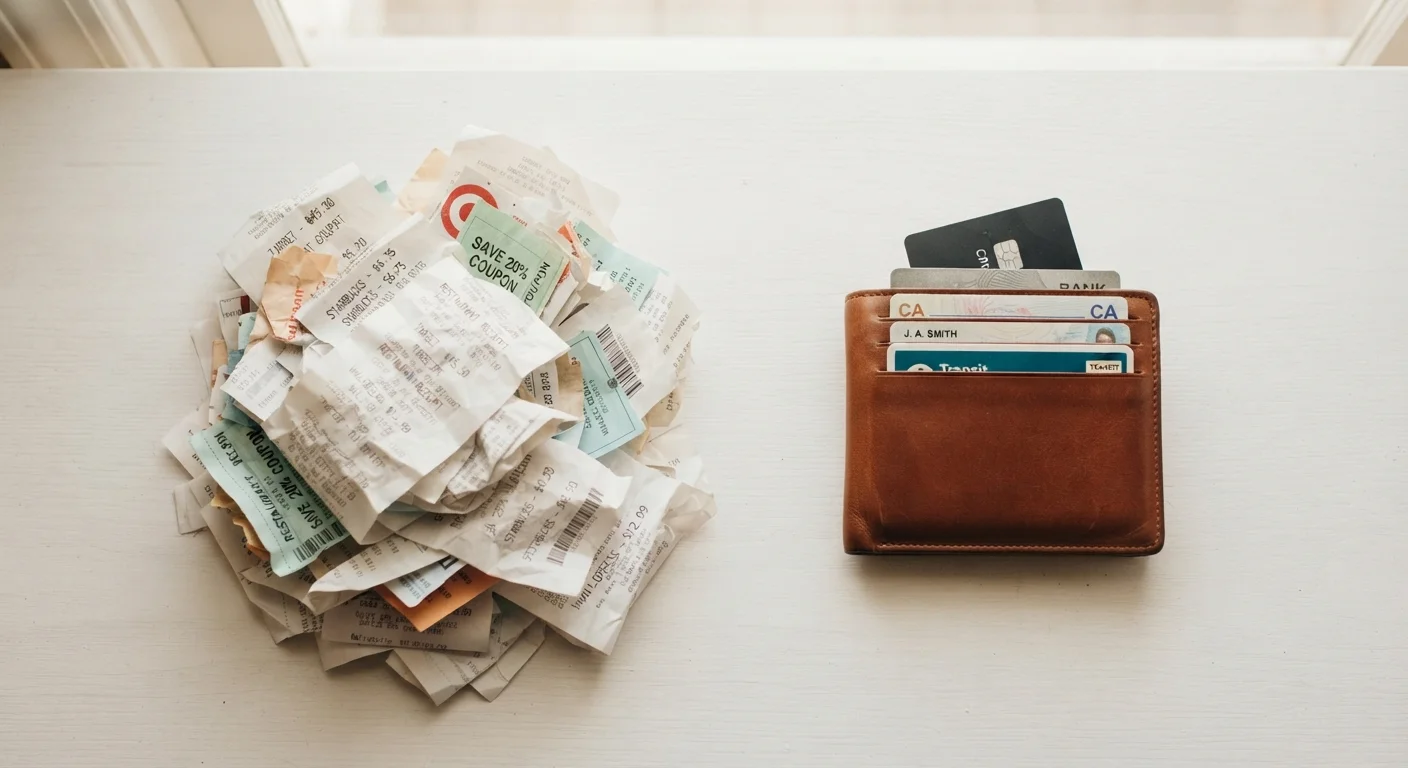
Most spending advice boils down to "just resist." Don't buy the coffee. Don't open the app. Don't click checkout. The problem is that this framing puts the entire burden on a resource - self-control - that behavioral economists have documented as finite and inconsistent. Research in the field consistently finds that people make worse decisions later in the day, under stress, or when cognitively depleted. Relying on willpower to manage money is structurally unreliable.
The more durable alternative is designing systems and environments that make the smart choice the path of least resistance. This isn't about hacks or tricks - it's about applying what we already know about human behavior to your own financial setup. The habits below work precisely because they don't require you to be at your best every time.
For a broader framework on the difference between spending less and spending smarter, see why saving and spending smarter aren't the same thing.
Automate transfers before you can spend the money
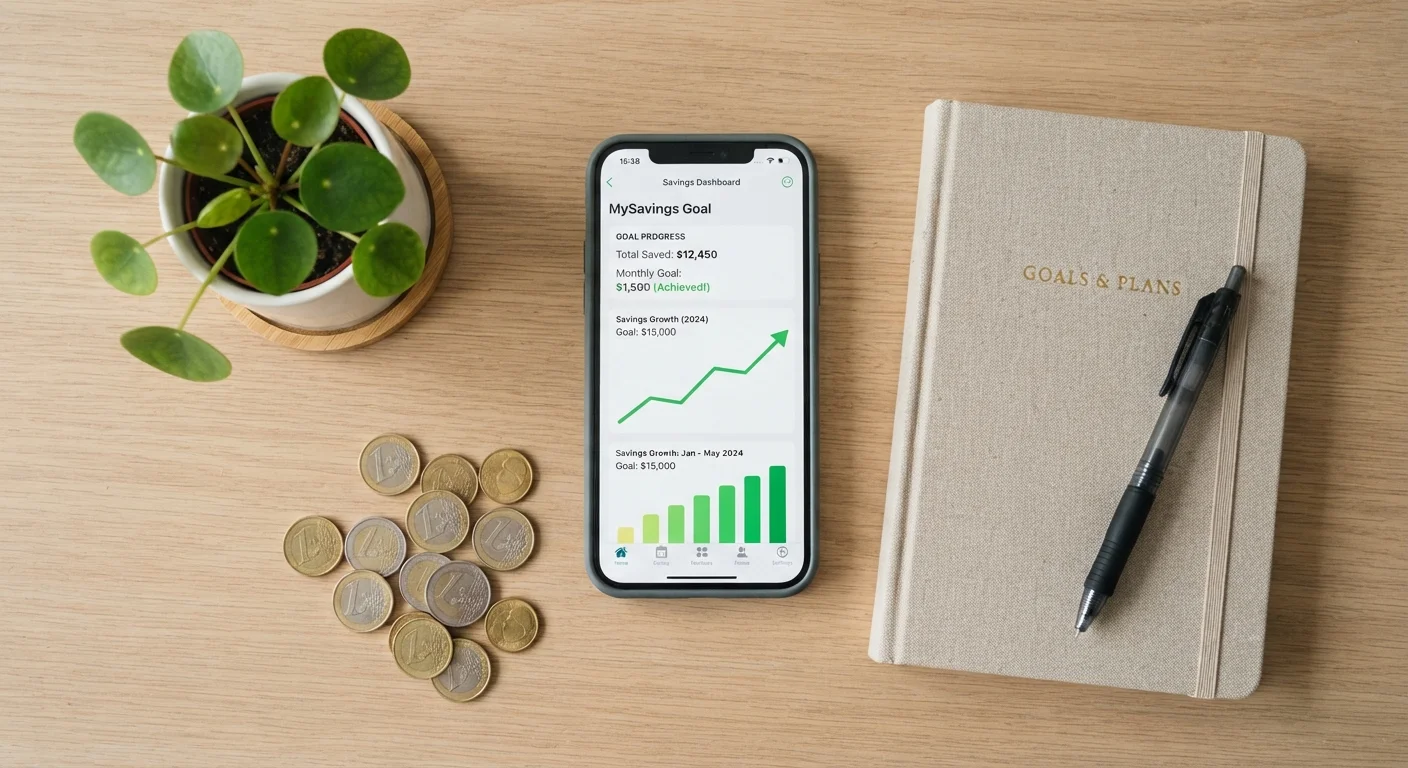
If savings and bill payments leave your account on payday - before you see the balance as "available" - you spend what's left rather than trying to save what's left over. This is sometimes called "pay yourself first," and it's one of the most well-supported behavioral finance principles. The key mechanic is timing: automation removes the temptation entirely because the money is already gone when you check your balance.
You don't need a large amount to start. Even a modest automatic transfer, set to coincide with your direct deposit, compounds over time and builds the habit of living on less than you earn without constant conscious effort.
Automation removes the temptation entirely because the money is already gone when you check your balance.
Add deliberate friction to your highest-impulse spending channels
Friction is the deliberate insertion of a small obstacle between desire and purchase. Delete saved payment details from retail sites. Remove shopping apps from your phone's home screen. Require that items sit in your cart for 24-48 hours before checkout. These micro-delays interrupt the impulse-to-click pipeline without requiring you to make a morally charged decision about self-control.
Research in behavioral economics consistently shows that even minor inconveniences dramatically reduce follow-through on impulsive actions. The goal isn't to make buying impossible - it's to ensure that purchases requiring effort are purchases you actually want. For more on building this kind of pause into your routine, see building a spending pause habit that sticks.
Minor inconveniences dramatically reduce follow-through on impulsive purchases - no willpower required.
Use separate accounts to give money a purpose
Mental accounting - the tendency to treat money differently depending on where it's held or how it was earned - is a quirk of human psychology that you can use intentionally. When "vacation money" and "emergency money" and "grocery money" live in separate places, they feel different, even if they're technically fungible. This makes it harder to rationalize dipping into one bucket for another purpose.
Many online banks now offer free sub-accounts or savings pockets, making this approach practical without any fee overhead. The act of labeling a pool of money changes how you relate to spending it - a feature, not a bug, when you're trying to protect specific goals.
Labeling a pool of money changes how you relate to spending it - that's a feature you can use deliberately.
Do a monthly spending review, not just a forward budget
Most budgeting advice focuses entirely on planning future spending. But looking backward - categorizing what you actually spent last month - is often more revealing and more corrective. It surfaces recurring charges you've forgotten about, categories that consistently blew past your mental estimate, and patterns that no forward budget would have predicted.
A monthly review doesn't need to be elaborate. Even 20 minutes with your bank statements and a simple spreadsheet or app can identify one or two adjustments that compound meaningfully over a year. Mindless spending patterns that outlast their usefulness covers the specific categories most likely to hide waste.
Looking backward at actual spending is often more corrective than planning any forward budget.
Reframe purchases by cost-per-use rather than sticker price
A $200 item you use 200 times costs $1 per use. A $15 item you use once costs $15 per use. Evaluating purchases on a cost-per-use basis - rather than absolute price - shifts attention from the transaction to the value delivered over time. This framing naturally favors durable, frequently used items and surfaces the true cost of impulse buys that sound cheap at the register.
This is especially relevant for categories like clothing, kitchen equipment, and tools. It also makes it easier to justify spending more on high-use items without guilt, because the math supports it. For how this fits into longer-term financial thinking, how long-term thinkers approach everyday purchases is worth reading alongside this habit.
Cost-per-use shifts focus from the transaction to the value delivered - and changes which purchases look smart.
Set a personal spending threshold for unplanned purchases
A pre-committed rule - for example, "any unplanned purchase over $50 waits 48 hours" - converts a repeated in-the-moment decision into a single standing policy. You make the rule once, when you're calm and clear-headed, and it applies automatically without requiring fresh deliberation each time.
The threshold amount is personal and should reflect your actual income and spending patterns, not a generic number. The point is that the rule exists before temptation arises. This is the same principle behind many successful habit frameworks: the decision is made in advance, under low-stakes conditions, so the high-stakes moment doesn't require heroic self-control.
A pre-committed spending rule converts repeated willpower battles into a single standing decision made in advance.
Build Systems, Not Resolutions
The habits above share a common thread: they shift the point of decision earlier, or remove the decision entirely. Instead of asking yourself "should I buy this?" in the moment - when desire is highest and judgment is most clouded - you answer that question in advance through rules, friction, and automation.
Start with one system change, not six
It's tempting to implement every habit at once, but behavioral research suggests that stacking too many changes simultaneously reduces follow-through on all of them. Pick the single habit that addresses your most consistent spending leak - whether that's impulse online shopping, forgotten subscriptions, or no savings automation - and lock that one in before adding another. Small, specific changes sustained over time outperform ambitious overhauls that fade after two weeks.
If you want to go deeper on the environmental design side of this, designing your environment to spend less covers the physical and digital setup in detail. And if automation interests you, small financial automations that save for you walks through specific set-and-forget options worth exploring.
None of these strategies require perfect discipline. They require a single good decision - to set the system up - and then the system does most of the work. That's a trade most people can actually make.
This article is for general informational purposes only and does not constitute financial advice. Consider consulting a qualified financial professional for guidance tailored to your personal circumstances.