
Why Batteries Fail Quietly - and Suddenly
Car batteries don't announce their decline. Unlike a worn brake pad that squeals or a low tire that visibly sags, a deteriorating battery tends to underperform gradually - until one morning it simply won't start your car. That gap between "working" and "dead" is where most drivers get caught off guard.
The core issue is how lead-acid batteries age. Each charge-discharge cycle causes minor chemical changes inside the battery. Over time, lead sulfate crystals build up on the plates, reducing the surface area available for the chemical reaction that generates electricity. The battery holds less charge, delivers less cranking power, and recovers more slowly - none of which you'll necessarily notice during a normal start on a mild day.
What typically triggers the visible failure is a stressor: a cold morning, a long stretch of short trips, or leaving an interior light on overnight. A healthy battery absorbs these without issue. A battery at 60% capacity can't. Understanding this pattern is the first step toward not being surprised by it.
Battery vs. Alternator: Know the Difference
A dead battery and a failing alternator can produce nearly identical symptoms - slow cranking, electrical issues, warning lights. The alternator charges the battery while the engine runs; if it's failing, even a new battery will drain quickly. If your battery tests fine but keeps going flat, have the charging system checked before replacing anything.
The Warning Signs Worth Paying Attention To
The signals are there if you know what to look for. The most common early indicator is sluggish cranking - the engine turns over more slowly than usual before starting. This is the battery struggling to deliver full cranking amps and deserves attention, not dismissal.
- Dimming headlights at idle: If your lights brighten noticeably when you rev the engine, the battery isn't holding charge well enough to sustain accessories at low RPM.
- Frequent need for jump-starts: Needing even one jump-start is worth investigating. Two or more in a short period almost always points to a battery past its useful life.
- Battery warning light: This can indicate a charging system issue (alternator or voltage regulator) rather than the battery itself, but either way it warrants a diagnostic check.
- Swollen battery case: Heat causes internal gases to expand, visibly bulging the battery casing. This is a sign of significant internal damage - the battery should be replaced promptly and handled carefully.
For drivers tracking multiple maintenance items, the seasonal maintenance checklist covers battery inspection alongside tires, fluids, and cooling systems - a useful framework for pre-season prep.
What Shortens Battery Life (Beyond Just Age)
Age is unavoidable, but several factors accelerate the timeline in ways drivers can partially control.
Heat is the primary enemy. While cold weather gets more attention because it visibly reduces starting power, sustained heat - common in southern states - causes more lasting internal damage by speeding up the chemical degradation inside the battery. Parking in shade where possible and ensuring your hood ventilation is clear can help marginally.
Short-trip driving. Every start draws a significant charge from the battery. Your alternator replenishes that charge while you drive, but it needs time - typically 15-30 minutes of highway-speed driving for a meaningful recharge. A routine of short errand runs without longer drives keeps the battery in a partial state of discharge, accelerating plate sulfation.
Parasitic drain. Modern vehicles run a constant low-level power draw through systems like alarm modules, keyless entry, and infotainment memory. In a healthy battery this is manageable. In an aging battery, it can be enough to prevent a full overnight recovery - particularly in cold weather.
Vibration. A battery that isn't properly secured in its tray is subject to vibration that physically damages internal plates over time. If your battery ever feels loose when you press on it, the hold-down bracket should be checked.
Test Your Battery Before Winter Hits
Cold weather is when weak batteries give out, but summer heat is what degrades them in the first place. Have your battery load-tested every fall - especially once it's past the three-year mark. A $0 test at an auto parts store is far cheaper than a winter roadside call.
Terminal Corrosion: The Preventable Problem
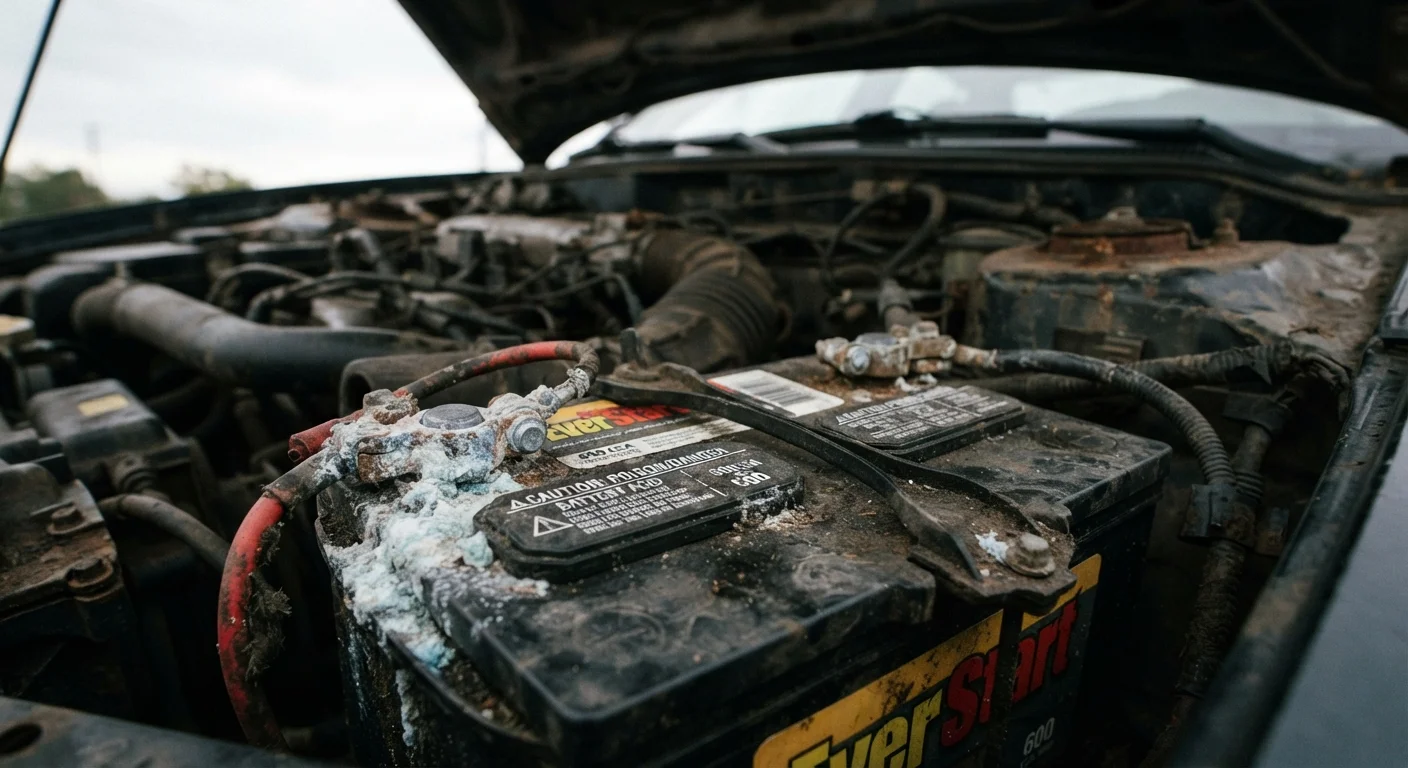
The white or blue-green crust that forms on battery terminals is lead sulfate and copper sulfate buildup - a byproduct of normal battery operation and outgassing. Left unchecked, this corrosion increases electrical resistance at the connection point, which can mimic the symptoms of a weak battery even when the battery itself is still viable.
Cleaning terminals is one of the few battery-related tasks most mechanically basic drivers can handle safely at home. The process involves disconnecting cables (negative first, always), applying a baking soda and water solution to neutralize the acid deposits, scrubbing with a stiff brush, rinsing, drying completely, and reconnecting (positive first). Applying a thin layer of petroleum jelly or dedicated terminal protector spray after cleaning slows future buildup.
If the corrosion extends into the cable itself, or if the terminal clamps are cracked and don't grip firmly, that's a job better left to a shop. Loose or corroded cable ends are a genuine safety issue, not just a performance one. Drivers building out their maintenance awareness will find the new driver maintenance guide useful for understanding which tasks are DIY-appropriate and which aren't.
Getting Your Battery Tested - and What the Results Mean
Visual inspection has limits. The only reliable way to assess battery health is a load test, which measures whether the battery can maintain sufficient voltage while delivering the current needed to start your engine. Most auto parts retailers offer this test free of charge using a conductance tester - a process that takes about five minutes.
Results typically indicate one of three states: the battery passes (still within acceptable capacity), the battery requires charging and retesting (often due to being deeply discharged rather than genuinely degraded), or the battery fails (capacity too low to reliably start the vehicle). A battery that fails a load test after a full charge should be replaced regardless of how old it is.
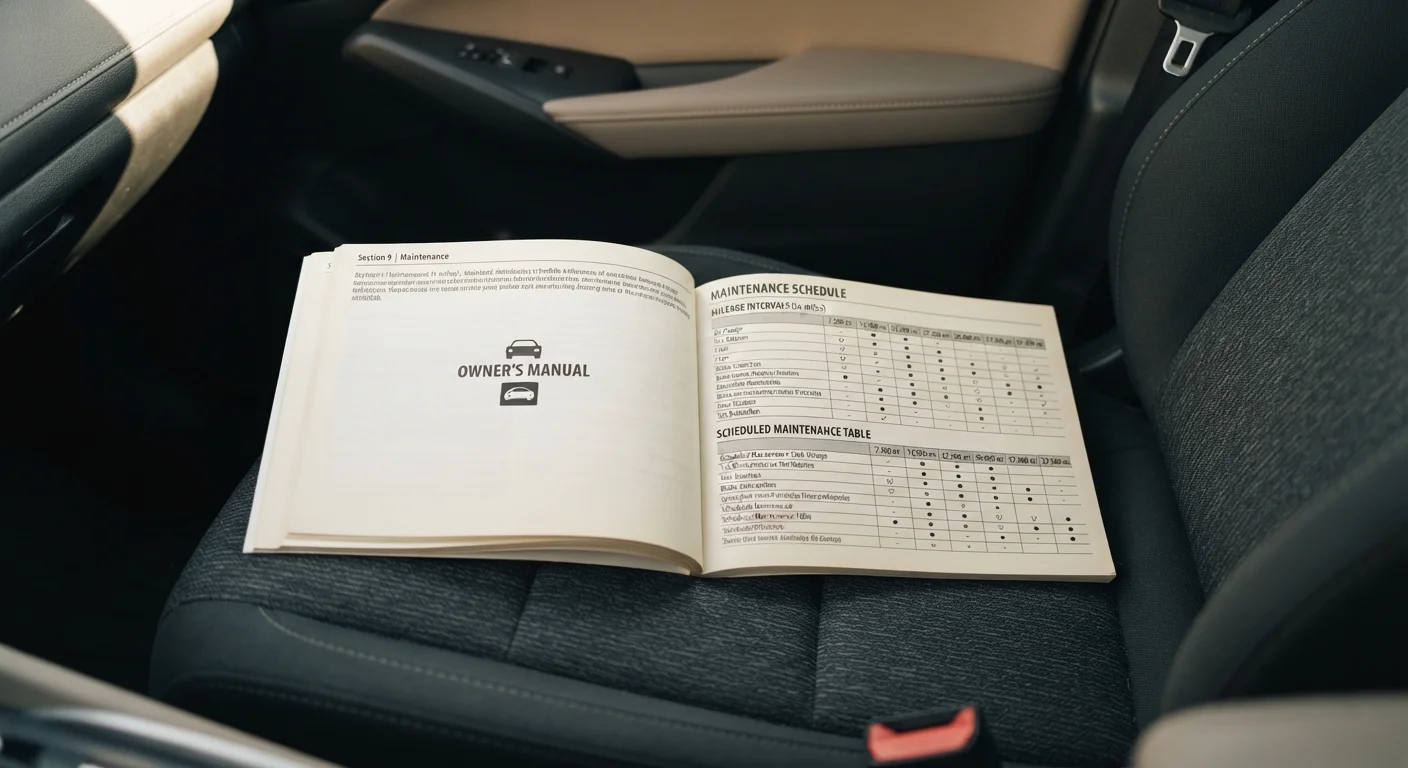
Your owner's manual may specify a cold cranking amps (CCA) rating - the minimum power your battery needs to deliver to start your engine in cold conditions. Replacement batteries should meet or exceed this rating. The owner's manual maintenance section explains how to locate these specs and use them practically.
Testing annually after year three is a reasonable baseline. If you notice any of the warning signs described above, test sooner - a failed battery on a cold morning costs far more in stress and roadside assistance than a proactive replacement ever would.
3-5 years
Typical lead-acid car battery lifespan
AAA's vehicle research indicates most conventional car batteries have a service life of three to five years under normal driving conditions.
~30-60%
Cold-weather reduction in battery cranking power
According to battery industry data, a battery's available cranking power can drop by 30-60% at temperatures around 0°F compared to performance at 80°F.
1 in 4
Vehicles with underperforming batteries
AAA roadside assistance data has historically suggested roughly one in four vehicles tested carries a battery operating below optimal capacity.