
Why Brake Wear Catches Drivers Off Guard
Brakes degrade gradually. Unlike a flat tyre or a dead battery, there's rarely a single moment when a driver thinks "something just changed." The wear happens across thousands of stops - commutes, school runs, highway exits - until one day the system signals it can't keep going quietly. By that point, many drivers have already missed the window where a straightforward, inexpensive fix was available.
Budget-conscious drivers are especially vulnerable here. It's tempting to defer a repair when the car still stops and money is tight. But brake jobs are one of the few maintenance categories where delay almost always means a more expensive outcome, not a cheaper one. Understanding what your brakes are actually telling you - and acting at the right moment - is the most cost-effective thing you can do. For drivers building a broader maintenance framework, the car maintenance habits guide provides useful context on where brakes fit into overall vehicle health.
Dismissing the initial squealing sound as 'just the car being noisy.'
Why it happens: Many drivers assume brakes squeal occasionally without consequence, especially if the car still stops normally. The noise feels like a nuisance rather than a warning.
Waiting until grinding sounds appear before booking a mechanic.
Why it happens: Because the car still brakes, drivers assume the system still has life left. Grinding feels more urgent, so some treat it as the real threshold.
Ignoring a car that pulls to one side during braking.
Why it happens: Mild pulling can be easy to attribute to road camber, wind, or tyre pressure - problems that feel less serious than brake noise.
Treating a spongy or low brake pedal as a quirk of an older car.
Why it happens: Drivers who have owned a vehicle for years sometimes normalise gradual changes in pedal feel because the shift happens slowly.
Neglecting to visually inspect brake pads during regular tyre checks.
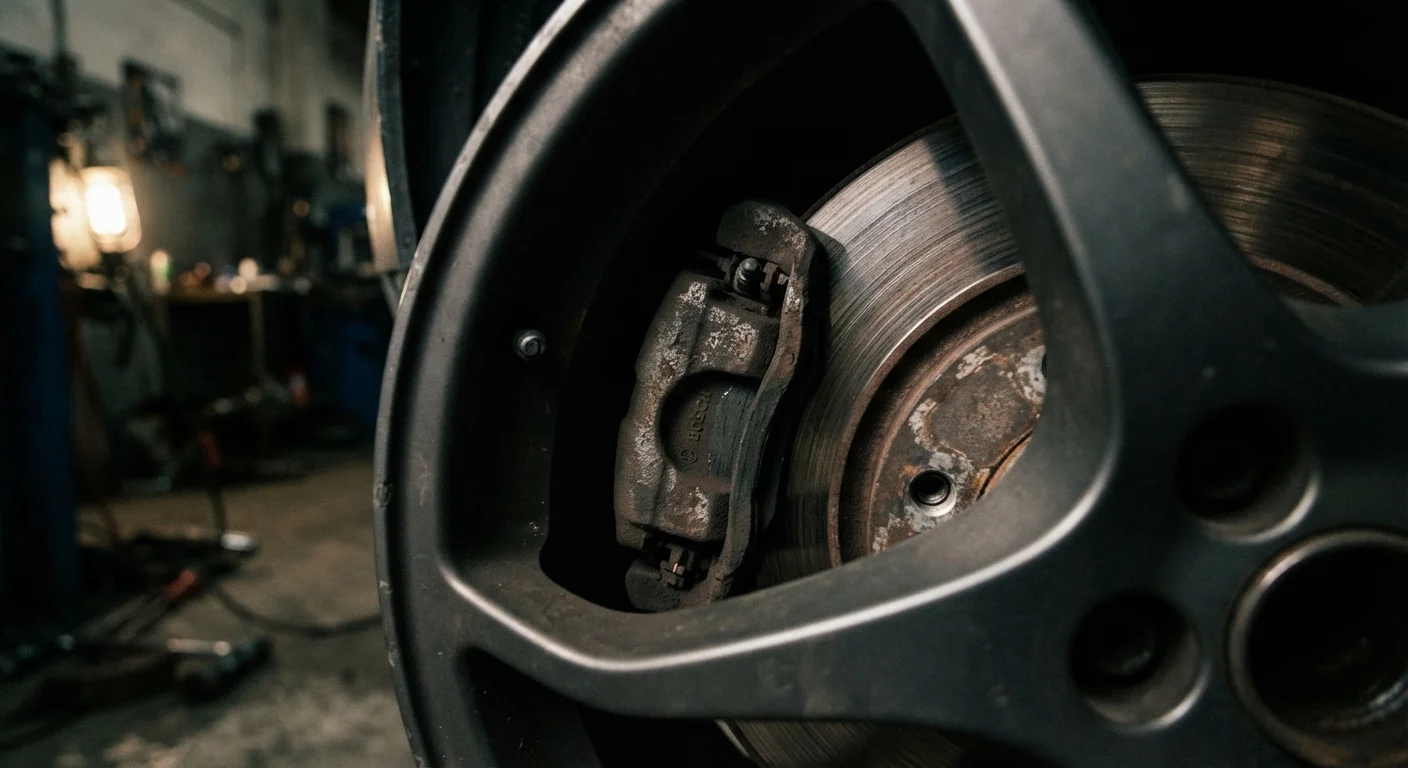
Why it happens: Most drivers don't know that pads are often visible through the wheel spokes without lifting the car, so the check never becomes part of a routine.
When to Handle It Yourself - and When to Call a Mechanic
Visual pad inspection through the wheel spokes is a legitimate DIY check that requires no tools and no lifting the vehicle. If you can see the pad and it looks thin - less than the thickness of a standard pencil eraser - book an inspection. That's a meaningful, money-saving habit.
Beyond observation, brake work enters territory where professional equipment and training matter. Brake fluid bleeding, caliper replacement, and rotor resurfacing all involve hydraulic systems where an error can result in brake failure. Unless you have confirmed mechanical training, these jobs belong with a qualified mechanic.
Brake Failure Is a Safety Emergency
Unlike a noisy exhaust or a slow oil leak, deteriorating brakes directly compromise your ability to stop the vehicle. If you experience a sudden loss of pedal pressure, grinding metal-on-metal contact, or severe pulling under braking, stop driving and have the car towed to a qualified mechanic. Do not delay this inspection.
Before any scheduled brake service, it's worth getting a pre-inspection quote from two or three shops. For drivers buying a used vehicle, our guide on what a mechanic should check before purchase explains how brake condition factors into a used car's true cost. Proactive inspection is almost always cheaper than reactive repair - a principle that applies equally to tyre care and other wear items.
Don't Confuse Dust Noise With Wear Noise
Light squealing first thing in the morning - especially after rain or overnight parking - can simply be surface rust burning off the rotors. This typically clears within a few stops. Persistent squealing that occurs on every stop regardless of conditions is a different matter and should be inspected. If you're uncertain, have a mechanic listen.