
Why Central America Works for Budget Travelers
Central America punches well above its weight for budget travelers. Seven countries packed into a landmass roughly the size of Texas offer a remarkable range — volcanic peaks, Caribbean beaches, colonial cities, and cloud forests — at daily costs that remain far below comparable experiences in Europe or Southeast Asia's premium destinations.
The region is compact enough that you can visit two or three countries in two weeks without burning most of your budget on flights. Low-cost carriers serve hubs like Guatemala City, San José, and Panama City from major US cities, and once you land, overland transport keeps costs manageable. It is also a well-established backpacker circuit, meaning the infrastructure for independent budget travel — hostels, shared shuttles, traveler-focused restaurants — is genuinely in place.
If you are new to independent travel generally, start with our complete guide to budget travel before diving into regional logistics.
CA-4 Agreement
A regional arrangement between Guatemala, Honduras, El Salvador, and Nicaragua that allows travelers to move across all four countries on a single 90-day entry stamp, avoiding repeated visa applications.
Chicken bus
Repurposed and brightly decorated school buses used as the primary public transport across much of Central America. They are the most affordable way to travel between towns but can be slow and crowded.
Shuttle van
Tourist-oriented shared minibuses that connect popular destinations at fixed prices. More comfortable and faster than chicken buses, but significantly more expensive.
Travel advisory
An official government statement rating the safety risk of traveling to a specific country or region. US travelers should check the US State Department website before any trip.
Dry season
The period roughly from November to April when rainfall is minimal across most of Central America. It coincides with peak tourism and higher prices at popular destinations.
Which Country Should You Start With?
First-timers have real options, and the right choice depends on your priorities and risk tolerance.
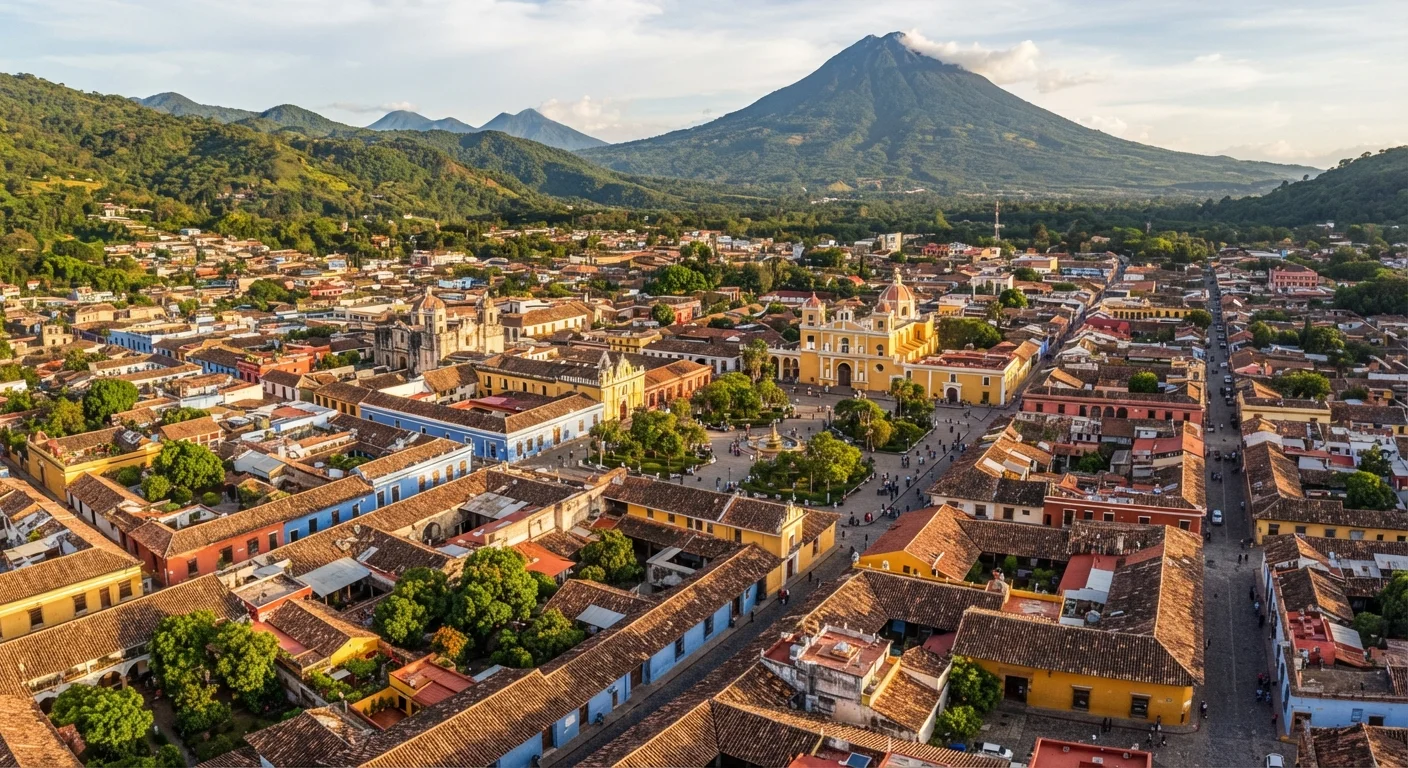
- Guatemala is the most popular entry point for good reason. Antigua is one of the best-preserved colonial cities in the Americas, Lake Atitlán offers dramatic scenery at low cost, and the country sits at the affordable end of the regional price scale. It is also the easiest country to use as a multi-week base while taking day trips.
- Nicaragua offers some of the lowest prices in the region. Granada and León are architecturally rich colonial cities, and the surfing on the Pacific coast draws a budget-conscious crowd. Verify current travel advisories before booking, as the political situation has affected tourism infrastructure in recent years.
- Costa Rica is the most tourist-ready and generally lowest-risk option, but costs are substantially higher — closer to $60–$90/day for a typical backpacker. It makes more sense as a later addition to a broader trip than as a primary budget base.
- Panama is an underrated finishing point for an overland trip. Panama City is more expensive but offers a unique mix of skyline, historic Casco Viejo neighborhood, and the Canal. The Bocas del Toro archipelago offers cheaper beach time.
For a broader framework on evaluating destinations before you commit, see our pre-trip destination research checklist.
What Things Actually Cost
Concrete numbers matter more than vague reassurances. Here is a realistic breakdown for mid-range backpackers across the region:
| Expense | Guatemala / Nicaragua | Costa Rica / Panama |
|---|---|---|
| Dorm bed (hostel) | $8–$14/night | $15–$25/night |
| Street meal or market lunch | $2–$4 | $5–$9 |
| Chicken bus (1–2 hour ride) | $1–$3 | N/A or limited |
| Shuttle van (popular route) | $15–$30 | $20–$40 |
| Volcano or nature tour | $20–$50 | $40–$80 |
A daily budget of $35–$45 USD is achievable in Guatemala or Nicaragua if you eat local, use public buses, and stay in dorms. The same habits in Costa Rica will likely push you to $55–$75. Factor in occasional tours and a private room night or two, and a monthly regional trip realistically costs $1,000–$1,500 for most travelers.
Don't Skip Travel Insurance Here
Medical facilities in rural Central America can be limited, and medical evacuation costs run into the tens of thousands of dollars without coverage. Travel insurance with emergency evacuation is not optional in this region — it is a baseline expense. Compare policy terms carefully and verify that adventure activities like volcano hiking are covered if you plan to do them.
Getting Around the Region
Transport is where budget decisions have the biggest impact on your daily spend.
Chicken buses are the backbone of affordable overland travel. They run frequently between towns and cities, cost almost nothing, and are used by locals — which means they reflect real on-the-ground life rather than a tourist bubble. The trade-off is time: routes are slow, stops are frequent, and schedules are informal.
Shuttle vans connect the most popular tourist destinations — Antigua to Flores, Granada to San Juan del Sur — door to door in a fraction of the time. They cost 5–10 times more than chicken buses but remain cheap in absolute terms. For long routes or night travel where safety is a concern, shuttles are often worth it.
Domestic flights make sense for reaching isolated areas like Bocas del Toro in Panama or the Bay Islands in Honduras, where overland alternatives are impractical. Book early for the lowest fares.
Within the CA-4 zone (Guatemala, Honduras, El Salvador, Nicaragua), a single 90-day entry allows free movement across borders — a practical advantage for anyone planning a multi-country route. Always carry your passport and entry documentation at each crossing.
Book Overland Transport a Day Ahead
Shuttle vans between popular destinations — such as Antigua to San Cristóbal or Granada to San Juan del Sur — fill up quickly during peak season. Booking even 24 hours in advance through your hostel usually secures a seat and avoids last-minute price bumps from street touts.
Before your trip, run through our pre-departure checklist for budget travelers to make sure logistics like SIM cards, insurance, and currency are sorted before you land.
Safety and Practical Realities
Safety is the most common concern for first-time visitors to Central America, and it deserves honest treatment rather than either dismissal or exaggeration.
The region is not uniform. Costa Rica has crime rates comparable to parts of Southern Europe. El Salvador and Honduras have historically had serious urban crime issues, though traveler-focused areas in both countries are generally calmer than headlines suggest. Guatemala City warrants caution in certain districts, while Antigua — two hours away — functions as one of the safer tourist towns in the region.
Practical steps that reduce risk significantly: travel during daylight hours, use registered taxis or app-based services rather than unmarked cabs, avoid displaying phones or cameras in crowded areas, and keep a small amount of local cash accessible rather than pulling out your wallet repeatedly. Petty theft is the most common issue; violent crime against tourists is comparatively rare but does occur.
Always check your government's official travel advisory for each country before booking. The US State Department updates these regularly and distinguishes between country-wide risk and specific city or regional warnings. Conditions change, and a destination that was high-risk two years ago may have improved — or vice versa.
Currency and US Dollar Acceptance
Panama uses the US dollar as its official currency. El Salvador also adopted the dollar officially. In Guatemala, Honduras, and Nicaragua you will use local currencies (quetzal, lempira, and córdoba respectively), though US dollars are accepted in many tourist areas. Carry small bills in local currency for markets, buses, and street food stalls where change is limited.
Travelers who find value in Central America often apply the same thinking to other budget regions. For a different regional comparison, our overview of budget travel across the Balkans covers what the numbers look like in Europe's most affordable corner.
Travel conditions, visa rules, safety ratings, and prices change over time. Verify all entry requirements, costs, and travel advisories with official government sources and your transport or accommodation providers before booking. This article is for general informational purposes only and does not constitute travel, legal, or financial advice.