
What Each Product Actually Does
Both caulk and weatherstripping block unwanted air movement, but they're engineered for entirely different situations. Confusing the two is one of the most common - and costly - DIY mistakes homeowners make.
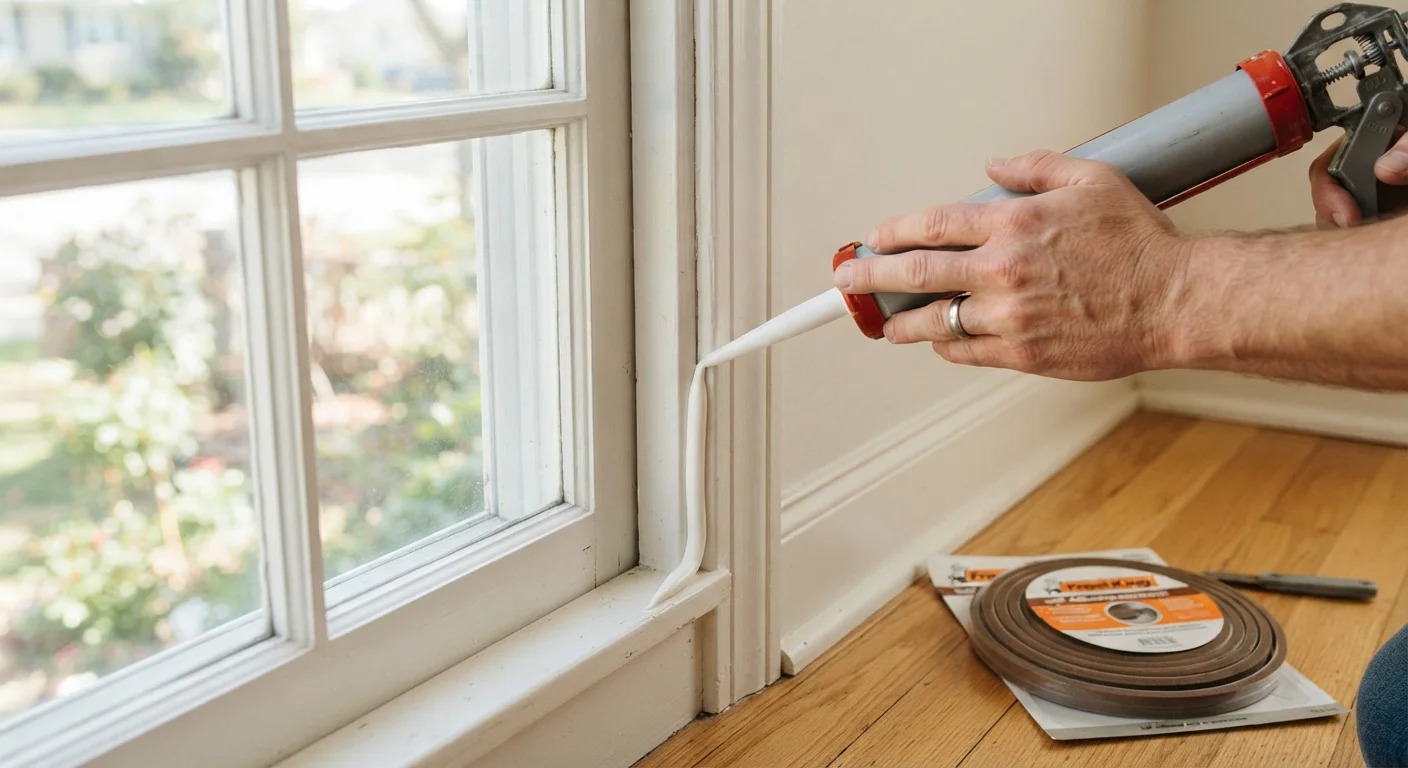
Caulk is a flexible sealant that cures into a semi-rigid bead. It's applied to stationary joints - places where two building materials meet and stay put, like the seam between a window frame and drywall, or between baseboard trim and a floor. Once cured, caulk forms a durable, often paintable bond. It cannot tolerate repeated flexing or friction; apply it somewhere that moves, and it'll crack and peel within weeks.
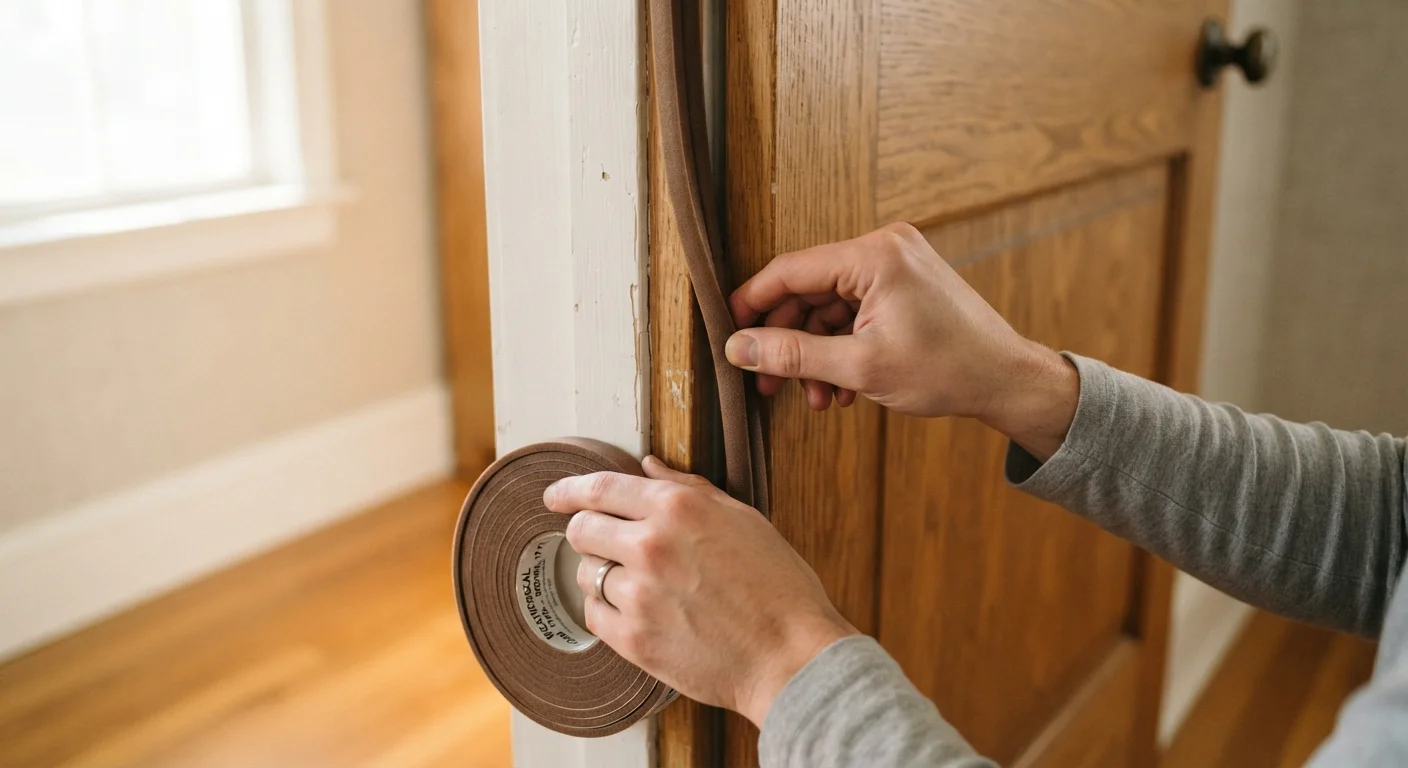
Weatherstripping is a compressible material - available in foam tape, V-strip (tension seal), door sweeps, and rubber gasket forms - that's designed to be compressed every time a door or window closes. It lives in the gap between a moving sash or door panel and its frame, springing back to shape when the door opens again. Because it endures constant mechanical stress, it needs periodic replacement (typically every few years), but it's inexpensive and fast to install.
| Criterion | Caulk | Weatherstripping |
|---|---|---|
| Best application | Stationary gaps and joints | Moving doors and operable windows |
| Typical cost | $3-$8 per tube | $5-$20 per door or window kit |
| Lifespan | 10-20 years (if properly applied) | 2-10 years depending on type |
| DIY difficulty | Easy - requires caulk gun | Easy - peel-and-stick or screw-in |
| Paintable | Yes (latex types) | No |
| Tolerates movement | No - cracks if flexed | Yes - designed for compression |
| Tools needed | Caulk gun, putty knife, damp cloth | Scissors or utility knife, ruler |
Where to Use Each One in Your Home
A quick walk around your home will reveal two distinct categories of gaps. Matching each gap type to the right product is the key to a draught-free result.
Use Caulk Here
- Around the perimeter of fixed window frames (interior and exterior)
- Between door frames and adjacent walls
- Along baseboards and crown moulding where trim meets wall or floor
- Around pipes, wires, or ducts passing through walls or floors
- At the sill plate where the wood framing meets the foundation
Use Weatherstripping Here
- Around the door stop (the three sides of the door frame the door closes against)
- Along the bottom of exterior doors (use a door sweep)
- Around operable window sashes - especially double-hung and casement styles
- On attic hatches and pull-down stair panels
For a broader approach to locating every air leak in your home, see our step-by-step guide to sealing air leaks.
Don't Mix Up Caulk and Weatherstripping Locations
A common mistake is applying caulk around an operable window sash - the part that slides or swings open. Caulking a moving sash will seal it permanently shut. Always confirm whether the surface moves before reaching for the caulk gun. When in doubt, check that the gap opens and closes before choosing your sealant.
Cost, Difficulty, and Longevity Compared
Both options are genuinely budget-friendly, but they differ in how long they last and how much effort ongoing maintenance requires.
Up to 30%
Home energy lost through air leaks
The U.S. Department of Energy estimates that air leaks account for up to 30% of a home's heating and cooling energy use.
$3-$8
Typical cost of one caulk tube
A single tube can seal several window frames, making caulk one of the highest-value energy improvements per dollar spent.
A standard tube of latex caulk costs roughly $3-$8 and a caulk gun around $10, making it one of the cheapest home improvement investments available. Properly applied to a stationary joint, quality caulk can last 10-20 years before needing replacement. Silicone-based formulas last even longer but cannot be painted.
Weatherstripping costs vary by type. Self-adhesive foam tape runs $5-$10 for a door kit and is the easiest to install but compresses permanently within a few years. V-strip and door sweeps cost slightly more ($8-$20) and hold up considerably longer - often 5-10 years with normal use. Factor replacement into your budget planning.
Neither project requires special skills. Caulking takes about 30 minutes per window with a little practice; weatherstripping a standard exterior door takes under an hour. The payoff in reduced energy bills - and a more comfortable home - makes both well worth the afternoon investment.