
Why DIY Myths Are So Persistent
DIY repair advice travels fast - through family handoffs, online forums, and well-meaning neighbors. The problem is that a tip that worked once in one context gets repeated as universal truth. For budget-conscious homeowners, believing the wrong fix can turn a $10 repair into a $500 professional call-out.
The myths below aren't obscure edge cases. They're the ones people act on regularly, often with genuine confidence. Understanding why each one fails is the first step to making smarter, more cost-effective decisions at home. For a broader foundation, see our complete beginner's guide to DIY home repairs.
Myth
Duct tape can seal a leaking pipe or stop water infiltration around windows.
Fact
Duct tape is not waterproof and loses adhesion quickly when wet, making it ineffective and potentially misleading as a plumbing or moisture seal.
Duct tape is genuinely useful for many household tasks, but water resistance isn't one of them. Standard duct tape uses a rubber-based adhesive that breaks down rapidly when exposed to prolonged moisture. Wrapping it around a leaking pipe joint may slow visible dripping for a few hours - long enough for you to forget about the underlying problem - while water continues to seep behind walls or under flooring. For pipe joint repairs, plumber's tape (PTFE thread seal tape) is used on threaded connections before assembly, not after a leak has started. Visible pipe leaks typically indicate a failed seal or cracked fitting that requires proper repair or replacement. For window gaps, purpose-made weatherstripping or exterior-grade caulk is the correct solution. See our guide on sealing air leaks around doors and windows for the right approach.
Myth
Expanding foam is a versatile fix - you can use it to fill any gap, crack, or hole around the house.
Fact
Expanding foam exerts significant pressure as it cures and can warp door frames, window frames, and other structural elements if over-applied.
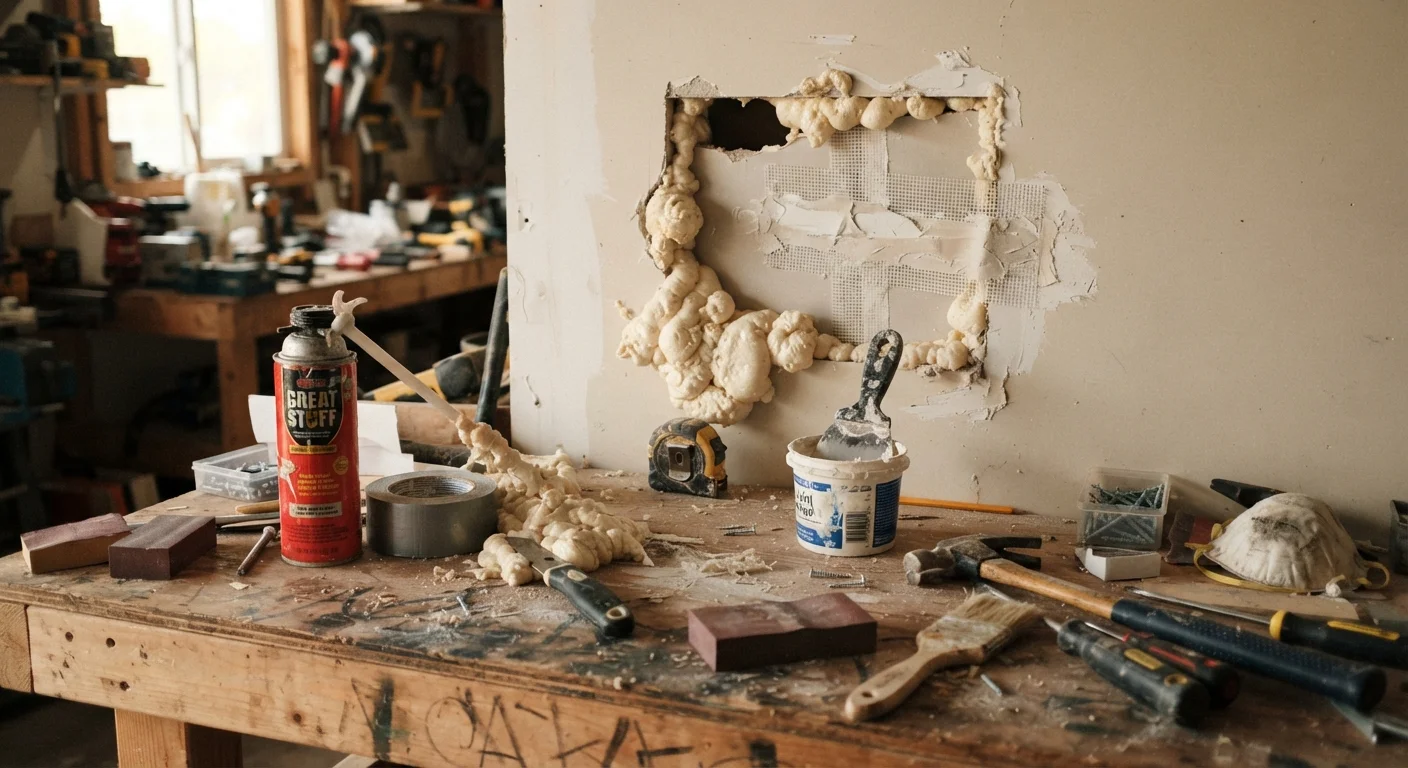
Expanding polyurethane foam is excellent in the right applications - filling gaps around pipes, sealing penetrations in walls, or insulating large irregular voids. However, it is not an all-purpose filler. When used in confined cavities near window or door frames, the expansion pressure can bow or warp the frame, causing doors and windows to bind or no longer close properly. For small wall holes and cracks, lightweight spackling compound or joint compound is the appropriate material - it doesn't expand and sands flush cleanly. For drywall repairs specifically, our article on patching a drywall hole without calling a pro covers the correct technique. Always use foam sparingly, applying less than you think you need - you can add more once the first application has cured.
Myth
Painting over a mold patch kills the mold and prevents it from coming back.
Fact
Paint does not kill mold. Painting over active mold traps it temporarily but the growth continues beneath the surface and will reappear.
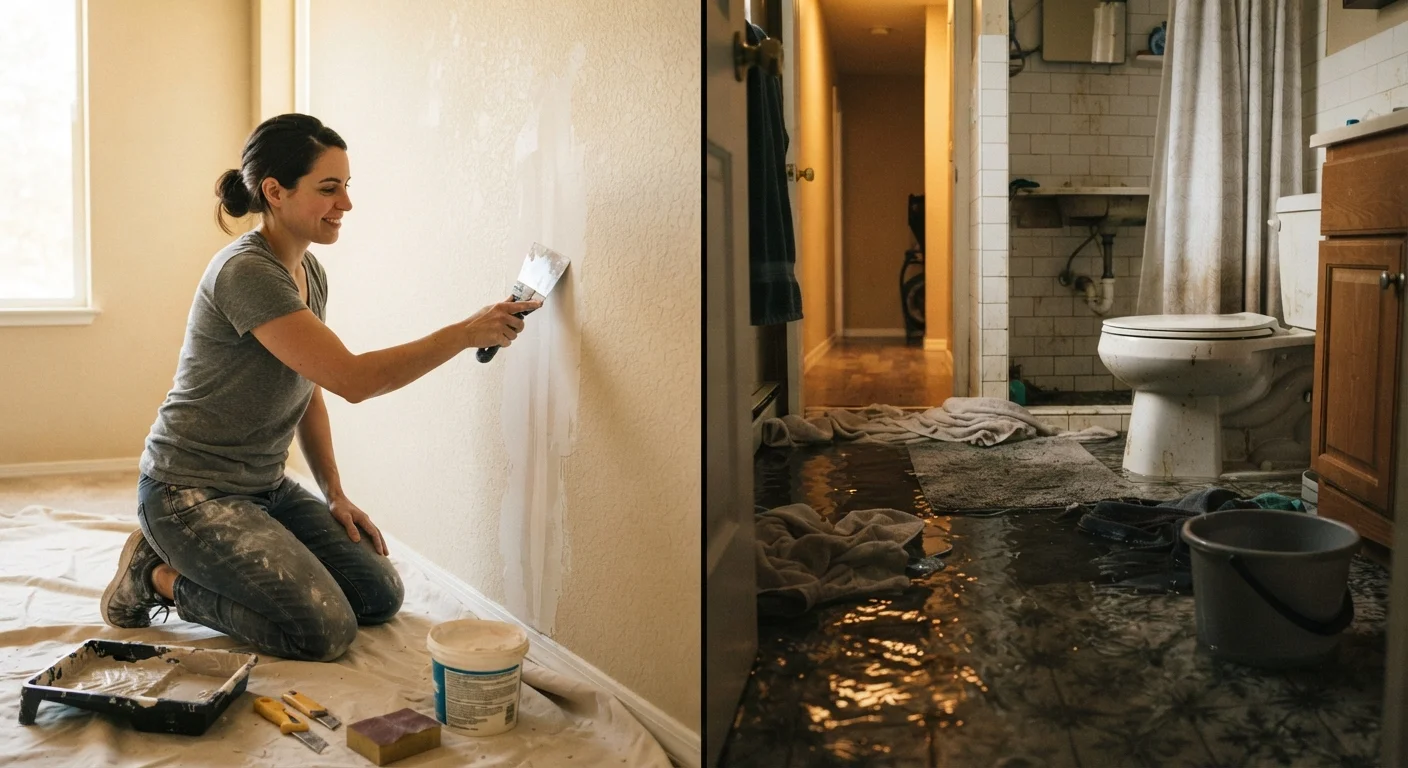
Mold-resistant paint is a preventive coating applied to clean, dry, treated surfaces - not a treatment for existing mold growth. Painting over visible mold may hide it for weeks or months, but the fungal structure remains alive and active in the substrate. It will eventually bleed through the new paint or spread further. Proper remediation requires identifying and eliminating the moisture source first, then removing affected material (such as drywall or grout) or treating hard surfaces with an appropriate cleaning solution. For small, isolated patches on non-porous surfaces in well-ventilated areas, cleaning with a diluted solution and allowing the surface to dry completely before repainting may be sufficient. Larger mold problems - especially anything covering more than a small patch or involving HVAC systems - warrant professional assessment. Do not attempt to remediate mold in areas with compromised structural material, insulation, or hidden wall cavities without professional guidance.
Myth
Tightening a leaking plumbing connection harder will stop the drip.
Fact
Overtightening threaded plumbing fittings is a leading cause of cracked joints and split pipes, which creates a larger leak than the one you started with.
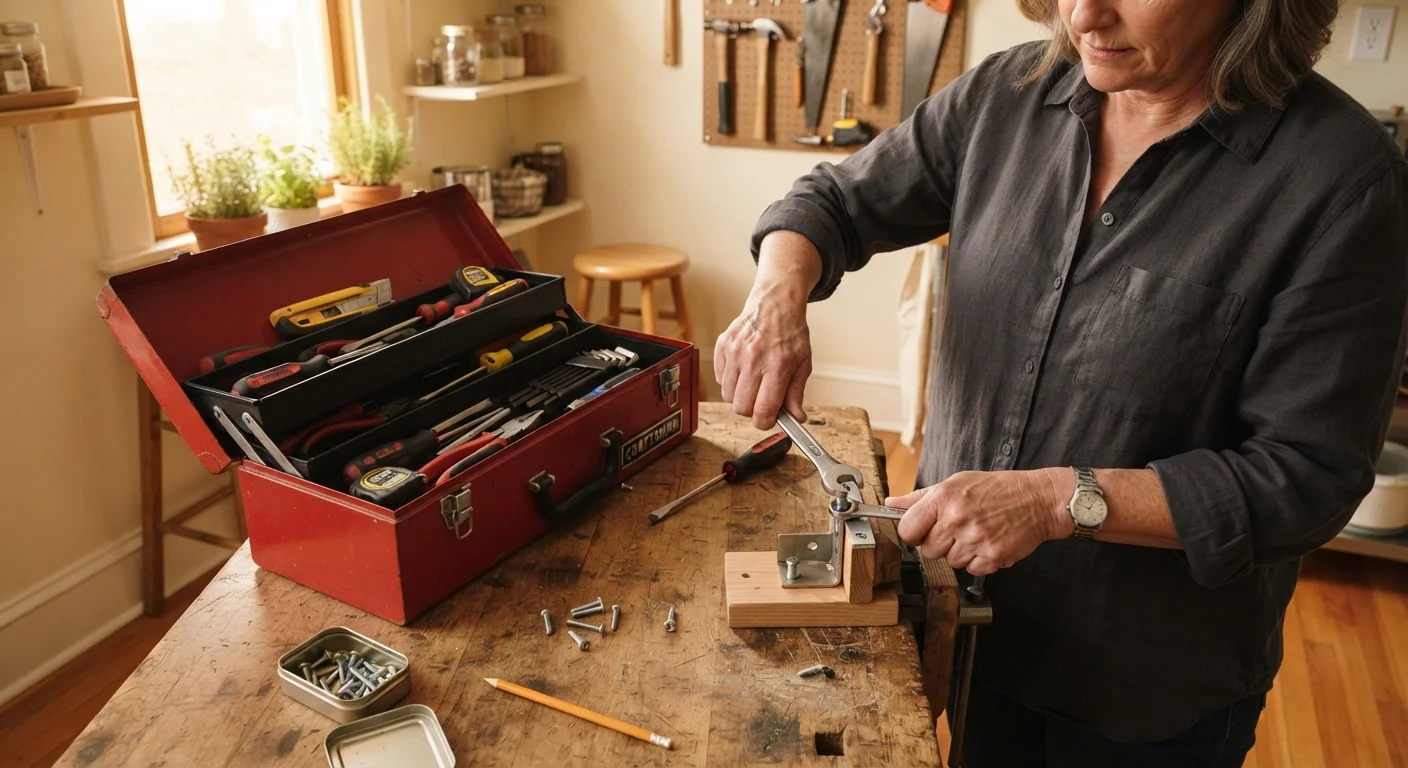
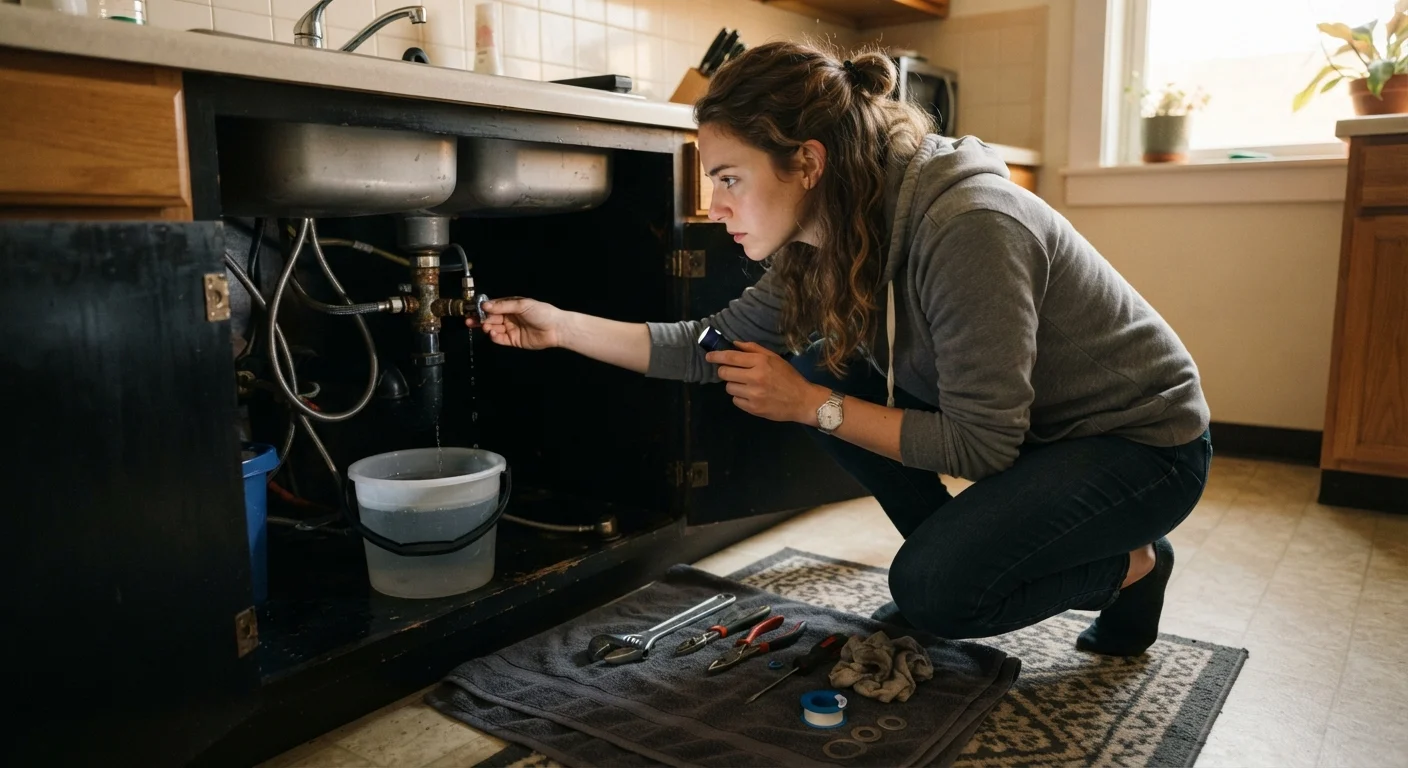
It's intuitive to assume that tighter means more sealed, but plumbing fittings - particularly those made from PVC, brass, or chrome - have a torque limit. Compression fittings and threaded joints rely on the compression of a washer or the integrity of thread seal tape to create a watertight connection. Cranking past that point stresses the material and can crack the fitting body or distort the washer, making the leak worse. If a connection is dripping after being hand-tightened plus a quarter to half turn with a wrench, the issue is likely a worn washer, damaged threads, or missing thread seal tape - not insufficient tightening. Replacing a $2 washer is a minor task; replacing a cracked fitting inside a wall cavity is not.
Myth
Any crack in a wall is just cosmetic - you can fill it and paint over it without investigating further.
Fact
Some wall cracks indicate foundation movement, settling, or moisture intrusion and should be evaluated before being filled and painted over.
Hairline cracks in plaster or drywall from normal seasonal expansion and contraction are generally cosmetic and safe to repair. However, cracks that are wide (typically more than 1/8 inch), follow a stair-step pattern in brick or block, appear suddenly, or grow over time can indicate structural movement or water damage. Filling these with spackle and repainting conceals the symptom without addressing the cause, making it harder to monitor whether the issue is progressing. Before patching, take a photo with a date reference and check again in several weeks. Cracks that grow or reopen warrant a professional structural assessment. For cosmetic wall repairs where the cause is confirmed minor, our guide on filling and repainting a wall for an invisible finish walks through technique that actually blends seamlessly.
Myth
You don't need a permit for small repairs - permits are only required for major renovations.
Fact
Many jurisdictions require permits for electrical work, plumbing changes, and structural modifications regardless of project size. Unpermitted work can create problems when you sell.
Permit thresholds vary significantly by municipality, but the assumption that small jobs are always permit-free is risky. Replacing a light fixture or adding an outlet, moving plumbing drains, or removing a non-load-bearing wall may all trigger permit requirements depending on local code. Unpermitted work can void homeowners insurance claims related to that work, create issues during a home inspection at sale, or result in orders to tear out and redo the work at your expense. Before starting any repair that involves electrical wiring beyond simple fixture swaps, changes to plumbing supply or drain lines, or anything structural, check with your local building department. Most jurisdictions offer free guidance on whether a permit is needed. This is particularly important for renters - see what every renter should know before attempting a home repair for lease-specific considerations.
The Real Cost of Getting It Wrong
Each myth above shares a common thread: a quick, low-cost shortcut that defers - and amplifies - the actual damage. Mold treatment after drywall replacement costs far more than addressing a small damp patch early. A cracked pipe fitting from overtightening requires cutting into walls. Foam-warped window frames can compromise weatherproofing for years.
When a DIY Fix Can Void Your Insurance
Homeowners insurance policies often exclude damage caused by faulty repairs or unpermitted work. If a DIY plumbing patch fails and causes water damage, your insurer may deny the claim if the original repair wasn't done to code. Before tackling any repair involving water supply lines, electrical panels, or structural elements, confirm what your policy covers - and whether a permit is required by local code.
The decision of whether to DIY at all is just as important as the technique you use. Our guide on when DIY saves money and when it creates a bigger bill helps you draw that line clearly. And if you're renting, check what every renter should know before attempting a home repair - your lease may restrict certain fixes regardless of your skill level.
Small maintenance problems rarely stay contained either. The repairs homeowners delay too long shows exactly how neglect compounds into serious expense. Applying a bad fix is often worse than applying no fix at all, because it can mask symptoms while damage continues underneath.
~35%
DIY repairs that require professional correction
Industry estimates suggest roughly a third of amateur home repairs result in a follow-up professional fix, often at greater total cost than an initial pro call-out would have been.
3-10×
Cost multiplier for delayed moisture damage
Building science research consistently shows that water intrusion addressed within days costs a fraction of repairs needed after weeks of undetected damage to framing, insulation, and drywall.
Approach repairs with the right information, the right materials, and an honest assessment of scope. That combination - not speed or confidence alone - is what actually saves money over time.