
Why the Label on the Tag Actually Matters
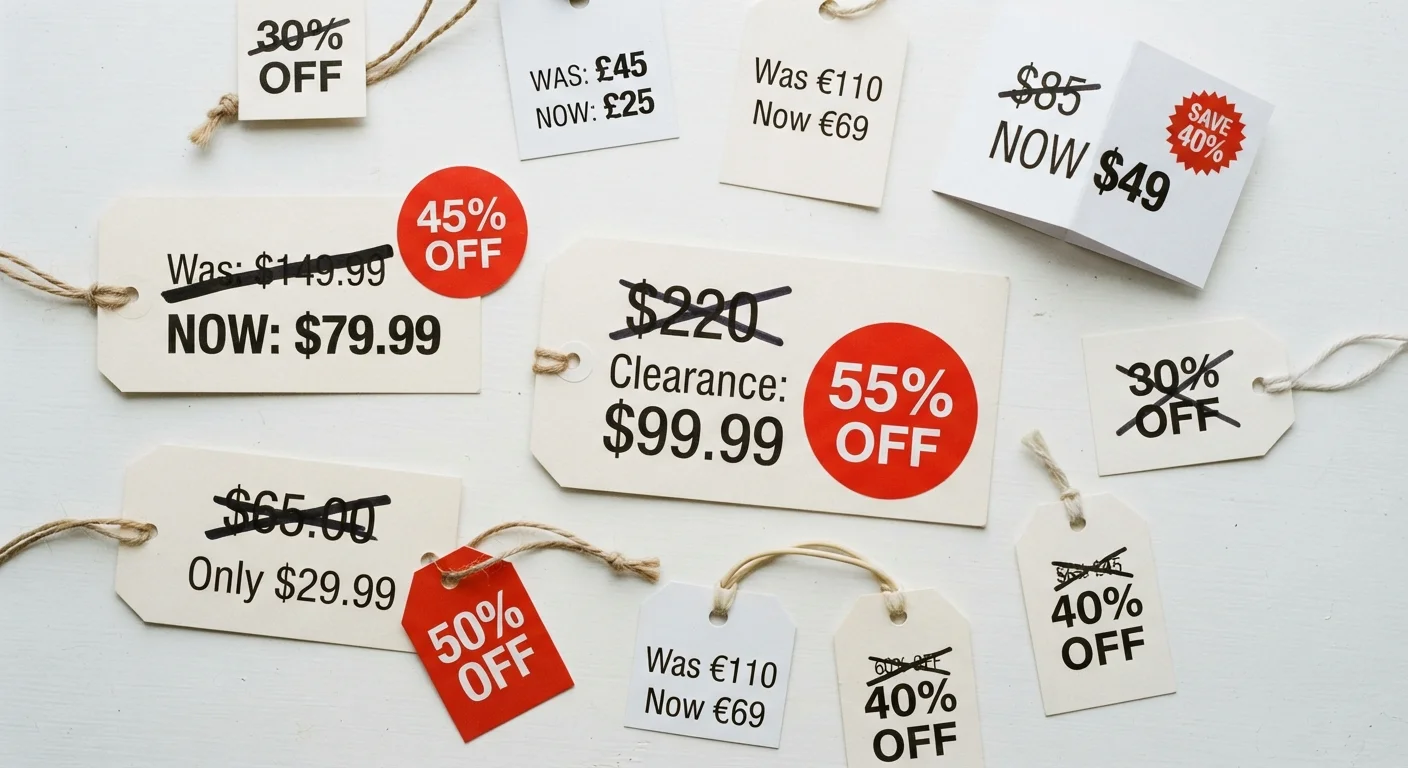
Walk through any retail floor and you'll see "Clearance," "Sale," and "Markdown" used almost interchangeably. They aren't. Each term signals something specific about why a price dropped, how deep the discount actually is, and whether you can expect the item to stick around. Misreading the signal is how shoppers overpay for things they think are deals - or miss genuine savings because the tag looked unremarkable.
Retailers aren't required to define these terms uniformly, but industry practice has produced fairly consistent meanings. Understanding them shifts the power dynamic in your favor. For a broader look at how retailers manufacture the appearance of deals, see how fake-sale tactics work.
Clearance: End-of-Life Pricing
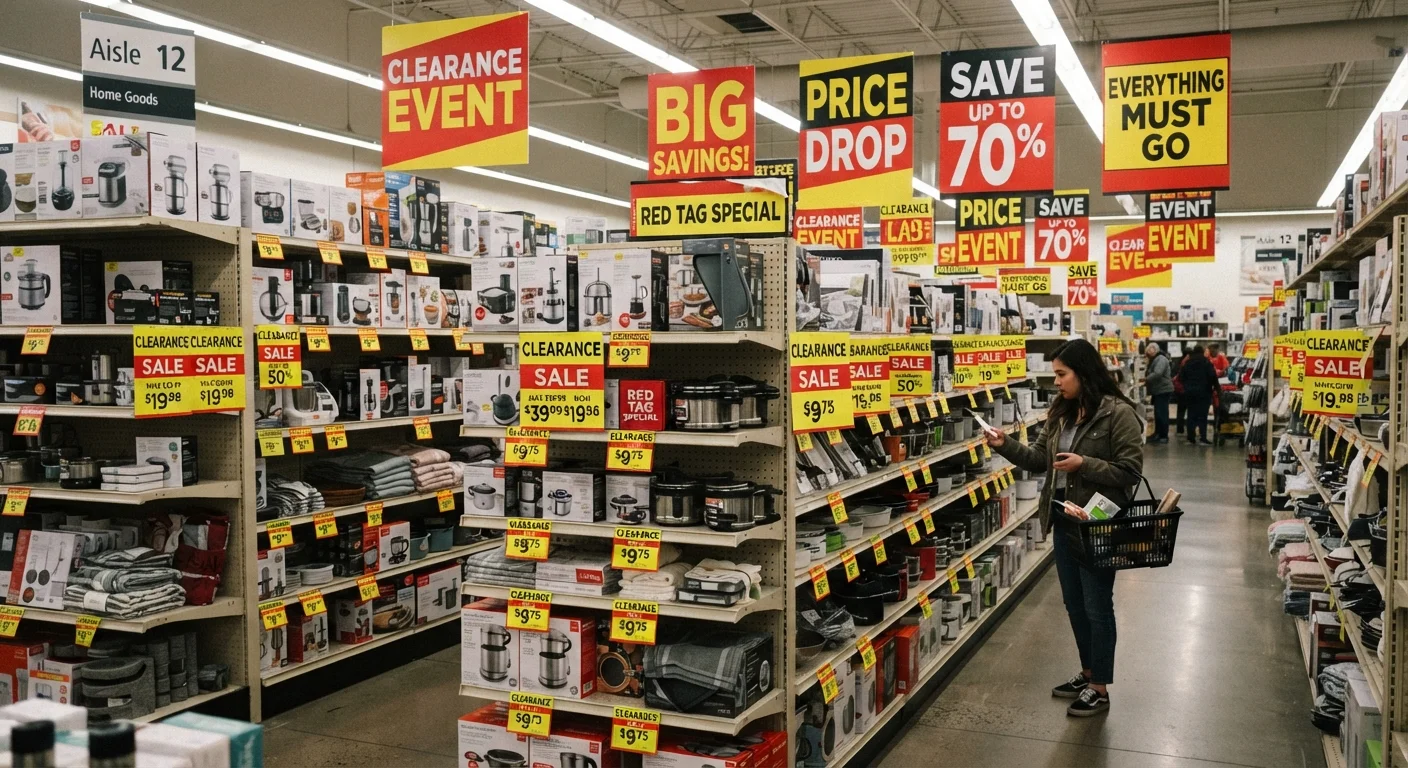
Clearance means a retailer is permanently discontinuing an item and needs to recover floor space and inventory costs. The price reduction is typically deeper than a standard sale - often 30-70% off - because the alternative for the retailer is liquidation at even steeper losses or paying to warehouse unsold stock.
What this means for you: clearance items are usually genuine discounts, but they come with trade-offs. Stock is finite and won't be replenished. Returns may be restricted or final-sale. And in apparel or footwear, you're often choosing from the sizes nobody else wanted.
Clearance is most reliable as a deal signal in grocery, home goods, and seasonal categories (outdoor furniture, holiday decor) where the retailer has a clear operational reason to move inventory. It's less reliable in electronics, where a "clearance" label sometimes accompanies a model that's simply been superseded - and may still carry the original inflated reference price. See whether clearance channel savings are real for more on this distinction.
Clearance
A permanent price reduction applied to items a retailer is discontinuing. The goal is to recover inventory cost and reclaim floor space rather than maintain the product line.
Sale
A scheduled, temporary reduction from the regular retail price. After the promotional period ends, the price is expected to return to its standard level.
Markdown
A reduction from an item's previous shelf price. Markdowns can be permanent or progressive, but the term says nothing about whether the original price was genuine.
Reference price
The "original" or "was" price shown alongside a discounted price. Legitimate reference prices reflect what an item actually sold for; inflated reference prices are a documented deceptive practice.
Progressive discounting
A markdown strategy where an item's price is reduced in stages over time until it sells or is liquidated. Common in apparel and seasonal merchandise.
Phantom markdown
A price reduction from an inflated reference price that was never genuinely charged to consumers. Regulated but inconsistently enforced across U.S. jurisdictions.
Sale: Temporary Price Reduction
Sale pricing is a scheduled, time-limited reduction off the regular retail price. The item will return to its standard price after the promotional period ends - or at least, that's the intent. In practice, some retailers run perpetual "sale" prices, which effectively makes the sale price the real price and the "original" price a marketing construct.
The key question to ask at any sale: What is this item's actual selling price on an ordinary Tuesday? If a quick price history check (using browser extensions or price-tracking tools that log historical data) shows the "sale" price is close to what the item always sells for, the promotional label is adding more urgency than value.
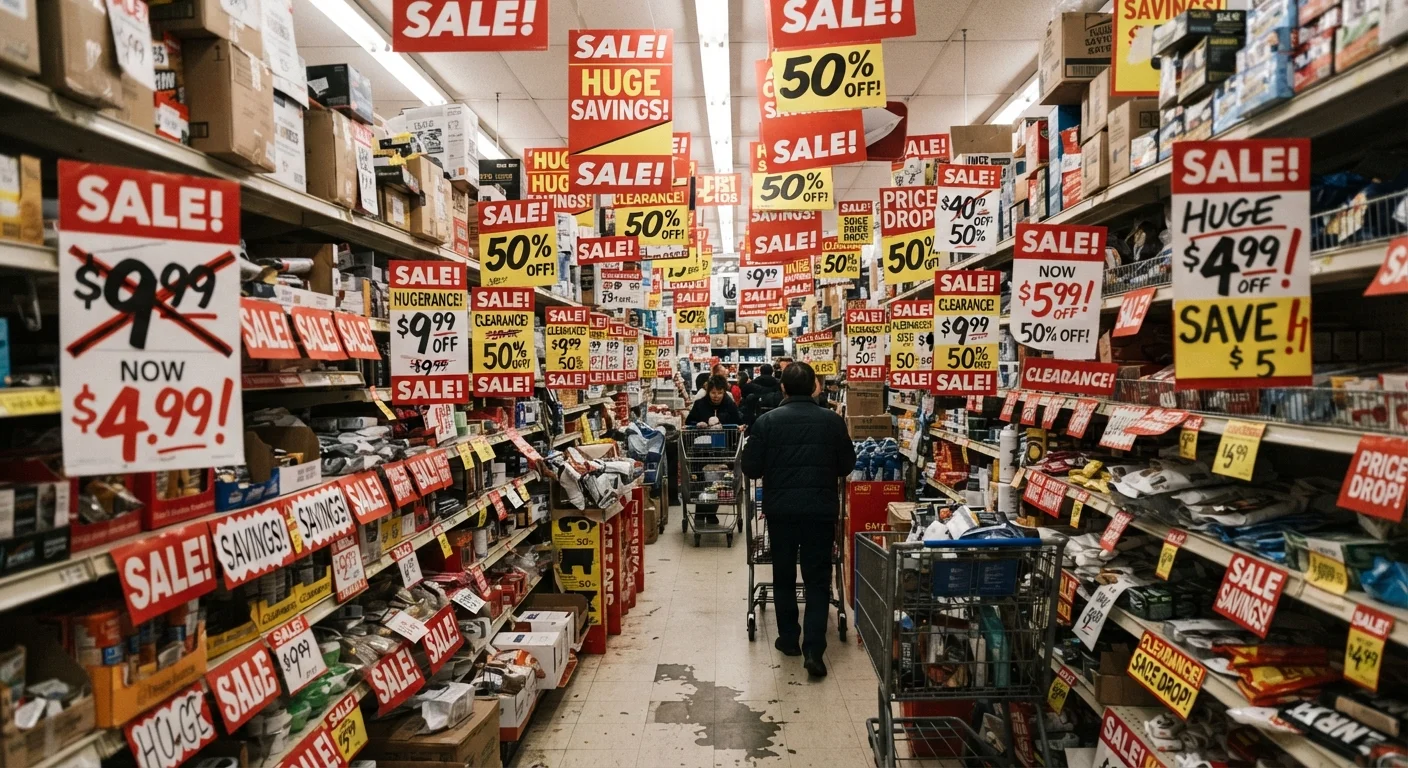
Sale events are driven by the retailer's calendar - seasonal transitions, holiday promotions, inventory cycles - not necessarily by any change in the product's cost or value. That's a meaningful distinction. For a deeper look at how urgency and scarcity language amplifies the psychological pull of sale signage, see the psychology behind sale signage.
Markdown: A Price Adjustment, Not Always a Discount
Markdown is the most neutral of the three terms - and the most misunderstood. A markdown is simply a reduction from the item's previous shelf price. It doesn't specify how large the reduction is, whether it's temporary or permanent, or whether the original price was ever a legitimate market price.
Markdowns appear in two common retail contexts. The first is legitimate progressive discounting: an item starts at full price, doesn't sell, and gets marked down in stages until it clears. The second - and more manipulative - is the "was/now" markdown on an item that was never actually sold at the "was" price for any meaningful period.
Several U.S. states have regulations requiring that a "former price" used in a comparison must have been the actual selling price for a minimum duration. However, enforcement is inconsistent, and federal guidance from the FTC provides principles rather than uniform rules. When you see a markdown, the relevant question isn't the percentage off - it's whether the reference price reflects what the item genuinely sold for. Reading the fine print on sale terms can help you evaluate this more precisely.
Understanding the difference between these labels connects directly to the broader question of value versus price - a lower number on the tag is only meaningful if the starting point was real.
This article is for general informational purposes only. Retail pricing practices and regulations vary by state and retailer; verify current rules with relevant consumer protection authorities in your area.