

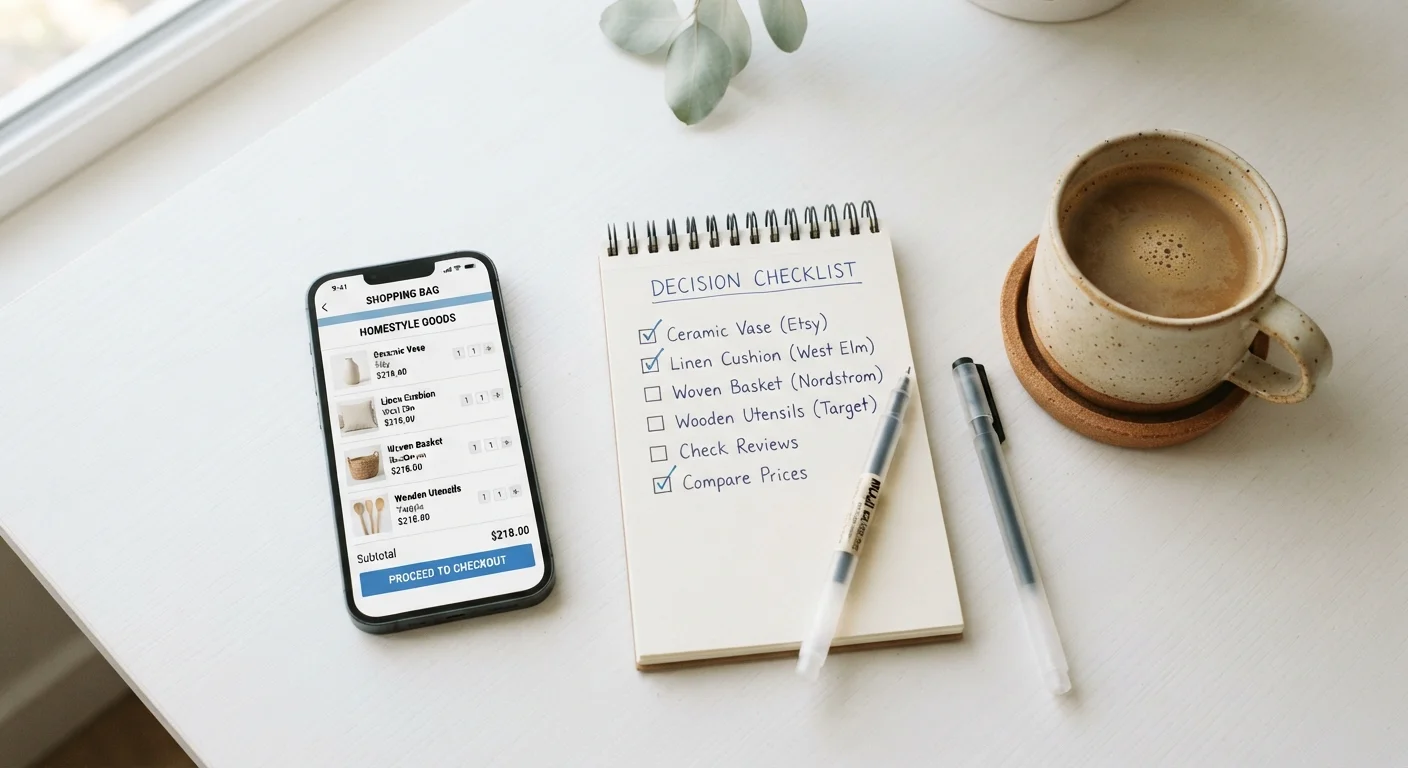
Why a Pre-Checkout Audit Works
Retail environments - physical and digital - are engineered to compress the gap between desire and decision. Countdown timers, low-stock warnings, and one-click purchasing are not neutral design choices; they are friction reducers deliberately built to shorten deliberation. A short self-audit restores that friction on your terms.
Behavioral research consistently shows that the mere act of pausing and articulating a reason to buy (or not buy) reduces impulse purchases. You don't need a complex system. You need a reliable set of questions you actually run through before entering payment details or walking to a register.
This checklist applies to any non-essential purchase - clothing, electronics, home goods, hobby gear, or a spontaneous online find. For grocery shopping, see the Budget Shopper's Supermarket Checklist, which is built specifically for that context. If you're evaluating a larger purchase like a car, the Car Buying Smart hub covers that territory in depth.
Work through the groups below in order. If a question gives you pause, treat that as signal - not noise.
Need vs. Want Clarity
True Cost Assessment
Budget Headroom Check
The Pause Test
Logistics and Exit Options
Getting the Most From This Checklist
The checklist is most effective when you treat it as a genuine decision tool rather than a box-ticking ritual. A few practical notes:
- Do it before you open your wallet, not after. Post-purchase rationalization is powerful - once money has changed hands, your brain works overtime to justify the decision. Run this audit while you're still in the cart or standing at the shelf.
- The 24-48 hour rule applies to "should" and "nice to have" items especially. If you still want it after sleeping on it, the purchase is less likely to be purely impulsive.
- Budget headroom is a hard stop, not a guideline. If covering this purchase requires shuffling money from savings or using credit without a clear repayment plan, the budget check has already answered the question for you.
For a deeper framework around evaluating whether a "deal" is actually saving you money, the Smarter Shopping Habit guide walks through price benchmarks and need-versus-impulse filters in detail. And if you're specifically staring at a sale price, run through the Pre-Purchase Verification Checklist for Sale Items before committing.
Buy-Now-Pay-Later Is Still Debt
Installment payment options at checkout make purchases feel smaller than they are. Before selecting one, write out every scheduled payment alongside your known income for those months. Missing payments on these products can result in fees and, depending on the service, credit score impacts. Treat them with the same caution as any other form of credit.
Finally, remember that this checklist is a tool for discretionary purchases. It is not financial advice tailored to your situation. For decisions involving significant sums or debt, consulting a licensed financial professional is the appropriate next step.