
Why Overfeeding Is Quietly Draining Your Budget
Overfeeding is one of the most common - and most overlooked - sources of unnecessary pet care spending. When you scoop kibble by eye or use a generous cup estimate, even a small daily excess compounds significantly over 12 months. For example, overfeeding a medium-sized dog by just one ounce per day could consume an additional 22 pounds of food per year, depending on the kibble's density. That's a meaningful fraction of several bags of food gone without benefit to your pet.
The issue isn't generosity - it's measurement. Feeding guidelines printed on pet food packaging are designed for the average animal at that weight range, and they represent a starting range rather than a precise prescription. Activity level, age, reproductive status, and health conditions all influence how much your individual pet actually needs. A sedentary indoor cat needs considerably fewer calories than the packaging's baseline may suggest.
Getting portions right protects your wallet and your pet's health at the same time. Chronic overfeeding is a leading contributor to pet obesity, which carries its own long-term costs in veterinary care. Our monthly pet health checklist can help you track your pet's body condition alongside feeding habits so you can catch drift early.
Treats Count Toward Daily Calories
Training treats, dental chews, and table scraps all contribute to your pet's daily caloric intake. If treats are a regular part of your routine, subtract their caloric content from the daily food portion to maintain accurate totals. Many pet owners overlook this and inadvertently overfeed even when meals are precisely measured.
What You'll Need Before You Start
Accurate portioning doesn't require expensive equipment, but a few basic tools make a real difference in consistency.
What you will need
Digital kitchen scale
Weighs food in grams or ounces for precise, repeatable portions every meal.
Standard measuring cup (set)
Provides a volume-based backup measurement when a scale isn't available.
Dedicated pet feeding scoop with markings
Speeds up daily portioning once your target weight is established.
Notebook or free notes app
Tracks daily portions and duration of each bag of food to calculate real consumption rates.
Step-by-Step: Calculating and Implementing the Right Portion
Follow these steps to establish your pet's correct daily food portion based on their individual needs. Once set, the process takes seconds per meal and the savings accumulate automatically.
Find your pet's current feeding guideline
Locate the feeding chart on your pet food packaging. These guidelines are typically expressed as a daily amount by pet weight range. Note the range that includes your pet's current weight and record both the minimum and maximum suggested amounts.
Establish your pet's target weight with your vet
Packaging guidelines are based on current weight, but your vet may recommend feeding to a target weight if your pet is overweight or underweight. Ask specifically: "What daily caloric intake should I aim for given my pet's ideal body weight and activity level?" This single question often unlocks a more useful number than any packaging chart.
Weigh one current meal and compare
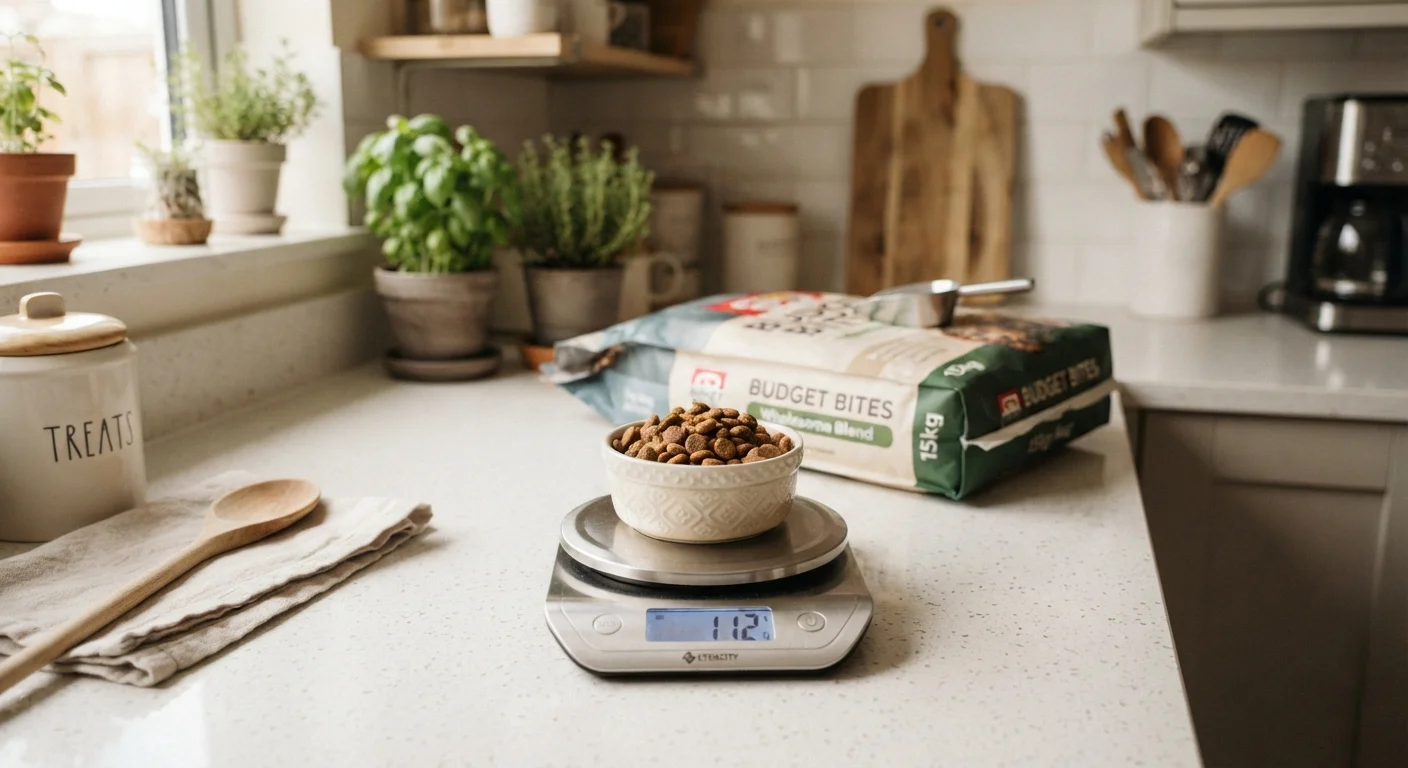
Before changing anything, weigh what you currently serve per meal using the digital kitchen scale. Multiply by the number of meals per day to get your current daily total. Compare this to the guideline or vet-recommended target. Most owners find they're serving 15-30% more than recommended.
Set and document your new daily target
Based on the guideline and your vet's input, establish a precise daily total in grams. Divide that by the number of meals you feed per day to get your per-meal portion. Write this number down and keep it near your feeding station to remove guesswork from every meal.
Track bag duration over two weeks
Note the date you open a new bag and the date it runs out. Calculate daily usage and compare to your portioning target. This tells you whether your household is staying consistent and gives you a reliable figure for projecting annual food costs under the new system.
Reassess every 4-6 weeks
Weigh your pet regularly (every four to six weeks) and compare against their target weight. Adjust portions up or down in small increments - typically 5-10% - as needed. Life stage changes, seasonal activity shifts, and health changes can all affect how much your pet needs.
If you feed multiple pets at home, portioning complexity increases but so does the savings opportunity. See our guide on budget-friendly feeding strategies for multi-pet households for household-specific approaches.
Never Restrict Food Without Veterinary Input
Rapid caloric restriction - especially in cats - can lead to serious medical complications including hepatic lipidosis (fatty liver disease). Any intentional reduction in your pet's food intake should be discussed with a licensed veterinarian first, particularly if your pet is overweight, elderly, or has an existing health condition. This guide is for general educational purposes, not a substitute for professional veterinary advice.
Turning Portion Discipline Into Long-Term Savings
Once you've established correct portions and stuck to them for two to three weeks, review how long your current supply lasts versus before. Most owners notice their food bags lasting noticeably longer, which directly translates to fewer purchases per year. Even modest reductions - shaving 10% off daily intake for an overfed pet - can shift you from buying 12 bags a year to 10 or 11.
Portion control also pairs well with other cost-reducing strategies. For instance, buying the right bag size for your measured daily amount (rather than guessing at bulk) prevents spoilage. Our guide to stretching your pet food budget without cutting nutritional corners explores complementary strategies that compound these savings further.
If you're evaluating whether to switch foods to save money, accurate portioning data gives you a fair baseline for comparison. You can also use our checklist for evaluating any pet food on a budget to ensure any food change still meets your pet's nutritional needs before committing.
This article provides general information for educational purposes only and is not a substitute for personalized veterinary advice. Always consult a licensed veterinarian before making significant changes to your pet's diet, particularly if your pet has a health condition.