

Why Pet Food Pricing Myths Are So Persistent
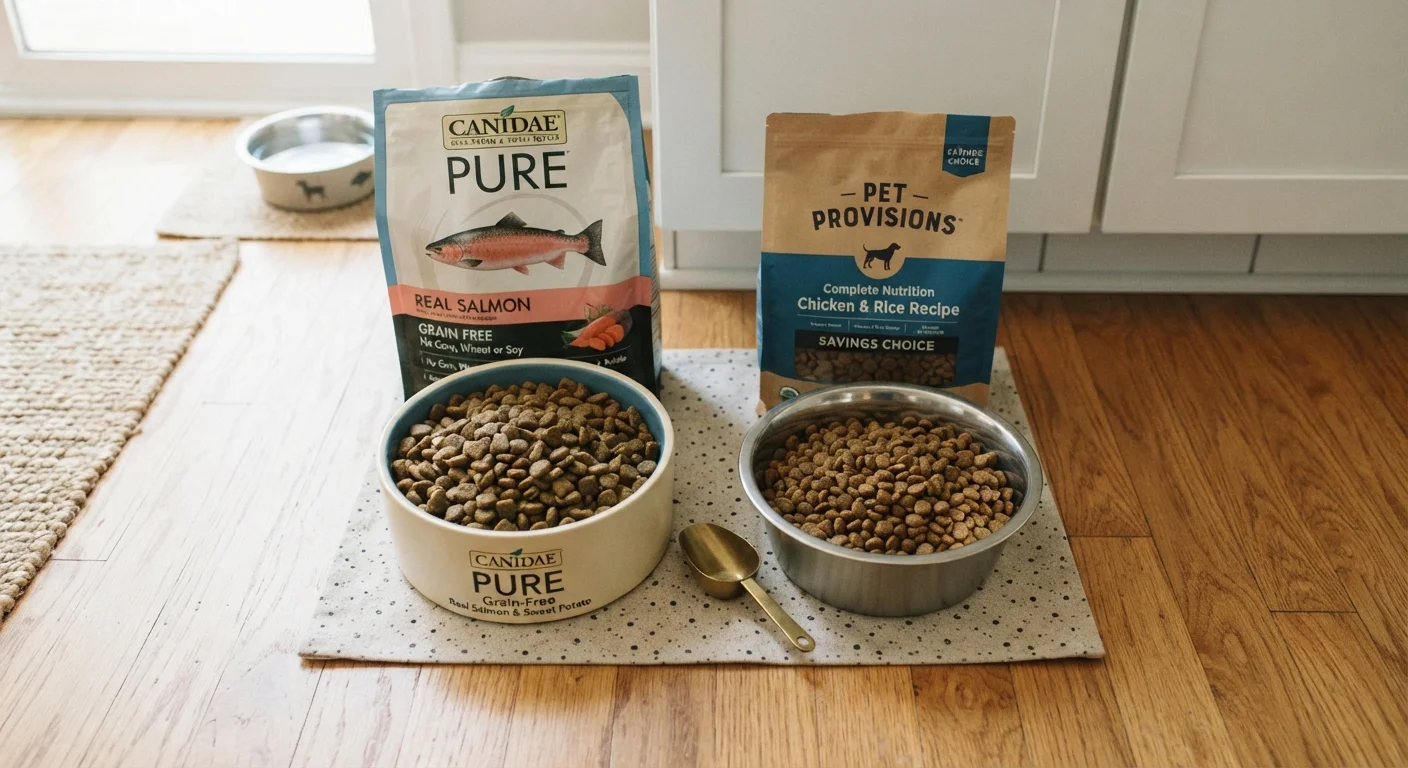
Walk into any pet store and you'll notice a wide price spread - from economy bags near the bottom shelf to small-batch, boutique formulas with triple-digit price tags. For budget-conscious pet owners, that gap raises an obvious question: is the expensive food actually better?
Marketing plays a significant role in shaping what pet owners believe about food quality. Premium packaging, claims like "human-grade ingredients" or "ancestral diet," and high per-pound prices all signal quality - but signals aren't always accurate. The idea that higher price always reflects higher quality is a deeply embedded assumption that doesn't always hold up, as explored in our broader look at price versus value.
Understanding what genuinely distinguishes pet foods - and what's mostly marketing - can help you make smarter choices without overspending.
Myth
Cheap pet food is nutritionally inadequate and will harm my pet's health.
Fact
Many affordable pet foods meet the same AAFCO nutritional standards as premium options.
The U.S. pet food market is regulated by AAFCO guidelines, which set minimum nutrient requirements for dogs and cats. A food carrying an AAFCO adequacy statement has met those minimums - at any price point. Price reflects factors like ingredient sourcing, marketing spend, and brand positioning, not necessarily the nutritional outcome for your pet. Some store-brand formulas are manufactured in the same facilities as name-brand products, though this varies and can be difficult to verify independently.
Myth
The first ingredient on the label tells you everything you need to know about quality.
Fact
Ingredient order is one useful signal, but it can be manipulated and should not be read in isolation.
Ingredients are listed by weight before processing - which means a named meat listed first may shrink considerably after cooking, while a dried or concentrated ingredient lower on the list may end up contributing more protein per serving. Manufacturers sometimes use "ingredient splitting," listing the same ingredient in multiple forms (e.g., pea protein, pea flour, pea starch) to keep each form lower on the list. Always read the guaranteed analysis alongside the ingredient list to get a fuller picture of nutrient levels.
Myth
Grain-free formulas are healthier and worth paying more for.
Fact
There is no established evidence that grain-free diets are nutritionally superior for most pets.
Grain-free pet food became popular based partly on the idea that grains are unnatural fillers. However, grains like rice, oats, and barley are digestible carbohydrate sources that contribute energy and some nutrients. More importantly, the U.S. Food and Drug Administration (FDA) has investigated a possible association between certain grain-free diets high in legumes and dilated cardiomyopathy (DCM) in dogs, though a causal link has not been definitively established. Most pets do not have grain allergies. For a deeper look at this debate, see our article on grain-free versus grain-inclusive nutrition claims.
Myth
Expensive foods use better manufacturing standards, so they're safer.
Fact
Price does not reliably predict manufacturing quality or safety record.
Premium brands have been subject to recalls, and some value-priced manufacturers have long, clean safety records. The FDA's Center for Veterinary Medicine tracks pet food recalls publicly - and the list includes products across all price ranges. What matters more than price is whether the manufacturer follows current Good Manufacturing Practices (cGMPs) and conducts nutritional testing. Some manufacturers publish this information voluntarily; if quality assurance practices matter to you, contacting the manufacturer directly or checking FDA recall databases is more informative than relying on price as a proxy.
Myth
Generic pet medications and generic pet food are equally unreliable compared to branded versions.
Fact
Generic and store-brand products in both categories can meet the same standards as name-brand counterparts.
Just as generic pet medications can be as effective as branded ones, store-brand pet foods that carry an AAFCO adequacy statement are formulated to meet the same nutritional benchmarks. The difference is largely in marketing investment and ingredient sourcing choices, not in fundamental nutritional adequacy. That said, palatability and digestibility can vary, so monitoring your pet's response when switching foods - regardless of brand tier - is always sensible.
What to Actually Look for on a Pet Food Label
Once you set price aside, a few concrete label features give you far more reliable information about nutritional quality.
4,000+
Pet food products available in the U.S. market
The U.S. pet food market offers thousands of formulas at wildly varying price points, making label literacy essential for any informed choice.
~12%
Estimated share of pets with diagnosed food allergies
Research suggests true food allergies are relatively uncommon in pets, meaning most animals do not require specialized high-cost hypoallergenic formulas.
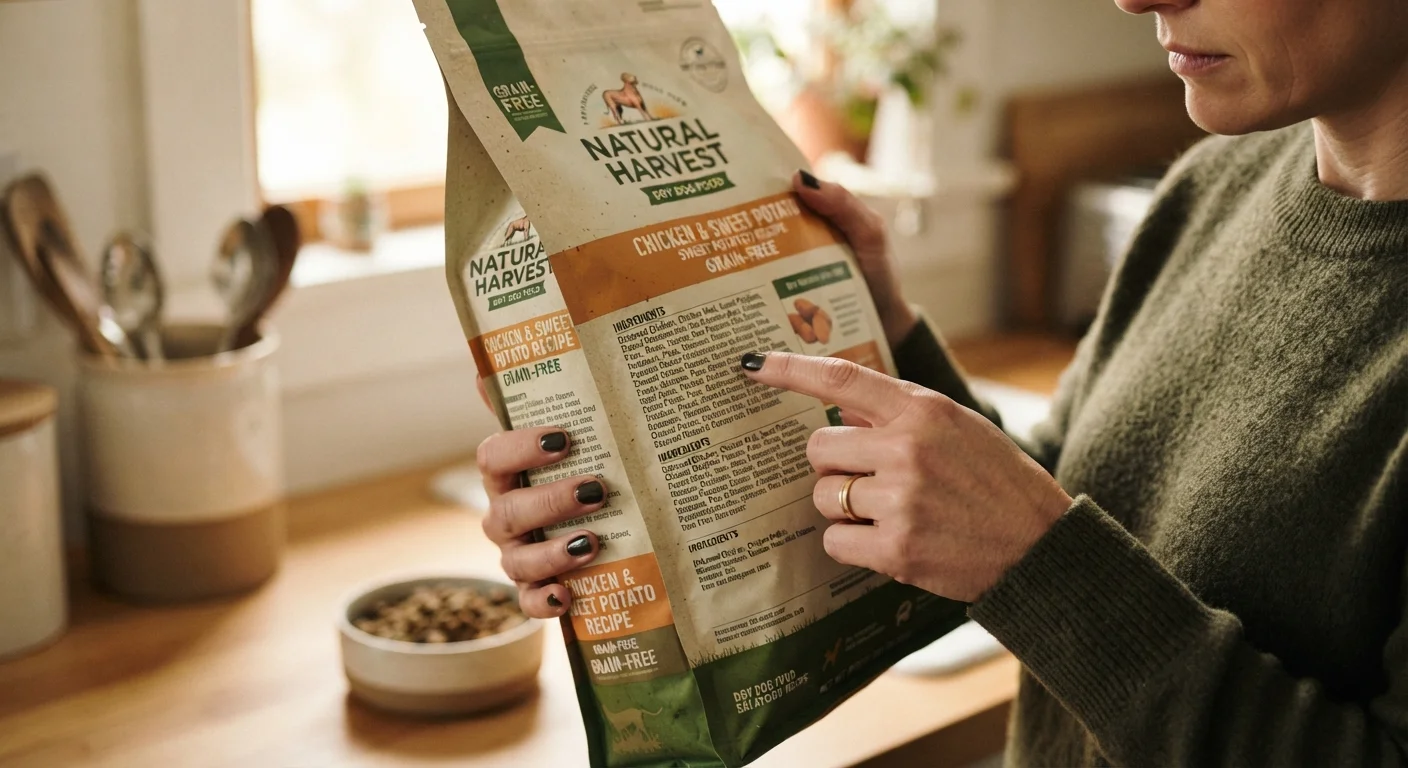
AAFCO nutritional adequacy statement: The Association of American Feed Control Officials (AAFCO) sets nutrient profiles for dog and cat foods in the United States. A food that carries the statement "formulated to meet AAFCO nutritional levels" or "feeding trials" has met a baseline nutritional standard regardless of its cost. This is the first thing to check on any bag or can.
Guaranteed analysis: This panel lists minimum crude protein and fat, and maximum fiber and moisture. Comparing these figures across price points often reveals that affordable formulas are nutritionally comparable to pricier ones.
Ingredient list: Ingredients are listed by pre-cooking weight, so a named meat appearing first is a good sign - but ingredient splitting (breaking one ingredient into multiple forms to push it lower on the list) is a tactic used across all price ranges. No single indicator tells the whole story.
For a structured way to apply these criteria before purchase, see our checklist for evaluating any pet food on a tight budget. You can also compare how store-brand and name-brand pet foods actually compare nutritionally.
Switching Foods Requires a Gradual Transition
Abruptly changing your pet's food - even to a nutritionally equivalent formula - can cause digestive upset including vomiting and diarrhea. Veterinary guidance generally recommends transitioning over 7-10 days by gradually mixing the new food with the old. If your pet shows persistent digestive symptoms, contact your veterinarian.
This article is for general informational purposes only and is not a substitute for veterinary advice. Always consult a licensed veterinarian before making significant changes to your pet's diet, especially if your pet has a health condition.