
Where the Saying Comes From - and Why It Sticks
"You get what you pay for" is one of those phrases that sounds like wisdom because it's occasionally true. When it holds up - a cheap tool that breaks on the first job, a budget mattress that sags within a year - the lesson stings enough to remember. But confirmation bias does the rest: we forget the expensive purchase that disappointed us and remember the cheap one that failed.
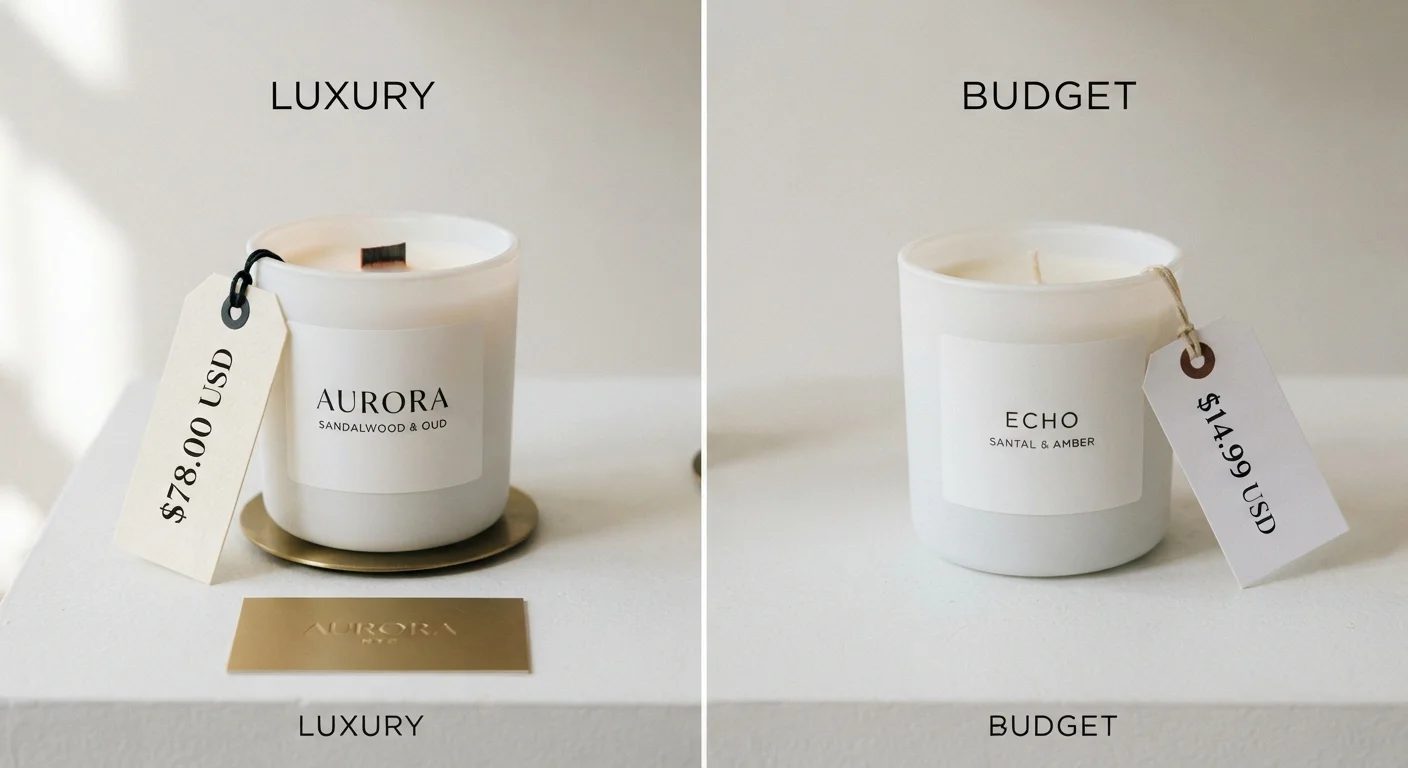
The saying also serves a convenient purpose for sellers. A higher price can signal quality even when the underlying product is identical to a cheaper alternative. Researchers have documented a well-established psychological effect where consumers rate the same product as more effective, more enjoyable, or higher quality when they're told it costs more. That's a powerful dynamic that marketing departments understand very well.
This article isn't arguing that price never matters - it sometimes does, and you can find a clear-eyed look at those cases in our piece on categories where going budget reliably backfires. The goal here is to identify where the price-quality link is genuinely weak, so you can stop overpaying for the label.
Myth
A higher price reliably signals a better product. If something costs more, it must be made to a higher standard.
Fact
Price and quality correlate weakly across many product categories. Multiple factors unrelated to performance drive pricing.
Consumer research - including studies published in peer-reviewed marketing journals - consistently finds that the price-quality correlation is positive but modest, and varies enormously by category. In commoditized categories like basic pantry staples, cleaning supplies, and generic medications, blind testing frequently shows no measurable performance difference between budget and premium options. The premium is often explained by brand investment, not product superiority.
Myth
Store-brand or generic products are lower quality because they're cheaper - manufacturers must be cutting corners somewhere.
Fact
Many store-brand products are manufactured in the same facilities as name-brand equivalents, sometimes on the same production line.
Retailers frequently contract with established manufacturers to produce private-label versions of their products. The formulation may be identical or nearly so. For over-the-counter medications specifically, the FDA requires generic drugs to demonstrate bioequivalence to their brand-name counterparts, meaning the active ingredient must behave the same way in the body. The cost difference reflects marketing spend and brand premium - not a quality gap.
Myth
Expensive cars are inherently more reliable than cheaper ones because better engineering costs more to produce.
Fact
Reliability data from large-scale owner surveys shows no consistent relationship between vehicle price and long-term dependability.
Long-running reliability surveys covering hundreds of thousands of vehicle owners regularly show that some of the most dependable models sit in mainstream price brackets, while certain luxury vehicles perform worse than average. High vehicle prices often reflect brand prestige, feature content, and performance tuning - none of which directly determine whether a car needs frequent repairs. Total cost of ownership, including insurance, maintenance, and parts costs, often favors non-luxury vehicles substantially.
Myth
Premium-priced food is nutritionally superior. If it costs more at the grocery store, it must be better for you.
Fact
Nutrition is determined by ingredients and formulation, not price. Many budget food options meet or exceed the nutritional profile of premium alternatives.
Packaging, organic certification, and marketing positioning all influence grocery pricing independently of nutritional value. A higher price may reflect production method, supply chain choices, or brand positioning rather than measurable nutritional difference. Comparing ingredient lists and nutrition facts panels - rather than price tags or label claims - gives a far more accurate picture. This same logic applies to pet nutrition, as explored in our article on whether cheap pet food is actually inferior.
Myth
When it comes to travel, a cheap fare or low-cost option always saves money overall.
Fact
Low advertised prices can conceal total costs that exceed the apparent savings - and the reverse is also true for premium options.
A budget airline fare might carry fees for seat selection, baggage, and itinerary changes that eliminate the apparent savings. Similarly, a premium option with inclusions bundled in might offer genuine value when the full cost is tallied. The actual price paid after all fees, not the headline number, determines which option is economical. Our article on why cheap flights aren't always cheapest breaks down how to do that full comparison accurately.
What's Actually Driving That Higher Price Tag
When a product costs more, that premium has to come from somewhere. Sometimes it reflects better materials or engineering. Often, it doesn't. Common price inflators that don't affect product performance include:
- Brand equity and advertising spend: Companies that invest heavily in national campaigns pass those costs to buyers. You're partly funding the ad you watched, not just the product.
- Packaging and retail placement: Premium shelf position and upscale packaging add cost without adding function. Studies in consumer behavior consistently show that attractive packaging raises willingness to pay independent of product quality.
- Channel markups: The same item sold through a specialty retailer versus a discount outlet can carry dramatically different prices despite being manufactured in the same facility.
- Prestige pricing strategy: Some brands deliberately price high to signal luxury - not because costs justify it, but because exclusivity itself is the product.
Understanding what's actually priced into a product helps you decide whether that premium is worth it to you personally. For a deeper look at how these signals mislead shoppers, see our guide on quality markers that actually matter.
~30%
Average store-brand grocery price discount vs. name-brand
Consumer research organizations have consistently found store-brand grocery items priced roughly 20-30% below name-brand equivalents, often with comparable ingredient profiles.
Low
Price-quality correlation strength across consumer goods
A meta-analysis of consumer goods studies published in the Journal of Marketing Research found the overall price-quality correlation to be statistically positive but practically weak - meaning price explains only a small portion of actual quality variation.
How to Evaluate Quality Without Relying on Price
Price is a shortcut - and like most shortcuts, it trades accuracy for speed. More reliable approaches take a few extra minutes but produce better decisions:
- Compare ingredient or material lists: For food, supplements, and household products, the formulation often matters more than the label. Generic over-the-counter medications in the US must meet the same FDA bioequivalence standards as name-brand versions - so the active ingredient is legally required to perform the same way.
- Calculate cost per use: A $60 item used 200 times costs less per use than a $20 item used 30 times. Frequency of use reshapes what "value" means entirely - a point explored fully in our article on what value for money actually means.
- Check independent testing: Organizations that conduct standardized product testing evaluate performance, not packaging. Their findings frequently show mid-range products outperforming premium alternatives in measurable ways.
- Look at warranty and repairability: True cost of ownership includes maintenance, repairs, and eventual replacement. A higher upfront price accompanied by a strong warranty and available parts can legitimately beat a cheaper item that can't be repaired.
Price Anchoring Can Distort Your Judgment
When you see an item marked down from a high "original" price, that anchor shapes your perception of value even if the original price was inflated or never widely charged. Retailers and online platforms use reference pricing strategically. Before assuming a deal is real, check whether the "original" price reflects what the item actually sold for over time - not just a promotional anchor. Our guide on identifying genuine discounts explains how to verify whether a markdown is real.
The generic vs. name-brand breakdown is a practical starting point for applying this kind of thinking across common product categories. And when you're ready to build a full framework for evaluating any purchase, our complete guide to smarter spending decisions covers the full toolkit.