
The Real Question: What Determines Pet Food Quality?
When comparing store-brand and name-brand pet food, the first instinct is to use price as a proxy for quality. That instinct is understandable but unreliable. What actually determines whether a pet food is nutritionally sound is far more specific - and far more readable - than a price tag.
In the United States, the Association of American Feed Control Officials (AAFCO) establishes the nutritional profiles that define a "complete and balanced" diet for dogs and cats. Any pet food - store-brand or name-brand - that carries the AAFCO nutritional adequacy statement has met these minimum standards, either through formulation or through feeding trials. That statement is printed on every qualifying bag or can, and it's the single most important thing to look for when evaluating any food.
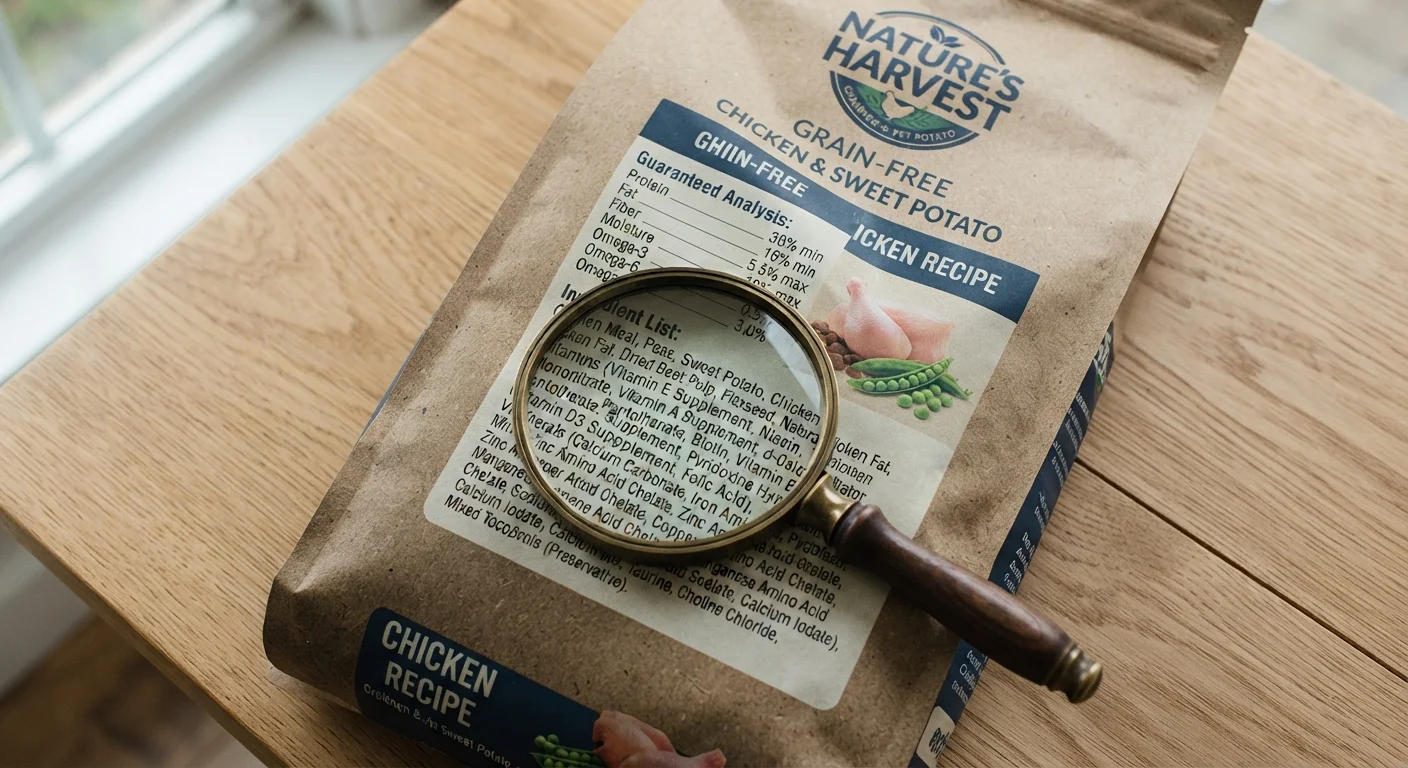
Reading ingredient labels is the other essential skill. The ingredient list is ordered by weight before processing, so the first few ingredients carry the most weight - literally and nutritionally. A named protein source (such as chicken, salmon, or beef) appearing first is generally a positive sign, regardless of whether the brand is a household name or a store label.
AAFCO Statements: What They Do and Don't Guarantee
An AAFCO nutritional adequacy statement confirms that a food meets minimum nutrient profiles - it is not a guarantee of ingredient quality, palatability, or digestibility. Two foods can both carry the statement and still differ meaningfully in ingredient sourcing or manufacturing rigor. Use it as a baseline filter, not a final verdict.
Head-to-Head: Where the Differences Are Real and Where They Aren't
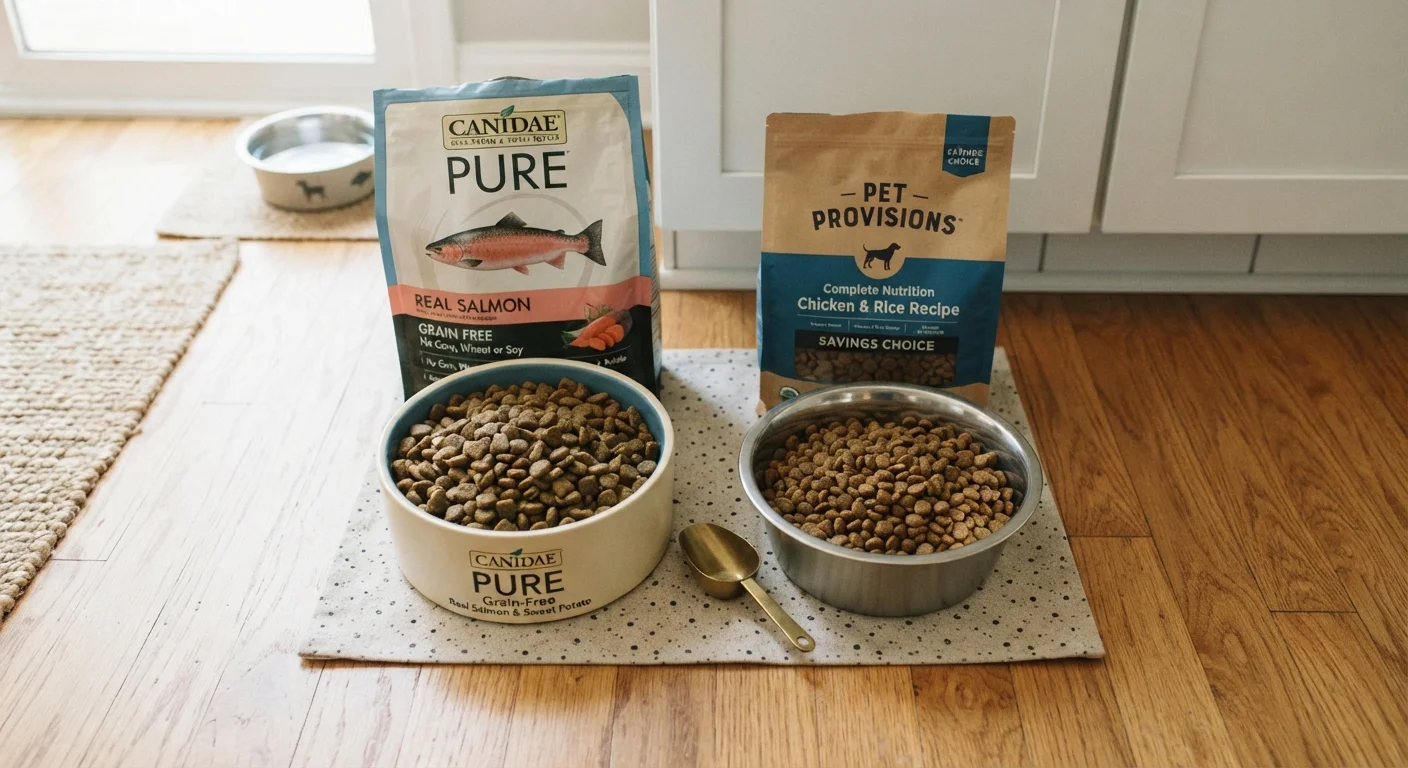
The gap between store-brand and name-brand pet food is real in some areas and overstated in others. Understanding which is which helps you spend strategically.
| Criterion | Name-Brand Pet Food | Store-Brand Pet Food |
|---|---|---|
| AAFCO compliance | Common; check label | Common; check label |
| Average cost per pound | Generally higher | Generally lower |
| Ingredient specificity | Often more detailed | Varies widely by brand |
| Independent feeding trials | More common | Less common |
| Sourcing transparency | More often published | Rarely published |
| Veterinary formula availability | Widely available | Rare |
| Marketing spend reflected in price | High | Low |
One area where name brands do tend to invest more is research and development, including feeding trials that go beyond AAFCO minimum requirements. Some name brands - particularly those sold through veterinarians - fund independent nutritional research. Store brands rarely do this. That said, most healthy adult pets do not need foods developed through proprietary feeding trials; they need foods that meet established nutritional baselines consistently.
Manufacturing is another nuance worth knowing. Some private-label store brands are produced in the same facilities as name-brand products. The formulas may differ, but the manufacturing standards can be comparable. This isn't universal, however, and it isn't always disclosed. If manufacturing transparency matters to you, price alone won't tell you the full story.
How to Evaluate Any Pet Food Label Side by Side
Whether you're holding a store-brand bag or a name-brand one, the evaluation process is the same. Start with these three checkpoints:
- AAFCO statement: Confirms the food is nutritionally complete for your pet's life stage (puppy/kitten, adult, senior, or all life stages).
- Guaranteed analysis panel: Lists minimum crude protein and fat percentages, and maximum crude fiber and moisture. Understanding these numbers lets you compare foods on a like-for-like basis rather than relying on marketing language.
- Ingredient list: Look for a named protein source in the first one or two positions. Avoid foods where grain fractions or vague terms like "meat by-products" dominate the top of the list - though note that by-products are not inherently harmful, just less specific.
When you run both a store-brand and a name-brand option through these three checkpoints, the differences are often smaller than the price gap suggests. That said, some store brands cut corners on palatability or ingredient specificity, so it's worth monitoring your pet's stool quality, coat condition, and energy level for several weeks after any food change.
Pets with specific health concerns - kidney disease, food allergies, weight management needs - warrant a conversation with a veterinarian or board-certified veterinary nutritionist before any food switch, regardless of brand. General food guidance is not a substitute for professional advice tailored to your individual pet's condition. See also: budget-friendly ways to keep your pet healthy without frequent vet visits.
This article is for general informational purposes only and does not constitute veterinary or nutritional advice. Always consult a licensed veterinarian for guidance specific to your pet's health needs.