
What Your Cat's Fur Is Actually Telling You
Most pet owners notice when a cat's coat looks off — but far fewer take the next step of asking why. A cat's fur condition is one of the most accessible health signals available to you, and it costs nothing to observe. Understanding what normal looks and feels like for your specific cat is the starting point for everything else.
A healthy coat should feel smooth and slightly springy, lie relatively flat, and have a natural sheen — even in cats with coarser or denser fur. The skin underneath should be clean, free of flakes, and neither oily nor excessively dry. Any meaningful departure from your cat's baseline deserves attention.
Think of regular grooming sessions not just as hygiene maintenance, but as structured health checks. The at-home pet health check routine pairs naturally with coat inspection, letting you assess gum color, eye clarity, and body weight in the same sitting.
~70%
Cat health issues detectable through skin and coat
Veterinary dermatologists estimate that a significant majority of systemic feline conditions produce visible changes in skin or coat condition as an early sign.
2–3×
Frequency long-haired cats need brushing vs. short-haired
Long-haired breeds such as Persians or Maine Coons typically require daily brushing to prevent matting, compared to a few times per week for short-haired cats.
$200–$500+
Estimated vet cost for treating mat-related skin infections
Treating secondary skin infections caused by neglected matting can involve sedation, shaving, antibiotics, and follow-up visits, according to general veterinary cost estimates.
Three Coat Changes That Deserve Your Attention
1. Dullness or Greasiness
A coat that has lost its luster or feels unusually oily is one of the first signs of nutritional imbalance. Omega-3 and omega-6 fatty acids play a critical role in skin and coat health — diets lacking in quality protein or healthy fats can strip the coat of its natural sheen quickly. Dullness can also accompany dehydration, kidney disease, or thyroid dysfunction, so it shouldn't be dismissed as cosmetic.
2. Excessive or Uneven Shedding
All cats shed, but a sudden increase — especially when localized to patches — warrants investigation. Hormonal fluctuations, ringworm, flea allergy dermatitis, and psychological stress are among the documented causes. Over-grooming driven by anxiety often produces symmetrical thinning along the belly or flanks. Learning to read your pet's behavioral signals can help you determine whether stress or a physical issue is the more likely driver.
3. Matting
Mats are more than untidy clumps of fur. When pressed against the skin, they restrict airflow, trap moisture, and create an environment where bacteria thrive. Cats who stop grooming themselves — often due to obesity, arthritis, or illness — are particularly prone. Neglecting mats can lead directly to skin infections requiring veterinary treatment. Understanding what skipping routine grooming actually costs puts the stakes in practical terms.
Make Grooming a Two-Minute Health Scan
Every brushing session is an opportunity to run a quick health check. Look at the eyes, ears, and gum color while you're already engaged with your cat. Catching small changes early — before they escalate — is the most effective way to keep routine vet costs predictable.
Building a Low-Cost Coat Monitoring Habit
You don't need expensive tools or a professional appointment to stay on top of your cat's coat health. A quality brush suited to your cat's coat length, a fine-toothed comb for detecting fleas or debris, and your own hands are sufficient for a thorough weekly check.
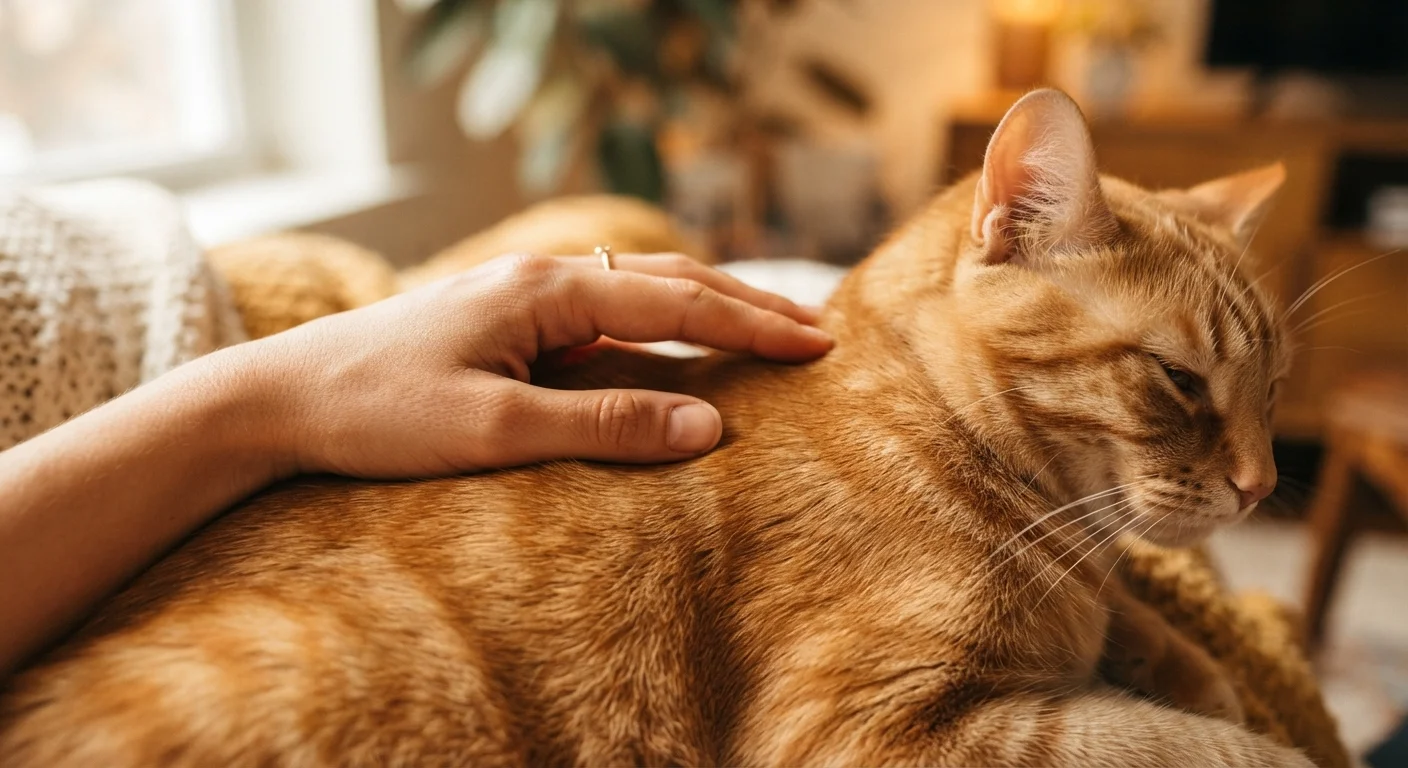
Run your fingers slowly along the back, sides, and belly. Feel for bumps, tender spots, or any areas where the fur feels clumped. Part the fur near the base of the tail and behind the ears — prime spots for flea dirt, which looks like tiny black specks. During grooming, note how much your cat tolerates being touched in different areas; flinching or vocalizing can indicate localized pain.
If you're unsure whether at-home brushing is enough for your cat's coat type, our guide comparing brushing versus professional deshedding can help you decide what makes sense for your situation and budget.
This article is for general informational purposes only and does not constitute veterinary advice. Always consult a licensed veterinarian if you have concerns about your cat's health.