
Why Shedding Management Actually Matters
Shedding is a normal physiological process for most dogs and cats. Loose fur that isn't regularly removed can work its way into the coat's undercoat layer, forming mats that trap moisture, irritate skin, and - left unchecked - lead to costly veterinary visits. As explored in our article on the real cost of skipping routine pet grooming, grooming neglect isn't merely a cosmetic issue.
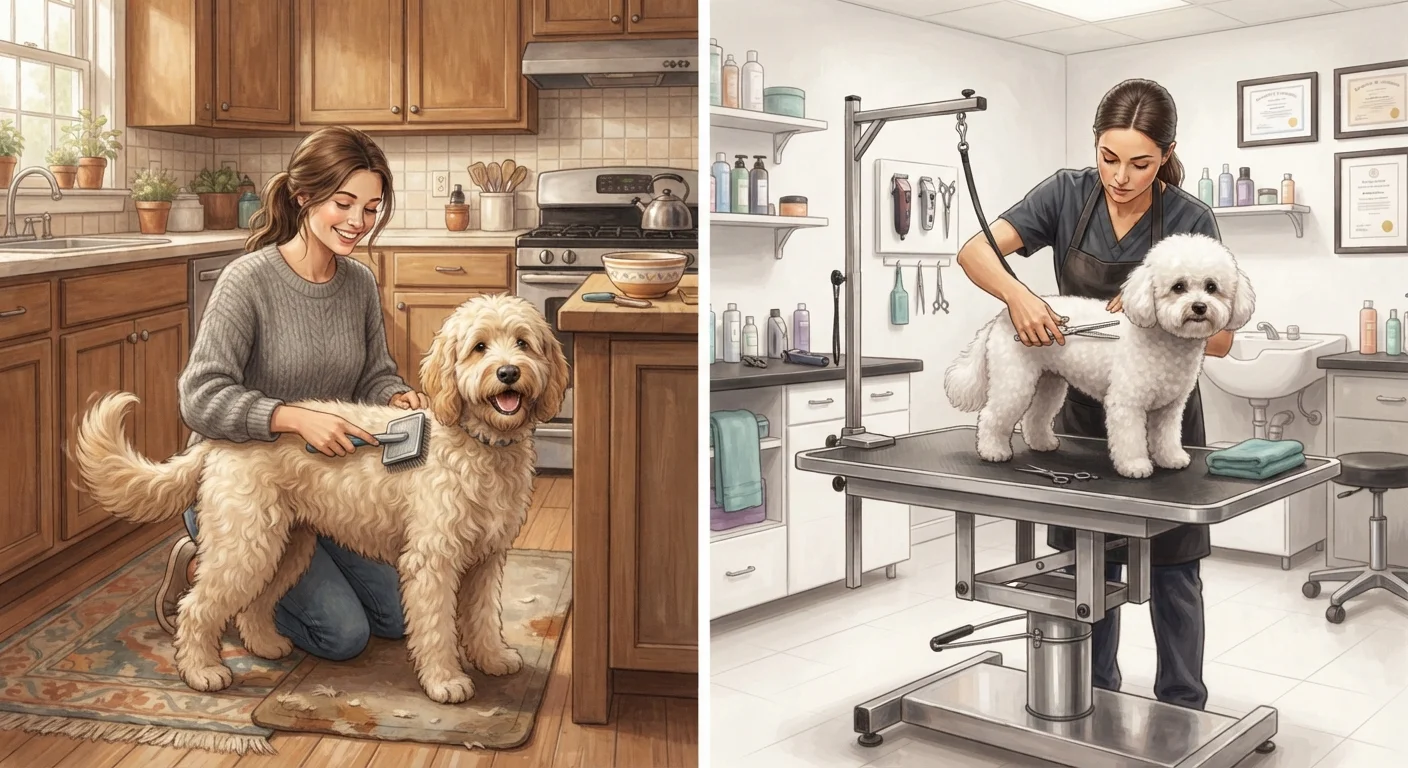
For budget-conscious pet owners, the central question is straightforward: can consistent at-home brushing replace professional deshedding services, or are those salon visits genuinely necessary? The honest answer depends on your pet's coat type, your schedule, and how you define "working."
At-Home Brushing: How It Works and What It Can Achieve
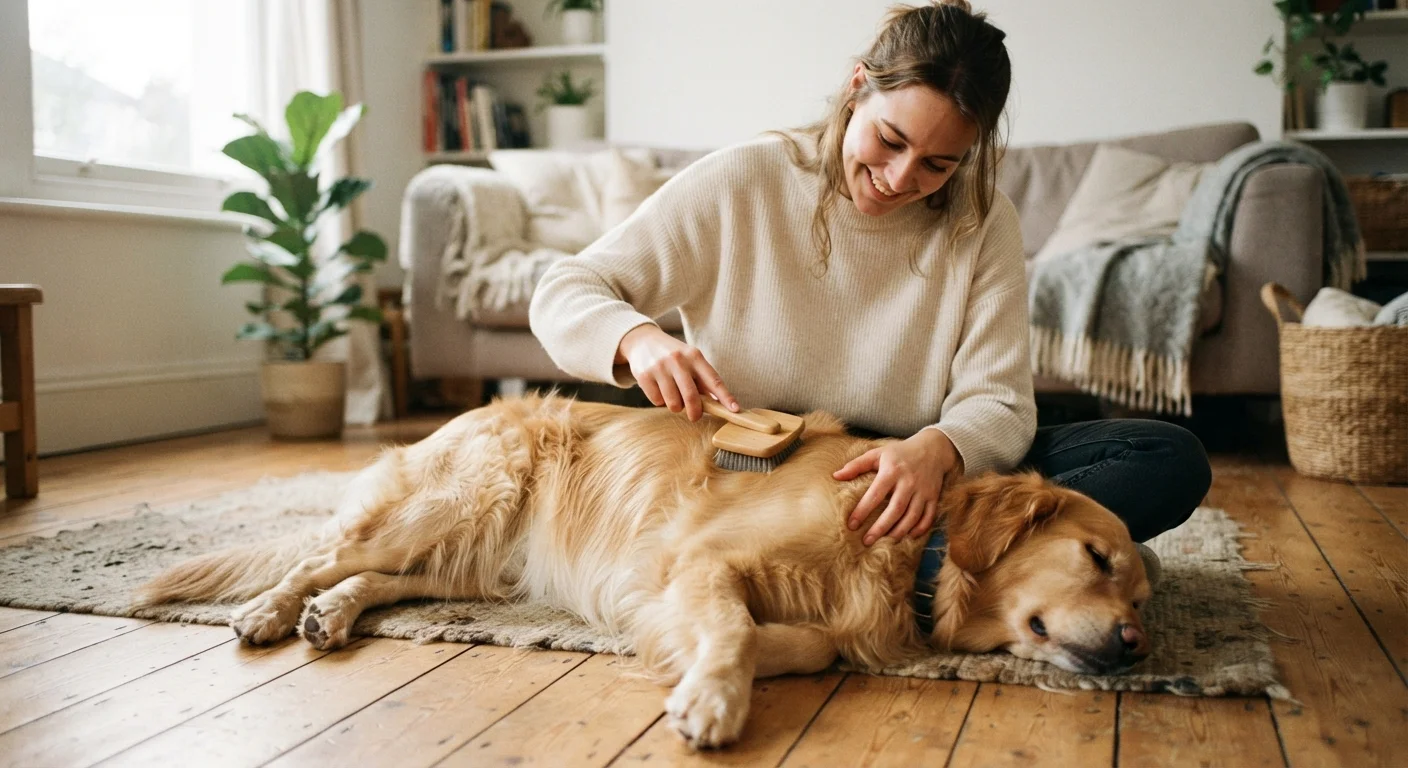
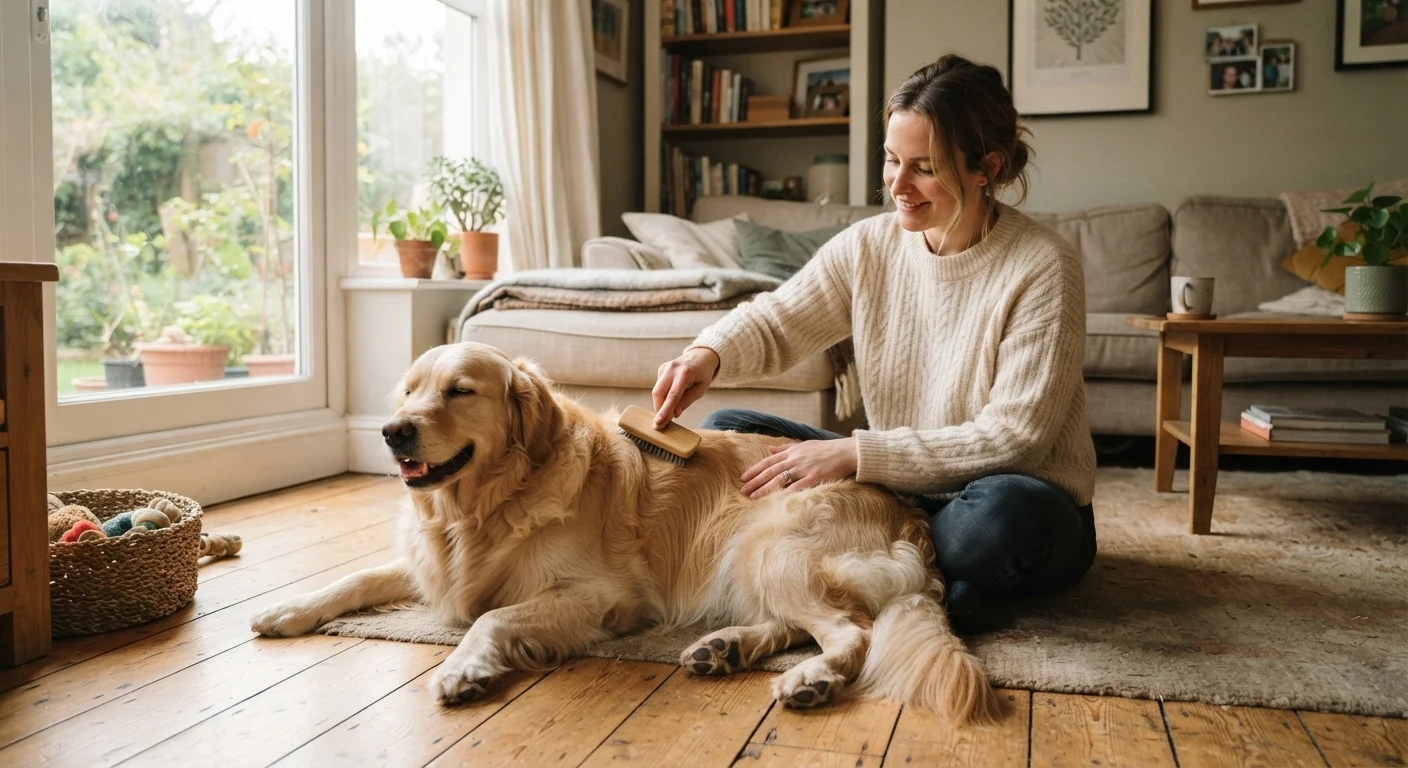
At-home brushing uses tools - slicker brushes, deshedding rakes, undercoat combs - to physically remove loose hair from the coat before it sheds onto furniture and floors. When performed correctly and consistently, brushing also distributes natural skin oils, stimulates circulation, and gives owners a regular opportunity to spot lumps, skin changes, or parasites early.
The effectiveness of brushing scales directly with frequency. A dog brushed three to five times per week will shed significantly less visibly than the same dog brushed once a month. Coat type matters too: short single-coated dogs like Beagles or Boxers need lighter, less frequent sessions, while double-coated breeds like Huskies, Corgis, or Golden Retrievers require more deliberate undercoat work.
The main limitation of home brushing is reach and tool power. Even a high-quality undercoat rake cannot match the volume of loose fur removed by a professional-grade high-velocity dryer, which blasts loose coat out of the fur far more efficiently than any hand tool.
| Criterion | At-Home Brushing | Professional Deshedding |
|---|---|---|
| Upfront cost | Low (tool purchase only) | Moderate to high per session |
| Ongoing cost | Near zero | Recurring every 4-8 weeks |
| Volume of fur removed | Moderate, tool-dependent | High, especially with HV dryer |
| Best for coat type | All coats, especially short/single | Dense double coats |
| Frequency needed | Several times per week | Every 4-8 weeks |
| Skin health monitoring | Yes - owner can spot issues | Yes - groomer trained to notice |
| Bonding benefit | High | Low |
| Seasonal shedding control | Good with consistency | Excellent during coat blow |
For a broader look at what home grooming can and can't replace, our DIY vs. professional grooming comparison covers the full trade-off picture.
Professional Deshedding Treatments: What Salons Actually Do
A professional deshedding treatment typically involves a multi-step process: a deshedding shampoo and conditioner formulated to loosen the undercoat, a blow-dry using a high-velocity dryer that physically expels loose fur, followed by thorough brushing with professional-grade tools. Some groomers also use finishing sprays designed to reduce static and make future shedding easier to manage.
The results are often dramatic, particularly for heavy double-coated breeds during seasonal "coat blows" - the twice-yearly periods when these dogs shed their entire undercoat. Owners frequently report that a single professional deshedding session removes more fur than weeks of home brushing.
The trade-off is cost and frequency. Professional deshedding services generally run higher than standard bath-and-brush appointments, and for maximum effect they need to be repeated every four to eight weeks depending on the breed. For pet owners watching their budgets, that recurring cost adds up quickly. Our guide on managing pet health on a tight budget walks through where professional care is worth the spend and where DIY holds its own.
A Note on "Deshedding" Shampoos at Home
Deshedding shampoos and conditioners are available for home use and can help loosen undercoat before brushing sessions. However, their effectiveness is closely tied to thorough rinsing and proper drying - ideally with a high-velocity dryer. Using these products with standard towel-drying and a basic brush produces more modest results than the professional process. They can still be a useful supplement to regular brushing, particularly during peak shedding periods.
How to Decide: Coat Type, Budget, and Realistic Expectations
Use these practical criteria to guide your approach:
- Short or single-coated pets: At-home brushing is almost always sufficient. A rubber curry brush or bristle brush used several times per week handles shedding effectively at near-zero ongoing cost.
- Long, thick, or double-coated breeds: Home brushing remains the daily foundation, but scheduling one to three professional deshedding sessions during peak shedding seasons is a worthwhile investment for owners of breeds like Malamutes, Samoyeds, or German Shepherds.
- Cats: Most cats manage their own grooming but benefit from regular brushing - particularly long-haired breeds prone to matting. Professional deshedding for cats exists but is considerably less common and typically necessary only for severe matting cases.
One important note from our article on DIY grooming myths: shaving a double-coated dog does not reduce shedding and can permanently disrupt the coat's insulating structure. It is not a substitute for either brushing or professional deshedding.
If you're building a fuller at-home grooming routine, our at-home dog grooming guide covers bathing, brushing technique, and trimming safely - without the salon price.
This article is for general informational purposes only and does not constitute veterinary or grooming advice for your specific pet. Consult a qualified veterinarian or professional groomer if your pet has skin conditions, coat abnormalities, or health concerns.