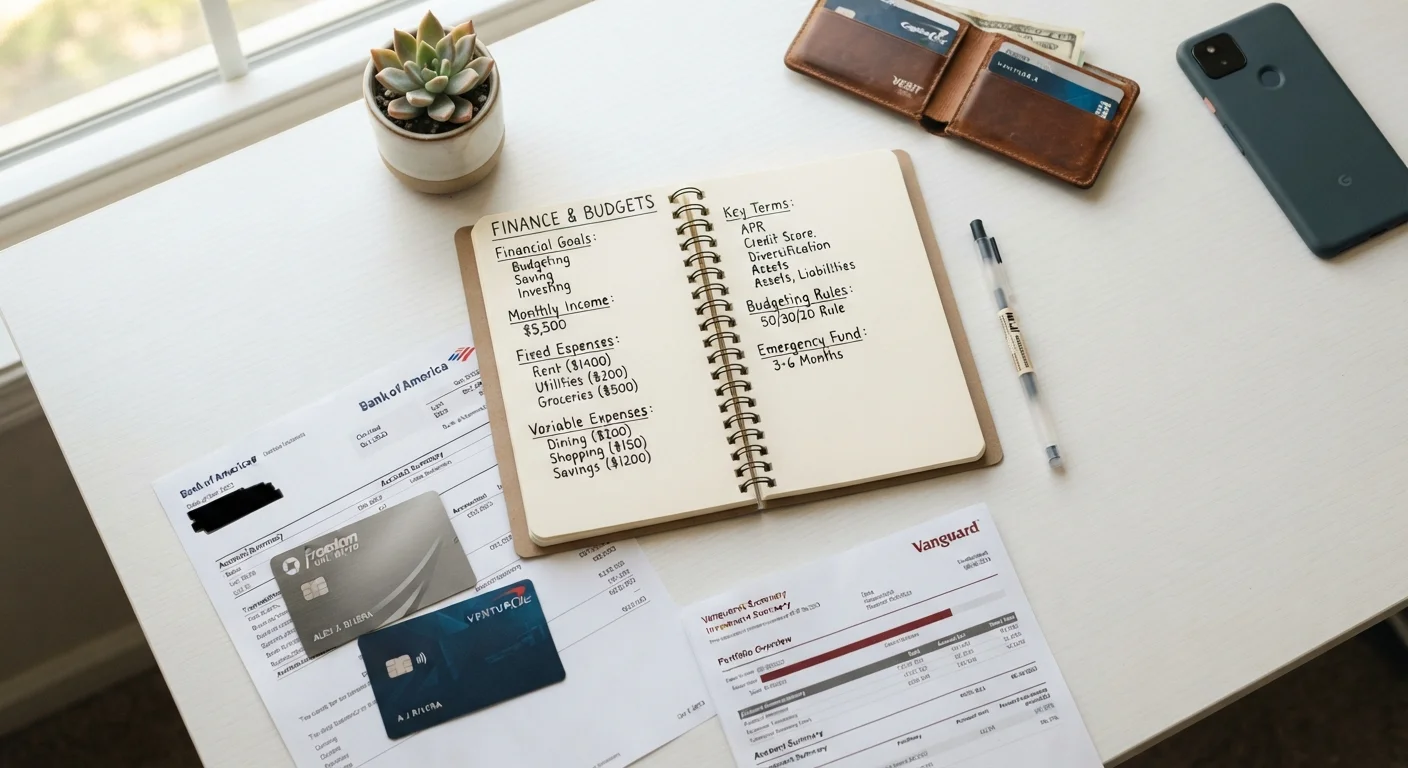


Why Budgeting Vocabulary Matters
Budgeting guides are everywhere, but they often assume you already know what terms like "discretionary spend" or "zero-based budget" mean. If those phrases have ever caused you to quietly close a tab, you're not alone. Financial jargon creates a real barrier — it makes money management feel like it belongs to someone else.
This reference cuts through that. Each term below is defined in plain English, with just enough context to make it immediately useful. Whether you're building your first budget or troubleshooting one that isn't working, understanding the vocabulary gives you a clearer map. For a broader glossary of personal finance terms beyond budgeting, see our plain-language personal finance glossary.
Discretionary Spending
Money spent on non-essential items and experiences — dining out, subscriptions, entertainment, travel. These are wants, not needs, and are typically the first area people adjust when tightening a budget.
Net Income
Your take-home pay after taxes, insurance premiums, and any other payroll deductions. This is the number you should base your budget on — not your gross (pre-tax) salary.
Emergency Fund
A dedicated savings reserve for unexpected expenses or income loss — job loss, medical bills, urgent car repairs. A common guideline is three to six months of essential living expenses, though any amount is better than none.
Zero-Based Budgeting
A budgeting method where every dollar of income is intentionally allocated to a category — spending, saving, or debt — so the total adds up to zero. The goal is full awareness of where every dollar goes.
Sinking Fund
A savings account set aside for a specific, anticipated future expense, such as a vacation, car maintenance, or annual fees. Contributions are made gradually so the cost doesn't hit all at once.
Fixed Expense
A recurring cost that stays the same amount each billing cycle, such as rent, a car loan payment, or a fixed-rate insurance premium. These are harder to reduce without a major lifestyle or contract change.
Variable Expense
A recurring cost that fluctuates month to month, such as groceries, gas, or utility bills. Variable expenses offer more day-to-day control and are often the primary target for cost-cutting efforts.
Pay Yourself First
A savings approach where you automatically transfer money to savings before spending on anything else. It treats savings like a non-negotiable bill, making it easier to build consistently over time.
50/30/20 Rule
A guideline that suggests dividing after-tax income into three buckets: 50% for needs, 30% for wants, and 20% for savings or debt repayment. It's a flexible framework, not a rigid requirement.
Budget Deficit
When your monthly expenses exceed your income. A personal budget deficit means you're spending more than you earn, which typically results in drawing down savings or adding debt.
Envelope Method
A cash-based budgeting system where you divide physical cash into labeled envelopes for each spending category. When an envelope is empty, spending in that category stops for the month. Digital versions exist for those who prefer not to use cash.
Irregular Income
Earnings that vary month to month, common among freelancers, gig workers, and those paid on commission. Budgeting with irregular income usually involves planning around a baseline (your lowest typical monthly earnings) rather than an average.
Core Budgeting Concepts You'll Use Every Month
These are the terms that come up in almost every budgeting conversation. Getting comfortable with them makes the rest of personal finance significantly easier to navigate.
| Most cited budgeting framework | 50/30/20 Rule |
| Recommended emergency fund size | 3–6 months of essential expenses (General personal finance guidance) |
| Zero-based budget goal | Every dollar assigned a purpose |
| Key difference: fixed vs. variable | Fixed stays constant; variable fluctuates |
| Sinking fund purpose | Known, irregular future expenses |
Fixed vs. Variable Expenses
Fixed expenses stay the same each month — rent, loan payments, insurance premiums. Variable expenses shift based on behavior or circumstance — groceries, gas, utilities, dining out. The distinction matters because you can only actively reduce variable expenses in the short term. Fixed costs require renegotiation or a structural change (like moving or refinancing).
The 50/30/20 Rule
A widely cited budgeting guideline that allocates 50% of after-tax income to needs, 30% to wants, and 20% to savings or debt repayment. It's a starting point, not a law — your actual numbers will depend on your income, cost of living, and goals. For a deeper look at what budgeting frameworks actually hold up, check out the budgeting myths worth questioning.
Zero-Based Budget
A method where every dollar of income is assigned a purpose — spending, saving, or debt payoff — so that income minus allocations equals zero. This doesn't mean spending everything; it means accounting for everything, including savings contributions.
Sinking Fund
A dedicated savings pool you build gradually to cover a known future expense — a car repair, holiday gifts, or an annual insurance premium. Instead of scrambling when the bill arrives, you've already set aside small amounts over time. Sinking funds are separate from your emergency fund and earmarked for predictable, irregular costs.
Pay Yourself First
A savings strategy where you move money into savings or investments before paying any other expenses. The idea is that what you don't see readily, you're less likely to spend. Automating this transfer makes it more consistent and removes the decision from your monthly routine.
Once you're comfortable with these fundamentals, the Budget Basics hub offers strategies to put them into practice. And if you're managing debt alongside a budget, key debt and credit terms is a useful companion reference.
This article is for general informational purposes only and does not constitute personalized financial advice. Consider consulting a qualified financial professional for guidance specific to your situation.