
Why Shopping Myths Survive - and Cost You
Retail is engineered to feel intuitive. Sale signs, loyalty dashboards, and bulk-discount math all seem straightforward - which is precisely why they work so well as persuasion tools. Most shoppers don't distrust the framing; they just act on it. The result is a checkout total that routinely exceeds what a little scrutiny would have produced.
The myths below aren't obscure edge cases. They're the beliefs baked into everyday shopping decisions. Correcting them doesn't require extreme couponing or hours of price research - just a clearer mental model of how retail pricing actually works. For a broader look at how spending habits shape your budget, the connected hub is worth bookmarking.
Myth
If it's on sale, now is the best time to buy it.
Fact
Sale prices are often set against inflated "original" prices, and many items cycle through the same discount repeatedly.
Retailers frequently establish a high reference price - sometimes called an "anchor price" - that the sale figure is compared against. Consumer research and regulatory enforcement actions in several U.S. states have documented cases where "original" prices were rarely, if ever, charged at retail. Tools like browser extensions that track price history can show whether today's sale is genuinely unusual or just another rotation of the standard promotional cycle. For categories like electronics and apparel, the same item may hit the same percentage off multiple times per season. If it's not something you need immediately, waiting to see whether the price reappears - or drops further - is often worthwhile. Outlet and clearance pricing follows a similar logic worth understanding.
Myth
Loyalty points are essentially free money - you're getting paid to shop.
Fact
Points programs are designed to increase purchase frequency and spending, and their value per dollar earned is typically a fraction of a cent.
Most retail loyalty currencies redeem at one cent per point or less, and earning enough for a meaningful reward requires sustained spending. Meanwhile, the program itself conditions shoppers to choose one retailer even when a competitor offers a lower price. Annual fees on co-branded credit cards can also offset point accumulation if the card isn't actively optimized. Add expiration policies - many points lapse after 12-18 months of inactivity - and the "free money" framing dissolves quickly. Points can provide genuine value in specific, well-managed situations, but they should never be the primary reason to make a purchase or to choose a pricier option. For a detailed look at how loyalty currencies work in the travel context, see travel rewards points demystified.
Myth
Buying in bulk always saves money.
Fact
Bulk savings only materialize if you use the entire quantity before it spoils, expires, or loses relevance - which many households don't.
The unit-price math at warehouse clubs often does favor the bulk buyer in isolation. The problem is the denominator: households regularly discard a portion of perishable bulk purchases, pay storage costs, or hold onto items they no longer need. A lower unit price on 48 rolls of paper towels saves money; a lower unit price on a gallon of specialty sauce that goes unused does not. Before bulk-buying, a quick calculation - how long will this realistically last, and what's the waste risk - tends to reveal whether the savings are real or theoretical. Non-perishables with indefinite shelf life are the clearest case where bulk generally wins.
Myth
Free shipping means you're not paying extra.
Fact
Free shipping thresholds are deliberately set to increase average order value, often prompting shoppers to add items they wouldn't have purchased otherwise.
A common free-shipping threshold - say, $35 or $50 - is calibrated so that a meaningful proportion of shoppers are just below it. Adding a $10 item to "unlock" free shipping and avoid a $5.99 delivery fee costs the shopper more overall, not less. The shipping cost is effectively bundled into product prices on platforms that offer blanket free shipping, which is one reason price comparisons across channels - including those that charge shipping - sometimes favor the latter. The practical test: would you buy the add-on item anyway, independent of the threshold? If the answer is no, the "free" shipping isn't free.
Myth
Price-match guarantees make comparison shopping unnecessary.
Fact
Most price-match policies include restrictions that significantly limit how often they apply in practice.
Common exclusions include marketplace sellers (as opposed to the retailer itself), limited-time flash sales, bundle prices, items that are out of stock elsewhere, and products that differ by even a minor specification. Some policies require the competing price to be active at the moment of purchase, making it difficult to reference historical lows. These restrictions aren't hidden - they're in the fine print - but they're rarely front-of-mind when a shopper assumes they're protected. Price-match guarantees work best as a backstop in straightforward situations (identical item, same condition, in-stock at a direct competitor), not as a substitute for checking prices in advance. For a broader perspective on value versus price decisions, see the connected hub.
Putting It Together: A Smarter Checkout Habit
Individually, each myth above costs a modest amount. Collectively, across a year of grocery runs, clothing sales, and online orders, they can add up to hundreds of dollars in unnecessary spending. The corrective habit isn't paranoia - it's a two-second pause before checkout to ask: Am I buying this because it's genuinely useful at a fair price, or because the framing made it feel urgent?
Urgency Cues Are Designed to Bypass Reflection
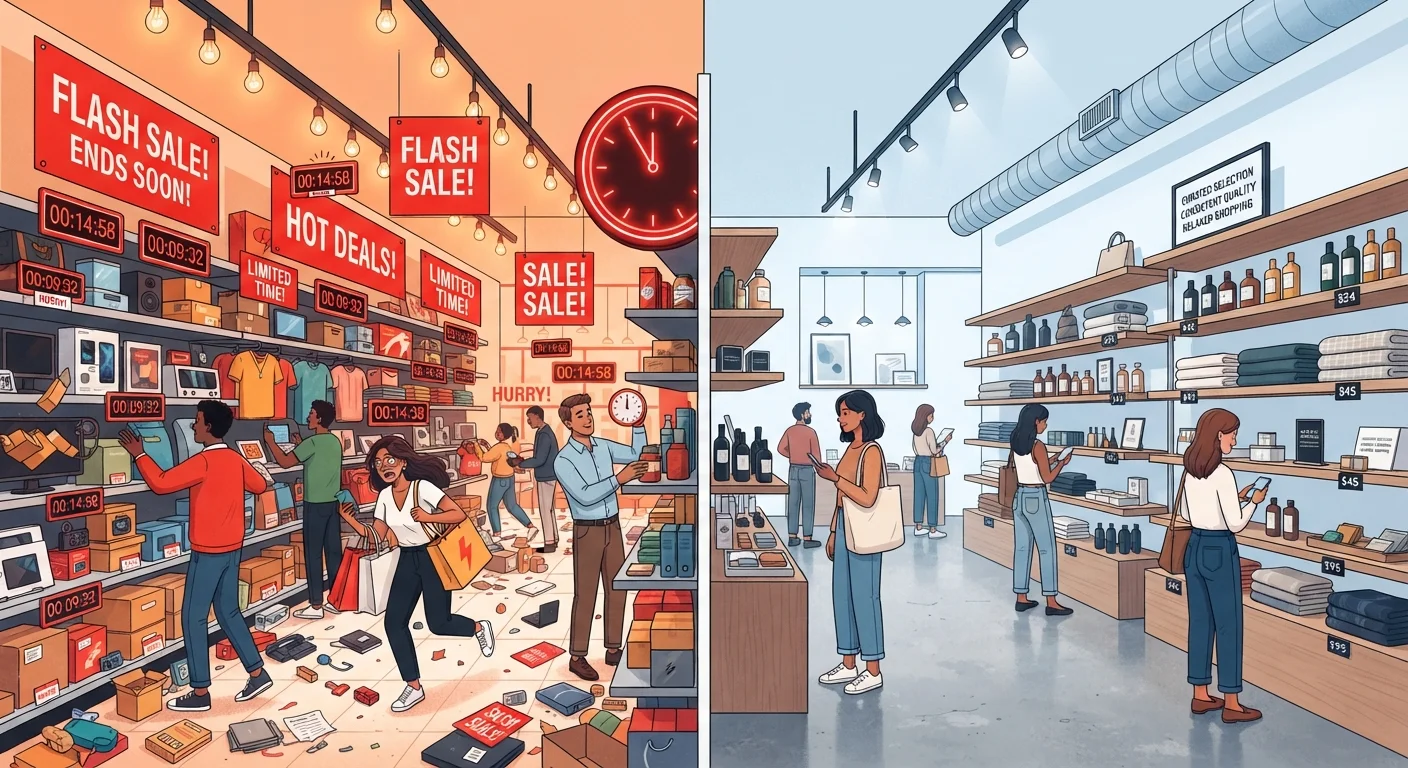
Countdown timers, "only 3 left in stock" notices, and flash-sale banners activate loss-aversion instincts, pushing shoppers toward faster decisions. These cues are not always inaccurate, but they're consistently deployed to compress decision time. If a deal creates pressure to act before you've checked the price history or considered whether you actually need the item, that pressure itself is a signal worth noticing.
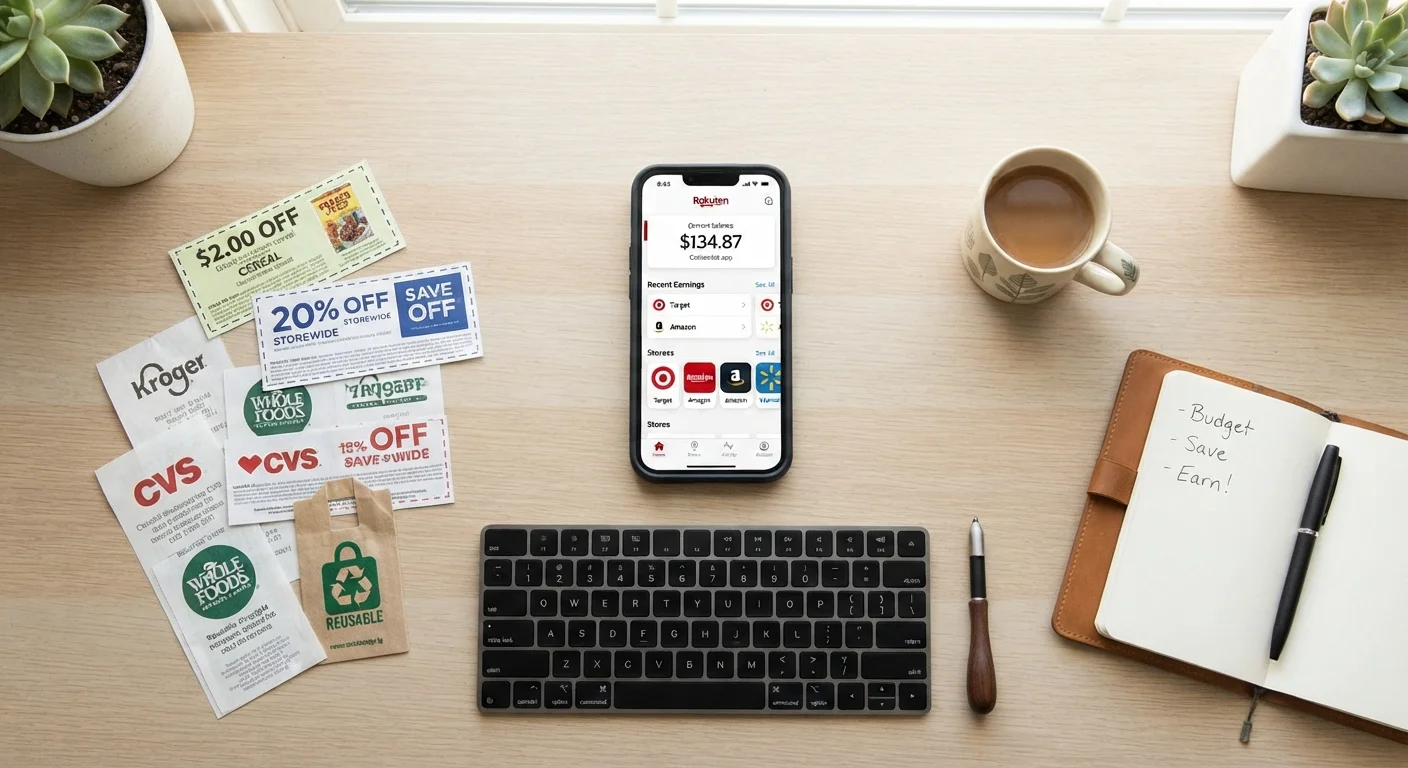
Pricing tactics and loyalty structures vary widely by retailer and category. Flash-sale retailers operate very differently from everyday-low-price stores - understanding which model a store uses changes how you should shop there. Our article on flash sales vs. everyday low pricing breaks that comparison down. And if you use coupons or cashback apps, knowing how those layers interact with the underlying price matters too - see how coupon stacking and cashback layer together.
The goal isn't to shop less - it's to shop with the same information the retailer already has.