
How the Anchor Gets Set
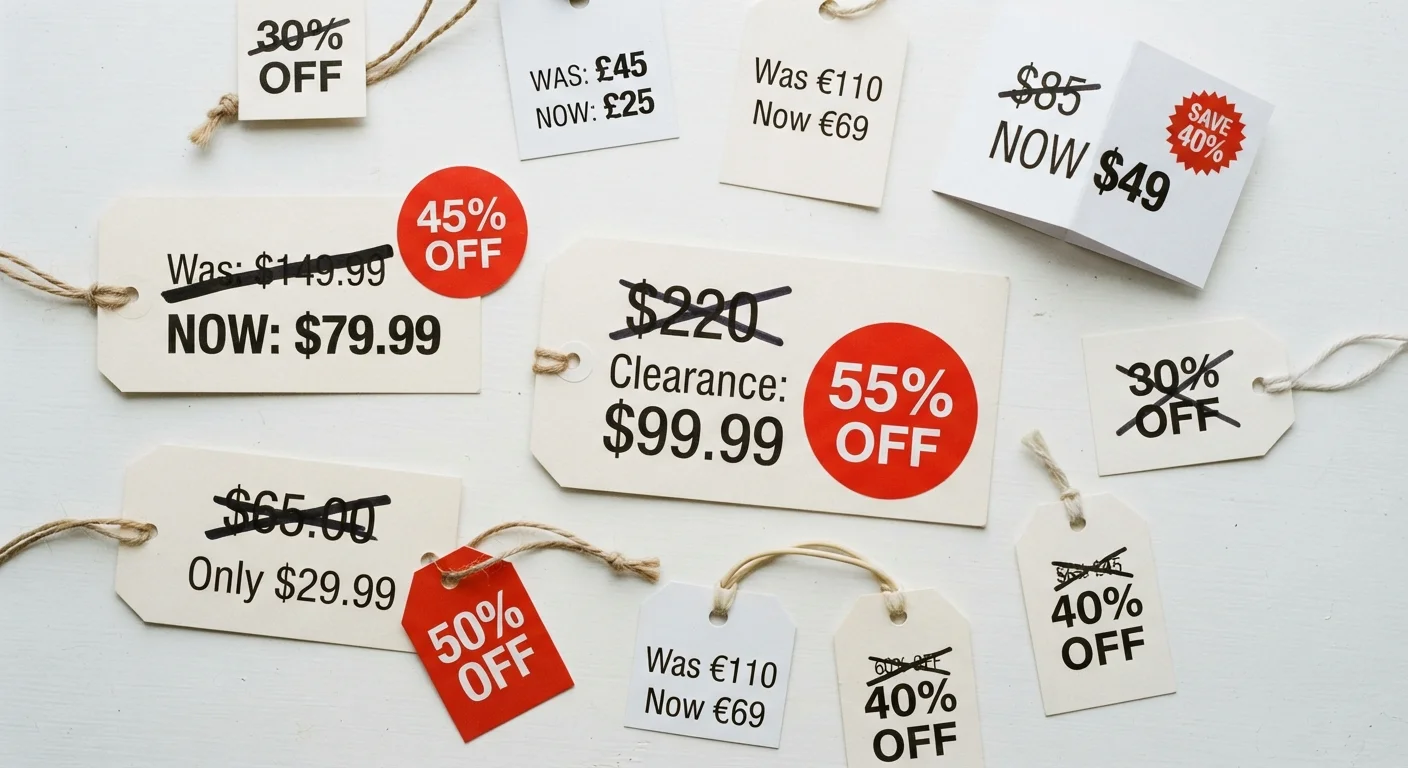
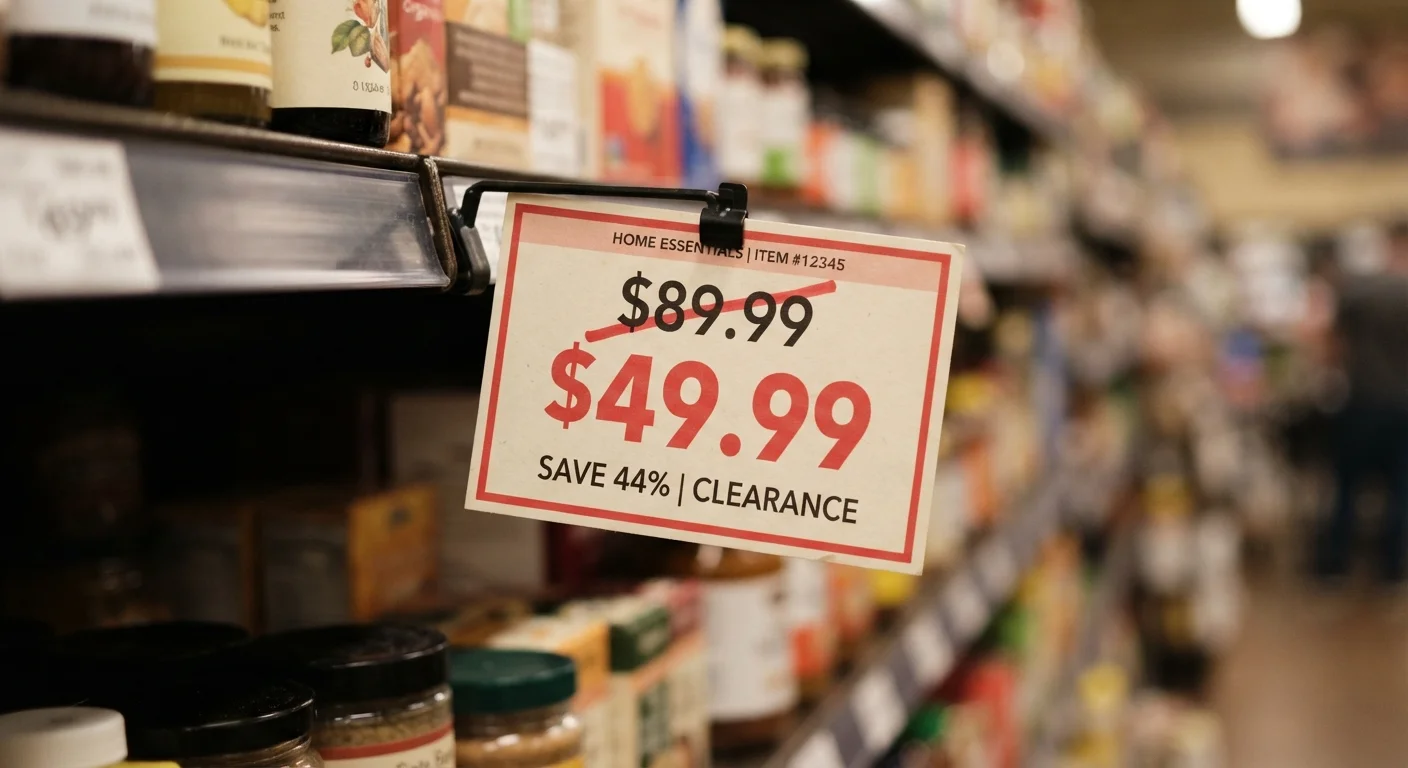
Walk past any end-cap or promotional shelf and you'll see the same format: a large number crossed out, a smaller number in red below it. That crossed-out figure is the anchor - and its job isn't to inform you, it's to make the price you're actually paying feel like a win.
Retailers set anchors in several ways. Some use a manufacturer's suggested retail price (MSRP) that few stores ever actually charge. Others briefly list an item at an elevated price, then place it "on sale" almost immediately - technically satisfying the legal requirement that a former price existed, while ensuring almost no one paid it. Still others invent a "compare at" price that references a vague competitive market rather than their own pricing history.
The mechanism works because of how human cognition processes relative value. When you see $180 crossed out and $79 below it, your brain doesn't ask "Is $79 a fair price for this item?" It asks "How good is $79 compared to $180?" That's the retailer's preferred question - and the anchor makes sure you ask it.
FTC Guidelines on Reference Pricing
The U.S. Federal Trade Commission's guidelines on deceptive pricing indicate that a "former price" should be one at which the product was actually offered to the public for a reasonably substantial period of time. However, these are guidelines rather than hard federal law, and enforcement at the retail level primarily occurs through state consumer protection agencies. Rules vary by state, so the same pricing practice may be permissible in one jurisdiction and actionable in another.
The Psychology Behind Why It Works
Anchoring isn't a quirk of gullible shoppers - it's a documented feature of human judgment documented across decades of behavioral economics research. The original anchoring-and-adjustment work showed that people exposed to an arbitrary high number will consistently estimate quantities higher than those who saw a low number first. Price perception follows the same pattern.
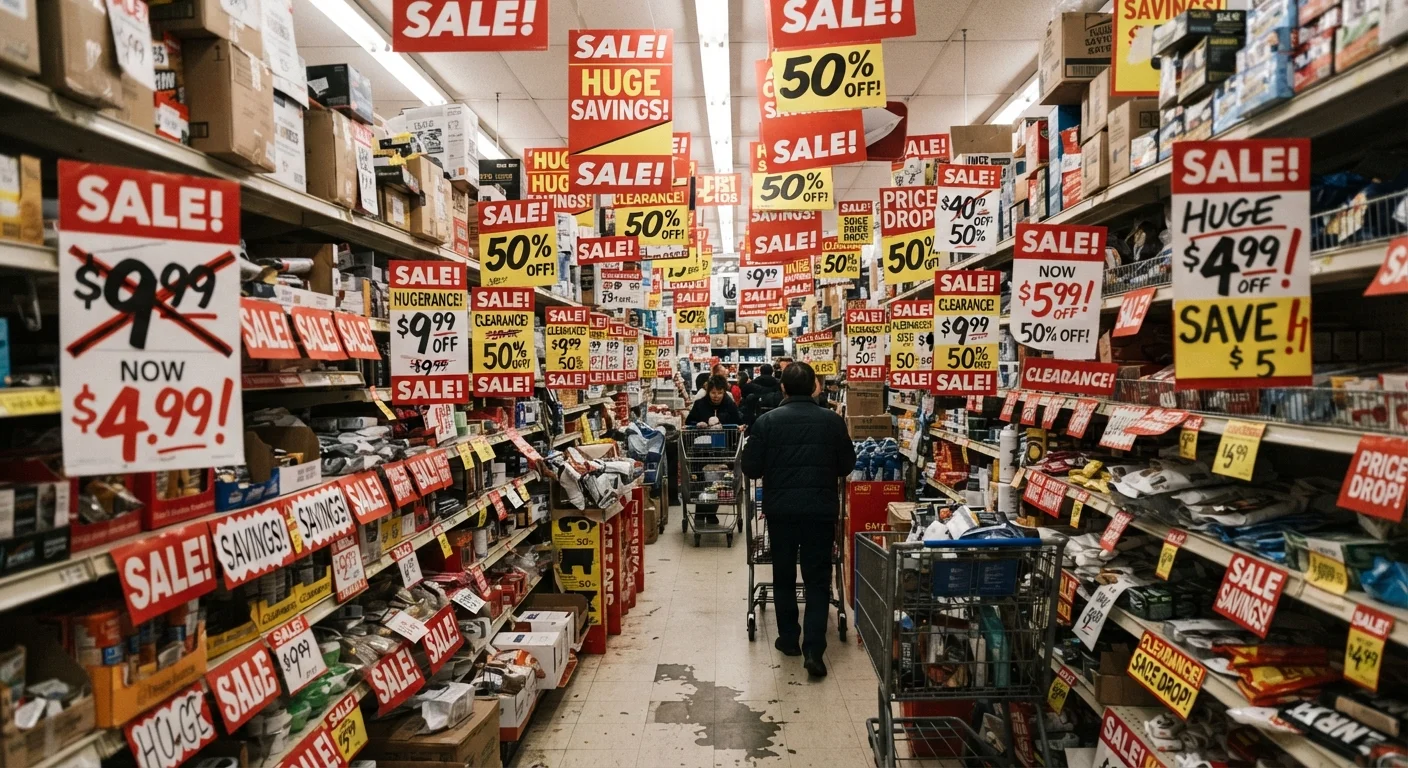
What makes anchor pricing particularly effective in retail is the context of scarcity and urgency that often surrounds it - limited-time banners, "while supplies last" language, countdown timers online. These layers compound the anchor's effect by narrowing the mental window you have to evaluate the deal rationally. For a deeper look at how these tactics layer together, see how urgency and scarcity amplify anchor pricing.
Critically, awareness of anchoring reduces but does not eliminate its effect. Knowing the trick is happening gives you a decision-making edge, but the automatic cognitive shortcut still fires. That's why behavioral awareness alone is insufficient - it needs to be paired with a concrete process for independent price verification.
“The first number you encounter acts as a gravitational field for your judgment. Even when people know an anchor is arbitrary, they can't fully escape its pull.”
— Richard Thaler, Nobel Prize-winning behavioral economist and author of 'Nudge'
What Anchor Pricing Costs You in Practice
The real damage isn't paying $79 for something worth $79. It's paying $79 for something worth $45 because the $180 anchor convinced you the deal was too good to pass up. Anchor pricing doesn't just distort your sense of value in the moment - it can systematically skew your spending over time if the habit of evaluating discounts against retailer-set reference prices goes unchallenged.
Consider a frequent purchase category like apparel, home goods, or consumer electronics - all sectors where perpetual "sales" are standard practice. A shopper who never benchmarks against external price data and consistently buys at anchor-discounted prices may believe they're saving significant money while actually paying at or above true market value on many items.
Phantom markdowns and inflated reference prices are part of a broader toolkit retailers use to frame spending as saving. Understanding anchor pricing is a starting point - but it connects directly to how everyday promotional formats are structured across retail categories.
~60%
Shoppers who feel urgency from a sale tag
Consumer behavior research consistently finds that reference price displays significantly increase purchase intent even when shoppers are skeptical of the original price's accuracy.
48 of 50
U.S. states with reference price disclosure laws
Most states have laws governing when a "former price" can be advertised, but enforcement mechanisms and thresholds vary considerably, leaving significant room for inflated anchors in practice.
Over 60%
Online deals with inflated reference prices
A study by consumer advocacy researchers examining major e-commerce platforms found the majority of promoted "sale" prices used reference prices that rarely or never reflected actual transaction prices.
A Practical Framework for Evaluating Any Tagged Price
Resisting anchor pricing comes down to one discipline: evaluate the sale price on its own merits, not in relation to the crossed-out figure. Here's how to apply that in practice:
- Ignore the anchor entirely. Cover or mentally discard the "original" price. Ask: Would I consider this item at $79 if no reference price existed?
- Check price history. Browser extensions and price-tracking tools log historical price data for many online retailers. If the "original" price appeared for only a few days before a perpetual sale began, the anchor is almost certainly artificial.
- Compare across channels. Search the same product - or a directly comparable one - at other retailers. The spread between prices often reveals what the market genuinely charges.
- Distinguish want from value. Ask whether the item solves a real need at a price that makes sense for your budget, separate from how much you appear to be "saving."
For a structured approach to evaluating any discount before acting on it, this practical framework covers benchmarking, need assessment, and the real cost of a missed deal. And if you want to understand which overall pricing models - constant promotions versus everyday low pricing - tend to deliver genuine savings, this comparison of flash sales versus everyday low pricing is a useful next read.