

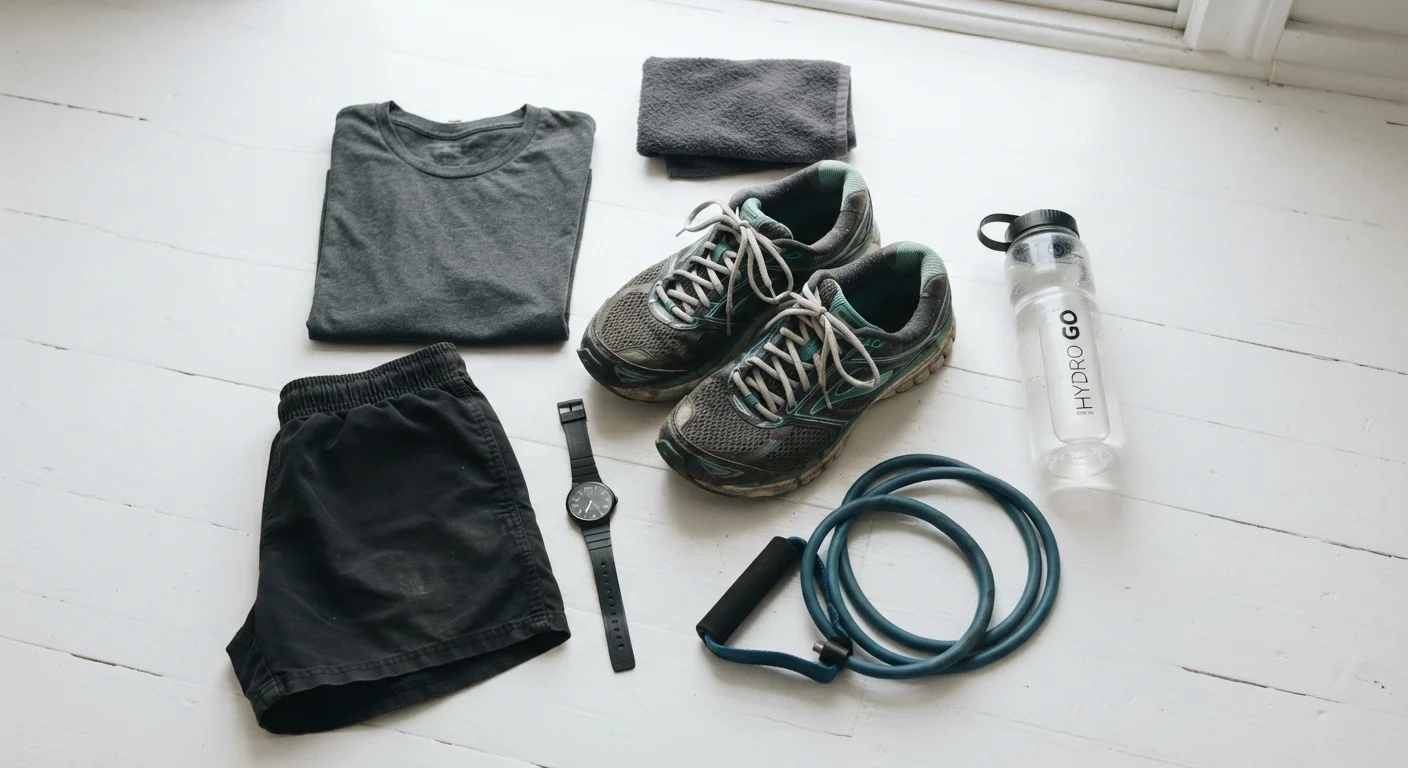
Why Fitness Marketing Costs Ordinary People Real Money
The fitness industry generates billions of dollars annually - and a significant portion of that revenue depends on convincing people that results require purchases. Protein powders, boutique gym memberships, compression gear, and app subscriptions are routinely framed as essentials, when the evidence supporting many of them is weak or conditional at best.
For budget-conscious people trying to stay active, separating genuine needs from manufactured ones isn't just intellectually satisfying - it's financially important. The myths below are among the most persistently expensive, and debunking them can free up meaningful money without sacrificing results. If you're also questioning spending habits in other areas of life, common budgeting myths are worth examining alongside these fitness ones.
Myth
You need a gym membership to get fit.
Fact
Effective fitness routines can be built entirely without gym access, using bodyweight exercises and outdoor spaces.
Gyms offer convenience and variety, but neither is required for progress. Research consistently shows that resistance training with bodyweight movements - push-ups, squats, lunges, dips - produces measurable strength and endurance gains. Parks, stairs, and living room floors are fully functional training environments. The gym industry's marketing conflates access with results, but the evidence doesn't support that equation for most people.
Myth
Protein shakes are essential if you want to build muscle.
Fact
Most people who eat a varied diet with adequate calories already get sufficient protein from whole foods alone.
Protein supplements are convenient, but convenience isn't the same as necessity. General dietary guidance suggests that protein needs for active adults - roughly 1.2 to 2.0 grams per kilogram of body weight per day, depending on activity level - are achievable through eggs, legumes, dairy, meat, fish, and tofu without supplementation. Protein powders are not harmful for most people, but they're frequently purchased under the false impression that whole foods can't do the same job. Cheap healthy eating strategies can help you meet protein targets without supplement costs.
Myth
Specialist workout shoes are necessary to exercise safely.
Fact
For most common activities, a comfortable, supportive shoe with a good fit is what matters - not a premium price tag.
The footwear industry invests heavily in marketing performance benefits that studies rarely confirm for general exercisers. Unless a clinician has identified a specific biomechanical issue requiring orthotic support, most people exercising at recreational intensity don't need specialty shoes. A well-fitting, reasonably cushioned shoe suited to the activity is adequate. Replacing shoes when the midsole compresses noticeably is more important than brand or price point.
Myth
You have to exercise for at least 45-60 minutes for it to count.
Fact
Shorter bouts of movement - even 10 to 20 minutes - provide genuine cardiovascular and metabolic benefits.
Duration thresholds are a persistent myth that leads people to skip activity entirely when they can't commit a full hour. Public health guidance from bodies such as the U.S. Department of Health and Human Services recognizes that moderate-intensity activity accumulates across the day - meaning three 10-minute walks can deliver similar benefits to one 30-minute walk. Shorter sessions are not a consolation prize; they're a legitimate and evidence-backed way to build an active lifestyle, particularly for people with demanding schedules.
Myth
Fat-burning supplements meaningfully accelerate weight loss.
Fact
No over-the-counter supplement has demonstrated clinically meaningful fat-loss effects beyond a modest, temporary metabolic nudge in some studies.
The supplement industry's fat-burner category is among the most heavily marketed and least supported by robust evidence. Ingredients such as caffeine may produce small, short-lived increases in metabolic rate, but the effect sizes in independent research are far smaller than packaging implies - and effects typically diminish with regular use. Some products in this category also carry safety concerns. Spending money on fat-burner supplements diverts resources from things that genuinely work: consistent movement and a sustainable approach to eating.
[important_callout]Myth
Working out every day is always better than resting.
Fact
Rest and recovery are physiologically required for strength and fitness adaptation - training daily without rest increases injury risk.
More is not automatically better in exercise. Muscle tissue repairs and grows during recovery, not during the workout itself. Overtraining - exercising too frequently without adequate rest - is associated with fatigue, decreased performance, and elevated injury risk. Most evidence-based programs for general fitness include at least one to two rest or active-recovery days per week. Prioritizing recovery isn't a shortcut; it's how fitness gains are consolidated.
What Actually Drives Fitness Progress
Exercise science is relatively consistent on what produces results: progressive overload (gradually increasing challenge over time), adequate sleep, reasonable nutrition, and - above all - consistency. None of those require a credit card.
Walking, for example, has decades of research behind it and costs nothing. Bodyweight movements like squats, lunges, push-ups, and planks can build real strength without equipment. If running interests you, what new runners actually need is much simpler than the industry suggests.
Don't Skip Activity Waiting for the Right Gear
One of the most common and costly fitness mistakes is postponing activity until a purchase arrives - new shoes, a gym membership, a fitness tracker. Research on behavior change suggests that starting immediately, even imperfectly, produces better long-term adherence than waiting for ideal conditions. The gear can come later, or not at all.
The single most reliable predictor of fitness improvement is showing up regularly over months and years. That's a habit, not a product - and habits are free to build.
This article is for general informational purposes only and does not constitute medical or professional fitness advice. Speak with a qualified healthcare provider before beginning any new exercise program, especially if you have an existing health condition.