
The Cost Breakdown: What You Actually Pay Per Serving
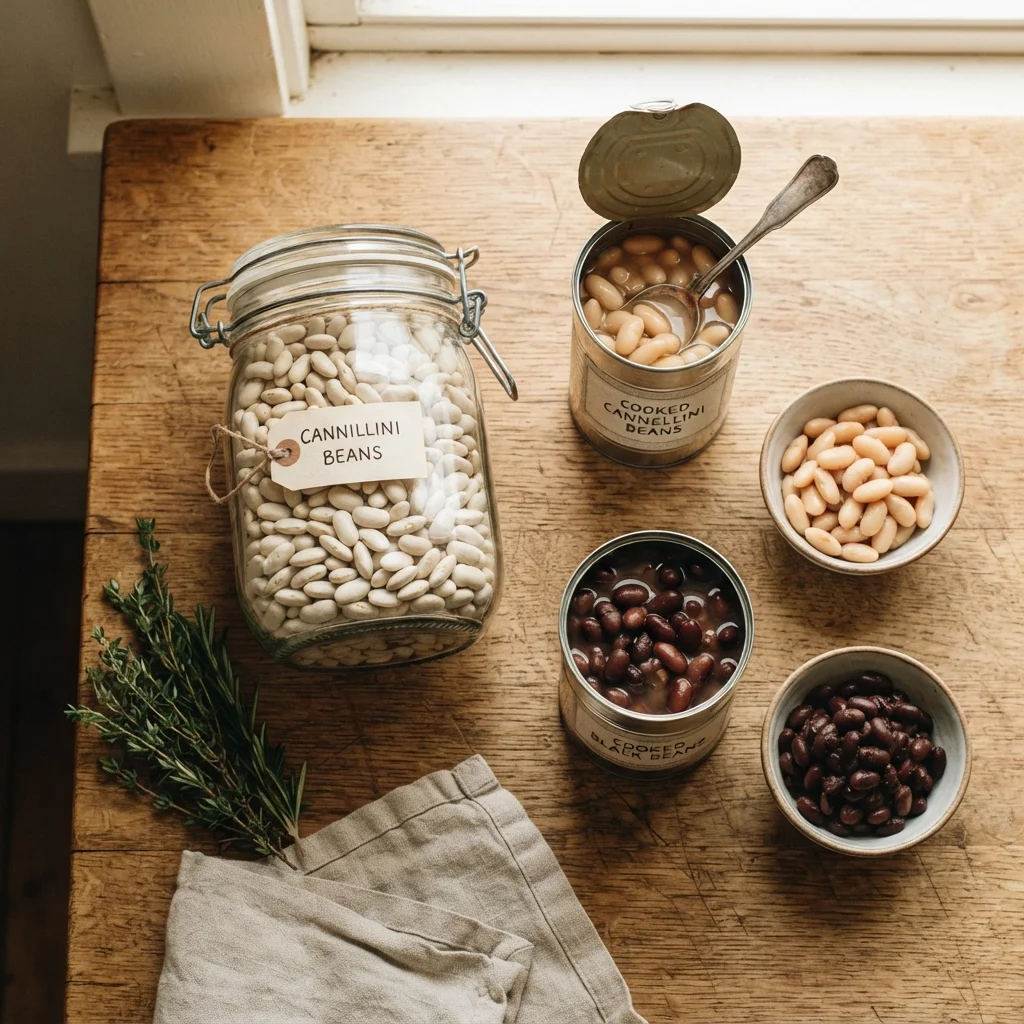
Beans - dried or canned - are among the most affordable protein and fiber sources in any US grocery store. But the price gap between the two formats is meaningful if you're watching every dollar.
A one-pound bag of dried beans typically yields around 6 cups of cooked beans, or roughly 12 half-cup servings. Depending on the variety and store, a pound of dried beans generally costs between $1.50 and $2.50, putting the cost per serving well under $0.25. A standard 15-oz can of beans, by contrast, provides about 3.5 half-cup servings and usually costs $0.80 to $1.50 - putting the per-serving cost roughly two to three times higher.
That gap compounds fast. If you eat beans four times a week and rely entirely on canned, you could easily spend $3-$5 more per week than someone using dried. Over a year, that's a noticeable difference on a tight grocery budget. For more on building out your whole pantry affordably, see our guide on stocking a nutritious pantry from scratch.
| Criterion | Dried Beans | Canned Beans |
|---|---|---|
| Average cost per serving | ~$0.10-$0.20 | ~$0.25-$0.45 |
| Prep time | 1-10+ hours | Under 5 minutes |
| Sodium content | None added | 300-500mg per serving (pre-rinse) |
| Protein & fiber | Excellent | Excellent |
| Shelf life | 1-2 years (dry storage) | 2-5 years (sealed can) |
| Batch cooking suitability | Ideal | Moderate |
| Equipment needed | Pot, time, storage | Can opener |
Nutrition: Is There a Real Difference?
Here's the reassuring part: nutritionally, dried and canned beans are quite similar. Both are excellent sources of plant protein, dietary fiber, folate, iron, and potassium. The cooking process - whether done at home or in a factory - doesn't significantly degrade those core nutrients.
The main nutritional concern with canned beans is sodium. Many canned varieties contain 300-500mg of sodium per half-cup serving, which adds up if you're eating beans regularly. The practical fix is simple: rinse canned beans under cold water before using them. Studies suggest rinsing can reduce sodium content by roughly 40%, bringing it down to a much more manageable level.
Some research also notes that home-cooked dried beans may retain slightly more of certain heat-sensitive nutrients and beneficial compounds, but the difference is not dramatic enough to make canned beans a nutritionally poor choice. Beans of either type are solid pillars of budget-friendly protein eating.
~40%
Sodium reduction from rinsing canned beans
Research published in food science literature suggests draining and rinsing canned beans can reduce sodium content by approximately 40%.
6 cups
Cooked yield from one pound of dried beans
One pound of dried beans typically yields around 6 cups cooked, equivalent to roughly three standard 15-oz cans.
~$0.15
Estimated cost per serving, dried beans
Based on typical US retail pricing for common dried bean varieties such as black beans, pinto, and chickpeas.
Time and Convenience: The Real Trade-Off
The honest argument for canned beans isn't nutrition - it's time. Dried beans require planning. Most varieties benefit from an overnight soak (8+ hours), followed by 45-90 minutes of simmering. A quick-soak method (boil, rest for an hour, then cook) cuts that, but you're still looking at a 2-hour commitment minimum.
Canned beans skip all of that. Open, rinse, add to your dish - done in under a minute. On a chaotic Tuesday night when dinner needs to happen fast, that matters.
The workaround that gives you the best of both worlds: cook a large batch of dried beans on the weekend, then freeze them in 1.5-cup portions (roughly equivalent to a can). Pull them from the freezer as needed. You get dried-bean cost with near-canned convenience - and this approach fits naturally into a broader meal planning strategy that keeps your weekly grocery spend predictable.
Which One Should You Actually Buy?
For most budget-focused households, the practical answer is both - used strategically. Keep a few cans on hand for last-minute meals and emergency proteins. Use dried beans for planned batch cooking where the time investment pays off in real dollar savings.
If you're in a season where time is genuinely scarce - new job, young kids, back-to-school chaos - leaning on canned beans is a smart, affordable choice that still puts a nutritious meal on the table. Don't let the pursuit of maximum savings push you toward skipping beans altogether.
If you're in a more stable routine and looking to cut your grocery bill further, shifting more of your bean consumption to dried is one of the higher-impact swaps available to you. Beans are a cornerstone of the kind of affordable healthy eating that actually works long-term - regardless of which format you choose.
This article is for general informational purposes only and does not constitute dietary or medical advice. Consult a qualified healthcare professional for guidance specific to your health needs.