

Why This Comparison Actually Matters
Free fitness sounds simple until you realize not all no-cost exercise is created equal. Running, walking, jumping rope, calisthenics, yoga, and HIIT are all technically free - but they differ wildly in how many calories they burn, how much space they demand, and whether a complete beginner can do them safely on day one.
This ranked breakdown uses those three criteria to help you match activities to your actual situation: your fitness level, your living space, and your goals. Calorie estimates listed are general ranges for a 155-pound adult exercising at moderate-to-vigorous effort and should be understood as rough guides, not precise prescriptions. Individual results vary based on body weight, fitness level, and exercise intensity. For a full framework on structuring these activities into a weekly plan, see Building a Weekly Fitness Schedule Using Only Parks, Pavements, and Your Living Room.
Mix, Don't Maximize One Activity
Rotating between two or three activities from this list covers more fitness dimensions than doubling down on one. Pairing walking with calisthenics, for example, combines low-impact cardiovascular activity with strength work - no equipment and no cost required. See Free Fitness Habits: A Complete Reference for definitions of movement types that help you build a balanced mix.
The Ranked List
Running
Calorie burn: Approximately 500-700 calories/hour at a moderate pace
Skill level: Beginner-accessible with gradual progression
Space required: Outdoor only - sidewalk, park path, or trail
Running consistently ranks as one of the highest calorie-burning free activities available. It requires nothing except a pair of supportive shoes and a safe surface. Beginners should build mileage slowly - alternating walking and running intervals is a well-established entry point that reduces injury risk. Running outdoors also provides mental health benefits linked to time in natural or open environments, according to general public health guidance.
Running delivers more calorie burn per hour than almost any other free activity.
Bodyweight HIIT (High-Intensity Interval Training)
Calorie burn: Approximately 400-600 calories/hour, with continued post-exercise calorie burning
Skill level: Moderate - requires basic movement literacy and body awareness
Space required: Small - a 6×6 foot area indoors is typically sufficient
HIIT alternates short bursts of intense effort with brief rest periods. Exercises like burpees, jump squats, high knees, and mountain climbers require no equipment and minimal floor space, making this ideal for apartment dwellers. The intensity demands good form; beginners should learn the base movements at a slower pace before adding speed or reducing rest intervals. Overexertion is a genuine risk - start conservatively and scale up over weeks, not days.
HIIT delivers significant intensity in a space no larger than a yoga mat.
Jump Rope
Calorie burn: Approximately 600-800 calories/hour at moderate to fast pace
Skill level: Moderate - coordination takes practice
Space required: Small outdoors; needs ceiling clearance indoors
A jump rope costs a few dollars if you don't already own one, but public spaces like parking lots, driveways, or parks make this essentially free. Calorie burn is impressively high - comparable to running - once you develop rhythm. Coordination is the main barrier for beginners; allow two to four weeks of short daily practice before expecting sustained sessions. High-impact on joints, so not ideal for those with knee or ankle concerns without medical guidance.
Jump rope can match running's calorie burn in a fraction of the space.
Cycling (Outdoor)
Calorie burn: Approximately 400-600 calories/hour at moderate effort
Skill level: Beginner-friendly if you already know how to ride
Space required: Outdoor - roads, bike paths, or trails
Cycling is low-impact compared to running, making it a strong option for people with joint sensitivities. If you already own a bike, the only ongoing cost is maintenance. City residents often have access to bike lanes and parks that make urban cycling practical. Effort level can vary enormously - leisurely riding burns far fewer calories than sustained moderate effort - so mindful pacing matters if you're using cycling as a fitness strategy rather than transport.
Cycling is a joint-friendly alternative to running with comparable calorie burn.
Calisthenics (Push-ups, Pull-ups, Squats, Lunges)
Calorie burn: Approximately 300-450 calories/hour depending on intensity
Skill level: Beginner to advanced - scales with progression
Space required: Small indoors; pull-up bar or overhead bar needed for some movements
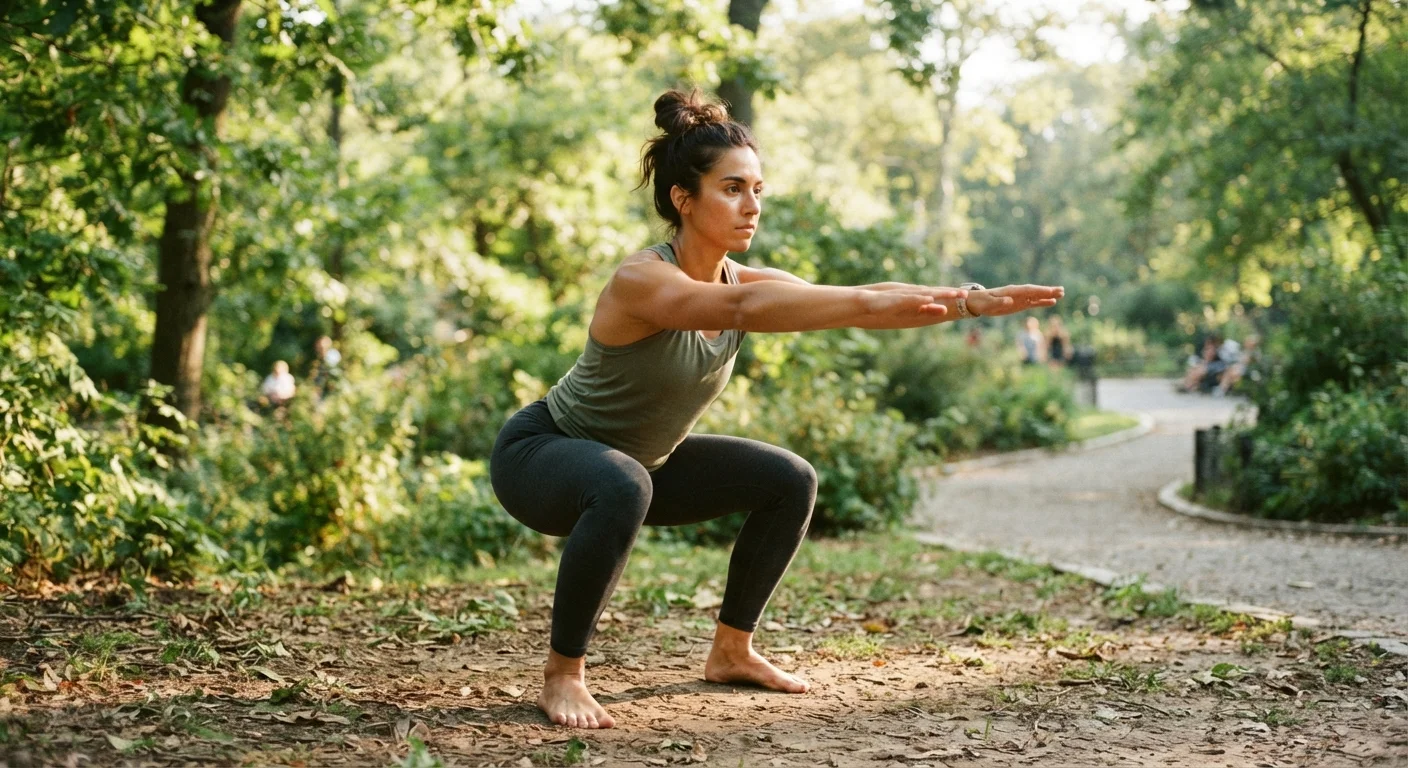
Calisthenics builds functional strength using bodyweight alone. Push-ups, squats, lunges, and planks require only a small floor area. Pull-ups need a bar - many parks have outdoor fitness equipment or monkey bars that serve this purpose at no cost. Calorie burn is lower than cardio-focused activities, but the strength and muscle-maintenance benefits are significant for long-term metabolic health. Progressions (e.g., incline push-ups → standard → decline) allow genuine advancement without equipment purchases.
Calisthenics builds real strength with nothing but floor space and body weight.
Yoga (Without a Class or App Subscription)
Calorie burn: Approximately 150-300 calories/hour (varies widely by style)
Skill level: Beginner-friendly; many free video resources available
Space required: Small - mat-size area indoors or outdoors
Yoga's calorie burn is lower than aerobic activities, but it contributes meaningfully to flexibility, balance, and stress management - components that support a complete fitness routine. Free yoga content is widely available through public libraries, YouTube channels, and community programs. For beginners, slower styles like Hatha are more accessible than dynamic flows. If you're using yoga as your primary physical activity, complement it with higher-intensity movement for cardiovascular benefit.
Yoga earns its place in a free routine through flexibility and stress recovery benefits.
Walking
Calorie burn: Approximately 200-300 calories/hour at a brisk pace
Skill level: Accessible to nearly everyone
Space required: Outdoors - any walkable surface
Walking has the lowest barrier to entry of any activity on this list. It's appropriate for nearly all fitness levels, requires no learning curve, and is sustainable long-term. Calorie burn is modest compared to more intense options, but walking's sustainability is its competitive advantage - a 45-minute daily walk is easier to maintain for years than a 45-minute HIIT session. Brisk walking (where you can speak in short sentences but not sing) offers meaningful cardiovascular benefit. For ideas on integrating more walking into daily life without setting aside extra time, see Everyday Movement as Exercise.
Walking's greatest fitness advantage is that almost anyone can do it consistently for years.
Calorie Estimates Are Approximate
The calorie figures in this article are general estimates based on publicly available exercise science data for a mid-weight adult at moderate-to-vigorous effort. Your actual burn will differ based on your body weight, fitness level, age, and how hard you push. Use these numbers as rough comparisons between activities, not as precise targets for any individual.
Once you've identified which activities fit your life, it's worth auditing whether your overall routine is actually balanced. Free Fitness Audit: Is Your Current Routine Actually Working? offers a practical checklist to find gaps in strength, endurance, and recovery. And if you want to be honest about the real trade-offs of going equipment-free, The Honest Trade-Offs of Exercising Without a Gym or Coach covers both the advantages and the limitations plainly.
This article is for general informational purposes only and is not medical advice. Consult a qualified healthcare professional before starting any new exercise program, particularly if you have an existing health condition, injury, or concern.