
Why Free Fitness Works Long-Term
The fitness industry generates billions by selling the idea that results require investment. Gym memberships, equipment, apps, and supplements dominate the conversation. But decades of exercise science consistently show that the fundamentals - moving your body regularly, progressively, and with adequate recovery - cost nothing at all.
People who build durable habits around walking, bodyweight training, and outdoor activity often maintain those habits longer than gym-goers, partly because there are no financial barriers to continuing. When a budget gets tight, the free habit survives. The gym membership gets cancelled.
This matters deeply for budget-conscious households. Fitness should not compete with groceries or rent. If you're also working on how your dollars flow day-to-day, our guide on building smarter everyday spending habits complements this approach well - the same discipline that builds a spending system builds a fitness system.
150 min
Recommended weekly moderate activity
Per U.S. Department of Health and Human Services Physical Activity Guidelines for Americans, adults should aim for at least 150 minutes of moderate-intensity aerobic activity per week.
$0
Cost of a complete bodyweight program
A full-body routine using push, pull, hinge, and squat patterns requires no equipment, no gym, and no paid subscription to deliver measurable fitness improvements.
66 days
Average time for a habit to become automatic
A study published in the European Journal of Social Psychology found habits took an average of 66 days to form, with a range of 18 to 254 days depending on the individual and behavior.
Start With the Right Foundation
Before choosing exercises, clarify your actual goal. General health, stress relief, weight management, and strength each respond to slightly different approaches. Mixing up these goals without a clear priority is one of the most common reasons routines fall apart in the first month.
A simple framework: decide on one primary outcome, commit to three sessions per week, and track only whether you showed up - not how you performed. Performance metrics become relevant once the habit is stable, which typically takes six to twelve weeks of consistent effort.
Assess your starting point honestly. If you haven't exercised regularly, beginning with daily walks of 20-30 minutes is a clinically supported starting point. Walking engages the cardiovascular system, supports bone density, and is accessible to nearly every fitness level. From that base, layering in bodyweight movements becomes natural rather than overwhelming.
This article is for general informational purposes only and is not a substitute for advice from a qualified healthcare professional. Consult a doctor before beginning a new exercise program, especially if you have an existing health condition.
Build Your Zero-Cost Exercise Toolkit
Your body is the only tool you need. A well-structured bodyweight routine can develop strength, endurance, mobility, and cardiovascular fitness. Our detailed reference, Free Fitness Habits: A Complete Reference for Exercise Without Equipment, breaks down movement types and effort levels in depth.
A practical starter toolkit covers four movement patterns:
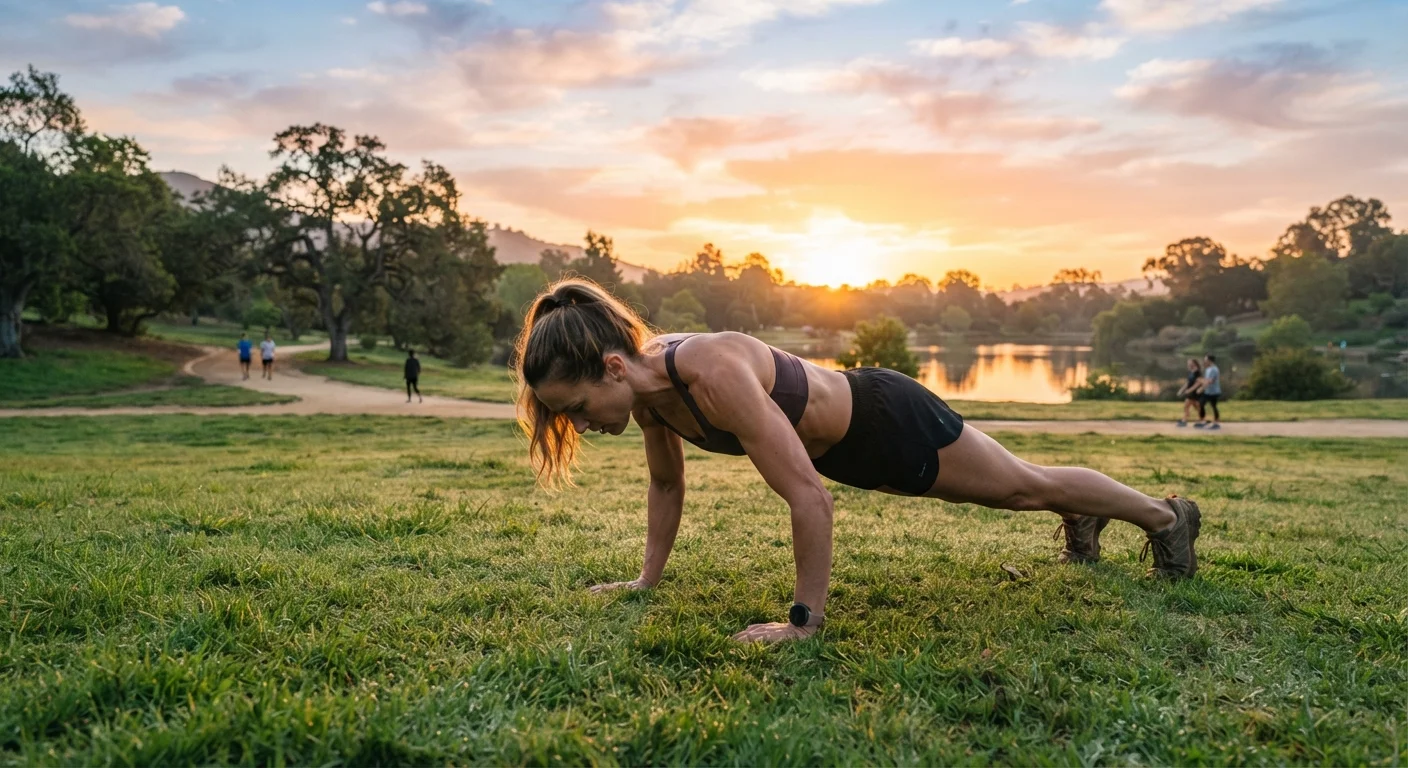
- Push: Push-ups, incline push-ups against a wall or step, dips using a sturdy chair
- Pull: Inverted rows under a sturdy table, doorframe-assisted holds
- Hinge: Hip hinges, single-leg deadlift variations using bodyweight
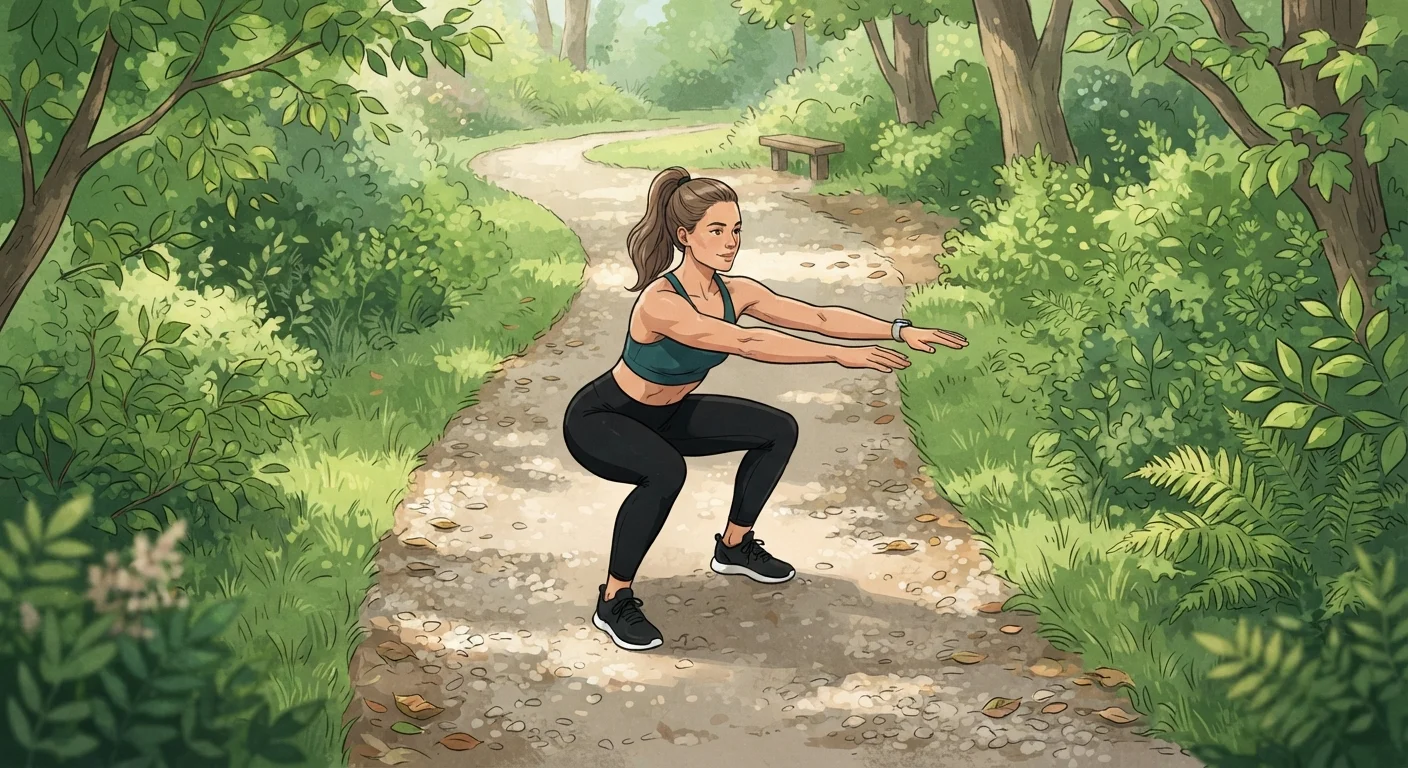
- Squat: Air squats, split squats, step-ups on a stair or park bench
Combine these with core work - planks, hollow holds, and leg raises - and you have a complete program. Outdoors, park benches, playground bars, and grassy lawns expand your options further without any cost.
When outdoor space is limited, use your stairwell. Repeated stair climbing is a legitimate cardiovascular and lower-body workout that requires no equipment and is available in most apartment buildings.
Stair climbing elevates heart rate comparably to moderate-intensity cycling and engages the glutes, hamstrings, and calves, making it a high-value, zero-cost option for urban dwellers.
Film yourself doing a new movement pattern once a month using your phone. You'll catch form errors that fatigue prevents you from feeling in the moment, reducing injury risk without paying for coaching.
Visual self-feedback is a documented technique in sports science for skill acquisition; it costs nothing and gives you objective data about your technique over time.
Making It Stick: Habit Psychology on a Budget
Research on habit formation consistently points to three components: a cue, a routine, and a reward. For free fitness habits, this means attaching your workout to something that already happens - waking up, a lunch break, or returning home from work - so the decision energy required is minimal.
Remove friction. Sleep in your workout clothes if morning sessions feel hard to start. Designate a specific outdoor spot as your "gym" so the environment becomes a cue itself. Track completion with a simple paper calendar and an X for each day done - sometimes called a "don't break the chain" method, and it works because visual streaks are motivating.
Avoid all-or-nothing thinking. A 10-minute workout counts. Missing one session is not failure. The habit lives in the weekly average, not any single day. Budget-oriented thinkers often respond well to framing fitness in cumulative terms: 150 minutes of moderate activity per week, spread however it fits.
Pair Workouts With an Existing Ritual
Attach your workout to something you already do every day - morning coffee, a commute, or a lunch break. This reduces the number of decisions required to exercise and makes skipping feel like breaking an established routine rather than just avoiding effort. Even a 15-minute session counts when it's consistent.
Progressing Without a Trainer or Gym
Progressive overload - gradually increasing the demand placed on your body - is the mechanism behind all fitness improvement. Without weights, you achieve it by manipulating four variables: repetitions, sets, tempo (slowing the movement down), and exercise variation (moving from easier to harder versions of the same pattern).
For example, a push-up progression might move: wall push-up → incline push-up → standard push-up → slow-tempo push-up (3 seconds down) → close-grip push-up → archer push-up. Each step increases demand without requiring a single piece of equipment.
Track progress in a simple notebook or free notes app. Record what you did, how many reps, and whether it felt easy, moderate, or hard. When an exercise feels easy for two sessions in a row, advance to the next variation. This self-coaching method keeps progress honest and removes the need for paid supervision for general fitness goals.
Free Resources to Keep You Growing
Free, credible fitness guidance is widely available if you know where to look. Government health agencies publish evidence-based physical activity guidelines. Public libraries offer exercise books and often host free fitness classes. Many community parks host free group workouts - check local bulletin boards or community center websites.
Online, channels affiliated with universities, hospitals, and certified trainers publish free bodyweight workout content. Look for creators who cite exercise science rather than promote products. Combine this with the nutritional side of healthy living - our Cheap Healthy Eating hub covers how to fuel your workouts without inflating your grocery bill.
If you enjoy outdoor activity, consider that budget gardening doubles as moderate-intensity physical activity - digging, hauling, and planting accumulate real movement over a session. The point is that free fitness integrates with everyday life once you start looking for it.
U.S. Physical Activity Guidelines (HHS)
The official federal guidelines for Americans on aerobic activity, muscle-strengthening, and special populations. Free to access at health.gov and grounded in comprehensive research review.
Your Local Public Library
Most public libraries carry books on bodyweight training, yoga, and general fitness. Many also host free in-person fitness classes or provide access to digital fitness platforms at no cost with a library card.
CDC Move Your Way Tool
A free interactive tool from the Centers for Disease Control and Prevention that helps you build a personalized weekly activity plan based on your goals and current fitness level.
Community Parks and Recreation Programs
Many municipal parks departments offer free or low-cost fitness classes, walking groups, and outdoor workout areas. Search your city or county parks department website for current offerings.
This content is general health information and education only. Always consult a qualified healthcare professional before starting or significantly changing an exercise routine.