
What Equipment-Free Fitness Actually Covers
Equipment-free fitness - often called bodyweight training - refers to any physical activity that uses your own body mass as resistance instead of machines, weights, or paid memberships. It spans a wider range than most people expect: walking, running, jumping, pushing, pulling, hinging, and core stabilization are all part of it.
This reference guide is organized for quick lookup. Whether you want to understand a term, compare effort levels, or identify which movement type fits your current ability, you'll find clear, plain definitions throughout. For a broader starting point, see our introduction to exercise for absolute beginners.
| Equipment required | None - bodyweight only |
| Minimum space needed | Roughly a yoga mat's footprint (6 ft × 2 ft) |
| Core movement categories | Push, pull, hinge, squat, core, locomotion |
| Key intensity levers | Tempo, leverage, range of motion, rest, volume |
| Primary recovery tools | Sleep, active recovery, adequate rest days |
| Progression method | Progressive overload via harder variations and reduced rest |
This article is for general informational purposes only and is not medical advice. Consult a qualified healthcare professional before beginning any new exercise program, especially if you have an existing health condition or injury.
Key Terms, Movement Types, and Effort Levels
Understanding a handful of core concepts helps you read workout instructions, assess your progress, and avoid injury. The glossary below defines the terms you'll encounter most often when building a no-cost routine.
Bodyweight training
Exercise that uses your own body mass as the primary source of resistance, requiring no equipment or gym access. It can develop strength, endurance, flexibility, and cardiovascular fitness.
Progressive overload
The gradual increase in training challenge over time - through more reps, harder variations, or less rest - that drives ongoing fitness adaptation. Without it, improvement stalls.
HIIT (High-Intensity Interval Training)
A training format alternating short bursts of high-effort movement with brief recovery periods. It can be done entirely with bodyweight and is time-efficient for cardiovascular conditioning.
RPE (Rate of Perceived Exertion)
A self-reported scale, typically 1-10, used to gauge how hard an exercise feels. It's a practical tool for regulating intensity without heart rate monitors or lab equipment.
Eccentric phase
The lowering or lengthening portion of a movement - for example, the descent of a push-up. Slowing this phase increases muscle challenge and is a key lever in bodyweight progression.
Active recovery
Low-intensity movement performed on rest days - such as walking or gentle stretching - that supports circulation and reduces stiffness without adding significant training stress.
Posterior chain
The group of muscles running along the back of the body, including the glutes, hamstrings, and lower back. Hinge-pattern movements like single-leg deadlifts target this group.
Isometric hold
An exercise where the muscle contracts without changing length - such as a plank or wall sit. Isometrics build endurance and stability and require no equipment.
Movement Categories at a Glance
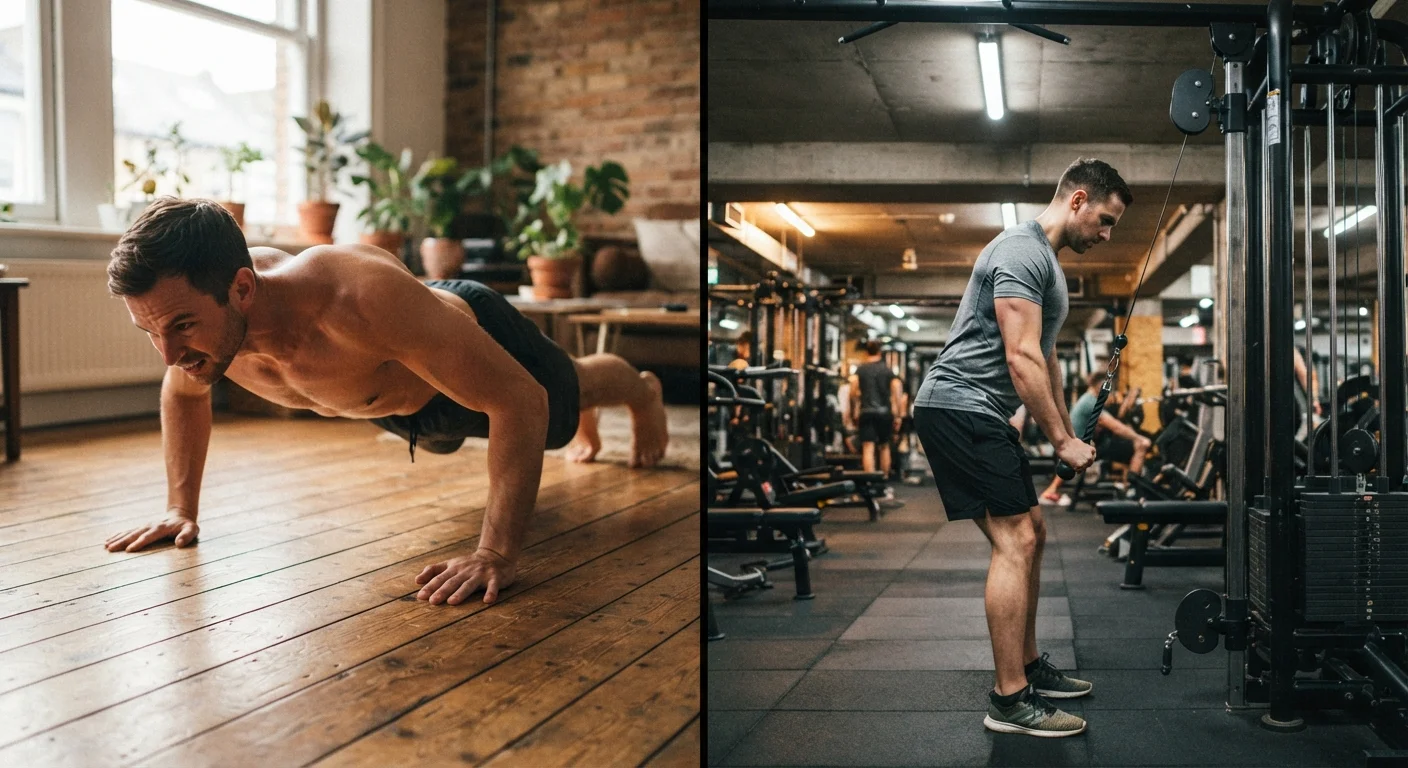
- Push movements: Engage chest, shoulders, and triceps. Examples: push-ups, pike push-ups, dips on a chair edge.
- Pull movements: Target back and biceps. Examples: bodyweight rows under a sturdy table, doorframe pulls, or park pull-up bars.
- Hinge movements: Load the posterior chain - glutes and hamstrings. Examples: single-leg deadlifts, good mornings without weight.
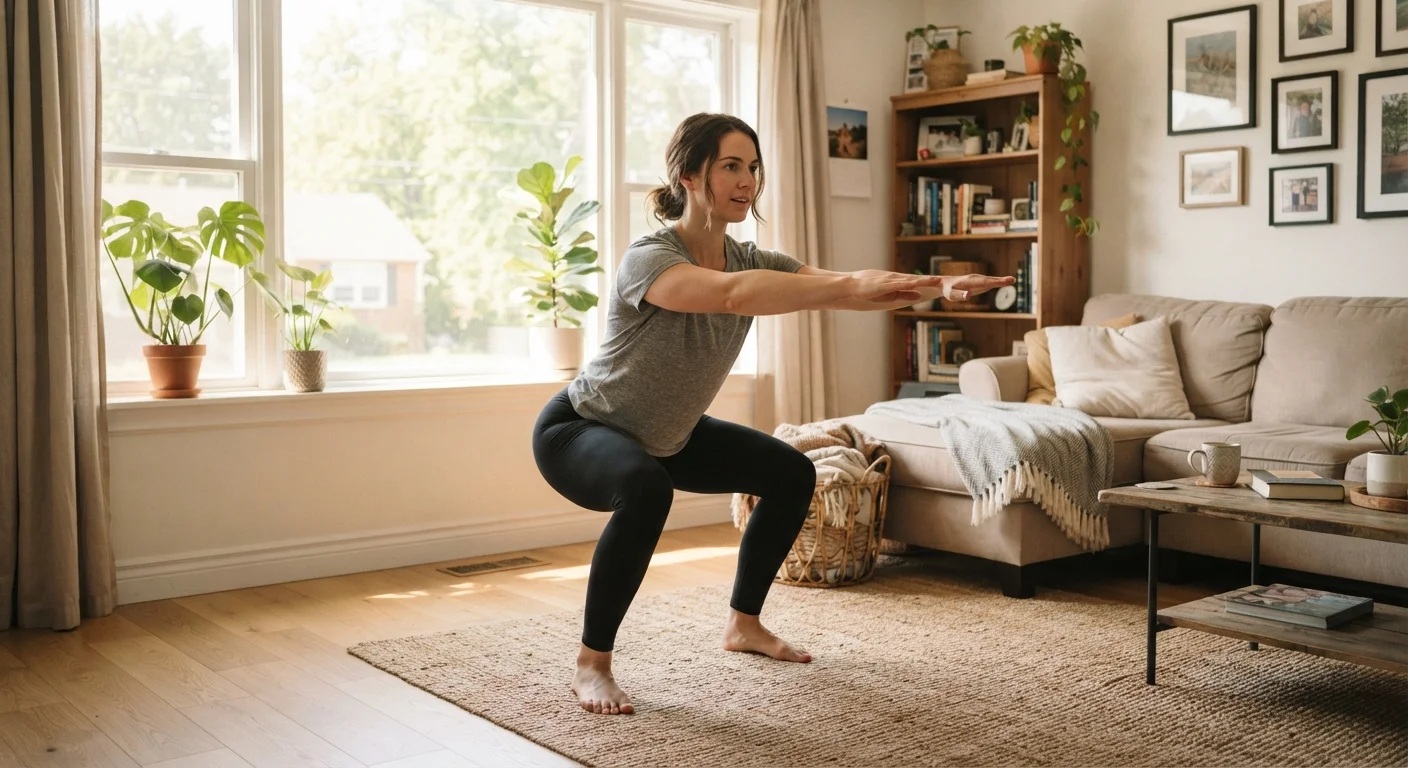
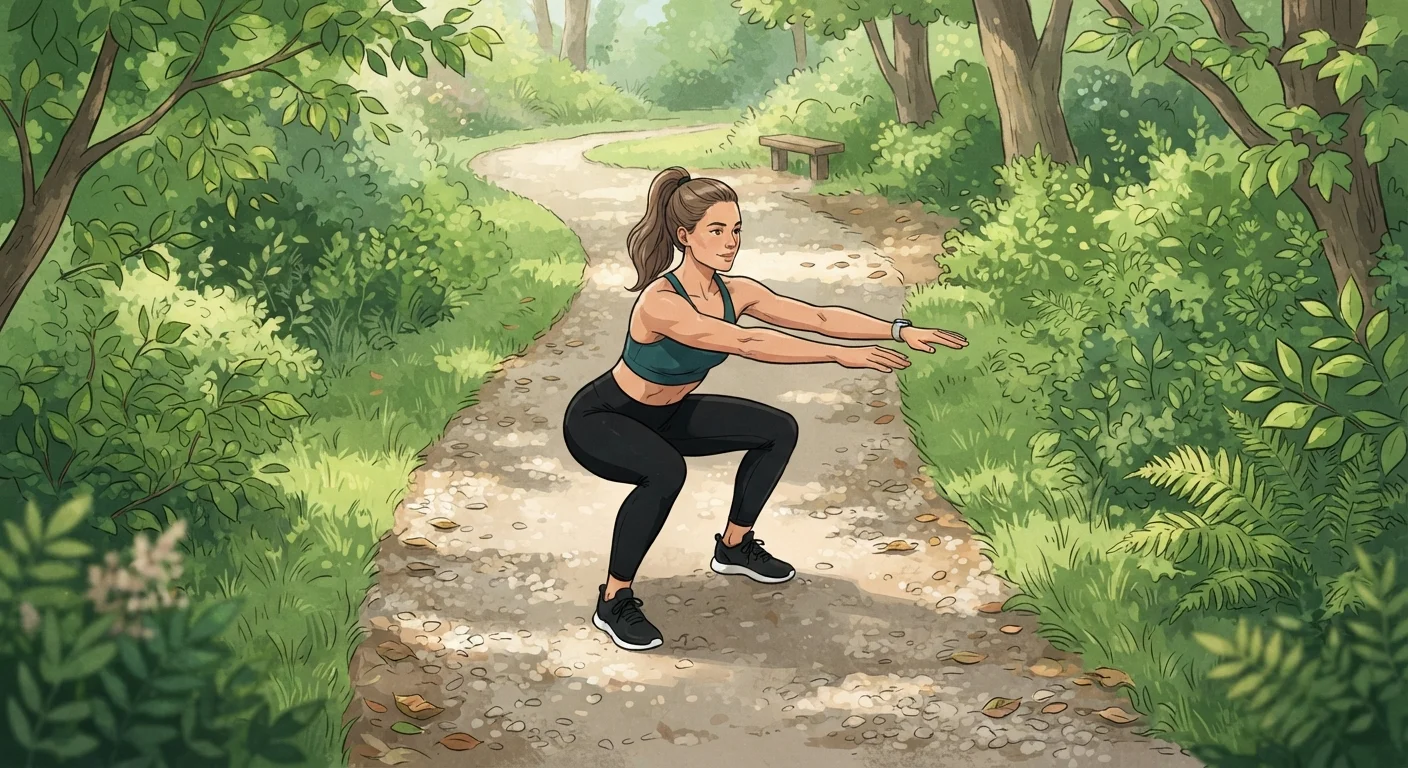
- Squat patterns: Work quads, glutes, and core. Examples: air squats, sumo squats, Bulgarian split squats using a step.
- Core stabilization: Build trunk endurance, not just crunch strength. Examples: planks, dead bugs, hollow holds.
- Locomotion: Walking, jogging, stair climbing, and jumping rope (if you own one) all count.
For a side-by-side look at how bodyweight patterns compare to machine-based training, our article on bodyweight training vs. gym machines breaks down the research.
Effort and Intensity Levels
Intensity in bodyweight training is controlled through variables - not equipment cost. Use these levers:
- Tempo: Slowing the lowering phase (eccentric) of any movement increases muscle challenge without adding load.
- Leverage: Elevating feet on a push-up increases difficulty; inclining them reduces it.
- Range of motion: Deeper squats and full-extension push-ups recruit more muscle than partial reps.
- Rest intervals: Shorter rest raises cardiovascular demand; longer rest prioritizes strength output.
- Volume: Total sets and reps across a session determine overall training load.
Recovery, Progression, and Building Consistency
Recovery is not optional - it's where adaptation happens. Skipping it is the most common reason free fitness habits stall or cause injury. Key recovery concepts to know:
- Active recovery: Low-intensity movement (a slow walk, gentle stretching) on rest days that promotes circulation without adding training stress.
- DOMS (Delayed Onset Muscle Soreness): Muscle ache that typically peaks 24-72 hours after unfamiliar or intense exercise. Normal and temporary; not a sign of damage in most cases.
- Sleep: The most underrated recovery tool. Muscle repair and hormone regulation happen primarily during sleep.
- Progressive overload: The principle of gradually increasing challenge over time. Without it, fitness plateaus. With bodyweight, apply it by adding reps, advancing to harder variations, or reducing rest.
150 min
Recommended weekly moderate aerobic activity for adults
Per the U.S. Department of Health and Human Services Physical Activity Guidelines for Americans, second edition.
2×/week
Recommended minimum muscle-strengthening sessions
The same federal guidelines suggest at least two days per week of muscle-strengthening activity involving all major muscle groups.
24-72 hrs
Typical DOMS onset and peak window
Delayed onset muscle soreness generally peaks within one to three days after unfamiliar or intense exercise, according to widely cited exercise science literature.
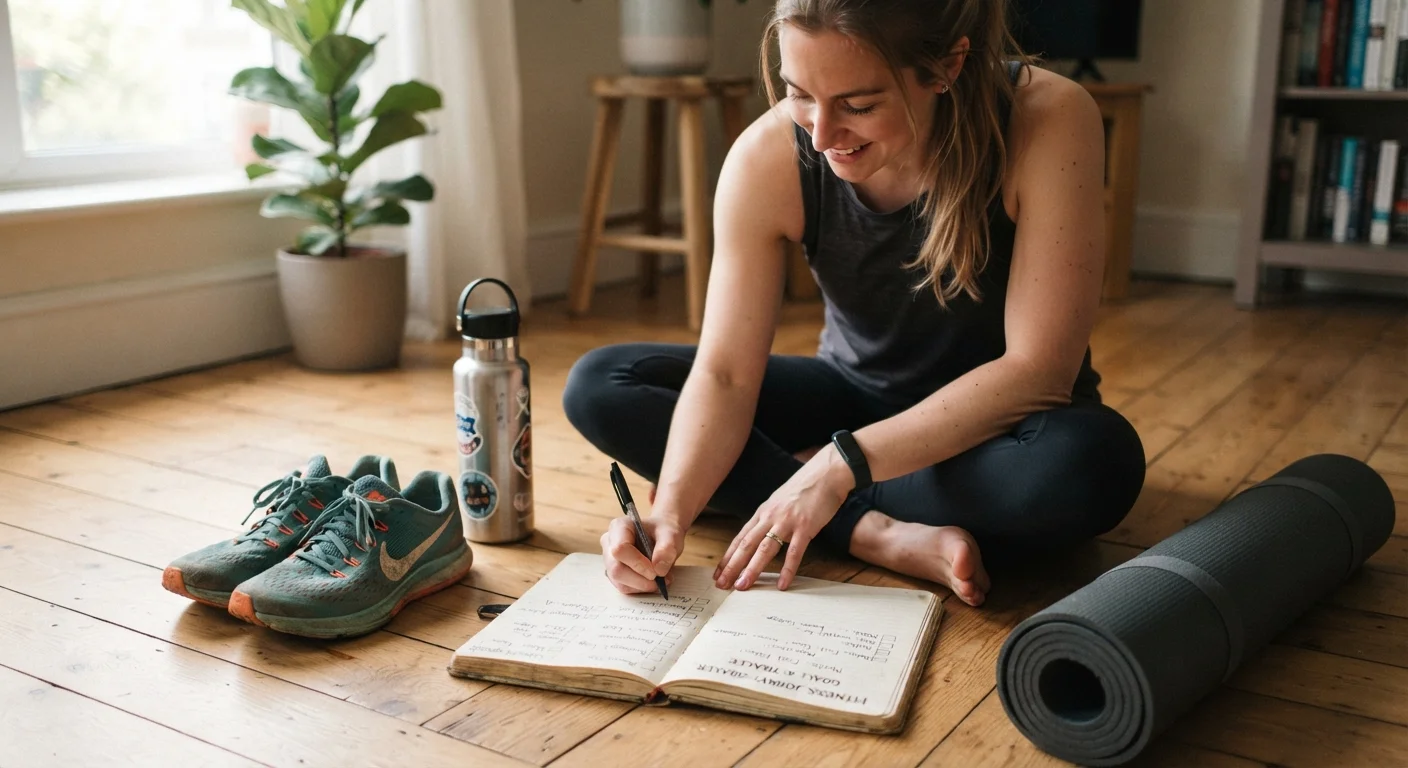
To assess whether your current free routine is balanced across all fitness components, use our free fitness audit checklist. And if you're ready to build a long-term system from scratch, the complete guide to building a lifelong fitness habit covers progression frameworks that cost nothing to implement.