
Why Sheen Level Matters More Than Color
Most people agonize over paint color and barely glance at the sheen label - but sheen often has a bigger impact on daily livability than the hue itself. The right finish protects surfaces, hides flaws, and survives scrubbing. The wrong one shows every fingerprint, peels in humidity, or makes a small room feel like the inside of a gymnasium.
Understanding what each sheen level actually does - not just what it's called - is the practical knowledge that separates a paint job that holds up for a decade from one that needs a touch-up in two years. And since paint costs real money, getting this right the first time directly affects your wallet.
~$30-$60
Average cost per gallon of interior paint
General market pricing in the US; choosing the correct sheen the first time eliminates the cost of a premature repaint.
2-3x
Longer lifespan of washable vs. flat finishes in high-traffic areas
Industry painting guides commonly cite this range when comparing satin or semi-gloss to flat finishes in rooms with heavy use.
Up to 50%
Of DIY paint jobs require a premature touch-up
Painting industry estimates suggest incorrect sheen selection is among the leading causes of early-onset paint failure in residential projects.
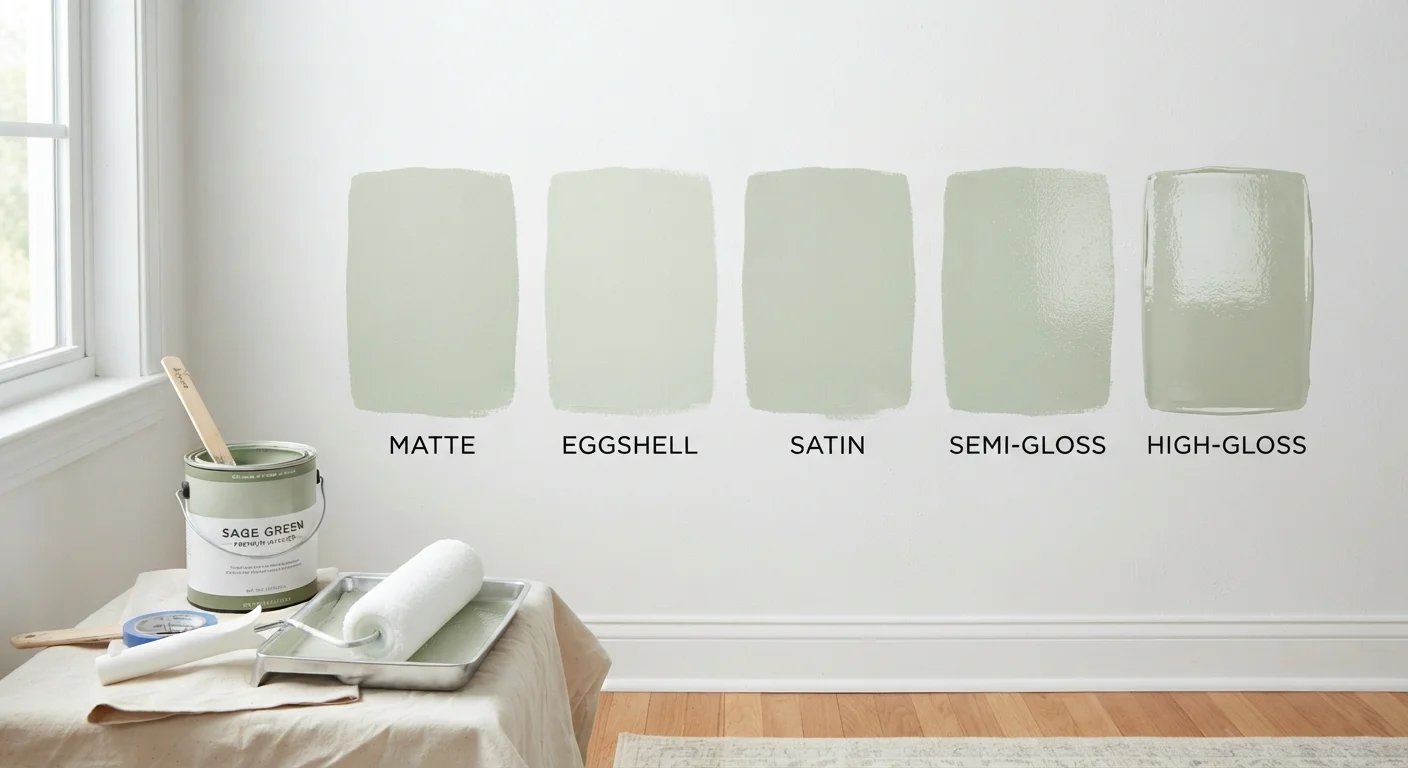
The Sheen Spectrum: Flat to High-Gloss Explained
Flat / Matte
Flat paint reflects almost no light, which makes it exceptional at hiding drywall imperfections, patch repairs, and uneven textures. It is the go-to for ceilings and low-traffic adult bedrooms. The trade-off is scrubability - flat finishes absorb rather than repel stains, and aggressive wiping can remove the paint itself. If you've filled nail holes or repaired cracks, a flat finish over the patched area is often the most forgiving for seamless blending. See our guide to achieving an invisible fill-and-repaint finish for more on that technique.
Eggshell
Eggshell has a very low sheen - comparable to the surface of an actual eggshell. It offers just enough reflectivity to feel slightly warmer and richer than flat, while being meaningfully more washable. This makes it the standard recommendation for living rooms, dining rooms, and adult bedrooms that see moderate use.
Satin
Satin is the workhorse of interior painting. It reflects noticeably more light than eggshell, handles wiping and light scrubbing well, and tolerates humidity better than lower sheens. Hallways, kids' rooms, and family rooms are natural fits. Satin does begin to show roller or brush marks more readily than flatter finishes, so good application technique matters more here.
Semi-Gloss
Semi-gloss is highly washable, moisture-resistant, and durable - which is why it's standard on trim, doors, window frames, and cabinets. In rooms where walls take direct contact or exposure to steam, like kitchens and bathrooms, semi-gloss walls are a practical choice. The higher reflectivity can amplify imperfections on large flat surfaces, so wall prep matters more.
High-Gloss
High-gloss creates an almost lacquer-like finish. It's extremely durable and easy to clean but unforgiving of any surface flaws. It's most often used on furniture, cabinetry, and exterior doors rather than interior walls, where it can feel visually overwhelming.
Room-by-Room Sheen Guide
Test Before You Commit to a Full Room
Buy a sample pot and apply a patch of your chosen sheen next to the existing finish before purchasing full gallons. View it at different times of day and under artificial light - sheen levels look noticeably different under bright overhead lighting versus natural daylight. This $5-$10 test can save you from buying the wrong product in quantity.
| Room | Recommended Sheen | Why It Works |
|---|---|---|
| Ceilings | Flat | Hides texture and roller marks; low-traffic surface |
| Living / Dining Room | Eggshell | Soft look, light washability for occasional marks |
| Bedroom (adult) | Flat or Eggshell | Low traffic; flat hides imperfections beautifully |
| Kids' Room / Hallway | Satin | Handles handprints and frequent wiping |
| Kitchen | Satin or Semi-Gloss | Resists grease, steam, and splashes |
| Bathroom | Semi-Gloss | Moisture and mold resistance; easy to wipe down |
| Trim / Doors / Cabinets | Semi-Gloss or High-Gloss | Maximum durability, defined contrast against walls |
Common Mistakes and How to Avoid Them
Using flat paint in a bathroom is the most frequent sheen misstep - the finish absorbs moisture, and within a season you may see bubbling or mildew. Almost as common is applying semi-gloss to walls that haven't been properly skimmed or sanded, turning every ding and ridge into a visible flaw once light hits the surface.
Another budget-draining error is using high-gloss on large wall areas hoping it will look dramatic - it often just looks hard to live with and reveals application marks. Reserve it for smaller surfaces where its durability earns its keep.
If you're touching up a previously painted wall, matching the sheen is just as critical as matching the color. A flat patch on a satin wall will catch light differently and remain visible. For a detailed look at blending repairs seamlessly, the filling and repainting guide covers what actually works.
Sheen Names Vary by Brand
Paint manufacturers don't use a universal standard for sheen terminology. One brand's 'satin' may be another's 'low-lustre' or 'pearl.' When comparing products, check the gloss unit (GU) value on the technical data sheet rather than relying on the name alone. This is especially important if you're trying to match an existing finish from a different brand.
Getting the Most Value From Your Paint Choice
Premium-quality paint in the right sheen will almost always outlast a budget paint in the wrong sheen. A washable eggshell applied correctly in a living room will keep looking fresh for years; a flat paint in the same space may need recoating within 12 months if kids or pets are in the picture.
When budgeting a paint project, factor sheen into the cost-per-year calculation rather than just the per-gallon price. Two coats of the right finish applied once beats three repaints of the wrong one. The sheen decision costs you nothing extra - it's information, not an upgrade fee.