
Why the Ingredient List Feels So Confusing
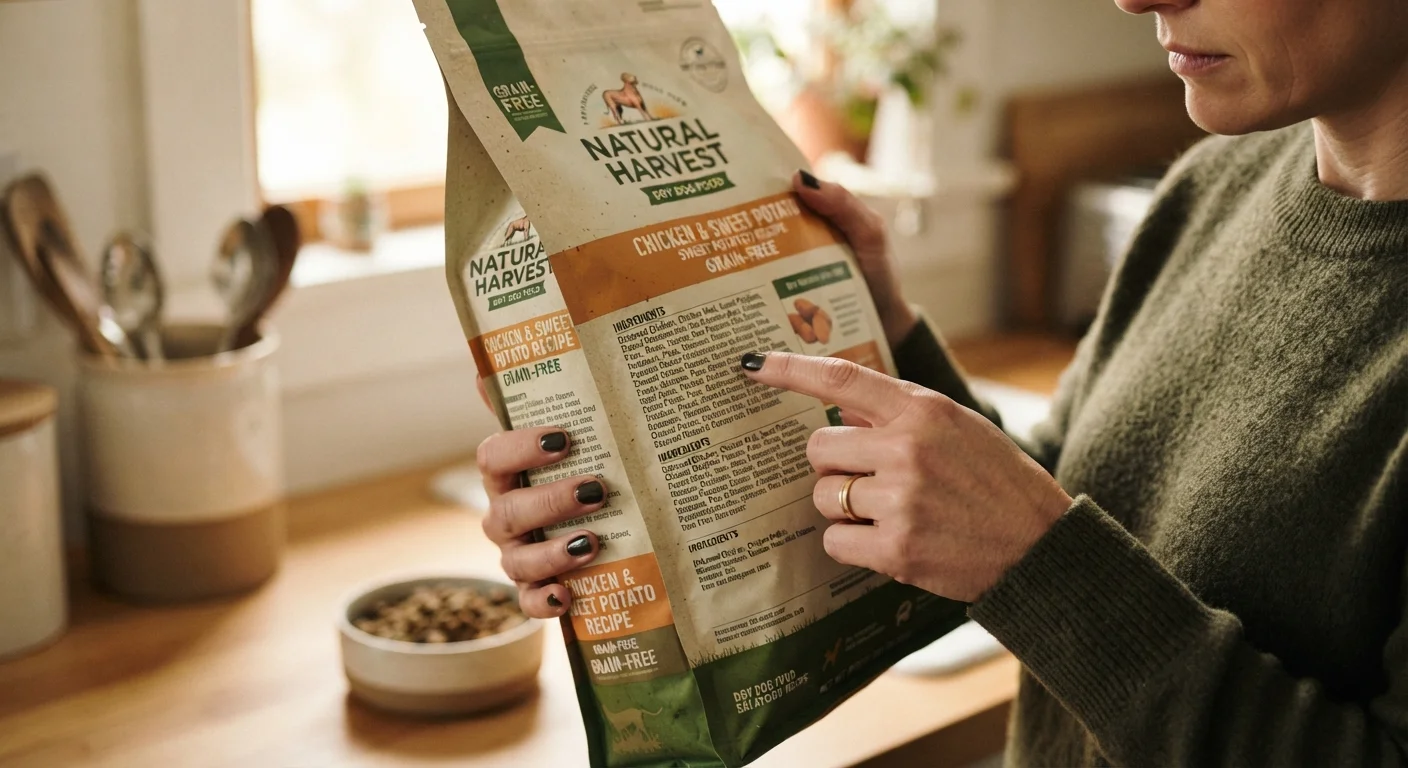
Pet food packaging is designed to market to you, not educate you. Front-of-bag claims like "premium," "natural," or "real meat" are largely unregulated marketing language. The ingredient list on the back or side, by contrast, is a regulated document - but it's written in industry shorthand that takes some decoding.
The good news: once you know a handful of key rules, you can read any label with confidence. You don't need a nutrition degree - just a basic understanding of how the list is structured and what the terminology means. For a plain-language reference on the most common terms, our pet nutrition glossary is a useful companion to keep bookmarked.
The Rules Behind the Ingredient Order
Ingredients are listed in descending order by weight before cooking. This matters because raw animal proteins like chicken or beef contain significant moisture - sometimes 70% water - which pushes them up the list. Once cooked and dried, they shrink considerably. A food that lists "chicken" first isn't necessarily protein-heavy in the final product.
This doesn't mean a first-listed protein is a red flag - it's still a positive sign - but it helps to look at the first five or six ingredients together rather than fixating on position alone.
~70%
Water content in raw chicken
Raw poultry is largely water by weight, which explains why it can rank first on an ingredient list while comprising a smaller portion of the finished, dried product.
50+
Nutrients AAFCO profiles cover
AAFCO's dog and cat nutrient profiles specify minimum (and sometimes maximum) levels for over 50 nutrients, forming the foundation of the 'complete and balanced' claim.
2
Types of AAFCO adequacy claims
A food can claim adequacy either by formulation (calculated to meet nutrient profiles) or by passing AAFCO feeding trials - the latter involves real animal testing over a defined period.
One tactic manufacturers sometimes use is called ingredient splitting: breaking a single ingredient into multiple forms to spread them out. For example, a label might list "ground corn," "corn gluten meal," and "corn flour" separately. If combined, corn could rank higher than the named protein. This is worth watching for, especially in budget foods where grain content tends to be higher.
What Named vs. Generic Ingredients Tell You
The specificity of an ingredient name signals how transparent the manufacturer is being. Compare these examples:
- "Chicken" - a named, specific ingredient. You know what it is.
- "Poultry" - less specific. It could be any bird species.
- "Meat" - vague. AAFCO defines it narrowly, but it still tells you less than a named source.
- "Animal digest" - a flavoring made from chemically or enzymatically treated animal tissue. It's permitted and palatable to pets, but non-specific.
As a general principle, named ingredients allow you to make more informed decisions, especially if your pet has a known protein sensitivity. This doesn't automatically make a food with generic ingredients unsafe - but specificity is a mark of label transparency.
Quick Label Check Before You Buy
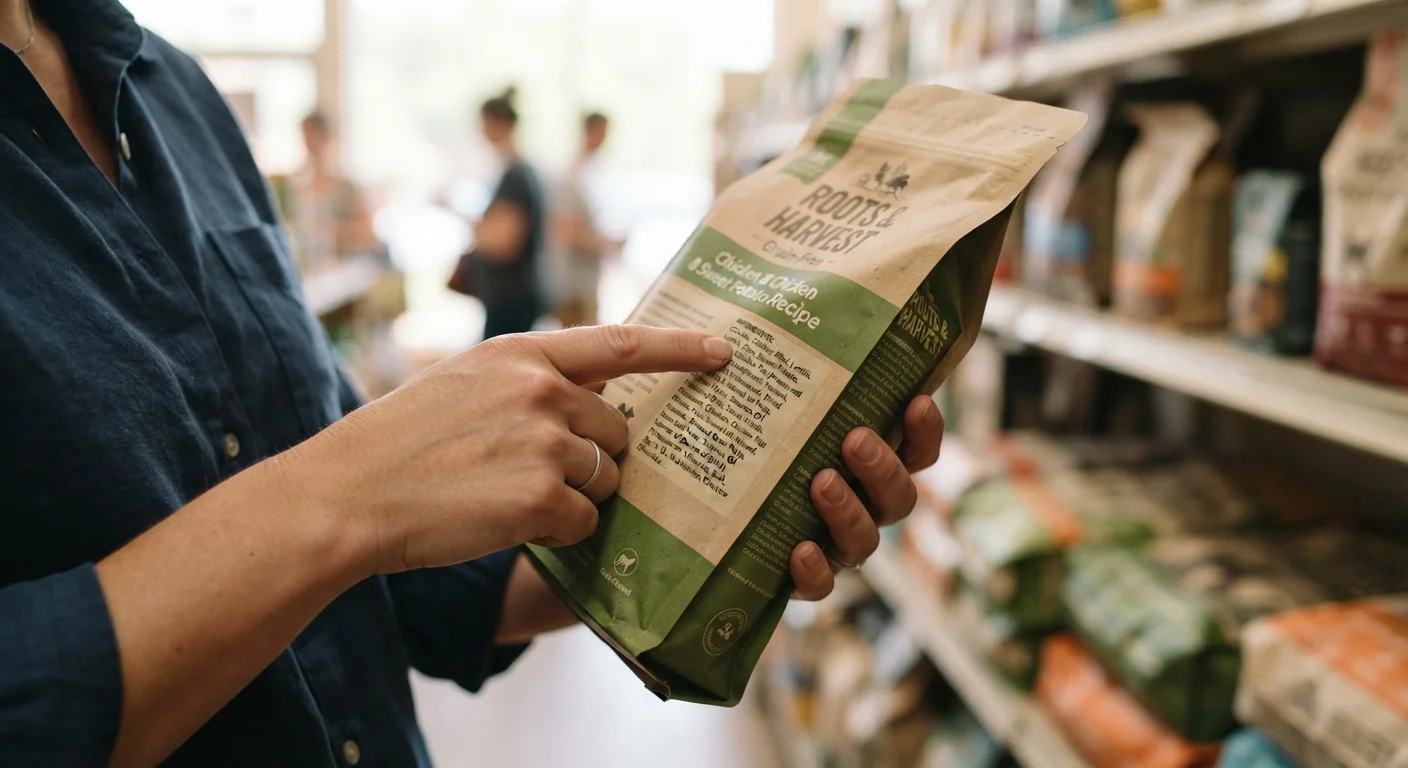
Flip the bag over and find the AAFCO statement before anything else. If you can't locate one - or if the label says 'for intermittent or supplemental feeding only' - the food isn't designed as a complete diet. This single check takes under 10 seconds and rules out a common budget-shopping pitfall.
For a deeper look at how the numbers panel works alongside the ingredient list, see our guide on nutrition labels on pet food.
The AAFCO Statement: The Most Important Line on the Label
Buried near the ingredient list or feeding guide is a short paragraph that carries more weight than most pet owners realize: the AAFCO nutritional adequacy statement. It will say something like: " is formulated to meet the nutritional levels established by the AAFCO Dog Food Nutrient Profiles for adult maintenance."
This statement tells you two critical things: (1) the food meets established minimum nutrient standards, and (2) which life stage it's designed for. Feeding a food labeled for "adult maintenance" to a growing puppy, or vice versa, can create nutritional gaps over time.
If a label says only "formulated to meet" those profiles, the claim is based on calculation. If it says the food was tested using AAFCO feeding trials, that means actual animals were fed the food and their health monitored - a higher bar of evidence, though neither approach guarantees a perfect diet for every individual animal.
Foods without any AAFCO statement - sometimes labeled as "complementary" or "intermittent feeding" - are not designed to be a pet's sole diet. This is an easy thing to miss when comparing prices at the shelf.
This article provides general educational information about pet food labeling and is not a substitute for personalized advice from a licensed veterinarian.
Applying This Knowledge Without Overspending
A higher price tag does not guarantee a better ingredient list, and a lower price doesn't mean a food is nutritionally deficient. Many store-brand and private-label foods meet the same AAFCO standards as name-brand alternatives - our article on store-brand vs. name-brand pet food explores this in more detail.
When evaluating any food on a budget, prioritize these four checks:
- Look for an AAFCO adequacy statement matching your pet's life stage.
- Confirm a named protein source appears in the first two or three ingredients.
- Scan for ingredient splitting that may inflate the apparent ranking of less desirable components.
- Avoid foods labeled only as complementary or for intermittent feeding if this is your pet's primary diet.
For practical strategies on keeping feeding costs manageable while maintaining nutritional quality, see our guide on stretching your pet food budget. And if you're considering making your pet's food at home, review the important considerations in our homemade pet food overview before making the switch.