
The Guaranteed Analysis Panel: What Each Number Tells You
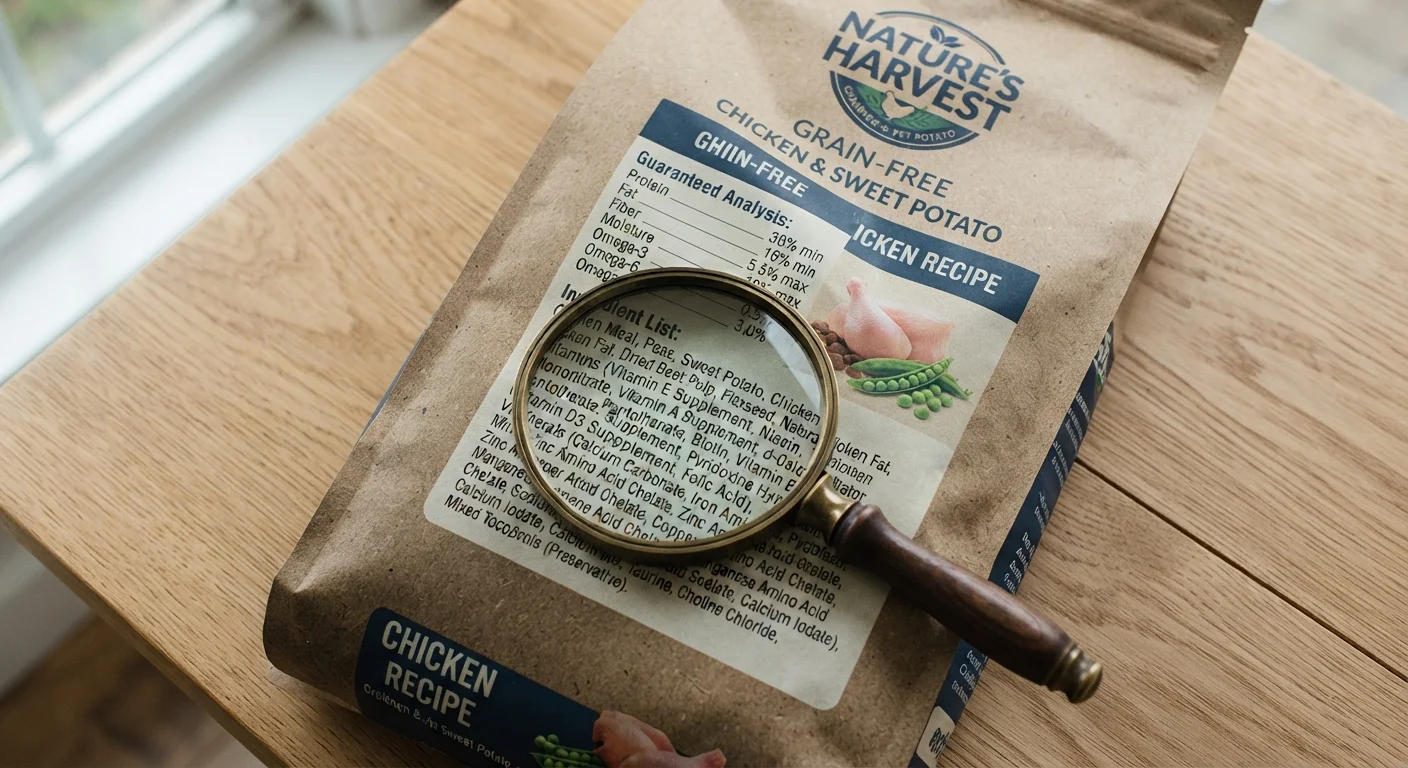
Every bag or can of commercially sold pet food sold in the U.S. must include a Guaranteed Analysis (GA) panel, regulated by the Association of American Feed Control Officials (AAFCO). This panel lists minimum or maximum percentages for four core nutrients: crude protein, crude fat, crude fiber, and moisture. Understanding these numbers is the first step toward comparing foods accurately - without relying on packaging claims.
| Regulating body for U.S. pet food labels | AAFCO (Association of American Feed Control Officials) |
| Typical moisture content - dry kibble | ~10% (AAFCO Pet Food Label Guidelines) |
| Typical moisture content - canned wet food | ~75-82% (AAFCO Pet Food Label Guidelines) |
| GA panel required nutrients | Crude protein, crude fat, crude fiber, moisture |
| Life stages recognized by AAFCO | Growth, adult maintenance, all life stages, senior (not standardized) (AAFCO Model Regulations) |
| "Holistic" on pet food labels | No regulated definition; carries no guaranteed nutritional meaning (FDA Pet Food Labeling Overview) |
Crude protein shows the minimum percentage of protein by weight - but "crude" means it measures nitrogen content, not digestibility. A food could meet a protein minimum using ingredients your pet absorbs poorly. That's why ingredient quality matters alongside the number itself.
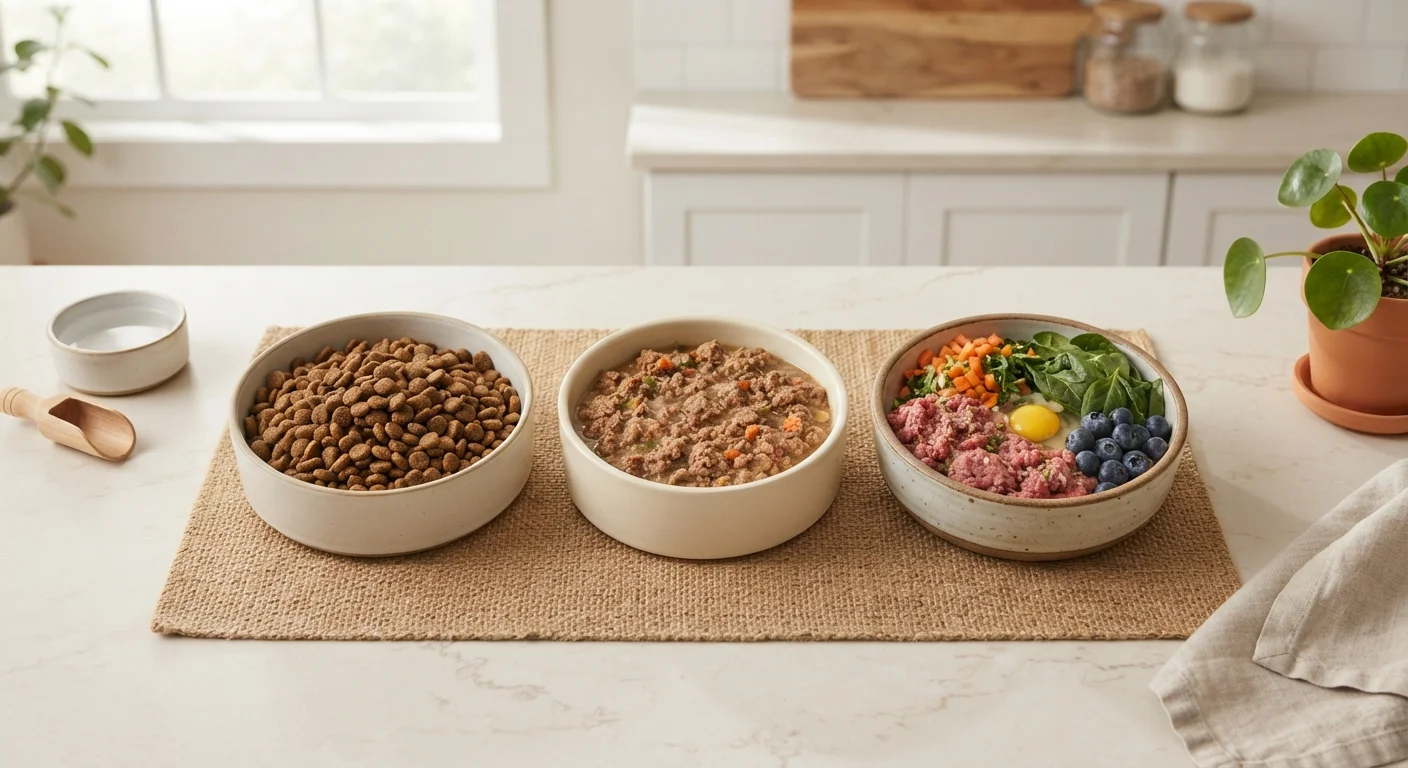
Crude fat (minimum) fuels energy and supports skin and coat health. Crude fiber (maximum) signals the upper limit of indigestible plant material. Moisture varies significantly between dry (around 10%) and wet (around 78%) foods - a critical point when comparing labels across formats. See our full breakdown of feeding format costs to understand how moisture affects cost per serving.
To compare a wet food and a dry food fairly, you need to convert both to a dry matter basis (DMB): subtract the moisture percentage from 100, then divide the nutrient percentage by that figure. For example, a wet food with 8% protein and 78% moisture has a dry matter protein of roughly 36% - comparable to many dry foods.
Ingredient Lists, AAFCO Statements, and Feeding Guides
Ingredients are listed by pre-cooking weight in descending order. That means the first few ingredients make up the largest portion of the recipe - but this can be misleading. A manufacturer can list three separate forms of corn (corn, corn gluten meal, corn flour) individually, which collectively outweigh a protein listed first. This is sometimes called ingredient splitting.
Guaranteed Analysis (GA)
A mandatory label panel listing minimum or maximum percentages of crude protein, crude fat, crude fiber, and moisture in a pet food. It provides a standardized way to compare nutrient content across brands and formats.
Dry Matter Basis (DMB)
A calculation that removes moisture from the equation so you can compare nutrient levels fairly across wet and dry foods. Divide the nutrient percentage by (100 minus the moisture percentage).
AAFCO Nutritional Adequacy Statement
A required label statement indicating whether a food meets AAFCO nutrient profiles for a specific life stage, and whether that was established through formulation or feeding trials.
Ingredient Splitting
A labeling practice where a single ingredient source is listed under multiple names (e.g., corn, corn gluten meal, corn flour), making it appear lower on the ingredient list than its combined quantity would warrant.
Crude Protein
A measure of total nitrogen content in a food, used to estimate protein percentage. It reflects quantity but not digestibility or amino acid completeness.
Meat Meal
A rendered, concentrated form of meat with moisture removed. It typically contains more protein per ounce than fresh meat listed by pre-cook weight, and is a legitimate protein source in many pet foods.
Look for a named protein source (e.g., "chicken," "salmon") rather than vague terms like "meat" or "poultry." Meal forms ("chicken meal") are concentrated and not inherently inferior - they often deliver more protein per ounce than fresh meat, which is mostly water before cooking. Our companion piece on reading ingredient labels without a degree breaks down specific terms in plain language.
The AAFCO nutritional adequacy statement is one of the most important lines on any label. It tells you whether the food was formulated to meet AAFCO nutrient profiles or was tested via feeding trials - and for which life stage (adult maintenance, growth, or all life stages). A food labeled for "all life stages" meets higher nutrient minimums and is suitable for puppies and kittens. A food with no adequacy statement is not intended as a complete diet.
Feeding guides give daily serving recommendations based on body weight, but they are starting estimates only. Actual needs vary based on activity level, health status, and individual metabolism. Overfeeding based on package guidance is a common cause of pet weight gain - and unnecessary food expense. For a structured way to evaluate any food before buying, see our budget-focused evaluation checklist.
Finally, premium marketing language - words like "human-grade," "natural," or "holistic" - has limited regulatory meaning on pet food labels. These terms don't guarantee superior nutrition. Comparing the GA panel and AAFCO statement of a store-brand and a premium product often reveals far less difference than the price gap suggests. Our article on store-brand vs. name-brand nutrition examines exactly that question.
This article provides general nutritional education for pet owners and is not a substitute for guidance from a licensed veterinarian. For questions about your specific pet's dietary needs, consult a qualified veterinary professional.