

Why This Topic Matters for Budget-Conscious Pet Owners
Prescription medications are a reality for many pets - from flea and tick preventives to thyroid drugs and antibiotics. When your veterinarian hands you a prescription, the brand-name option may carry a price tag that strains a tight budget. Generics can offer real relief, but persistent myths keep many pet owners from considering them.
Understanding how generic pet medications actually work - and where the science stands - helps you have a more informed conversation with your vet. This article is for general educational purposes only; always consult your veterinarian before starting, stopping, or switching any pet medication.
For a broader look at how price relates to quality in pet products, see our article on whether cheap pet food is always inferior.
Myth
Generic pet medications are lower quality than brand-name drugs because they cost less.
Fact
Lower cost reflects the absence of research and marketing overhead - not a reduction in active ingredient quality or potency.
Brand-name drug companies invest heavily in original research, clinical trials, and marketing. Once their patent expires, generic manufacturers can produce the same active compound without those upfront costs. The FDA requires that the active ingredient, strength, dosage form, and route of administration be identical. The price difference is a reflection of business economics, not product quality.
Myth
Generic medications are not regulated as strictly as brand-name drugs.
Fact
The FDA's Center for Veterinary Medicine holds generic veterinary drugs to the same bioequivalence standards applied to brand-name drugs.
Generic manufacturers must meet FDA manufacturing standards, demonstrate bioequivalence through pharmacokinetic studies, and pass facility inspections. Approval is not automatic - it requires documented evidence. The regulatory rigor is comparable to that applied to the originator product; what differs is that generics build on an already-established safety and efficacy record.
Myth
If my vet prescribes a brand-name drug, the generic won't work the same way.
Fact
For most medications, an FDA-approved generic is designed to perform equivalently in the body - but switching should always be done with your vet's guidance.
Bioequivalence means the generic reaches the same concentration in the bloodstream within an acceptable statistical margin. For the vast majority of veterinary medications, this translates to equivalent therapeutic effect. That said, your veterinarian should approve any switch, particularly for medications where consistent blood levels are clinically important.
Myth
Generic pet medications always look different, so they must be a different product.
Fact
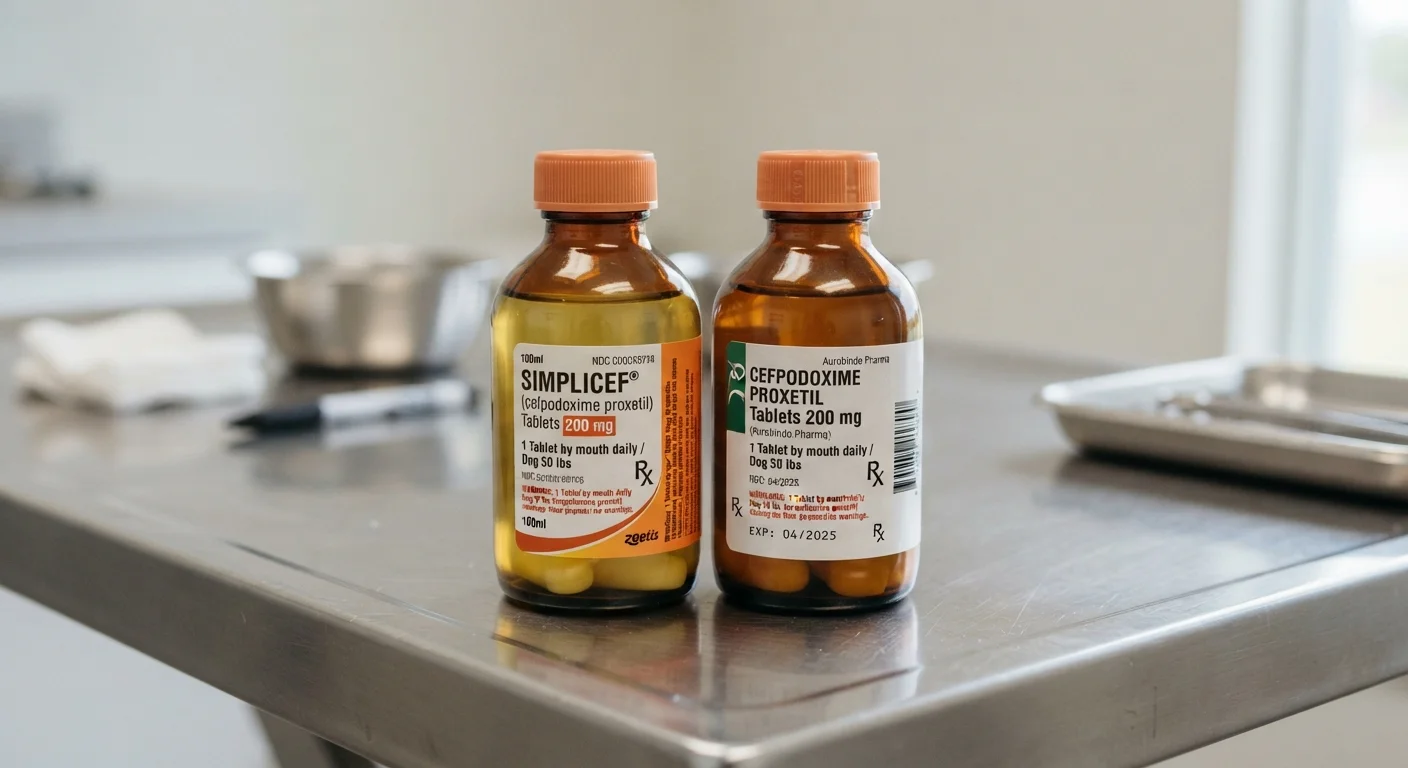
Appearance can legally differ - color, shape, and inactive ingredients may vary - but the active ingredient and its amount must be the same.
Trademark law prevents generics from copying the exact appearance of a brand-name pill or package. This is purely a legal distinction, not a pharmacological one. The active compound - the molecule responsible for the drug's effect - must be chemically identical in type and quantity. If a tablet looks different but contains the same active ingredient at the same dose, it is still a therapeutically equivalent product under FDA standards.
Myth
Switching to a generic mid-treatment will destabilize my pet's condition.
Fact
For many conditions, switching is safe if done with veterinary oversight, though some narrow therapeutic index drugs require extra care.
Most common veterinary drugs - antibiotics, anti-inflammatories, antiparasitics - can be switched to an approved generic without issue. However, drugs like phenobarbital or levothyroxine, where precise blood levels are monitored, may warrant additional testing after any formulation change. This is not a generic-specific concern; even switching between two brand-name formulations could require monitoring. The key is always to involve your vet in the decision.
What Regulation Actually Requires
In the United States, the FDA's Center for Veterinary Medicine (CVM) oversees the approval of generic animal drugs. A generic must demonstrate bioequivalence - meaning it delivers the same active ingredient to the bloodstream at the same rate and to the same extent as the reference brand drug. This is not an optional standard; it is a legal requirement for market approval.
Manufacturers of generics do not need to repeat the full safety and efficacy trials conducted on the original drug, but they must prove their product performs equivalently. This is the same framework used for human generic medications, and it is why generics are broadly accepted in human medicine as well.
30-80%
Typical cost savings with generic pet medications
Generic human drugs save an estimated $300 billion annually in the U.S., and comparable savings patterns are observed in veterinary generics where available.
~80%
Share of U.S. human prescriptions filled as generics
According to the FDA, approximately 80% of prescriptions dispensed in the U.S. are generics - reflecting broad acceptance of the bioequivalence standard.
If you're curious how this principle applies beyond pet medications, our guide on where the generic quality gap is real and where it isn't explores the broader consumer landscape.
When to Pause and Talk to Your Vet
Generics are not a one-size-fits-all solution. Certain drug categories - such as narrow therapeutic index drugs, where small differences in blood levels can matter - may require extra caution when switching. Phenobarbital, used in dogs with epilepsy, is a commonly cited example where veterinarians often prefer consistency in formulation.
Additionally, some pets with known sensitivities may react to different inactive ingredients (fillers, binders, flavorings) used in a generic versus the brand. This does not make the generic inferior - it simply means the individual pet's response matters.
Never Switch Medications Without Vet Approval
Even when a generic is FDA-approved, switching formulations for certain conditions - especially epilepsy or thyroid disorders - should always be done under veterinary supervision. Abruptly changing a stabilized pet's medication without guidance can introduce unnecessary risk. Ask your vet specifically whether a generic is appropriate for your pet's condition and current health status.
Cost savings from generics can be meaningful for long-term medications. However, the right decision always depends on your pet's specific condition, history, and your vet's clinical judgment. The supplement marketing and your pet guide is another useful resource for navigating pet health spending wisely.
This article provides general educational information about veterinary medications and is not a substitute for professional veterinary advice. Always consult a licensed veterinarian before making any changes to your pet's medication regimen.