
Why Indoor Cats Need a Structured Enrichment Routine
Indoor cats live longer, on average, than cats with outdoor access - but the trade-off is a more restricted environment. Without the territory to patrol, prey to hunt, and novel stimuli to encounter, indoor cats can quickly become understimulated. The result is often a cluster of behavioral problems: excessive grooming, aggression, furniture destruction, or persistent yowling - all of which are expensive to address after the fact.
Building a daily enrichment routine is preventive care in its simplest form. It costs very little, requires no specialized knowledge, and can be adapted around almost any schedule. The approach described here draws on established principles of feline behavioral health - specifically the importance of mimicking natural hunt-catch-eat cycles and providing environmental complexity. For a broader look at what hands-on cat care can involve, the comprehensive pet care guide is a useful companion resource.
Enrichment Is Not Optional for Indoor Cats
Cats confined indoors without adequate stimulation are at elevated risk for anxiety, obesity, and destructive behaviors. These conditions often lead to costly veterinary visits. A daily enrichment routine is one of the most effective preventive care steps you can take - and it costs very little to implement.
Budget-conscious pet owners will find that enrichment is one of the highest-value investments of time they can make. Preventing stress-related illness and destructive behavior means fewer emergency vet visits and less replacement of damaged household items.
What You'll Need to Get Started
What you will need
Interactive wand or feather toy
Simulates prey movement to trigger a cat's hunting instinct during active play sessions.
Puzzle feeder or food-dispensing toy
Slows mealtime and provides mental stimulation by requiring the cat to work for food.
Cat tree or window perch
Gives the cat vertical space and an outdoor view, satisfying the need to observe and climb.
Paper bags or cardboard boxes
Low-cost exploration and hiding opportunities that satisfy curiosity and reduce stress.
Small bell or crinkle ball
Encourages solo play between scheduled interactive sessions.
Most of the tools listed above are either free (cardboard boxes, paper bags) or modestly priced. You do not need a large collection of toys - a few well-chosen items rotated regularly are more effective than many items left out constantly. For guidance on crafting enrichment items at home, consult our article on safe homemade pet enrichment toys before making anything yourself.
Avoid Unsafe DIY Materials
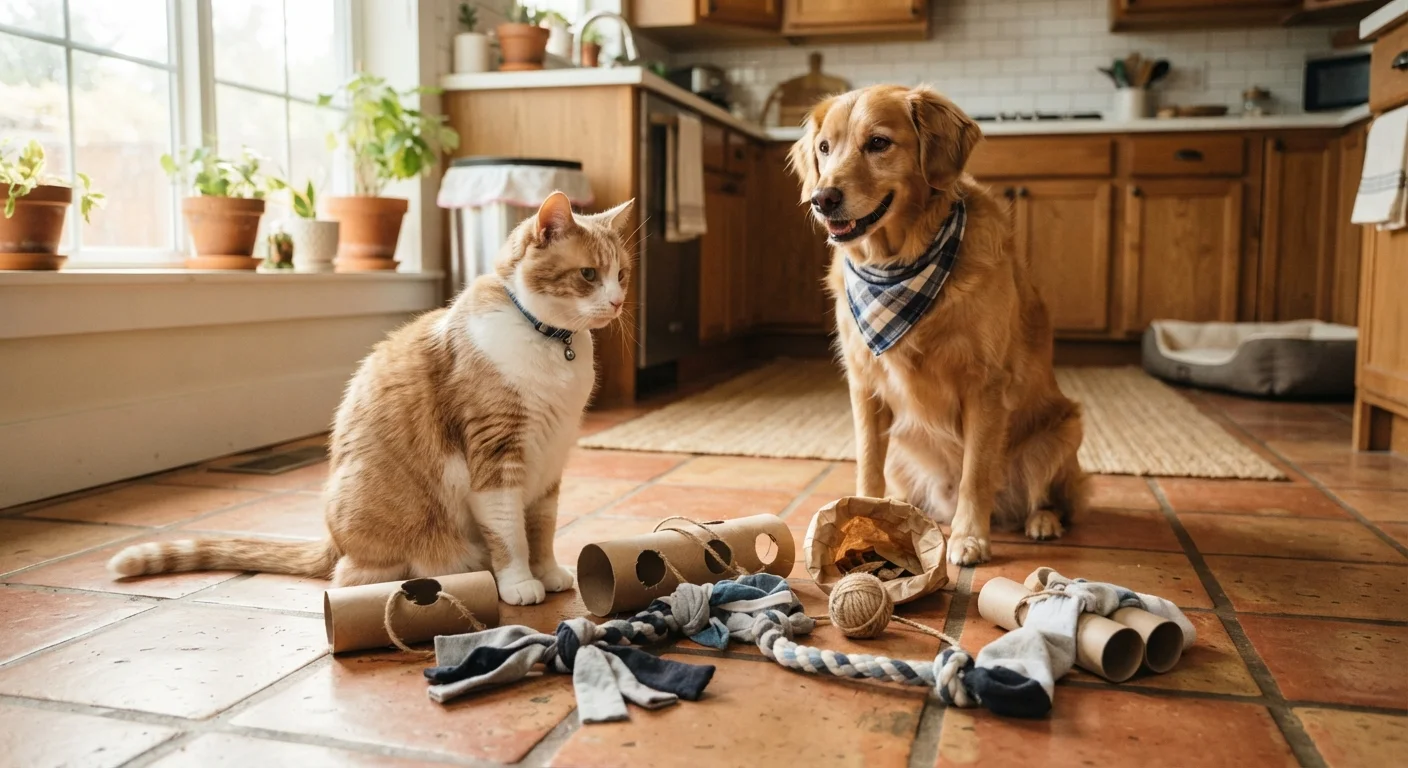
Not every household item is safe for cat enrichment. Rubber bands, small plastic pieces, and string can be swallowed and cause intestinal blockages. Before crafting any homemade toy, review what materials are genuinely safe for your cat.
Building the Routine Step by Step
Assess Your Cat's Current Activity Level
Before building a routine, spend two or three days observing when your cat is most active. Most cats follow a crepuscular pattern - naturally more alert at dawn and dusk. Note when your cat initiates play, vocalizes, or seems restless. This baseline helps you schedule enrichment at times when your cat is already primed to engage, making the routine easier to maintain.
Set Up Environmental Enrichment Stations
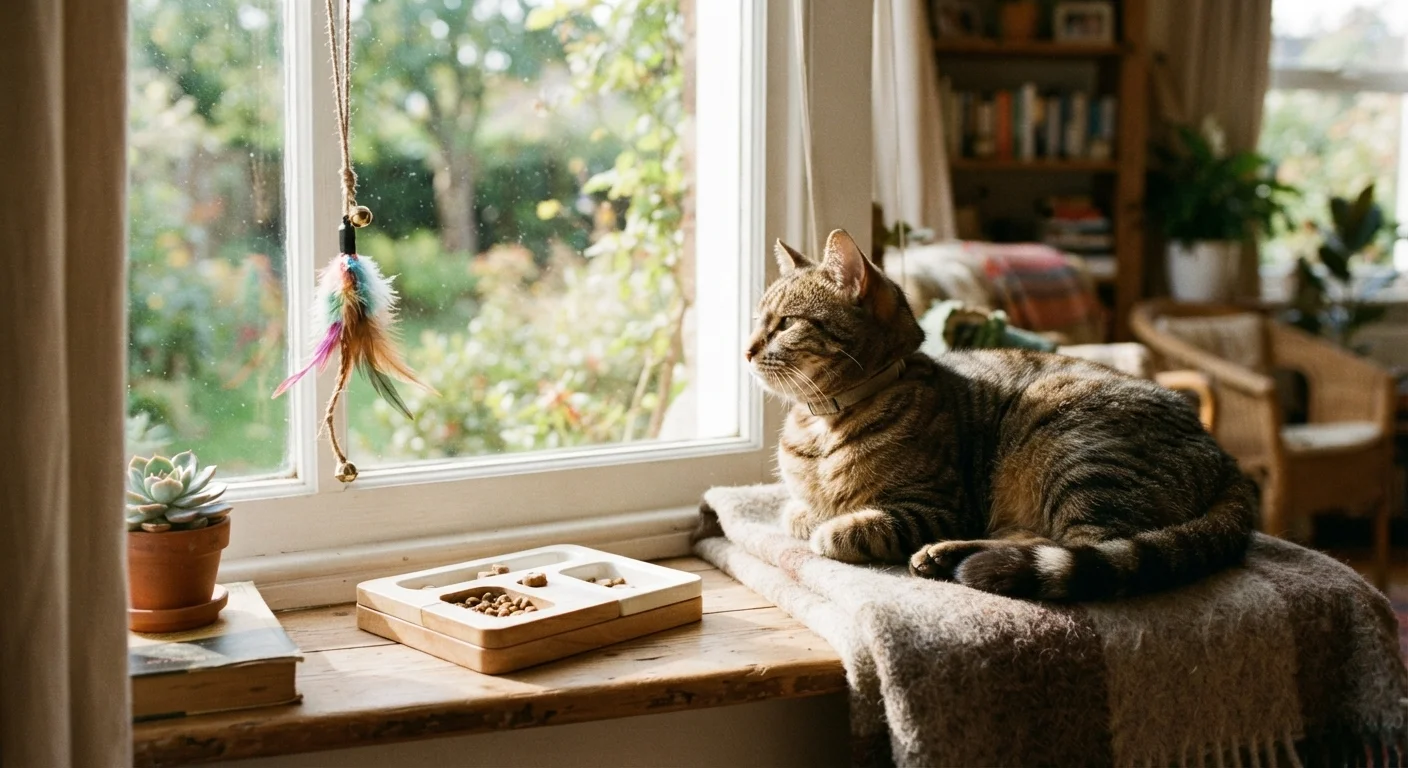
Designate two or three spots in your home as enrichment zones. These might include a window perch with an outdoor bird view, a cardboard box tunnel on the floor, and a shelf cleared for climbing. Environmental enrichment works passively - it stimulates your cat even when you're not present. Rotate items between zones weekly to sustain interest without spending more money.
Schedule Two Daily Interactive Play Sessions
Commit to two structured play sessions per day - one in the morning and one in the evening - each lasting 10 to 15 minutes. Use a wand toy, feather teaser, or crinkle ball to mimic prey movement: quick darts, sudden pauses, and retreats. End each session with a small treat or meal to complete the hunt-catch-eat cycle, which satisfies instinctual needs and promotes calm afterward.
Introduce a Puzzle Feeder at Mealtimes
Replace at least one daily meal in a standard bowl with a puzzle feeder or food-dispensing toy. You can also make a simple DIY version using a muffin tin covered loosely with tennis balls. This transforms feeding into a problem-solving activity, slows eating (which supports healthy digestion), and occupies your cat mentally for 10-20 minutes without any additional time investment from you.
Add a Midday Sensory Activity
If you work from home or have a midday break, add a brief sensory activity. Options include placing a small amount of dried catnip or silver vine on a mat, opening a window safely with a secure screen so your cat can experience outdoor sounds and smells, or hiding a few kibble pieces around the room for your cat to locate. These take under five minutes and break up long stretches of inactivity.
Track Progress and Adjust Weekly
After one week, review how your cat is responding. Signs that enrichment is working include reduced vocalization, less furniture scratching, more relaxed posture, and a willingness to engage during scheduled sessions. If your cat seems disinterested in certain activities, swap them out. Enrichment routines should evolve with your cat's preferences. Check in monthly alongside other at-home care tasks - see the monthly pet care checklist for a fuller picture of what to monitor.
Rotate Toys to Keep Things Fresh
Cats habituate quickly to the same stimuli. Rotating a small set of toys every few days - rather than buying new ones - maintains novelty at no extra cost. Store unused toys in a bag for a week, then swap them back in.
Once the routine is established, most owners spend 20-30 minutes per day in direct engagement, with environmental enrichment running passively in the background. For more low-cost activity ideas that work across different pet types, the guide on pet enrichment on a shoestring offers additional inspiration.
This article is for general informational purposes only and does not constitute veterinary advice. If your cat displays signs of illness, persistent behavioral change, or significant distress, consult a licensed veterinarian.