
Why Enrichment Matters — and Why It Doesn't Have to Cost Much
Mental stimulation is as important to a pet's health as food and exercise. Without enough cognitive engagement, dogs, cats, and small animals can develop stress-related behaviors — excessive barking, destructive chewing, over-grooming, or lethargy. The good news is that effective enrichment rarely requires a shopping trip.
Many of the most engaging activities for pets rely on something money can't replicate: your time and attention. This is also what makes enrichment one of the best tools for budget-conscious pet owners. A cardboard box, a few kibble pieces, or a sock tied in a knot can occupy a curious animal for longer than the average store-bought toy. The key is knowing which activities match your pet's species, age, and temperament.
This list covers practical, low-cost enrichment strategies for dogs, cats, and small animals. For ideas on keeping other care costs manageable, see our guide on stretching your pet food budget without cutting nutritional corners.
Turn Mealtime Into a Puzzle
Rather than placing food in a bowl, scatter kibble across a snuffle mat, hide it in muffin tin cups covered with tennis balls, or tuck it inside a rolled-up towel. This engages your pet's nose and slows down eating — a benefit for dogs prone to gulping. For cats, spreading wet food thinly on a lick mat (or even a clean plate) adds a foraging layer to an ordinary meal.
Small animals like rabbits and guinea pigs also benefit from forage-style feeding. Hiding leafy greens in hay or tucking pellets into paper bags encourages natural foraging behavior at zero extra cost.
Scatter feeding uses your pet's nose and brain together — no equipment required.
Use Cardboard Boxes as Exploration Stations
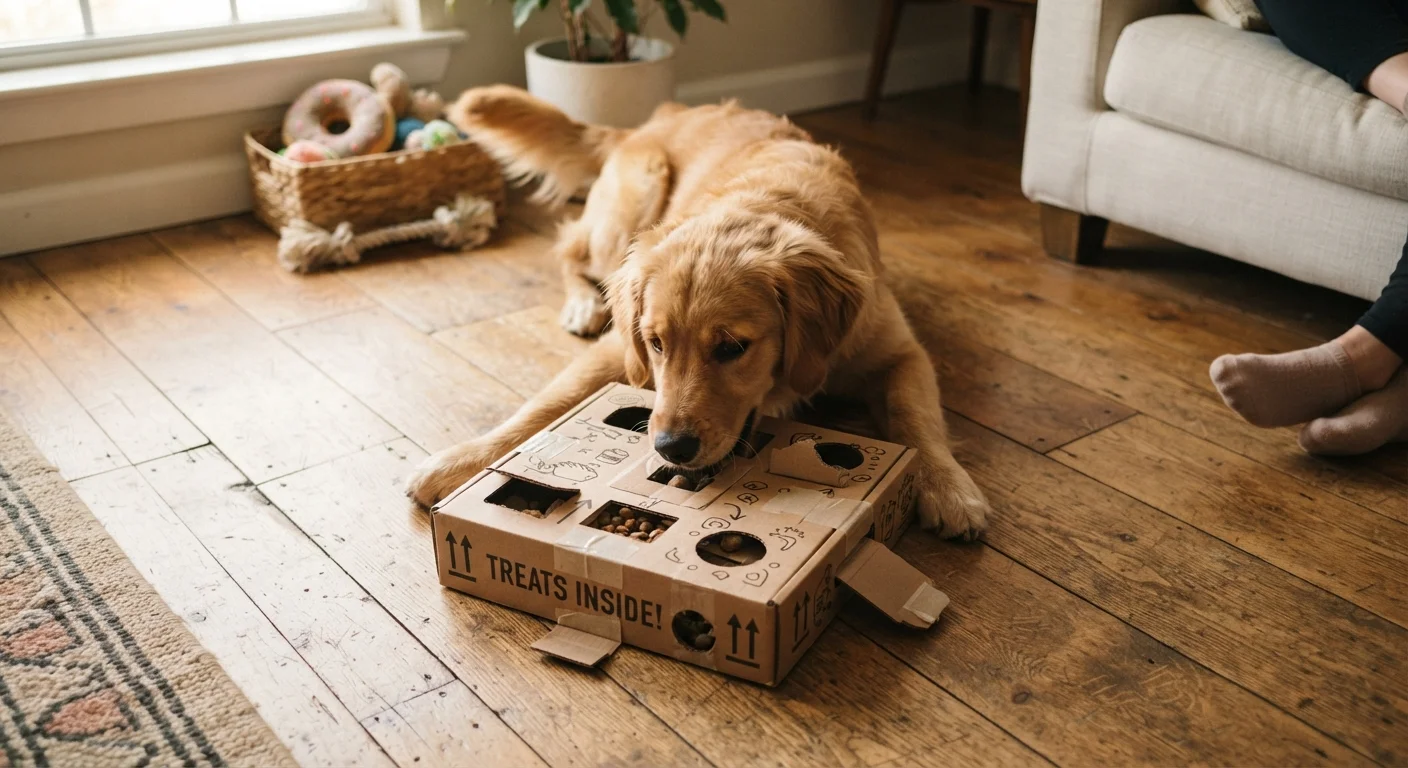
Cardboard boxes are free, endlessly reusable, and irresistible to most pets. Cats love boxes as hiding spots and vantage points. Dogs enjoy sniffing out treats hidden under flaps or inside crumpled paper. For rabbits, a cardboard tunnel or chew box stuffed with hay provides both enrichment and dental wear — an important health benefit.
You can cut holes in boxes for cats to bat at or peer through, or stack several to create a temporary maze. Always remove tape, staples, and ink-heavy printed sections before letting your pet interact with cardboard.
A plain cardboard box is one of the most versatile — and free — enrichment tools available.
Practice Nose Work at Home
Nose work — training a dog or cat to locate a specific scent — is a recognized enrichment discipline that tires pets out mentally far faster than physical exercise alone. At home, you can start simply: hide a small treat under one of three cups and let your dog sniff to find it. Gradually increase difficulty by using more cups, different rooms, or lower-value treats that require more focused searching.
Cats can also learn simple hide-and-seek scent games. This kind of activity is especially useful for rainy days, apartment living, or senior pets with limited mobility who still need cognitive engagement.
Nose work tires dogs out mentally faster than a long run — and costs nothing to start.
Rotate Toys to Restore Novelty
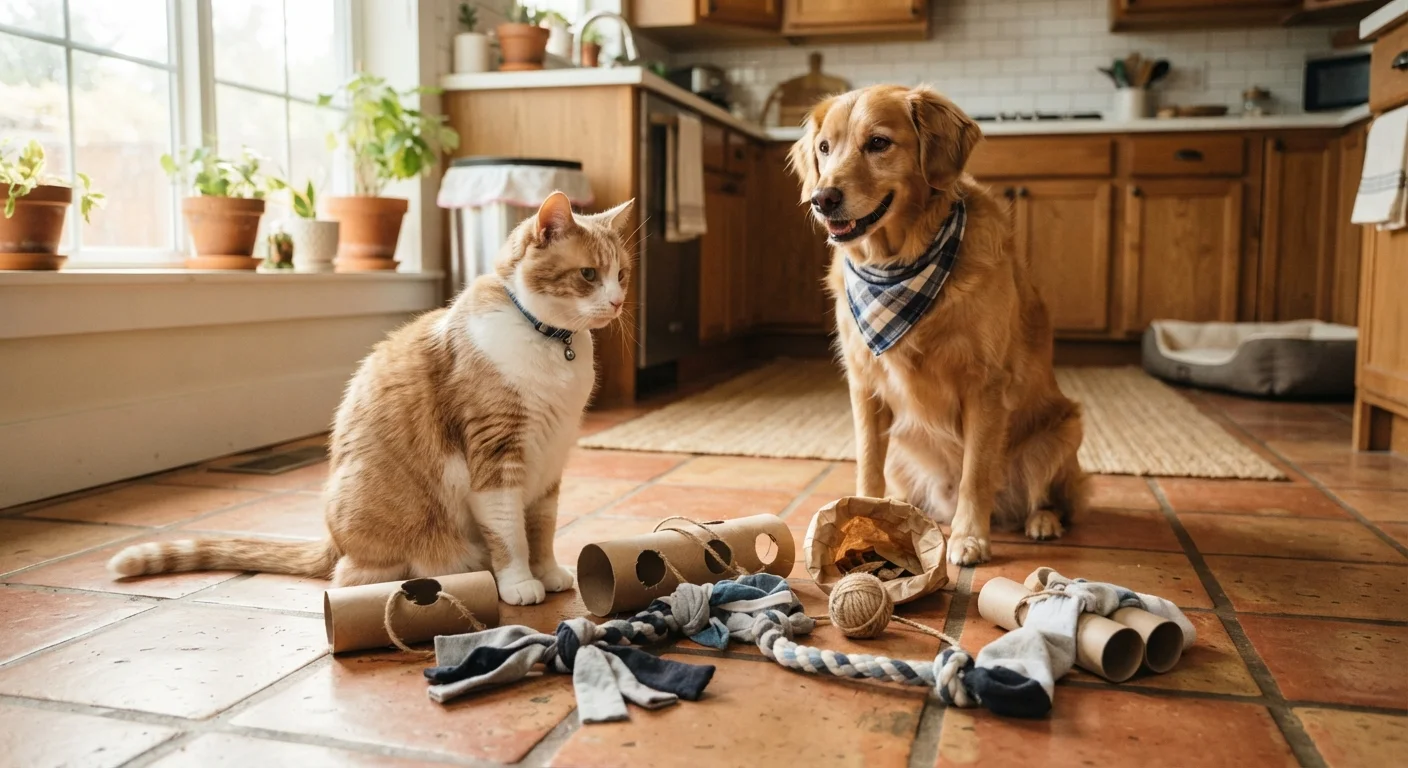
You don't need more toys — you need better toy management. Pets habituate quickly to the same items left out continuously. Rotating toys every few days makes each object feel new again when it reappears. Store half your current collection in a bin or closet and swap them on a weekly schedule.
Introducing a familiar toy after a short absence often produces the same exploratory enthusiasm as a brand-new purchase. This strategy works across species and is one of the simplest ways to get more mileage from what you already own.
A toy hidden for a week feels brand-new when it reappears — save money by rotating, not buying.
Teach New Skills Using Positive Reinforcement
Training isn't just about obedience — it's one of the richest forms of mental enrichment available to dogs and cats alike. A short five-to-ten-minute session of learning a new cue or trick uses real cognitive effort and builds confidence. All you need is your pet's regular kibble or small food treats.
Dogs benefit enormously from learning basic commands without a trainer using reward-based methods you can apply at home for free. Cats can also be trained with patience and high-value treats — targeting, sit, and recall are realistic starting points for most cats.
A ten-minute training session can be more tiring for a dog's brain than an hour-long walk.
Create Sensory Experiences Outdoors on a Budget
New smells, sounds, and textures are enriching in themselves. For dogs, varying your walking route — even slightly — provides substantial sensory novelty. Letting your dog sniff freely during part of the walk (often called a "sniff walk" or "decompression walk") is low-effort and highly stimulating.
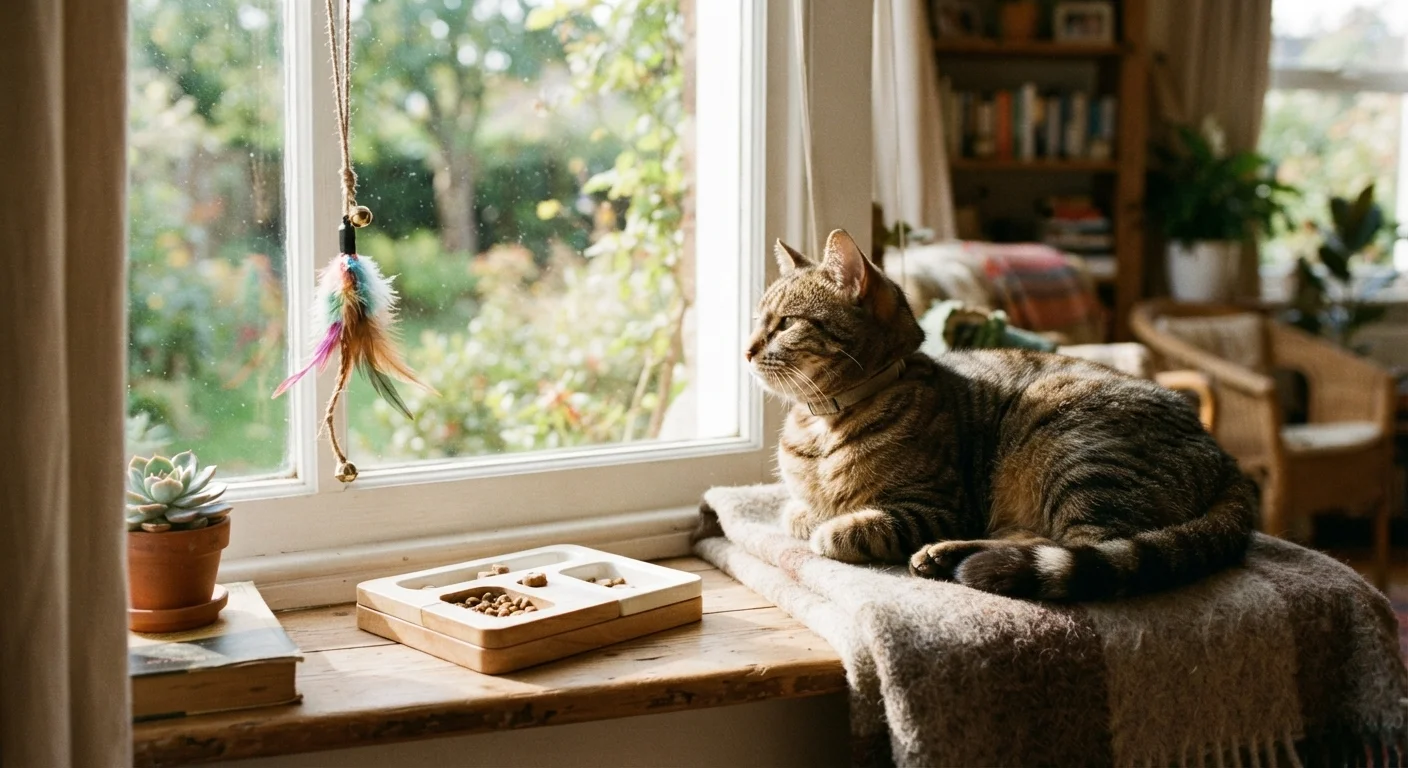
For cats in safe environments, a screened window perch, bird feeder placed in a window's sightline, or a leash harness for supervised outdoor time can all expand their world without significant cost. Small animals like guinea pigs can benefit from supervised outdoor time on grass in a secure pen, giving them access to natural smells and textures that indoor life doesn't provide.
A slow sniff walk offers dogs more mental enrichment than a fast-paced jog on the same path.
Building Enrichment Into Everyday Life
The most sustainable enrichment routines are the ones woven into what you're already doing. Feeding time, walks, and play sessions are all opportunities to add mental challenge without any extra expense. Spreading small enrichment moments throughout the day — rather than one long session — tends to be more effective for most pets.
Start Small and Build Gradually
If your pet is new to enrichment activities, introduce one idea at a time rather than overhauling their entire routine at once. Some animals — especially rescues or senior pets — may need time to feel comfortable with novel objects or challenges. Watch for signs of stress (freezing, hiding, refusing food) and simplify if needed. Enrichment should always feel like play, not pressure.
If you have an indoor cat, a structured daily routine can make a significant difference in mood and behavior. Our article on building a daily enrichment routine for indoor cats walks through how to plan those sessions simply and consistently. And if you're interested in making DIY toys, review what materials are safe first — see homemade pet enrichment toys: what's safe and what isn't before you start crafting.
Enrichment is also part of a broader picture of hands-on care that saves money over time. Pets with lower stress levels tend to have fewer behavior-related vet visits. For a full overview of at-home pet care practices, visit everything you need to know about caring for your pet at home.
This article is for general informational purposes only and does not constitute veterinary advice. If your pet shows signs of anxiety, compulsive behavior, or sudden behavioral changes, consult a licensed veterinarian or certified animal behaviorist.