
Why Homemade Enrichment Toys Are Worth Your Time
Mental stimulation is as important as physical exercise for most pets. Boredom can lead to destructive behavior, anxiety, and even stress-related health problems in dogs, cats, and small animals alike. Store-bought enrichment toys can be expensive - and pets often lose interest in them quickly. Making your own toys from household materials solves both problems at once.
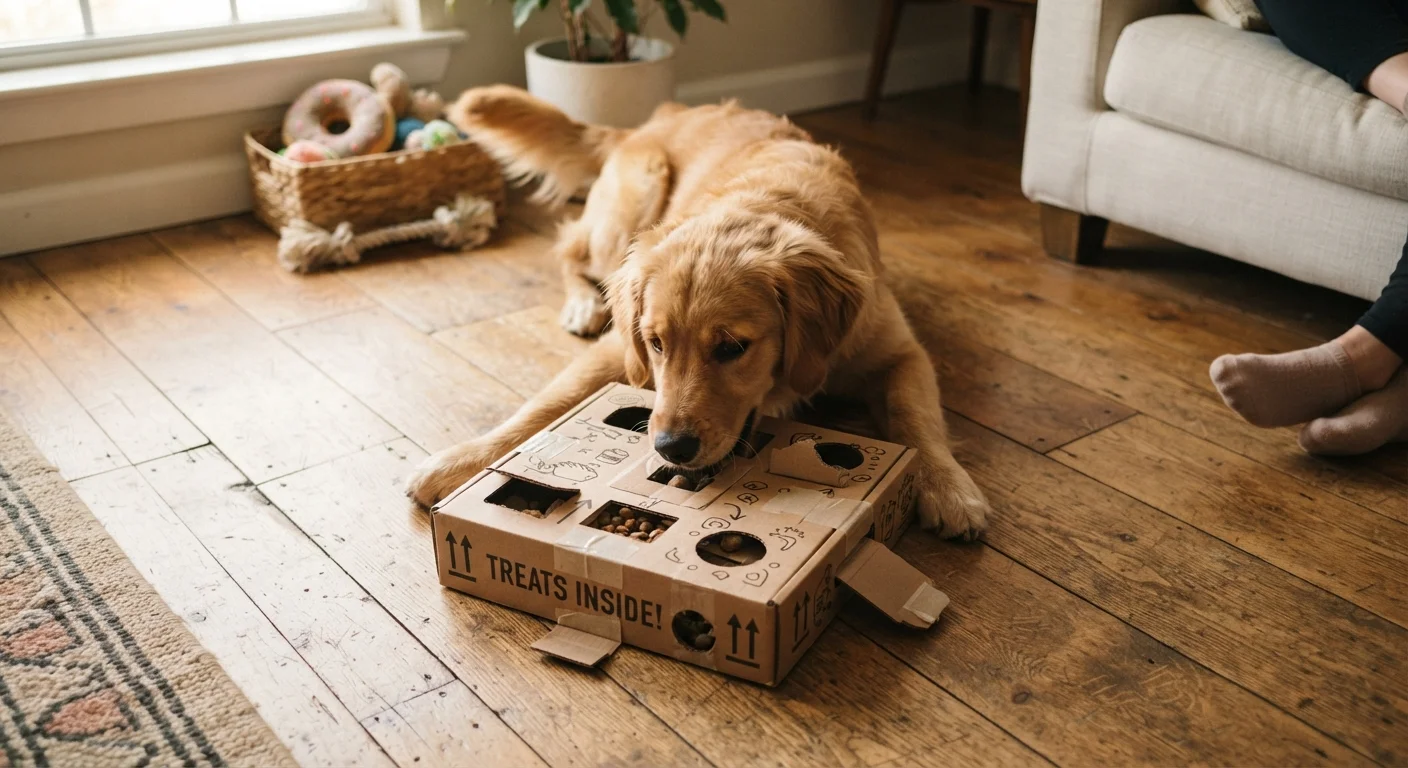
Homemade toys also let you tailor difficulty level and format to your specific pet. A cardboard box with holes cut in it challenges a cat differently than a dog. A muffin tin covered with tennis balls creates a nose-work puzzle for a medium-sized dog. The creative process is part of the value.
That said, not all DIY approaches are equally safe. The shoestring enrichment strategies that work for one species can be hazardous for another, and even species-appropriate toys can cause harm if built from the wrong materials. Understanding what to avoid is just as important as knowing what works.
Materials That Are Generally Safe for DIY Toys
The following materials are widely used by pet owners and considered low-risk when used correctly. Always inspect finished toys before offering them and remove any toy that shows signs of deterioration.
Use plain, unprinted cardboard as your primary building material.
Plain cardboard is non-toxic, widely available, and digestible in small amounts - making it one of the safest materials for both dogs and cats. It can be folded, cut, and shaped into tunnels, puzzle feeders, and foraging boxes. Avoid cardboard with heavy ink printing or glossy coatings, which may contain chemical dyes.
Choose plain, undyed natural fabrics for snuffle mats and tug toys.
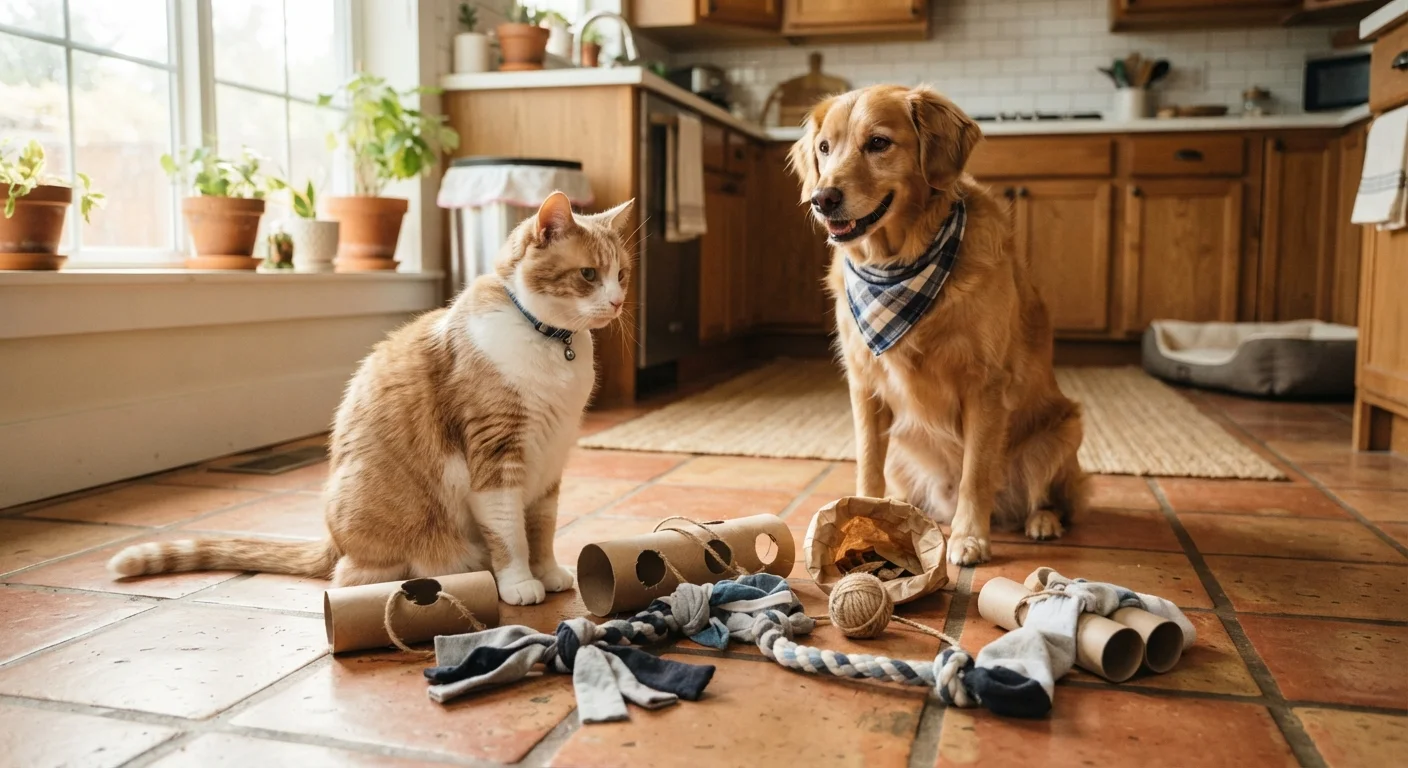
Untreated cotton and natural fleece (confirmed non-toxic) are soft, washable, and generally safe for pets to mouth. Fabric toys provide tactile enrichment and can be scented naturally with a small amount of your pet's food. Avoid synthetic dyes or chemical finishing sprays.
Repurpose food-safe containers as puzzle feeders.
Containers labeled food-safe (such as plain plastic containers originally used for food storage) are designed to be non-toxic in contact with consumables. When used as puzzle feeders with no sharp edges, they provide excellent slow-feeding and problem-solving enrichment. Always sand or file any rough cut edges before offering.
Inspect every homemade toy before each use and retire it when damaged.
Even safe materials become hazards when a toy begins to break down. Loose threads, torn cardboard strips, and detaching parts can be ingested and cause blockages or choking. A brief pre-play inspection takes seconds and prevents serious problems.
Supervise all play sessions with homemade toys, especially the first few.
You cannot predict exactly how a pet will interact with a new toy. Supervision lets you intervene quickly if a pet starts to chew off and swallow material rather than interact with the toy as intended. Once you know a particular pet's play style with a specific toy, you can make an informed decision about unsupervised access.
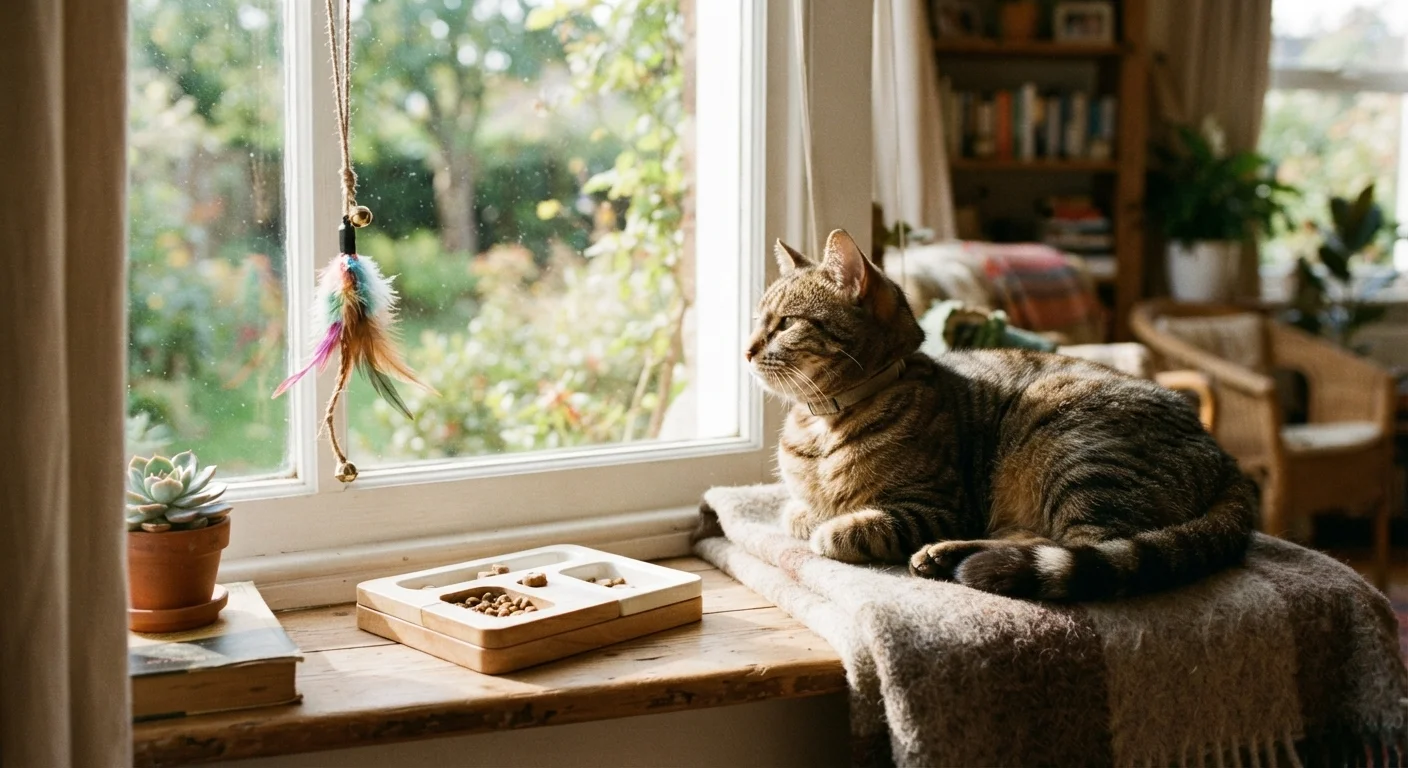
For cats specifically, building enrichment into a structured daily routine can multiply the benefits. See our guide to building a daily enrichment routine for indoor cats for practical scheduling ideas.
Materials and Design Choices to Avoid
Some household items seem harmless but carry real risks. Reviewing these hazards before you start crafting can prevent emergency vet visits.
Small Pets Have Different Safety Thresholds
Rabbits, guinea pigs, hamsters, and birds are far more sensitive to toxic materials than dogs or cats. Many items that are low-risk for a 40-pound dog - certain wood types, fabric dyes, adhesives - can be dangerous for small animals. If you have a small or exotic pet, verify toy materials with a veterinarian familiar with that species before offering any homemade item. General pet toy guidance does not automatically apply across all species.
- Rubber bands and hair ties: These are small, stretchy, and tempting to chew - but they can cause intestinal blockages if swallowed, particularly in cats.
- Styrofoam: Breaks into tiny pieces that are easily ingested and can cause gastrointestinal obstruction.
- Dyed or treated fabrics: Some fabric dyes and chemical treatments are toxic if chewed or licked. Use only plain, undyed natural fabric or confirmed non-toxic fleece.
- Thin plastic bags and plastic wrap: Suffocation and ingestion hazards for all pets. Never use as a toy or toy component.
- Staples, hot glue with additives, and small metal parts: These can cause cuts internally or externally. Use plain white school glue or skip adhesives entirely where possible.
- Essential oils or scented items: Many essential oils are toxic to cats and dogs even in small amounts. Do not add scent to toys using these products.
- String, yarn, and ribbon: Linear foreign bodies - long strings or fibers - are especially dangerous for cats, who may ingest them while playing, leading to life-threatening intestinal damage.
If your pet ingests any of these materials, contact your veterinarian promptly. Do not wait to see if symptoms develop.
Best Practices for Building and Offering Homemade Toys
Making safe choices at the crafting stage is only part of the equation. How and when you introduce toys matters too. Introduce new toys during calm, supervised play sessions so you can observe how your pet interacts with them. Some pets are gentle; others will immediately try to dismantle anything placed in front of them. Adjust construction durability - or toy type - accordingly.
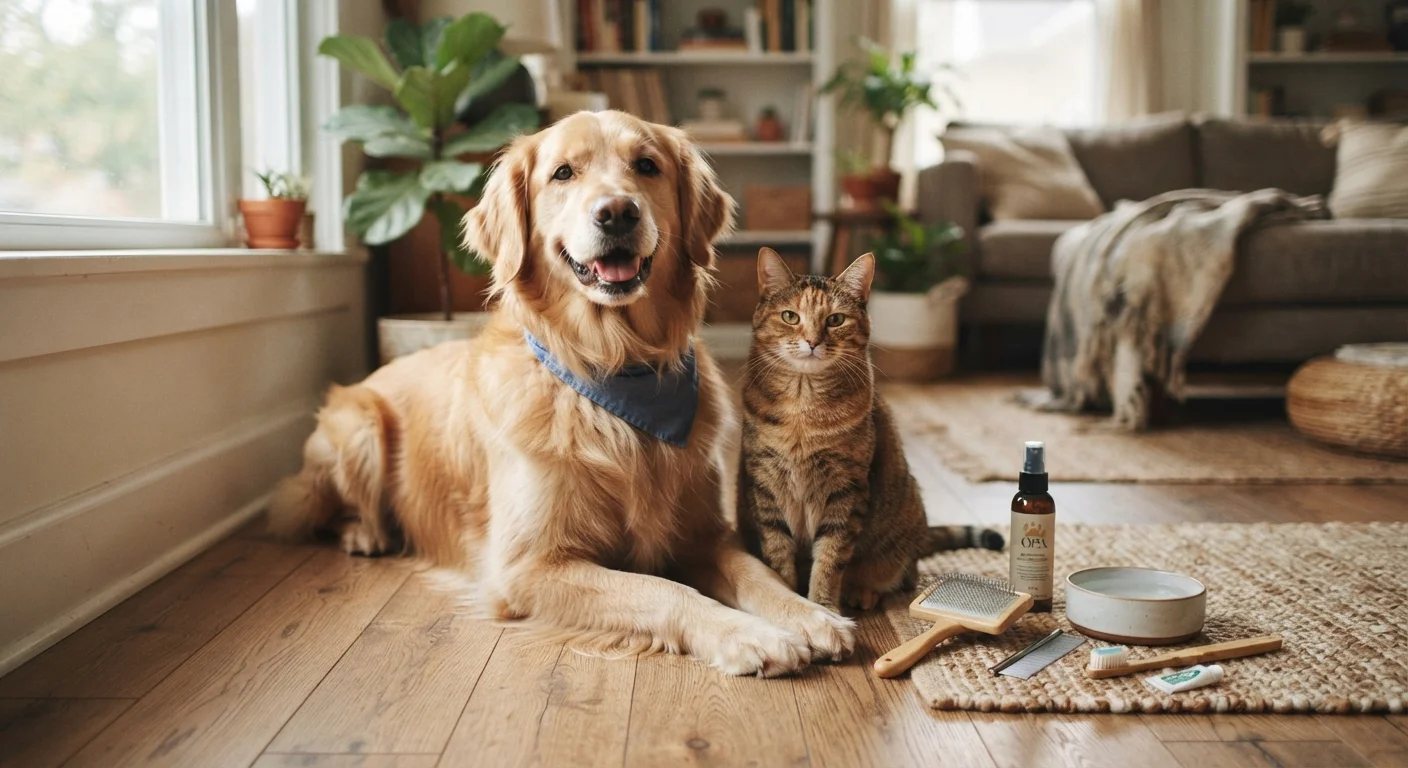
Homemade toy safety is one piece of a broader hands-on pet care approach. If you're exploring other DIY care areas, our overview of caring for your pet at home covers grooming, training, and more in one place. And for those thinking about DIY grooming, the same principle applies: knowing the risks up front makes the hands-on approach genuinely rewarding rather than stressful.
This article is for general informational purposes only and is not a substitute for veterinary advice. If you have concerns about your pet's health or safety, consult a licensed veterinarian.