
How Each Method Actually Works
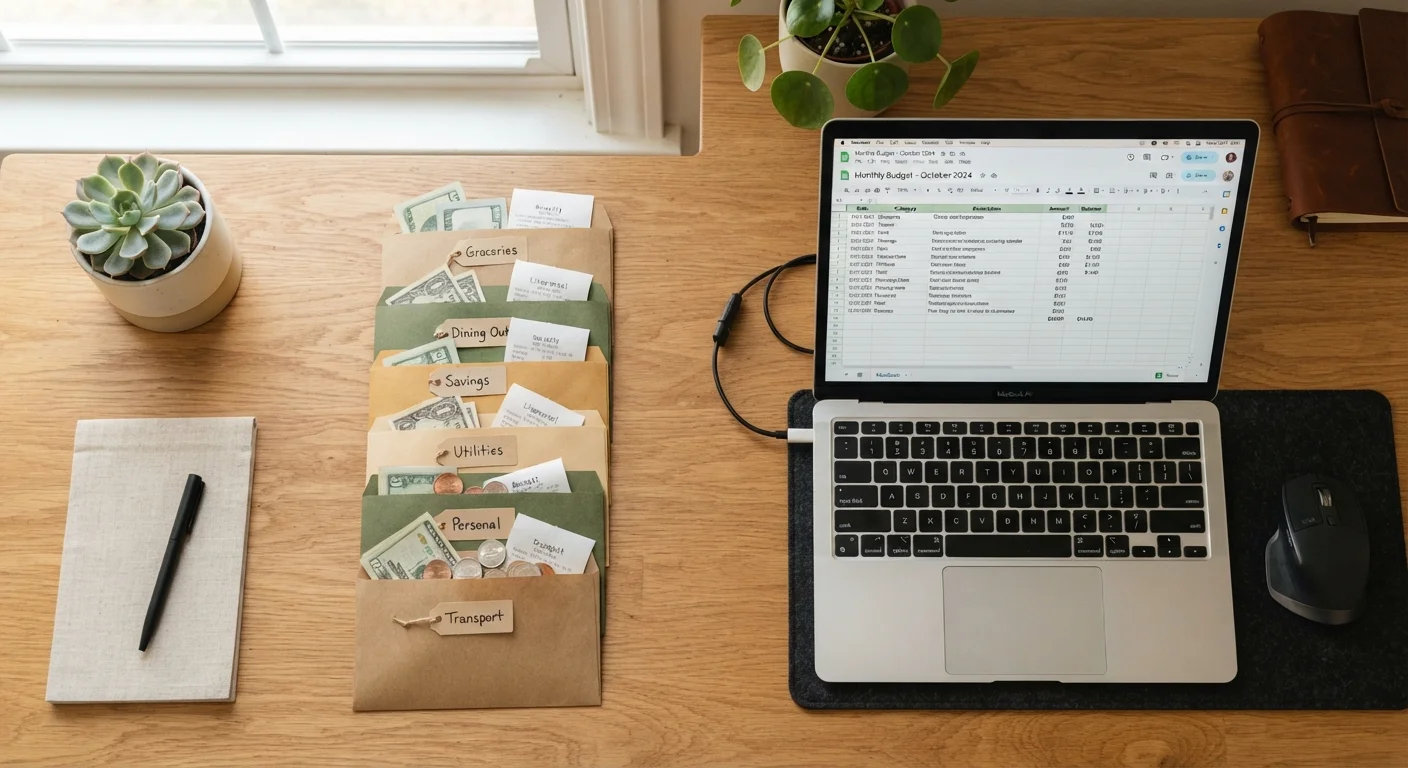
Envelope budgeting is straightforward: at the start of each pay period, you withdraw cash and divide it into labeled envelopes — one for groceries, one for gas, one for dining out, and so on. Each envelope holds only what you've budgeted for that category. Once the cash is gone, that category is done for the month. There's no overdraft, no credit card buffer, and no wiggle room unless you consciously move money between envelopes.
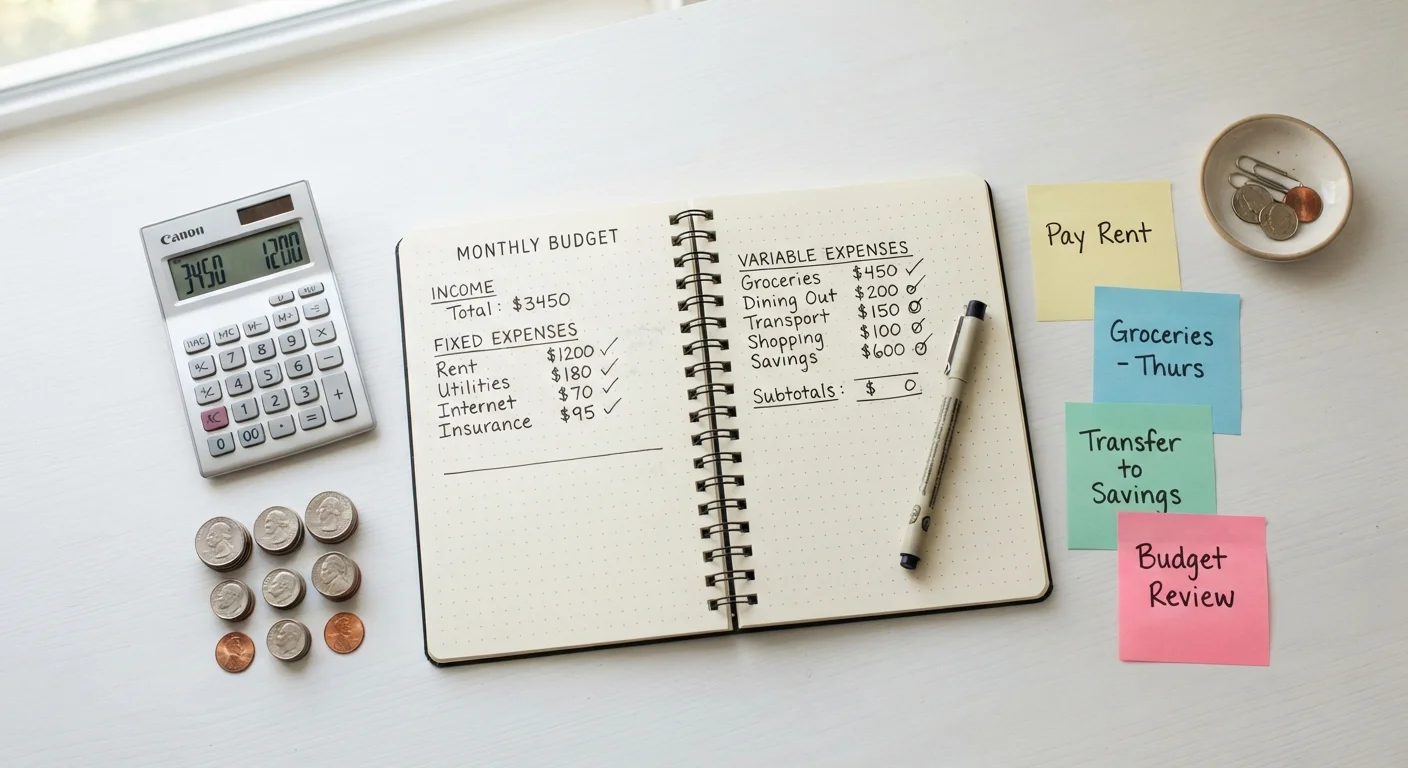
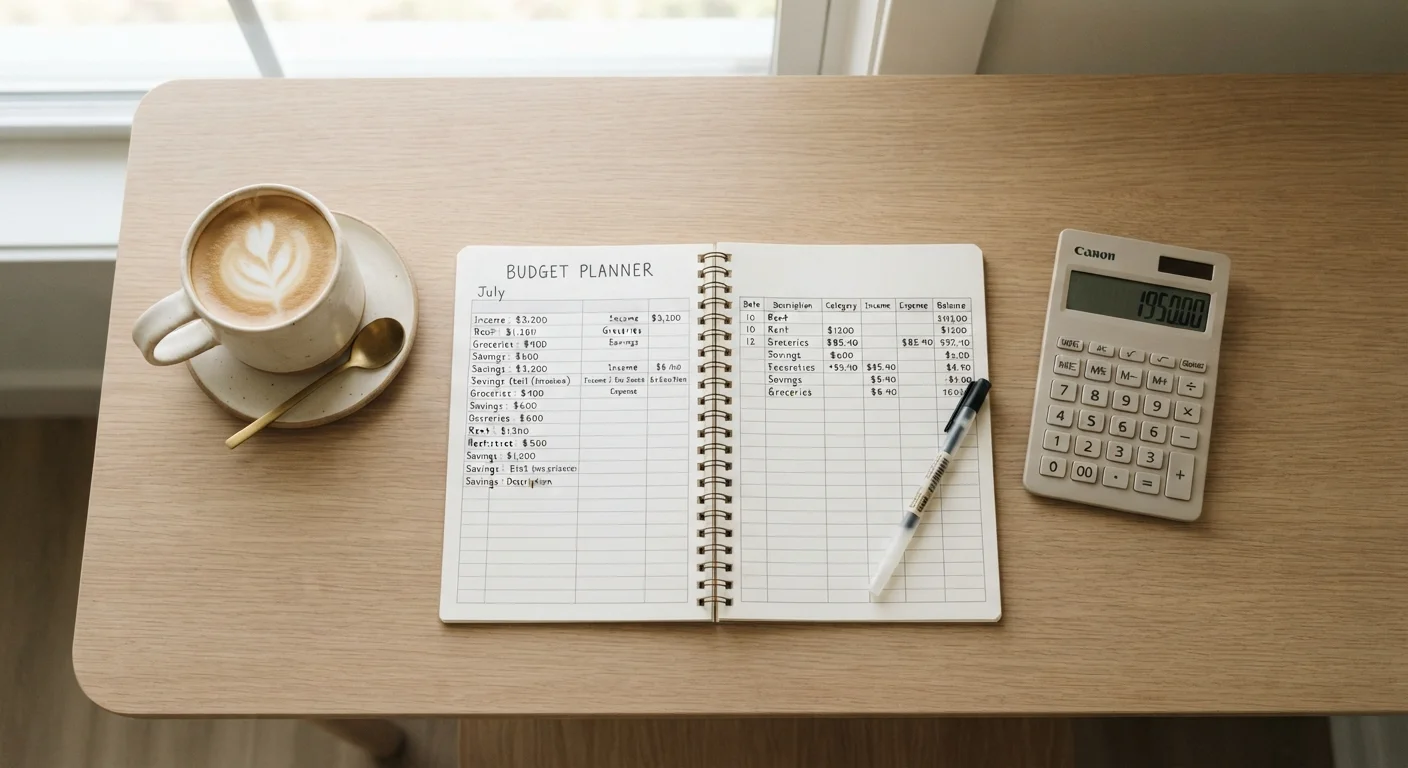
Spreadsheet budgeting works differently. You build a document — in Google Sheets, Excel, or a similar tool — that lists every income source and expense category. As money comes in and goes out, you log transactions against your planned amounts. The spreadsheet calculates what's left in each category, flags overages, and can show trends over time if you keep monthly tabs.
Both methods follow the same underlying logic: assign every dollar a job before you spend it. The difference is in execution — one uses physical cash as the enforcement mechanism, the other uses recorded data and personal discipline. For a broader look at how these fit into the wider landscape of budgeting frameworks, see budgeting methods compared.
Accountability: Where Each Method Has the Edge
Accountability is where these two approaches diverge most sharply. With envelopes, the accountability is built into the system. Handing over physical bills registers differently in the brain than tapping a card — research in consumer behavior consistently suggests that cash payments feel more "real," which tends to reduce impulse purchases. You don't need willpower to stop spending when there's literally nothing left in the envelope.
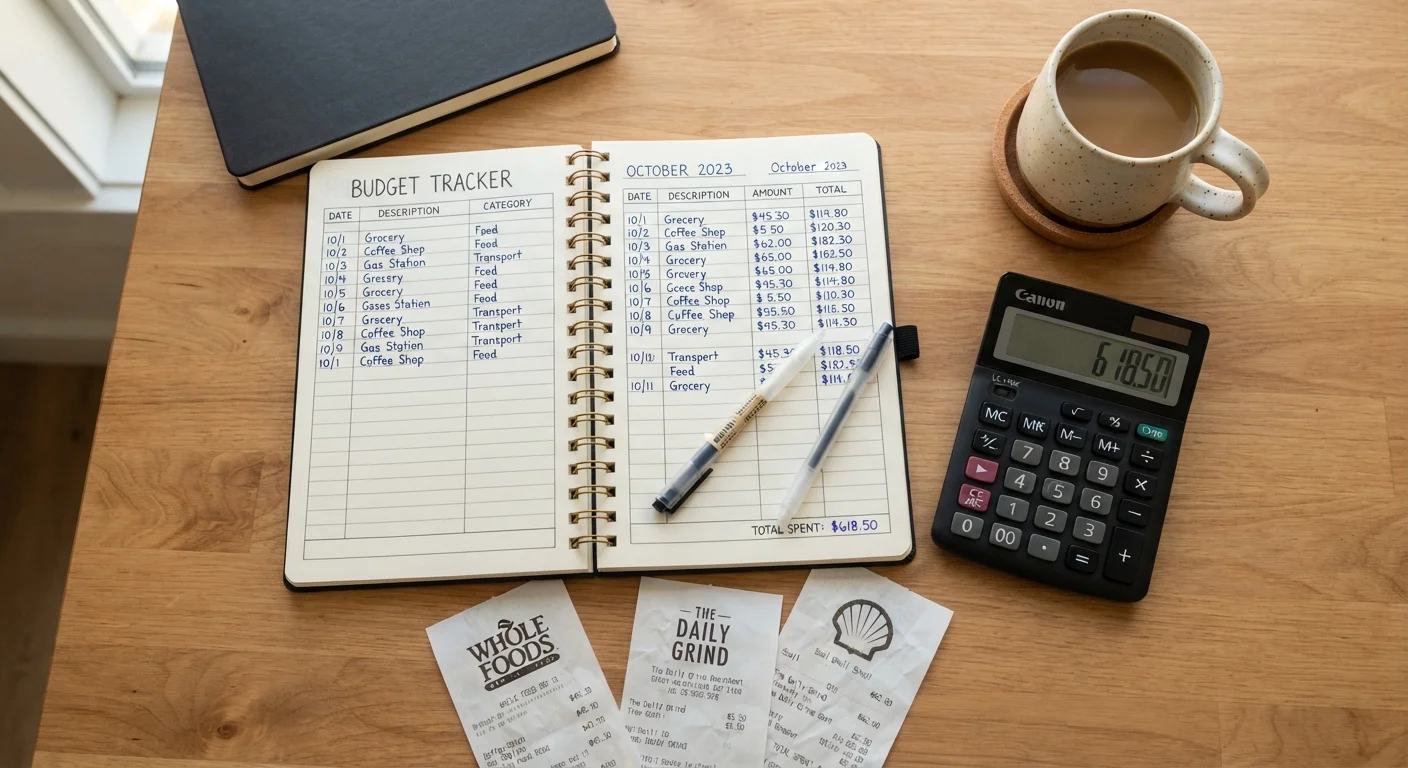
Spreadsheets demand more self-discipline. The data is only useful if you enter it consistently and honestly. A week of skipped entries can turn a careful budget into fiction. That said, spreadsheets offer something envelopes can't: a full audit trail. You can look back over three months of grocery spending, spot the creep, and adjust — a kind of accountability that's retrospective rather than real-time.
| Criterion | Envelope Budgeting | Spreadsheet Budgeting |
|---|---|---|
| Spending enforcement | Automatic — cash runs out | Manual — requires self-discipline |
| Setup time | Low — label envelopes, withdraw cash | Moderate — build or adapt a template |
| Works with digital payments | Poorly — cash only | Well — logs any transaction type |
| Visibility into trends | Limited — monthly snapshot only | High — historical data available |
| Flexibility for variable income | Low — requires recalculating each period | High — easy to adjust formulas |
| Cost | Near zero — envelopes and cash | Near zero — free tools widely available |
| Best accountability style | Real-time, tactile | Retrospective, data-driven |
If you've struggled to make budgeting stick in the past, it's worth questioning whether the method or underlying habits are the real obstacle. Our piece on budgeting myths that keep people stuck addresses some of the common beliefs that derail even well-designed systems.
Practical Friction: Daily Use and Real-World Limitations
Day-to-day, envelope budgeting has friction that spreadsheets don't. Most transactions today are digital — rent, utilities, subscriptions, and online purchases don't lend themselves to cash. Many envelope users solve this by keeping envelopes only for high-risk discretionary categories (groceries, dining, entertainment) and handling fixed bills separately. It works, but it requires a hybrid mindset.
Spreadsheets have their own friction: the time investment of logging every transaction. Automation helps — some people export bank statements monthly and paste them in — but it still requires a standing habit. The spending tracking habit is what turns a spreadsheet from a static document into a useful financial picture.
~33%
Adults with a detailed monthly budget
Gallup polling has consistently found that fewer than one in three American adults maintains a detailed household budget, highlighting how common it is to manage money informally.
18%
Reduction in discretionary spend using cash
A widely cited study published in the Journal of Consumer Research found participants spent measurably less when paying with cash compared to cards, supporting the core logic of envelope budgeting.
For people operating almost entirely in a cashless environment, a separate comparison worth reviewing is cash envelopes versus digital budgeting apps, which explores app-based alternatives that bridge the gap.
This article is for general informational and educational purposes only and does not constitute personalized financial advice. Consult a qualified financial professional for guidance specific to your situation.