
Why Your Budget Feels Off (And Tracking Fixes It)
Most budgets fail not because the math is wrong, but because the inputs are. When you estimate what you spend on groceries, gas, or going out, you're working from memory — and memory is optimistic. Research in behavioral economics consistently finds that people recall planned spending more readily than spontaneous purchases, which means your budget categories are almost certainly understated from day one.
Spending tracking closes that gap. It replaces estimates with actual numbers, turning your budget from a hopeful projection into an accurate map of where your money goes. Once you know your real numbers, you can make real adjustments. Without tracking, you're just guessing — and guessing keeps you stuck.
If you've noticed that money seems to disappear between paychecks, the spending leaks guide explains exactly which micro-purchases are most often the culprit. Tracking is what makes those leaks visible in the first place.
Best Practices for Building a Tracking Habit That Sticks
The method you'll actually use consistently beats the method that's theoretically perfect. Here are the practices that make tracking sustainable rather than a chore you abandon by week three.
Choose one tracking method and commit to it for at least 60 days before evaluating alternatives.
Switching tools mid-habit resets your learning curve and creates data gaps that make trend analysis impossible. Consistency with a simple method produces better insights than inconsistency with a sophisticated one. Sixty days gives you enough data to see genuine patterns rather than random variation.
Log every transaction within 24 hours of making it.
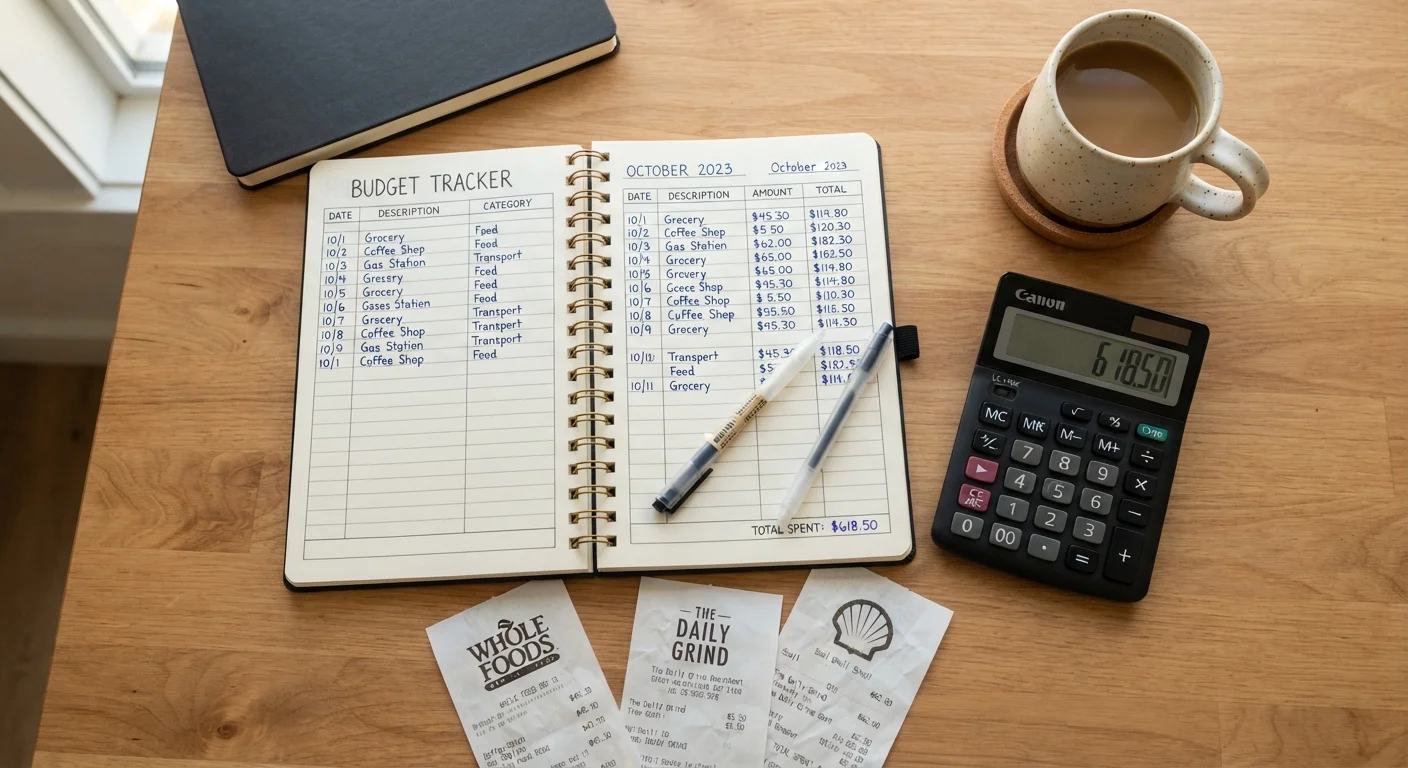
Recall accuracy drops sharply after a day or two. Waiting until the weekend to log a week's worth of purchases guarantees you'll miss or misremember several entries, which compounds errors across categories. The habit of same-day or next-morning logging keeps records clean.
Use specific subcategories rather than broad ones like 'food' or 'misc.'
Broad categories hide the spending patterns you most need to see. 'Food' that combines groceries, coffee shops, and restaurant delivery prevents you from identifying which subcategory is driving overruns. Specific labels turn data into actionable insight.
Schedule a brief weekly review — not just a monthly one.
Monthly reviews catch problems after they've already caused harm. A weekly 10-minute check lets you spot when a category is trending over budget mid-month, while you still have time to adjust. It also reinforces the habit loop that makes tracking feel routine rather than burdensome.
Treat irregular and annual expenses as monthly line items by dividing them across 12 months.
Car registration, holiday gifts, annual subscriptions, and medical co-pays don't appear every month, but they will appear — and they wreck budgets when treated as surprises. Dividing their annual cost by 12 and tracking a monthly 'set-aside' amount makes your budget reflect reality rather than a frictionless fantasy.
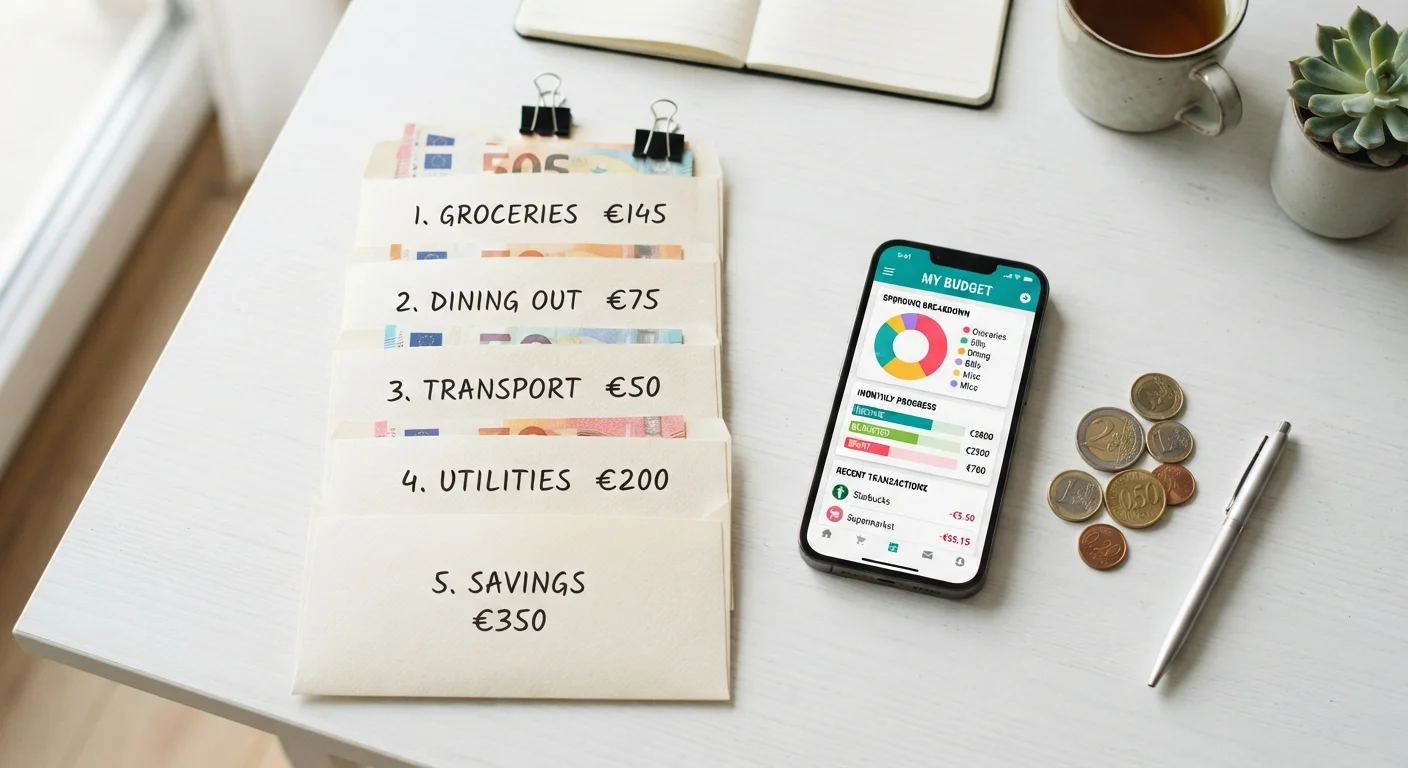
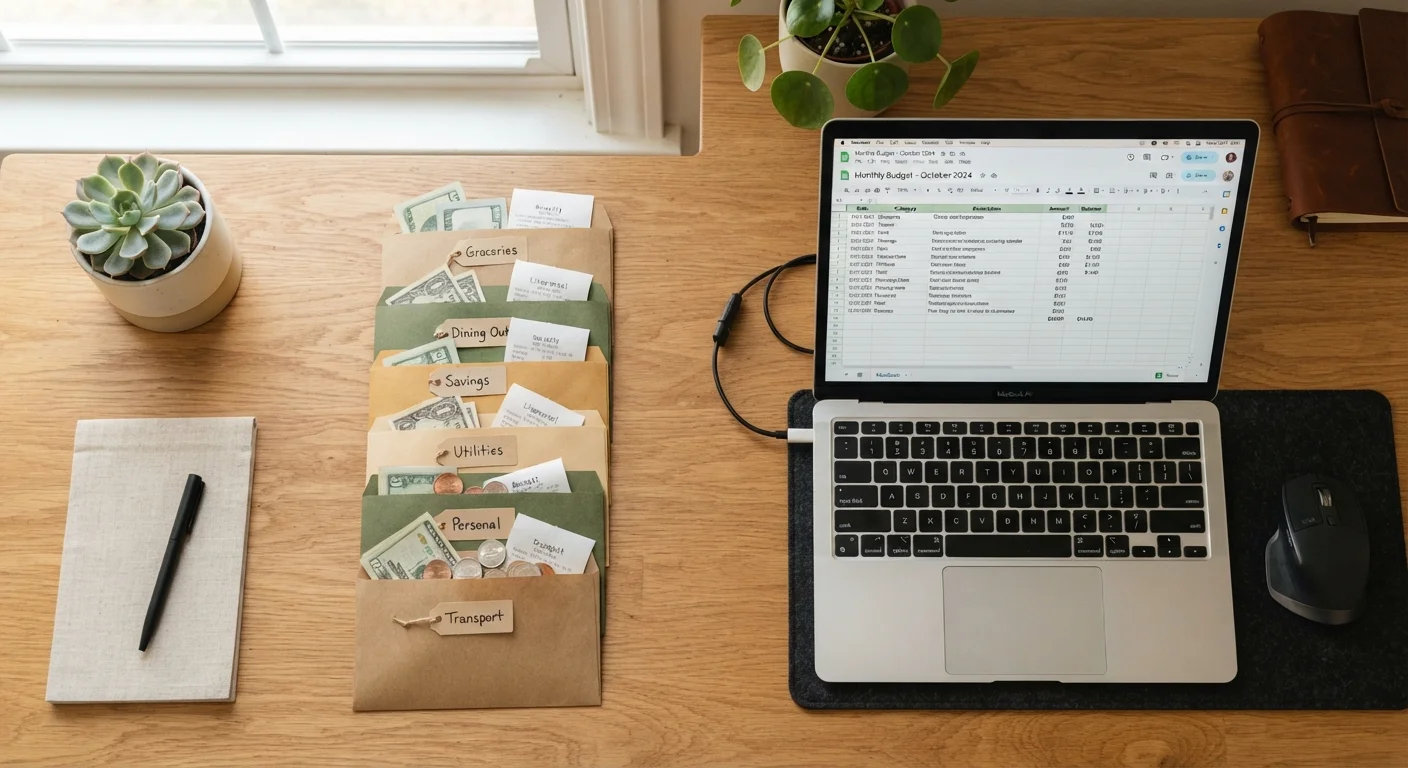
Not sure whether to use a spreadsheet, an app, or pen and paper? The cash envelope vs. digital apps comparison and the envelope vs. spreadsheet breakdown both walk through the tradeoffs in detail.
Start Today: Quick Wins to Get Your Tracking System Running
You don't need a perfect system before you begin. Start with the minimum viable version and refine as you go. These actions take under 20 minutes combined and immediately improve your financial visibility.
Once you have two to four weeks of tracked data, you're ready for a deeper review. A monthly budget audit gives you a structured way to turn raw tracking data into concrete spending changes. Pairing tracking with sinking funds also helps you prepare for predictable irregular costs that otherwise catch most budgets off guard.
~40%
Spending underestimation gap
Consumer behavior studies have repeatedly found that people underestimate discretionary spending by roughly 20–40% when relying on memory rather than recorded data.
10 min/week
Time needed for a weekly spending review
Personal finance educators widely recommend that a weekly category check-in takes under 10 minutes when transactions have been logged daily throughout the week.
This article is for general informational and educational purposes only and does not constitute personalized financial advice. For guidance specific to your financial situation, consider consulting a qualified financial professional.