
Why Your Budget Breaks Down in Predictable Ways
Most budgets fail not because of daily coffee habits or restaurant tabs, but because of expenses that don't show up every month. Your car registration is due once a year. The dentist bill lands every six months. Holiday spending peaks in December. These costs are perfectly predictable — yet they consistently catch people off guard, forcing them to dip into savings, carry a credit card balance, or simply go without.
This is the core problem sinking funds solve. Rather than treating irregular expenses as emergencies, you plan for them like any other bill. The math is simple: if you know an expense is coming, you can spread its cost across the months before it arrives.
If you've ever wondered why your budget looks fine on paper but still falls apart in practice, irregular expenses are often the culprit. Common budgeting myths — like the idea that a good budget only needs to track monthly bills — can make this blind spot worse.
~$1,400
Average annual car maintenance cost per vehicle
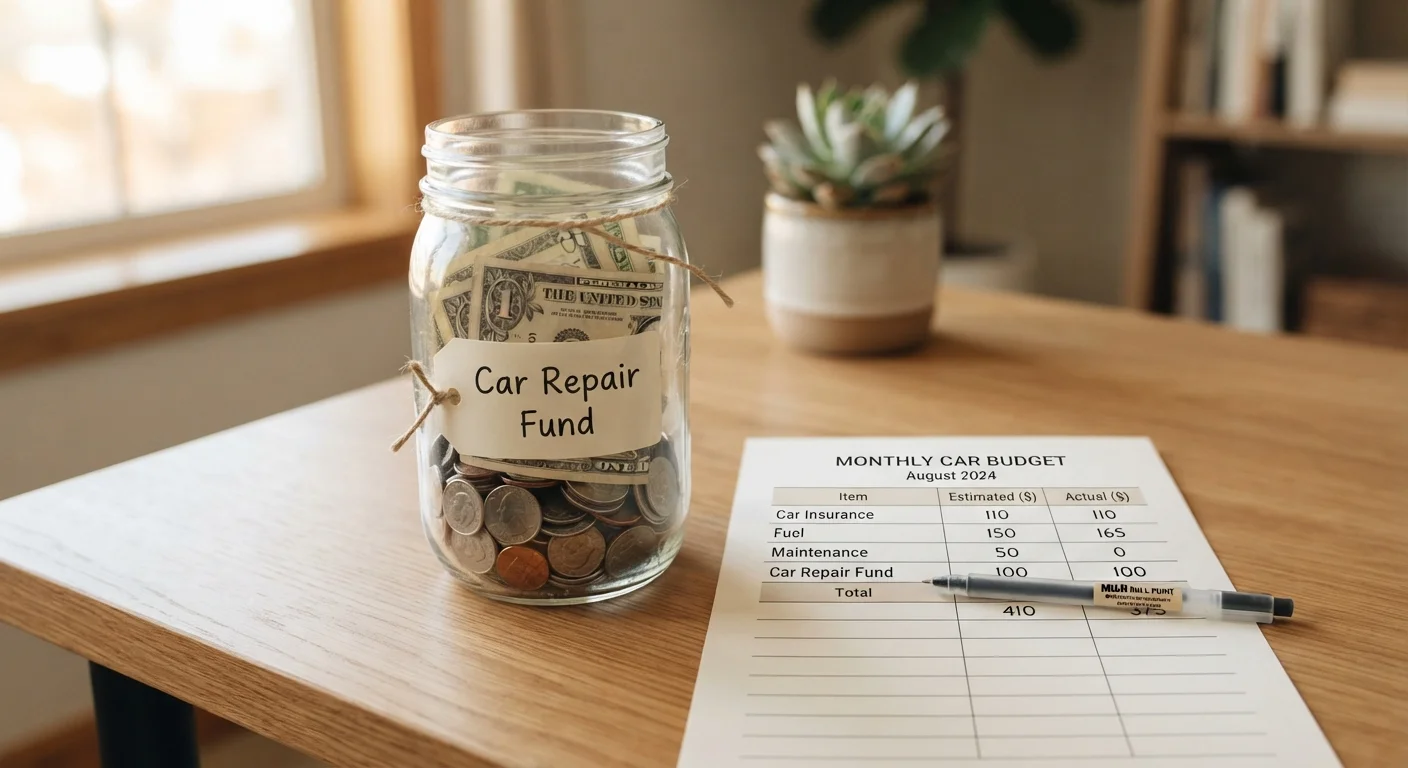
According to AAA's annual Your Driving Costs study, ongoing maintenance and repair costs for a typical vehicle run roughly $1,400 per year — about $117 per month — making auto expenses one of the most impactful sinking fund categories.
1–2%
Of home value recommended for annual maintenance savings
Financial planning guidance frequently cites 1–2% of a home's purchase price as a reasonable annual maintenance reserve, meaning a $300,000 home could generate $3,000–$6,000 in upkeep costs per year.
$1,000+
Typical US household holiday spending
The National Retail Federation has consistently reported that US consumers spend over $1,000 on average during the winter holiday season — a cost that arrives on the same date every year but catches many budgets unprepared.
How Sinking Funds Actually Work
The mechanics are straightforward. You identify a future expense, estimate its total cost, and divide that total by the number of months until you need it. The result is your monthly contribution. You move that amount into a dedicated account or labeled savings bucket each month until the bill comes due.
For example, suppose you want to set aside money for a $600 car service you expect to need in about five months. Contribute $120 per month, and by the time the bill arrives, the money is already there. No scrambling, no credit card balance, no stress.
The key discipline is keeping sinking fund money separate from both your everyday spending account and your emergency fund. Many people use sub-accounts within a savings account — some banks allow you to label these individually, which makes it easy to see each fund's balance at a glance.
Label Each Fund Clearly Before You Start
Before opening any new sub-account or envelope, write down the specific purpose and target amount for each sinking fund. Vague labels like 'extra savings' make it too easy to rationalize spending the balance on something unrelated. A label like 'Car Tires — $450 by October' keeps the goal concrete and protects the fund from casual withdrawals.
Common Sinking Fund Categories Worth Starting
Almost any irregular but foreseeable expense is a candidate. Here are the categories that tend to matter most for budget-conscious millennials:
- Car maintenance and registration: Oil changes, tires, and annual fees add up fast. A small monthly contribution creates a buffer before the next service.
- Medical and dental: Even with insurance, deductibles and co-pays accumulate. A dedicated fund prevents healthcare bills from derailing everything else.
- Home maintenance: Whether you rent or own, appliances break and repairs happen. A modest monthly set-aside keeps these moments from becoming crises.
- Holiday and gift spending: December is entirely predictable. Starting a holiday fund in January means you arrive at the season with cash ready rather than racking up debt.
- Travel: A dedicated travel fund makes trips feel genuinely affordable rather than financially stressful afterward.
- Annual subscriptions: Software, streaming bundles, or memberships billed yearly can be smoothed out with a sinking fund.
You don't have to start all of these at once. Pick the one or two irregular expenses that have caused the most friction in your budget and begin there.
Making Sinking Funds Stick: Automation and Integration
The biggest threat to any savings strategy is forgetting to follow through. Automating your sinking fund contributions removes that risk entirely. Set up a recurring transfer on payday — even a small amount — and the habit runs without requiring any active decision-making each month.
This connects directly to a broader principle: the most effective financial habits tend to be the ones you don't have to think about. Small financial automations consistently outperform manual approaches because they remove the moment of temptation to spend that money elsewhere.
Equally important is knowing what belongs in a sinking fund versus what belongs in your emergency fund. If you're regularly pulling from your emergency savings for expenses like car repairs or vet bills, that's a signal those costs are predictable enough to have their own fund. Protecting your emergency fund for genuine crises keeps your financial safety net intact when you actually need it.
For a fuller picture of where irregular expenses fit in your broader spending patterns, tracking your spending is a natural companion habit — it surfaces which irregular costs are draining your budget most and helps you size your sinking funds more accurately.
This article is for general informational and educational purposes only and does not constitute personalized financial advice. Consult a qualified financial professional for guidance specific to your situation.