
How Each Approach Works
When debt starts feeling unmanageable, two options you'll frequently encounter are debt management plans (DMPs) and debt settlement. They sound similar, but they operate very differently — and confusing one for the other can lead to costly mistakes.
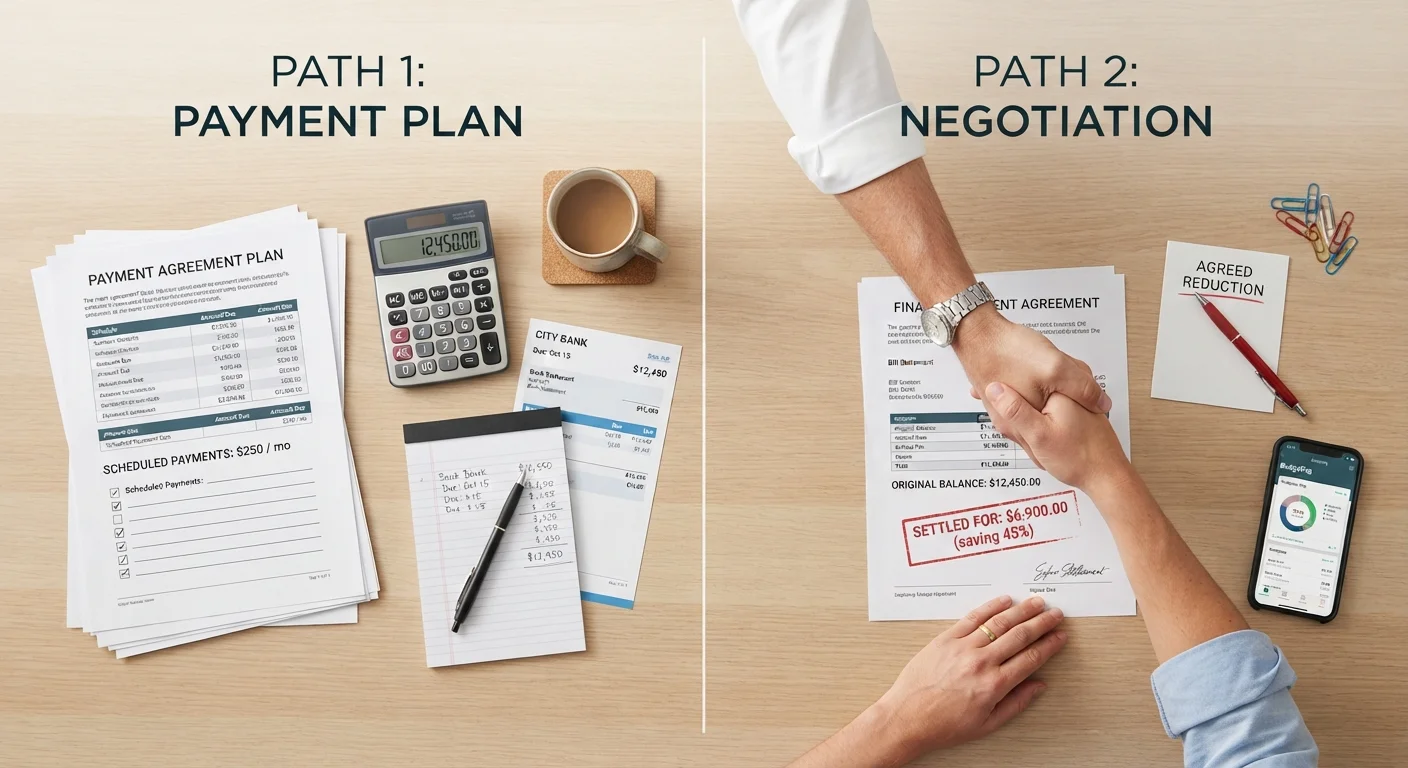
A debt management plan is a structured repayment program typically offered through a nonprofit credit counseling agency. The agency negotiates with your creditors on your behalf to secure reduced interest rates or waived fees, then consolidates your payments into a single monthly amount you pay to the agency. You repay the full principal balance over three to five years. The agency charges a modest monthly fee — often in the range of $25–$75 — though fee waivers may be available based on hardship.
Debt settlement takes a different route: a company (or you, directly) negotiates with creditors to accept a lump-sum payment that is less than the total owed. To build that lump sum, you typically stop paying creditors and instead deposit money into a dedicated account. This process can take two to four years and only begins negotiation once enough funds have accumulated. See our guide to negotiating with creditors for context on what these conversations actually look like.
| Debt Management Plan (DMP) | Debt Settlement | |
|---|---|---|
| Amount repaid | 100% of principal | Typically 40–60% of balance |
| Credit impact | Moderate, improves over time | Severe, lasts up to 7 years |
| Who administers it | Nonprofit credit counseling agency | For-profit settlement company or self-negotiated |
| Typical timeline | 3–5 years | 2–4 years |
| Fees | ~$25–$75/month | 15–25% of enrolled debt |
| Tax liability risk | None | Yes — forgiven debt may be taxable |
| Creditor participation | Most major creditors participate | Not guaranteed; creditors may refuse or sue |
Credit Impact and Tax Consequences
This is where the two options diverge most sharply. With a DMP, your credit report may show that accounts are enrolled in a repayment plan, which can temporarily limit your access to new credit. However, because you're repaying in full and on time, the long-term damage is generally limited. Many people see their credit improve steadily throughout the program.
Debt settlement is more disruptive. To qualify for a settlement, accounts typically need to be delinquent — meaning missed payments and charge-offs are showing up on your credit report throughout the process. A settled account is also reported as "settled for less than the full amount," which stays on your report for seven years and signals risk to future lenders.
There's also a tax issue that catches many people off guard: the IRS generally considers forgiven debt as taxable income. If a creditor forgives $5,000 of your balance, you may owe income tax on that amount unless you qualify for an insolvency exception. A DMP involves no debt forgiveness, so this issue doesn't arise.
Start With a Free Credit Counseling Session
Before enrolling in any debt relief program, consider scheduling a free or low-cost session with a nonprofit credit counselor accredited by the NFCC or FCAA. They can review your full financial picture and help you determine which option — if either — is appropriate for your situation. This step costs nothing and could save you thousands in fees or credit damage.
Fees, Risks, and Who Offers These Services
The organizations behind each option are worth scrutinizing. Nonprofit credit counseling agencies that administer DMPs are accredited by bodies such as the National Foundation for Credit Counseling (NFCC) or the Financial Counseling Association of America (FCAA). Their fee structures are regulated in most states and are generally transparent.
Debt settlement companies are predominantly for-profit, and their fee structures can be substantial — commonly 15–25% of the enrolled debt amount. The Consumer Financial Protection Bureau (CFPB) has noted that settlement companies are prohibited from charging upfront fees before settling at least one debt, but ongoing fees during the accumulation phase are common. There's also no guarantee that all creditors will agree to settle; some may sue for the full balance instead.
If you're weighing either option, it's also worth considering whether debt consolidation might be a more suitable path — particularly if you have good enough credit to qualify for a lower-rate loan. For a side-by-side look at DIY repayment strategies that don't involve third parties, the debt avalanche vs. debt snowball comparison is worth reading first.
This article provides general financial information for educational purposes only and is not personalized financial or legal advice. Consult a qualified financial counselor or advisor before making decisions about your debt situation.