
How Each Method Actually Works
Both the Debt Avalanche and Debt Snowball share the same core mechanics: you make minimum payments on every debt you carry, then direct any extra money toward one designated account. The difference is simply which account gets that focused attention.
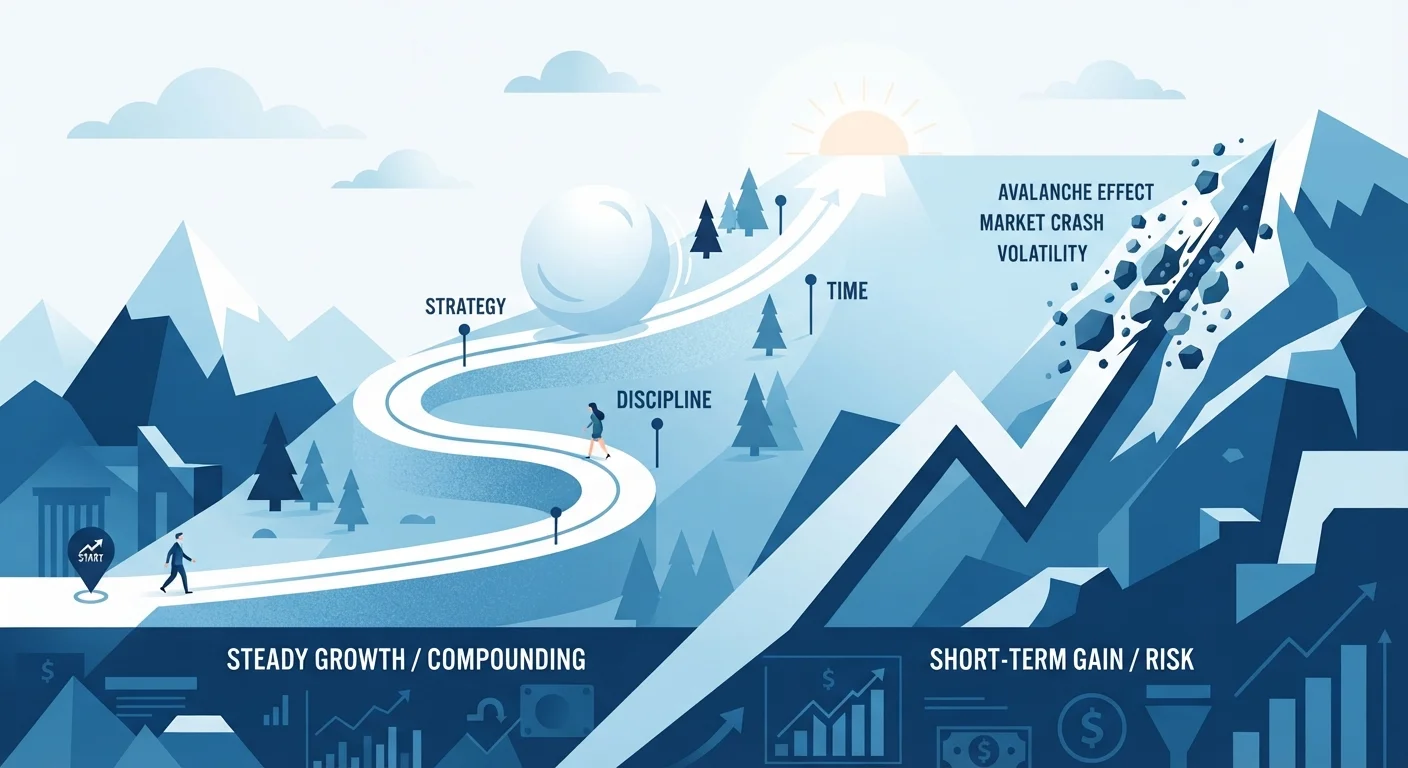
With the Debt Avalanche, you rank your debts by interest rate — highest to lowest. Every extra dollar goes to the highest-rate balance first. Once it's cleared, you roll that payment into the next highest-rate debt, and so on. Because high-interest debt grows fastest, eliminating it early reduces the total cost of your repayment journey.
With the Debt Snowball, you rank debts by outstanding balance — smallest to largest, regardless of rate. You attack the smallest balance first. When it's gone, you take that freed-up payment and add it to the minimum on the next smallest account. The growing payment amount is what gives the method its name.
For a fuller picture of how debt compounds and why interest rates matter so much, see this overview of managing debt.
| Criterion | Debt Avalanche | Debt Snowball |
|---|---|---|
| Payoff order | Highest interest rate first | Smallest balance first |
| Total interest paid | Lower — mathematically optimal | Typically higher |
| Time to first paid-off account | Can take longer if high-rate debt is large | Faster — quick early wins |
| Psychological motivation | Relies on self-discipline and patience | Built-in momentum from closing accounts |
| Best for | Analytical, disciplined payoff planners | Motivation-driven, habit-building payoff planners |
| Complexity | Requires tracking APRs across accounts | Simple — just sort by balance |
The Real Cost Difference — and Why It's Not the Whole Story
On paper, the Avalanche wins every time. By neutralizing high-interest balances first, you limit how much interest accrues across your total debt load. Depending on your balances and rates, this can translate to a meaningful difference — sometimes several hundred to several thousand dollars over the life of repayment.
But personal finance research consistently shows that the best strategy is the one you'll actually follow through on. A landmark study published in the Journal of Marketing Research found that debt repayment behavior is heavily influenced by a sense of progress, and that people who close out individual accounts — even smaller, lower-rate ones — are more likely to stay engaged with their repayment plan overall.
In practical terms: if a mathematically superior plan causes you to disengage after three months, it costs you far more than the interest savings were worth. The Snowball's psychological payoff is a real financial variable, not just a feel-good factor.
~$1,000+
Potential interest saved with Avalanche method
Consumer Financial Protection Bureau guidance notes that targeting high-interest debt first typically reduces overall interest costs, though exact savings depend on individual balances and rates.
80%
Of successful debt payers cite motivation as key
Behavioral finance research consistently finds that perceived progress — not just math — is a primary driver of debt repayment completion rates.
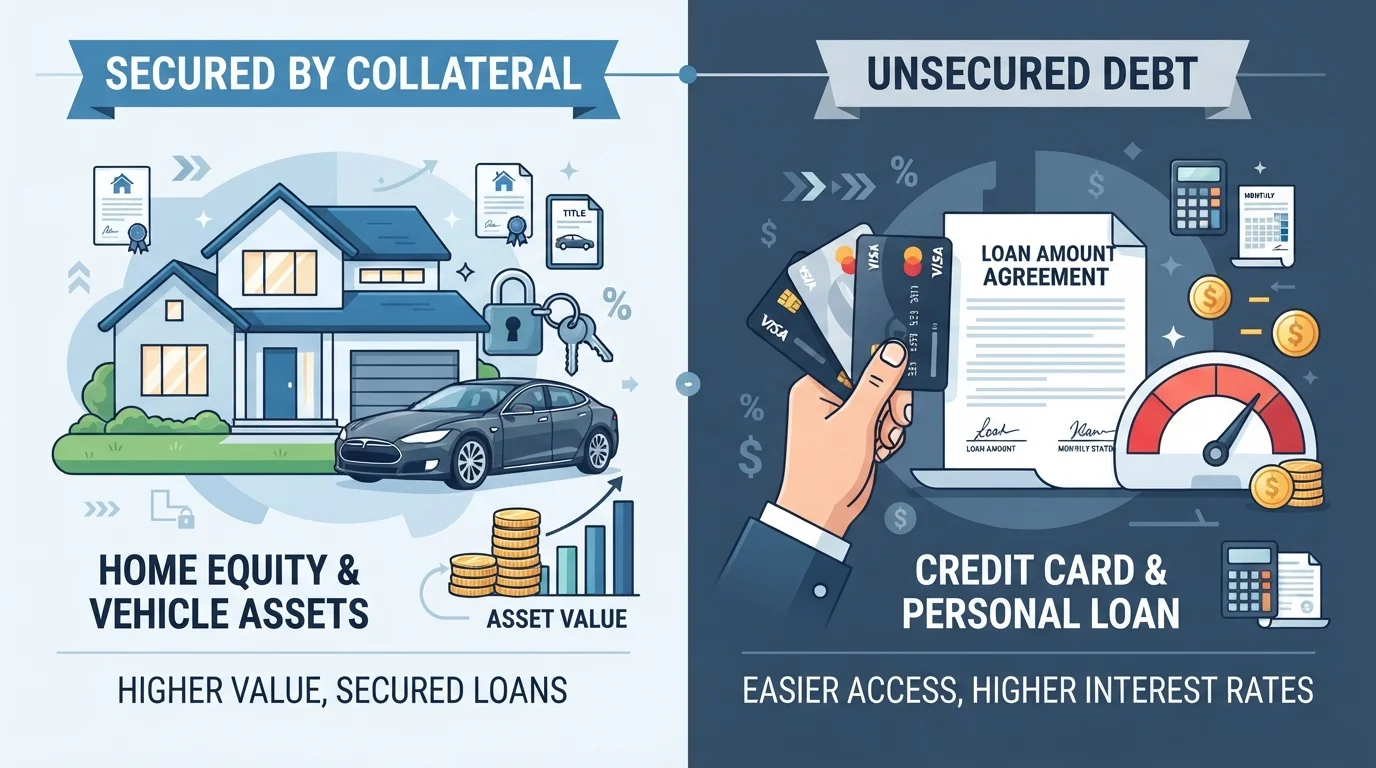
If your debt picture includes both secured and unsecured balances, it's worth understanding how each type behaves — especially if you fall behind. Secured vs. unsecured debt carries very different risks and that context matters when you're ranking which accounts to tackle.
How to Choose — and What to Do Next
A few honest questions can help you decide which method fits your situation right now:
- What's your track record? If you've started and stopped debt payoff plans before, the Snowball's early wins may be what keeps you in the game this time.
- What's your highest interest rate? If you're carrying a balance at 24–29% APR — common on credit cards — every month you delay attacking it is expensive. The Avalanche becomes harder to ignore at those rates.
- How many accounts do you have? A large number of small balances often responds well to the Snowball, which simplifies your financial life quickly.
It's also worth knowing that neither the Avalanche nor the Snowball is your only option. Debt consolidation may make sense if your credit allows for a lower-rate loan, while debt management plans or debt settlement are options for more serious situations — each with distinct trade-offs.
Whichever method you choose, the move that matters most is starting. Pick a strategy, automate your minimum payments to avoid late fees, and put whatever extra you can — even $25 a month — toward your target account. Consistency over months beats the perfect theoretical plan you never fully execute.
This article is for general informational purposes only and does not constitute personalized financial advice. Consider consulting a licensed financial professional for guidance specific to your circumstances.