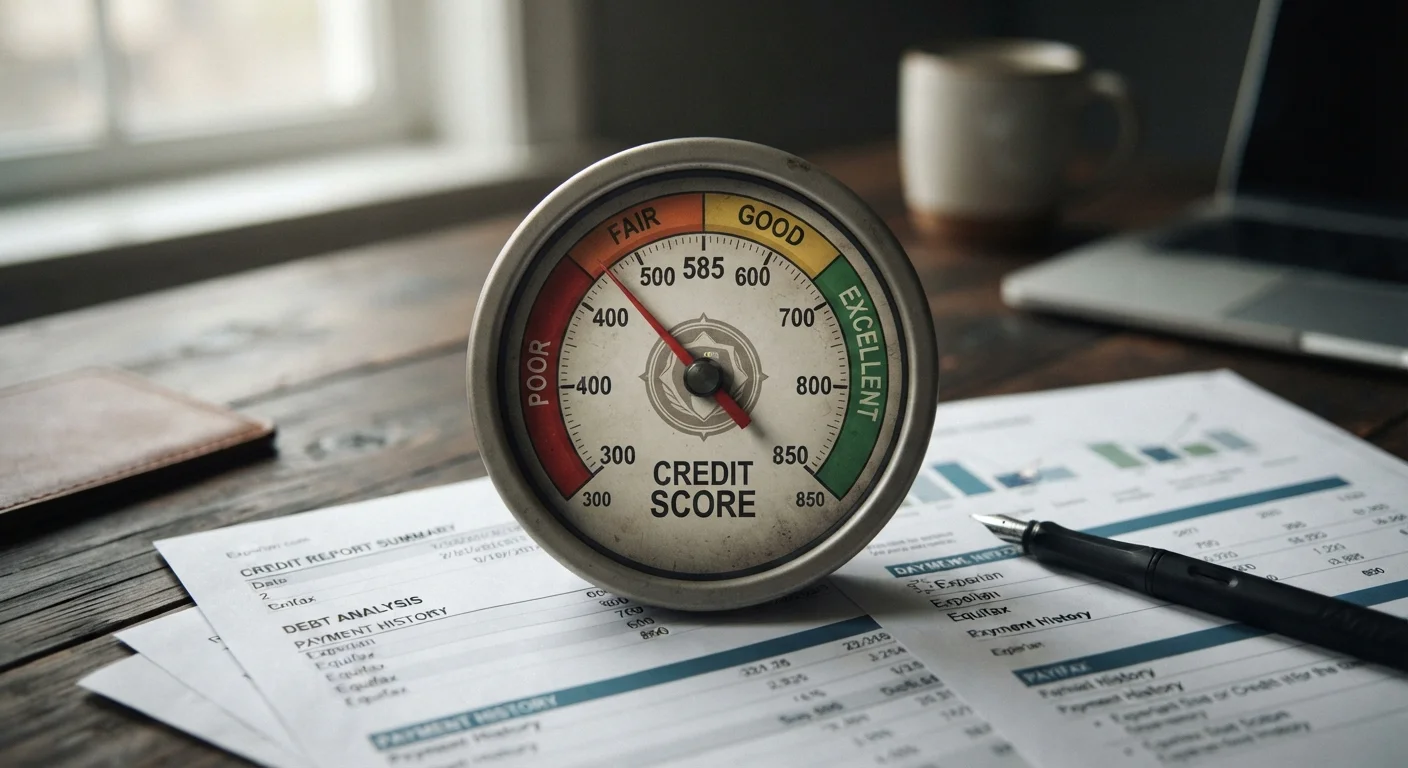


The Logic That Trips People Up
Closing a credit card you never use sounds like responsible financial hygiene. Fewer accounts, less clutter, lower fraud risk. The reasoning is understandable — but the impact on your credit profile is often the opposite of what you'd expect.
Credit scores are calculated using several weighted factors. Two of those factors — credit utilization (how much of your available credit you're using) and length of credit history — are directly affected when you close an account. Understanding exactly how each one shifts is the key to making smarter decisions about your cards.
For a broader look at behaviors that quietly chip away at your score, see our guide to overlooked credit score damage.
Closing your oldest card without considering its impact on credit history length.
Why it happens: People often target the card they use least — which tends to be the one they've had the longest. The connection between account age and credit scoring isn't widely understood.
Not calculating how closure will affect your credit utilization ratio.
Why it happens: Utilization is one of the most misunderstood credit factors. Many people focus on their balance amount rather than the ratio of balance to total available credit.
Assuming a closed account disappears from your credit report immediately.
Why it happens: There's a common belief that closing an account erases its history. In reality, closed accounts in good standing typically remain on your report for up to 10 years.
Closing a card right before applying for a major loan or mortgage.
Why it happens: Timing rarely feels urgent until it suddenly is. Many people close cards during a general financial clean-up without checking their upcoming credit needs.
Confusing credit card balance myths with how utilization actually works.
Why it happens: Some people believe carrying a small balance helps their score, so they keep balances on multiple cards — then close the ones they mistakenly think are "hurting" them.
When Closing a Card Actually Makes Sense
This isn't a blanket rule against ever closing a card. There are legitimate reasons to do it — the key is understanding the trade-off before you act.
High annual fees with no value: If a card costs $95 a year and you're not using the perks, keeping it open purely for your credit score may not pencil out — especially if your score is already in good shape.
Cards linked to harmful spending patterns: If keeping a card open is genuinely creating financial risk for you, that takes priority over the score impact.
Duplicate cards with identical credit limits: If you have two very similar cards from the same issuer and want to simplify, closing the newer one — not the older one — minimizes history loss.
~30%
Utilization threshold that begins to hurt scores
Credit scoring models generally treat utilization above 30% as a risk indicator, though lower is considered better for top-tier scores.
15%
Weight of credit history length in FICO scoring
According to FICO, the length of your credit history accounts for approximately 15% of your overall FICO score calculation.
10 years
How long a closed account in good standing stays on your report
The Consumer Financial Protection Bureau notes that positive closed accounts can remain on your credit report for up to 10 years.
Before you close anything, check your current utilization rate. A simple formula: divide your total balances by your total credit limits across all cards. If closing one card pushes that number above 30%, you'll likely see a score drop. How significant depends on your overall profile.
If you're actively rebuilding after credit problems, the stakes are higher. Our guide on rebuilding credit after a financial setback walks through how to protect your progress at every step.
And if you want to cement the habits that keep your score climbing over time, credit-building habits worth practicing long-term covers the low-effort moves that compound quietly in your favor.
This article is for general informational purposes only and does not constitute personalized financial advice. Consider consulting a qualified financial professional for guidance specific to your situation.