
Why India Works for Budget Travelers
India is one of the few destinations where a genuinely immersive, months-long trip remains financially accessible for travelers working with limited funds. The rupee's exchange rate against the US dollar means that local goods and services — accommodation in guesthouses, meals at local restaurants, regional train journeys — cost a fraction of equivalent experiences in Western countries.
But India's appeal as a budget destination goes beyond raw price points. The sheer density of things to see and do in a single city, region, or state means that slow travel — spending a week or two in one place rather than rushing — stretches money further without sacrificing depth. This aligns directly with what experienced low-cost travelers consistently recommend; see principles experienced budget travelers use for more on that approach.
That said, India demands honest preparation. It's a vast, logistically complex country with significant regional variation in cost, infrastructure quality, and traveler experience. The gap between expectation and reality can be wide — and expensive.
What a Realistic Daily Budget Looks Like
Breaking down costs by category gives a clearer picture than a single daily figure:
- Accommodation: Dormitory beds in budget guesthouses run $5–$10/night in most cities. Private rooms in mid-range guesthouses or budget hotels typically cost $15–$35/night depending on region and season.
- Food: Eating at local dhabas and thali restaurants costs $3–$8/day for three meals. Adding occasional café meals or tourist-area restaurants pushes this to $10–$20/day.
- Internal transport: Sleeper-class train fares between cities average $5–$15 per journey. City transportation via auto-rickshaw or metro is generally $0.50–$3 per trip.
- Sightseeing: Many temples and public sites charge minimal entry fees ($0.50–$3). Major monuments — particularly those maintained under the Archaeological Survey of India — charge foreigners a premium over locals, sometimes $10–$20 per site.
Book overnight trains rather than budget flights between cities — you save on accommodation while covering distance, and the experience itself is genuinely worthwhile.
India's rail network is one of the world's most extensive, and sleeper-class fares between major cities often cost less than $10 while eliminating a hotel night.
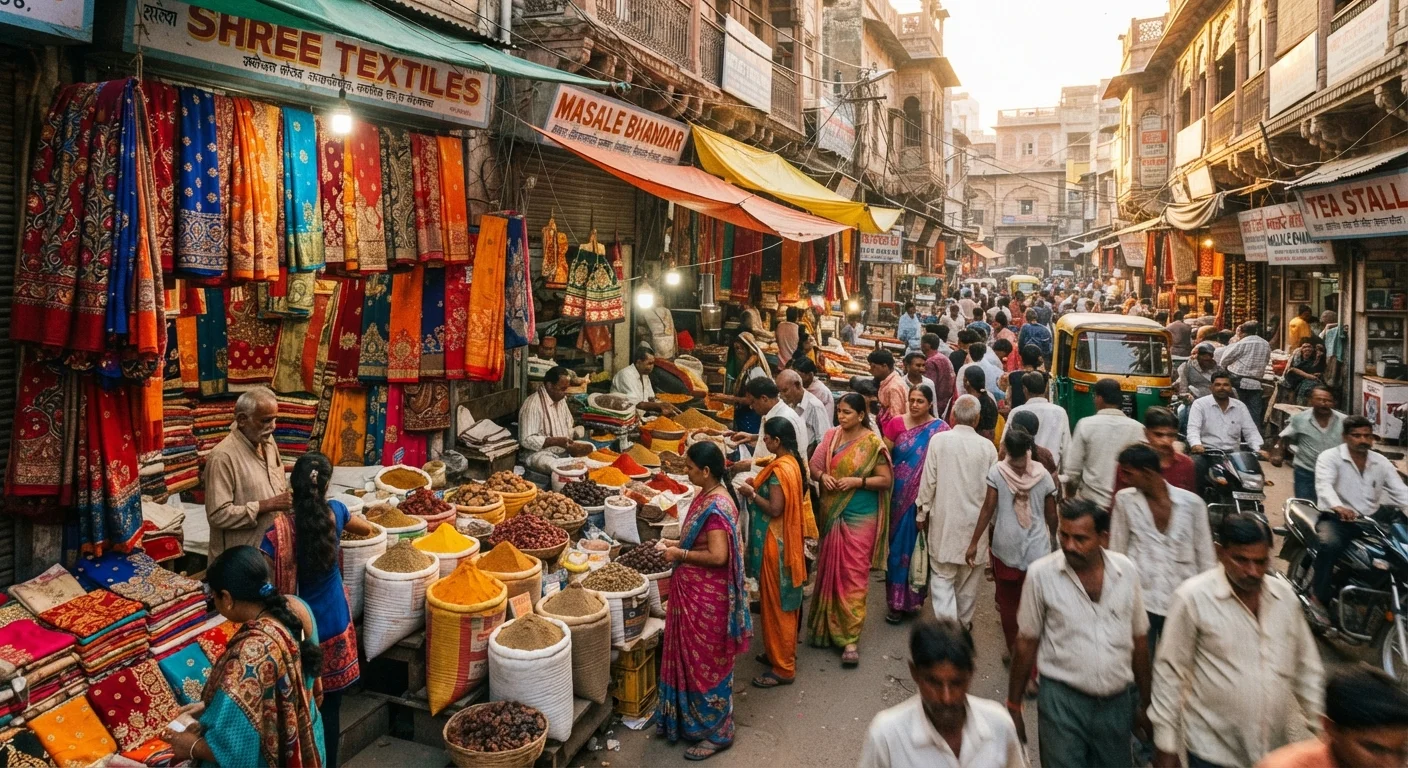
Eat where locals eat: thali restaurants, dhabas (roadside eateries), and canteen-style 'meals' spots routinely charge $1–$3 for a full, filling plate.
Tourist-facing restaurants in heritage districts often charge three to five times more for similar food; shifting one street away can cut your daily food budget significantly.
Combining these, a shoestring traveler staying in dorms, eating local, and using trains can realistically manage $20–$30/day. A traveler prioritizing private rooms, occasional restaurant meals, and some comfort on transport will spend closer to $50–$80/day.
$25
Approximate shoestring daily spend
Based on mid-2020s traveler reports covering budget accommodation, local food, and regional transport in non-peak areas.
67,000+
Railway stations in the network
India's rail system connects even remote destinations, making low-cost long-distance travel widely accessible across the subcontinent.
~$150
Median e-visa fee for US citizens
India's e-Tourist Visa fee varies by nationality and duration; US citizens should verify current fees directly at the official Indian government visa portal.
Regional Cost Differences You Need to Know
India is not a single-cost environment. Regional variation is substantial:
- Rajasthan and the Golden Triangle
- Delhi, Agra, and Jaipur are heavily touristed. Accommodation and food prices in tourist zones run 30–50% higher than comparable quality elsewhere in India. These areas are still affordable by Western standards but are India's pricier circuit.
- Goa
- Beach-focused tourism has pushed prices up significantly, particularly November through February. Budget travelers who visit outside peak season or stay inland find better value, but Goa is not India's cheapest region.
- Kerala and Tamil Nadu
- South India offers a solid mid-range balance: reliable infrastructure, lower tourist density outside major sites, and food that is generally excellent and inexpensive. Kerala's backwaters are worth noting — houseboats are marketed as a signature experience but carry a significant price premium.
- Northeast India and Madhya Pradesh
- These regions see far fewer international tourists, and costs reflect that. Accommodation and food are noticeably cheaper, and the cultural and natural density rivals more famous circuits. Madhya Pradesh in particular — home to Khajuraho, Orchha, and Bandhavgarh — offers remarkable value.
For a direct comparison with another affordable multi-country region, the Balkans budget travel overview provides useful context on how regional variation works elsewhere.
Travel Styles and What They Actually Cost
How you travel within India shapes your budget as much as where you go:
- Slow, single-region immersion: Spending three weeks in one state or region dramatically reduces internal transport costs and allows you to find local pricing rather than tourist-facing rates. This is the highest-value approach for most budget travelers.
- Multi-city circuit: Covering several destinations in two weeks requires more transport spending and often more expensive, conveniently located accommodation. Budget carefully — transport alone can add $50–$100 per move.
- Organized tours: Small-group budget tours exist and can be cost-effective for remote areas where independent logistics are complicated. Compare total cost — including accommodation and transport — against independent equivalents before assuming tours are more expensive.
Time Your Visit for Value
Traveling during the shoulder season — roughly February to March or September to October — can reduce accommodation rates by 20–40% compared to peak winter months in northern India. Monsoon season (June–September) brings steep discounts in some areas but can make certain regions genuinely difficult to navigate.
If you're new to navigating destinations like this, the complete starting point for tight-budget travel covers the foundational decisions that apply across destinations.
Hidden Costs and Honest Caveats
Several costs catch first-time India travelers off guard:
Budget Estimates Can Mislead
Online daily-budget figures for India often exclude international airfare, visa fees, travel insurance, and vaccination costs — which together can add $800–$1,500+ to your trip before you land. Always build your total-trip budget rather than just a daily one. See why cheap countries don't always mean cheap trips for a fuller breakdown of this gap.
- Visa fees: India requires a visa for US citizens. The e-Tourist Visa is available online but carries a fee that varies by stay duration. Check the official portal for current pricing.
- Travel insurance: Non-negotiable for a destination with significant health considerations. Policies covering medical evacuation add meaningfully to trip costs but are worth budgeting for.
- Vaccinations and medications: Hepatitis A, typhoid, and other travel vaccines are commonly recommended. A pre-travel health consultation with a travel medicine provider is advisable — costs vary but should be factored in.
- Foreigner pricing at attractions: Entry fees at major sites are often 10–20x higher for foreign nationals than for Indian citizens. This is legal and standard — build it into sightseeing estimates rather than treating it as a surprise.
For a systematic way to map all these costs before committing, see the pre-trip budget research checklist.
Practical Planning Essentials
Verify Entry and Health Requirements
India's visa rules, required vaccinations (such as yellow fever for travelers arriving from certain countries), and any health advisories change periodically. Always check the official Indian government immigration portal and the US CDC or State Department travel pages before booking. This article provides general orientation only, not current regulatory guidance.
A few practical realities worth knowing before finalizing plans:
- Best entry points: Delhi, Mumbai, and Bangalore receive the most international flights. Positioning your itinerary to arrive and depart from the same city reduces internal repositioning costs.
- SIM cards: Prepaid tourist SIMs are available at major airports. Mobile data is inexpensive and essential for navigation, translation, and booking apps in India.
- Cash vs. digital payments: India has expanded digital payment infrastructure significantly, but cash remains important in rural areas, smaller towns, and local markets. Carry a mix.
- Accommodation booking windows: During peak season (November–February in the north), popular budget guesthouses in Rajasthan and Goa fill quickly. Book at least two to three weeks ahead for those specific windows.
For a full framework on evaluating whether India — or any destination — genuinely fits your budget before booking, the destination budget evaluation framework walks through the research process step by step.
This article is for general informational purposes only. Travel conditions, prices, visa requirements, and health recommendations change over time. Verify all entry requirements, safety advisories, and health precautions with official government and medical sources before booking.