
Why Eastern Europe Still Wins for Budget Travelers
Western Europe's headline cities — Paris, Amsterdam, Lisbon — have absorbed years of tourism demand, and their prices reflect it. Eastern Europe, by contrast, still offers a wide tier of destinations where your dollar, or converted local currency, simply goes further. Not just marginally further — often two to three times further on accommodation, meals, and local transit.
The cities on this list aren't obscure backpacker secrets, but they're consistently overlooked in favor of Prague or Budapest. That's precisely what makes them worth considering. For travelers who want history, architecture, and real local culture without draining a savings account, these destinations deliver. For food strategies that work across all of them, see our guide on eating well abroad without spending like a tourist.
Tbilisi, Georgia
Georgia's capital sits at a geographic and cultural crossroads between Europe and Asia, and its prices haven't caught up with its rising reputation. Budget accommodation in Tbilisi — from well-reviewed guesthouses to small boutique hostels — routinely runs $15–$30 per night. A full sit-down meal with wine at a mid-range local restaurant often comes in under $12.
The old town district (Abanotubani) is a maze of carved wooden balconies, sulfur bathhouses, and narrow streets that charge nothing to explore. Georgia also operates a remarkably generous visa-free policy for many nationalities, though travelers should confirm current entry rules through official Georgian government sources before departing.
A full restaurant meal with Georgian wine often costs under $12 in Tbilisi.
Skopje, North Macedonia
Skopje is arguably the most underpriced capital in Europe relative to what it offers. The city is visually striking — its central zone was dramatically rebuilt in the 2010s — and the Old Bazaar district (Čaršija) is one of the largest and most intact historic bazaars in the Balkans. Hostel beds can be found for $10–$15, and a local lunch of grilled meats and salad runs $4–$6.
North Macedonia uses the Macedonian denar, and currency exchange rates typically work in visitors' favor. The country is compact enough that day trips to Lake Ohrid — a UNESCO-listed site — are feasible and inexpensive by local bus.
Skopje may be the most underpriced capital in Europe relative to what it offers.
Lviv, Ukraine
Note: As of the time of writing, Ukraine is experiencing an ongoing armed conflict. Travelers should consult their government's official travel advisory before considering any trip to Ukraine, including Lviv. This entry reflects Lviv's historical status as a budget destination and is included for informational context only.
Lviv's UNESCO-listed old town is one of Central Europe's most architecturally intact city centers, blending Polish, Austro-Hungarian, and Ukrainian influences. Pre-conflict, the city was well-regarded among budget travelers for its dense café culture, very low accommodation costs, and strong local arts scene — context worth noting for future planning.
Lviv's UNESCO old town blends Polish, Austro-Hungarian, and Ukrainian architecture in one walkable district.
Plovdiv, Bulgaria
Bulgaria's second city consistently outperforms expectations. Plovdiv's old town sits on three hills and contains some of the best-preserved Bulgarian National Revival architecture in the country. The city hosts a vibrant arts and gallery scene — it was a European Capital of Culture in 2019 — yet daily costs remain firmly in budget territory.
Expect to pay $20–$35 for a private guesthouse room, and under $8 for a solid local meal. Bulgaria uses the lev (pegged to the euro), which simplifies budgeting. Transit between Sofia and Plovdiv by bus or train costs roughly $5–$8 each way, making a two-city Bulgaria trip very manageable financially.
Plovdiv was a European Capital of Culture yet daily costs remain firmly in budget territory.
Kotor, Montenegro
Montenegro's coastal old town of Kotor is a walled medieval city on a bay that rivals the Adriatic's most photogenic spots — at prices well below Croatia's Dubrovnik, which sits just up the coast. Entering the old town walls is free, and the hike up to the fortress above offers sweeping bay views without a ticket price.
Accommodation costs are higher in peak summer (July–August) but drop sharply in shoulder season, when a private room can be found for $30–$50. Montenegro uses the euro despite not being an EU member, so there's no currency exchange friction for eurozone visitors. For a fuller regional picture, see the Balkans budget travel overview.
Kotor delivers Adriatic scenery comparable to Dubrovnik at a noticeably lower price point.
Cluj-Napoca, Romania
Cluj-Napoca sits in Transylvania and is Romania's second-largest city, home to a major university that keeps the local economy — and its prices — grounded. It lacks the tourist infrastructure of Bucharest, which works entirely in budget travelers' favor: fewer tourist-price menus, more local bars and markets, and accommodation that runs $18–$40 for a private room.
The city's central market (Piața Unirii) anchors a walkable historic center, and the surrounding Transylvania region offers day-trip potential to medieval towns like Sighișoara without requiring a rental car. Romania uses the leu, and the exchange rate has historically been favorable for USD and GBP holders, though rates fluctuate and should be checked before travel.
Cluj-Napoca's large student population keeps local prices grounded even as Romania's tourism grows.
Putting It Into Practice
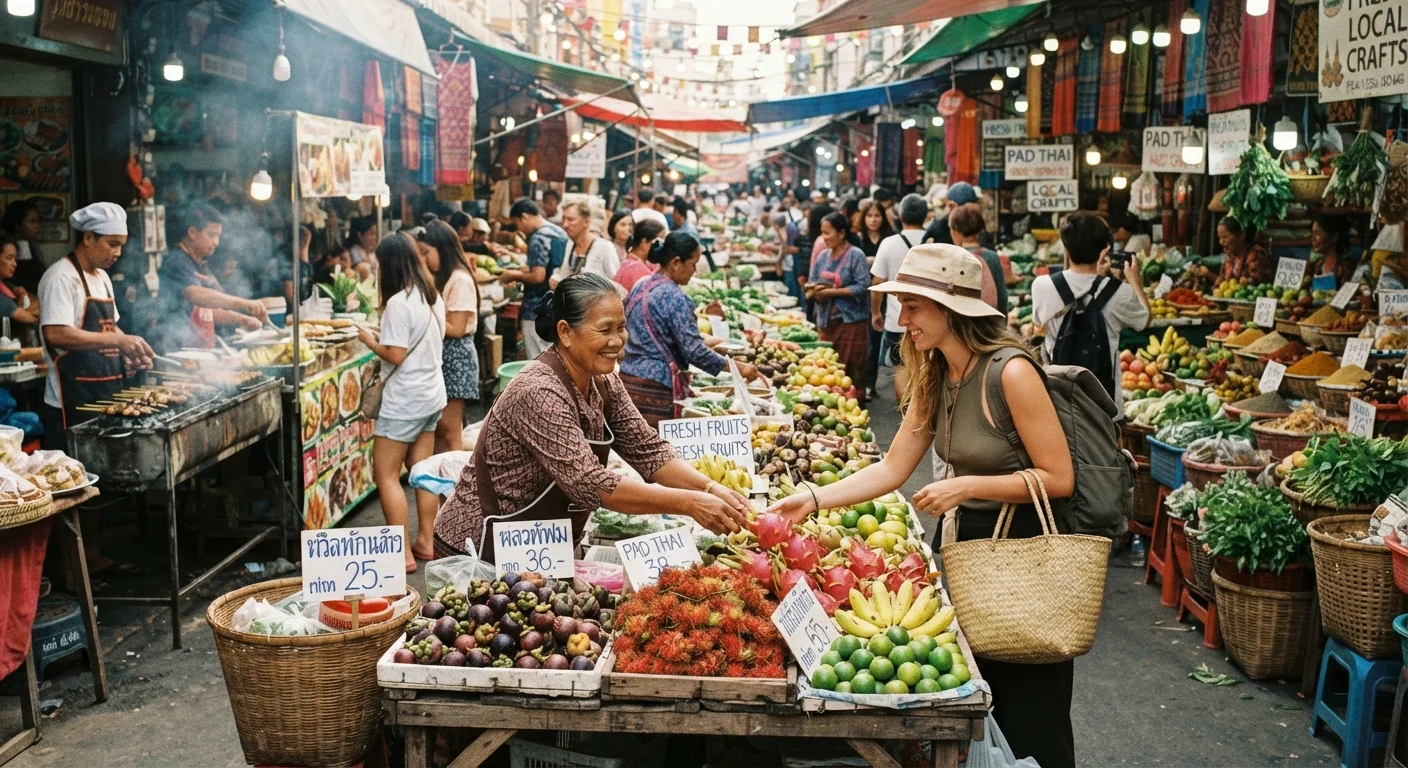
A common thread across all these cities: the gap between tourist-facing prices and local prices is real and exploitable. Eating where locals eat, using city buses rather than ride-share apps, and staying in neighborhoods a short walk from the main square rather than on it — these habits consistently reduce daily spend by 20–40%. Our piece on where budget travelers actually find good food breaks down exactly which venue types deliver the most value.
Time Your Visit for Shoulder Season
April through May and September through October offer the most favorable conditions across Eastern Europe for budget travelers. Accommodation prices are 20–40% lower than peak summer rates, key sites are less crowded, and the weather across most of the region is mild and walkable. Flights also tend to be cheaper outside the July–August window, so the savings compound across every budget category.
If you're building a broader Balkan itinerary, the regional cost breakdown in our Balkans budget travel overview is a useful planning reference. And for the principles that apply regardless of destination, experienced low-cost traveler habits is worth reading before you book anything.
Travel conditions, visa requirements, entry rules, and prices change. Verify all entry requirements and safety information with official government sources and your country's travel advisory before booking.