
Why Carry-On Only Is Worth the Discipline
Checked-bag fees on US budget carriers typically run $35–$65 per bag each way. On a round trip with even one connection, that cost compounds fast. Beyond the money, checked luggage means waiting at carousels, risk of delays or loss, and less flexibility when plans change. For the budget-conscious traveler, learning to pack light isn't just an aesthetic choice — it's a direct line to keeping costs under control.
The challenge isn't fitting your life into a bag. It's changing how you think about what you actually need for a trip. Most travelers report that they use roughly 60–70% of what they pack. That unused 30% is dead weight you paid to carry. This guide walks through a repeatable system to close that gap.
Before packing a single item, also check out the pre-trip checklist for budget travelers — it covers logistics that directly affect what you need to bring.
What You'll Need Before You Start
Getting the system right starts with having the right foundation — the bag itself and a few organizational tools.
What you will need
Carry-on suitcase or travel backpack (40–45L)
The main container for clothing and non-liquid items — must fit your airline's cabin bag dimensions.
Packing cubes (set of 3–4)
Compress and organize clothing into sections, making it easier to find items without unpacking everything.
Reusable quart-size zip bag
Required by TSA for liquids carried through US airport security; keeps toiletries contained and accessible.
Daypack or structured personal item tote
Carries in-flight essentials and a day bag so they don't consume space in the main carry-on.
Laundry detergent sheets or a small soap bar
Enables mid-trip hand-washing so you can re-wear clothes and pack fewer items overall.
How to Pack a Full Trip Into One Carry-On
Follow these steps in order. Skipping ahead — especially skipping the editing phase — is the most common reason travelers end up gate-checking a bag at the last minute.
Check your airline's exact carry-on dimensions and weight limits
Size and weight allowances vary by carrier and even by fare class. A bag that's fine on one airline may trigger a gate-check fee on another. Before buying or packing anything, go to your airline's website and confirm the current limits. Write them down. Measure your bag if you haven't in a while — handles and wheels count toward dimensions on some carriers.
Write out your itinerary and planned activities
List every category of activity you have planned: casual sightseeing, dining out, hiking, beach time, business meetings. This gives you a functional inventory to pack against, rather than packing by feel. Be honest about how many distinct outfit types you actually need — most trips have one or two dominant activity types, not five.
Build a capsule clothing list — then cut it by 25%
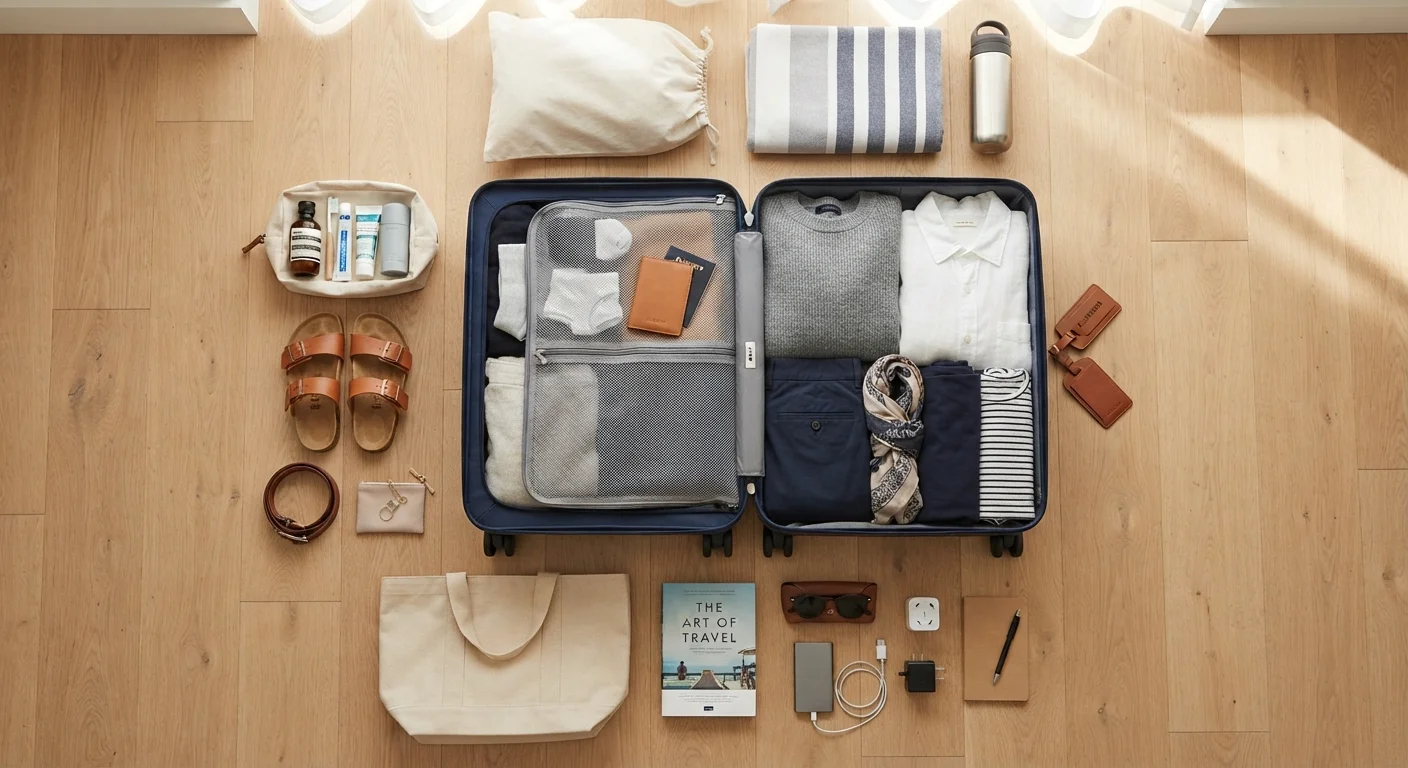
Write down every piece of clothing you think you need. Then remove one item from each category. A reliable baseline for a 7-day trip: 4 tops, 2 bottoms, 1 layer (lightweight jacket or zip-up), 3 pairs of socks and underwear, and 1–2 pairs of shoes. Prioritize fabrics that are lightweight, wrinkle-resistant, and quick-drying so you can re-wear and hand-wash easily.
Edit your toiletries to TSA-compliant travel sizes
All liquids, gels, and aerosols must be in containers of 3.4 oz (100ml) or less and fit in a single quart-size bag under TSA rules. Decant products you already own into small refillable bottles. Skip anything available at most pharmacies or hotels at your destination — shampoo, conditioner, and body wash are rarely worth carrying. Solid alternatives (shampoo bars, solid moisturizer) bypass liquid rules entirely.
Pack using the rolling method and packing cubes
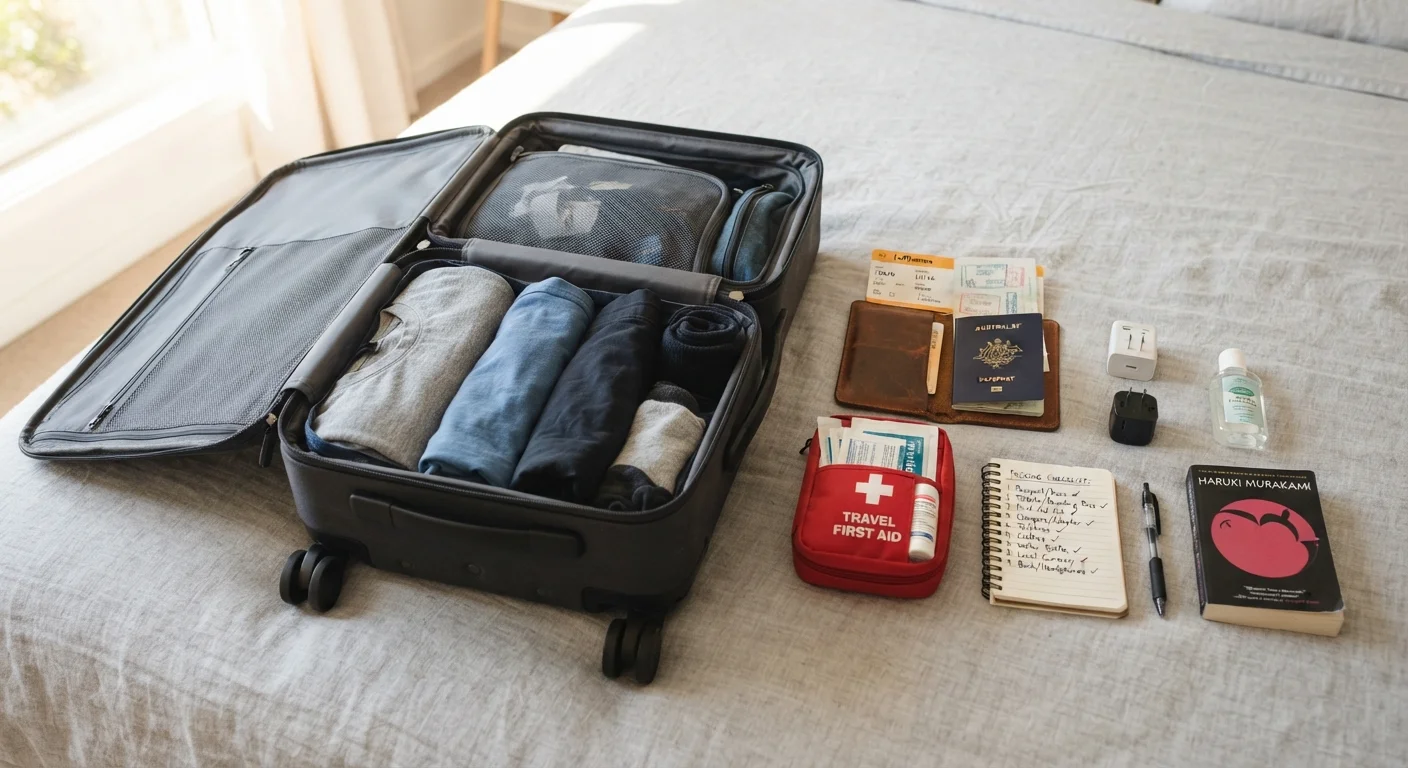
Roll every garment tightly before placing it in a packing cube. Rolling consistently outperforms folding for volume savings and reduces wrinkles on most fabrics. Pack heaviest items (shoes, toiletry bag) at the bottom of the carry-on near the wheels. Use separate cubes for tops, bottoms, and underwear/socks to keep things accessible without unpacking the whole bag at your destination.
Do a final weight and size check before you leave
Weigh the packed bag using a luggage scale or bathroom scale. Lift the bag and simulate overhead bin placement — if it's a struggle at home, it'll be harder in a crowded aisle. If the bag exceeds your airline's weight limit, remove items rather than risk an overweight fee, which can exceed the cost of a checked bag on some carriers.
Common Mistakes That Force You to Check a Bag
Even experienced travelers fall into predictable traps. Shoes are the single biggest space drain — more than two pairs is rarely justified for trips under two weeks. Bulky toiletry bottles are next: if it can be bought at the destination for a few dollars, it shouldn't take up a quarter of your bag. Overpacking "just in case" outfits — formal wear, rain gear, gym clothes — for trips where the need is speculative adds volume without reliable return.
Another frequent error is ignoring the personal item. Most airlines allow one carry-on and one personal item (a backpack or tote). That personal item, packed with a day bag, laptop, snacks, and your in-flight layer, frees up the main bag for clothing.
Use Your Personal Item Strategically
Pack your travel layer, laptop or tablet, snacks, and anything you'll want on the plane into your personal item before you leave home. This keeps that bulk out of the main carry-on and means the items you reach for most are immediately accessible — no overhead bin required.
For a fuller picture of the financial errors that go hand-in-hand with overpacking, see what first-time budget travelers consistently get wrong. And if you're managing bags across multiple cities, stretching a travel budget across a multi-city trip covers how packing light intersects with multi-stop logistics.