From travel insurance to local SIM cards, tick off everything that helps you avoid costly surprises before you leave home.
Key Takeaways
Skipping travel insurance is one of the costliest mistakes budget travelers make — a single claim can dwarf the premium.
Confirming visa requirements and entry rules well in advance prevents last-minute fees or denied boarding.
A local SIM card or offline-capable map app eliminates expensive roaming charges from day one.
Notifying your bank and carrying a small amount of local currency avoids card blocks and airport exchange losses.
Packing carry-on only removes checked-bag fees that can add $60–$120 or more to a round trip.
Researching airport transfer options before departure typically saves 30–60% over arriving without a plan.
Why a Pre-Trip Checklist Pays Off
Most travel budget blowouts don't happen at the destination — they happen in the 72 hours before departure. A blocked card at the ATM, a roaming data bill that arrives after you land, a checked-bag fee you didn't budget for: these are avoidable costs that drain money you planned to spend on actual experiences.
This checklist is built for budget-conscious travelers who want to close every gap before leaving home. Work through it in the week leading up to your trip. Items marked must are non-negotiable; skip them and you're accepting real financial risk. Should items are strongly recommended — they typically pay for the time they take. Nice-to-have items are worth doing if you have bandwidth.
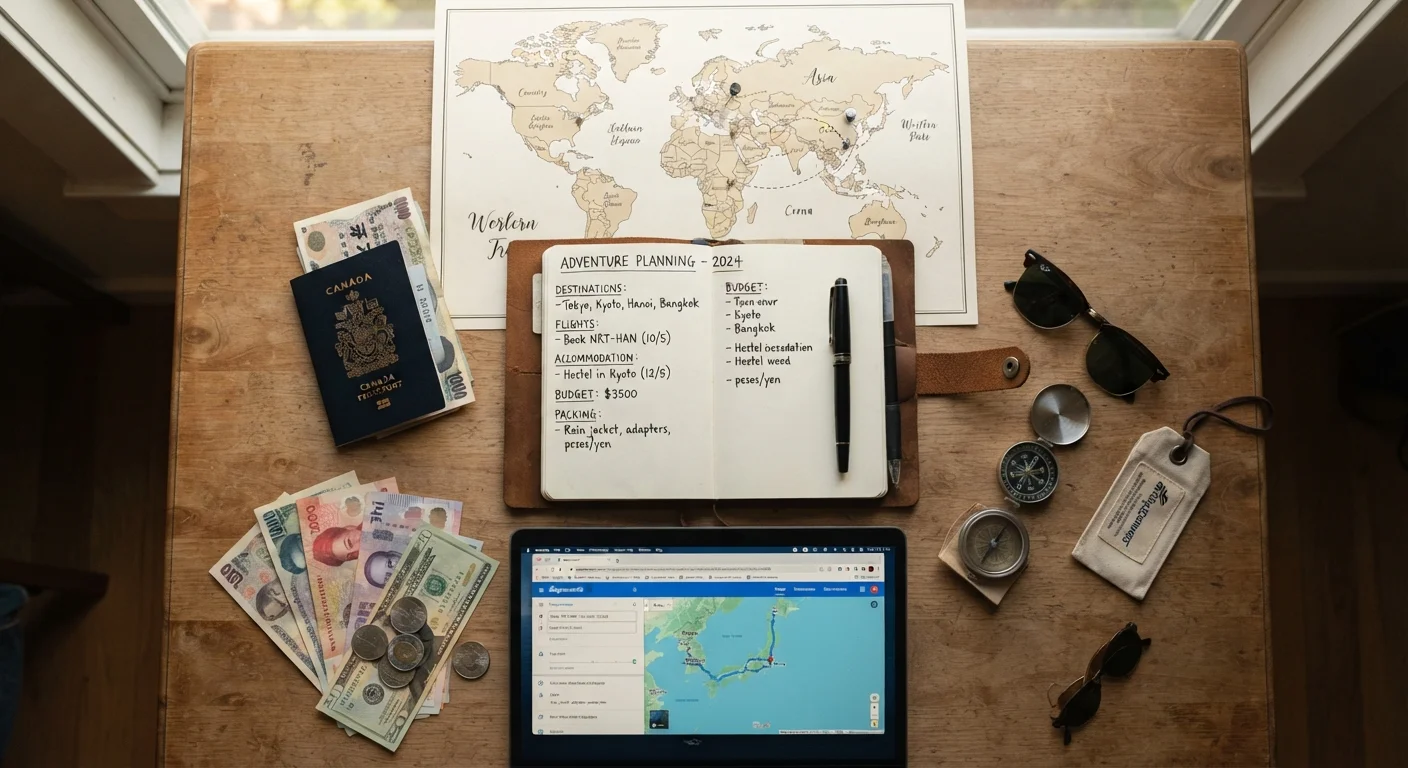
If you're still in the destination-research phase, the pre-booking research checklist covers visa fees, local transport costs, and daily spending estimates before you commit to a ticket.
Documents & Entry Requirements
Verify your passport has at least six months of validity beyond your return date — many countries deny entry without it.Must
Check current visa requirements for your destination through your government's official travel portal and apply well in advance.Must
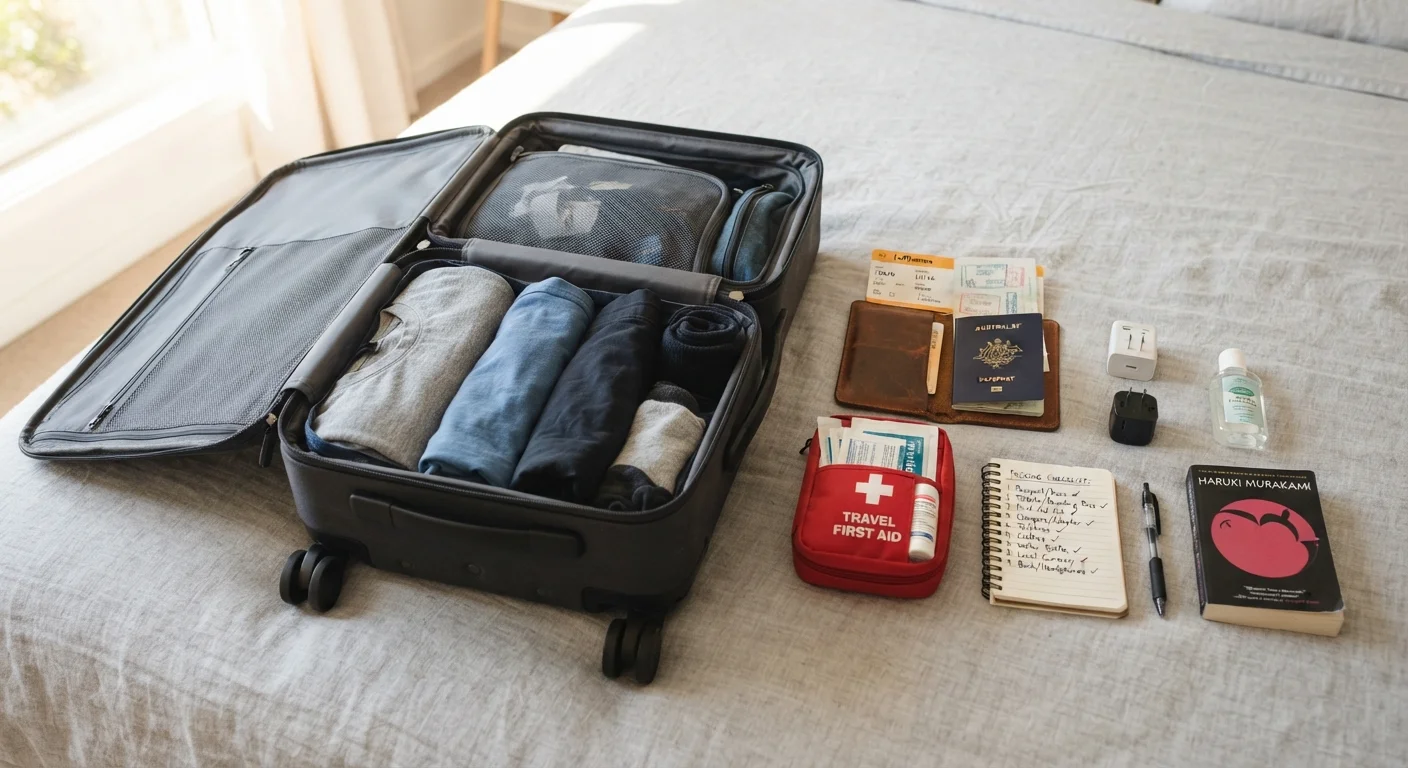
Download or print paper copies of your e-tickets, accommodation confirmations, and travel insurance policy.Must
Register your trip with your country's official travel advisory service so you can receive safety alerts while abroad.Should
Money & Banking
Notify your bank and credit card providers of your travel dates and destinations to prevent automatic fraud blocks on your cards.Must
Identify which of your cards charges zero (or low) foreign transaction fees and plan to use that card as your primary one.Must
Exchange a modest amount of local currency before departure — enough for your first day's transport and meals — using a bank or credit union rather than an airport kiosk.Should
Research ATM availability at your destination and note any daily withdrawal limits that could affect your access to cash.Should
Insurance & Health
Purchase travel insurance that covers medical evacuation, trip cancellation, and lost baggage before your first departure.Must
Check destination-specific health advisories and vaccination recommendations through your country's official health authority.Must
Pack a sufficient supply of any prescription medications for the full trip duration, plus a few extra days as a buffer.Must
Carry a basic first-aid kit with pain relief, antidiarrheals, blister treatment, and any personal items you know you'll need.Should
Connectivity & Navigation
Research local SIM card options at your destination and plan to purchase one on arrival to avoid roaming charges.Must
Download offline maps for your destination using a free mapping app so you can navigate without data.Must
Identify the local emergency number and the nearest embassy or consulate contact for your home country.Should
Download a translation app with offline capability if you're traveling to a destination where you don't speak the language.Nice to have
Transport & Transfers
Research airport-to-city transport options in advance — public transit, shared shuttles, and pre-booked transfers are typically far cheaper than taxis hailed at arrivals.Must
Confirm check-in baggage allowances for every flight segment, including connecting carriers, to avoid surprise fees at the gate.Must
Check in online within the window your airline allows to secure your seat and skip potential last-minute fees.Should
Packing & Luggage
Weigh your bag before leaving home if you're checking luggage — overweight fees can be steep and are entirely preventable.Must
Pack only what fits in a carry-on if your itinerary allows it — eliminating checked-bag fees on a round trip can save $60–$120 or more.Should
Include a universal power adapter and a small portable charger so you're never left without power for navigation or communication.Should
Leave expensive or irreplaceable jewelry at home — it reduces loss risk and simplifies airport security.Nice to have
Tools That Make the Checklist Easier
You don't need premium apps or subscriptions to execute this checklist well. A few free or low-cost tools handle most of the heavy lifting.
Required
Government Travel Advisory Portal
Verify current entry requirements, visa rules, health advisories, and safety alerts for your specific destination.
Required
Offline Maps App (e.g., maps with downloadable regions)
Navigate without a data connection once you arrive, eliminating roaming charges for basic wayfinding.
Optional
Translation App with Offline Mode
Communicate in destinations where you don't speak the local language, including reading menus and signs without data.
Required
Digital Document Storage (cloud or encrypted local folder)
Store backup copies of your passport, insurance policy, bookings, and emergency contacts accessible from any device.
Optional
Luggage Scale
Weigh bags at home before departure to avoid overweight fees at the check-in counter.
Once you've assembled your tools, the single biggest time-saver is batching tasks by category — handle all your financial prep in one sitting, connectivity prep in another. Budget travelers who work through a structured list before departure consistently report fewer surprise expenses. The common first-timer mistakes article documents the specific gaps — airport transfers, insurance gaps, and over-packing fees — that this checklist is designed to close.
Airport Currency Exchange Kiosks Cost More
Exchange rates at airport kiosks routinely run 10–15% worse than those available at your home bank or local credit union. If you need local currency for arrival day, exchange it before you leave home or plan to withdraw from an in-network ATM at your destination. Carrying enough for your first day only minimises your exposure to bad rates.
Travel for Less Editorial Team is the collective byline for our editorial team and contributor network. Articles published under this byline or an editorial pen name are researched, written, and reviewed according to our editorial standards for clarity, consistency, and independence before publication.
The content provided on our blog site traverses numerous categories, offering readers valuable and practical information. Readers can use the editorial team’s research and data to gain more insights into their topics of interest. However, they are requested not to treat the articles as conclusive. The website team cannot be held responsible for differences in data or inaccuracies found across other platforms. Please also note that the site might also miss out on various schemes and offers available that the readers may find more beneficial than the ones we cover.