

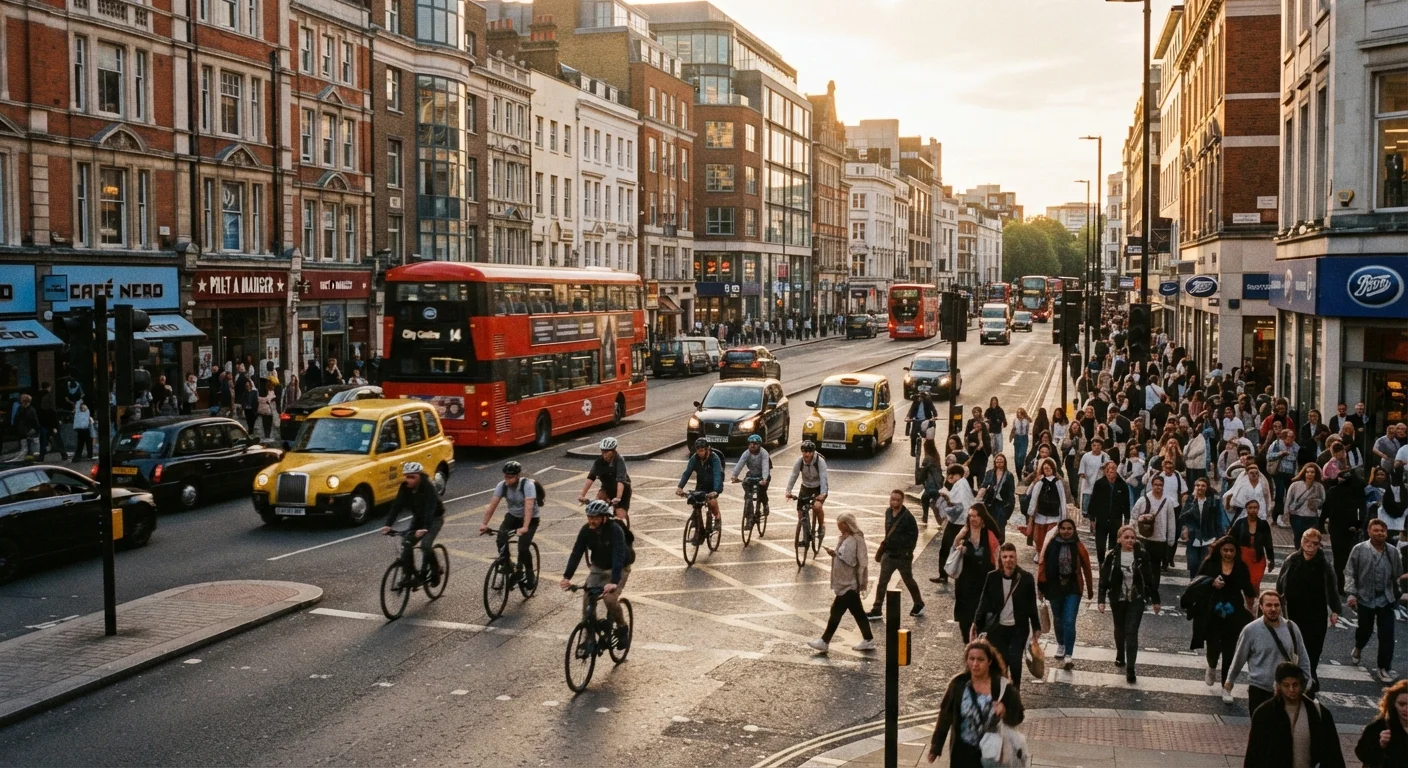
The Budget Line Most Travelers Underestimate
Most people building a travel budget spend real time comparing flight prices and accommodation rates. Ground transport — the daily cost of getting from A to B once you arrive — rarely gets the same scrutiny. That's a costly oversight.
In cities where public transit is thin or unfamiliar, a traveler who defaults to taxis or ride-share for every journey can easily spend $15–$30 per day on local movement alone. Over a ten-day trip, that's $150–$300 that never appeared in the original budget. As our guide to common first-timer mistakes notes, airport transfer costs alone are one of the most predictable budget leaks — and one of the most avoidable.
The decisions below aren't about suffering through inconvenience. They're about choosing deliberately, with a clear understanding of what each transport option actually costs in total — not just the sticker price.
Audit the airport transfer before anything else
The trip from the airport to your accommodation sets the tone for every transport decision that follows. It's also reliably one of the most expensive per-mile journeys of any trip. Official airport taxis, hotel shuttles, and premium car services can charge two to four times more than alternatives covering the same route.
In most mid-to-large cities, a direct rail or bus link to the city center exists and costs a fraction of a taxi. Research this before departure: know the route name, the approximate fare, and where to buy the ticket. That ten-minute preparation often saves $20–$50 on a single journey.
A ten-minute pre-trip research session on airport links often saves $20–$50 on a single transfer.
Calculate whether a transit pass actually pays off
Multi-day transit passes are marketed heavily at tourists, but they don't always make financial sense. The math depends on how many journeys you'll realistically take per day and what single fares cost locally.
A pass makes sense if you'll make four or more transit trips daily — common when sightseeing across a spread-out city. It makes less sense if you're based in a walkable neighborhood or plan to spend most days in one area. Look up the single-ride fare before buying any pass, then run the numbers against your actual itinerary rather than an optimistic version of it.
Transit passes only pay off if you'll realistically make four or more trips per day — do the math first.
Understand the full cost of a rental car
Rental car headline rates are rarely the price you pay. Mandatory insurance (sometimes required even if you have credit card coverage), fuel, parking, and tolls can add 40–80% to the base rate in many destinations. In cities with good transit, a rental car is often a net negative — you pay for it daily while it sits in expensive parking.
Rentals make more sense for destinations with poor public transit, rural itineraries, or when splitting costs among three or four travelers. If you're traveling slowly in one place, the math changes — a week-long rental in a car-dependent region may still be the most affordable option once transit alternatives are priced out.
Mandatory insurance, parking, and tolls can add 40–80% on top of a rental car's advertised rate.
Treat ride-share as a convenience premium, not a baseline
Ride-share apps feel affordable because individual fares are modest. The problem is frequency. Travelers who use ride-share as their default transport — because it's easy, air-conditioned, and door-to-door — often spend $10–$20 per trip across several journeys a day without tracking the accumulation.
Ride-share is most cost-effective for specific cases: late-night travel when transit has stopped, journeys with heavy luggage, or routes where no transit option exists. Used selectively rather than habitually, it's a reasonable tool. Used as a substitute for transit, it's one of the fastest ways to quietly overspend a daily budget.
Ride-share used habitually rather than selectively is one of the fastest ways to quietly overspend.
Walk and cycle whenever the route supports it
Zero-cost transport is genuinely available in most destinations, and it's systematically underused by travelers who underestimate walkable distances or don't know that bike-share programs exist. Many city centers are compact enough that major attractions are within a 20–30 minute walk of each other.
Bike-share schemes — available in hundreds of cities globally — typically cost $1–$4 for a single ride or offer day passes under $10. Beyond the cost saving, walking and cycling routes through residential neighborhoods often surface the kind of local character that no transit line reaches. It also pairs naturally with the principles experienced low-cost travelers use to get genuine value from a destination.
Bike-share day passes often cost under $10, providing full city mobility with zero per-trip charges.
Factor transport into accommodation location decisions
Accommodation located away from city centers or transit hubs often looks attractive on price — until you add the daily transport cost to reach anything worth seeing. A guesthouse that's $20 cheaper per night but requires a $10 round-trip taxi to reach transit can actually cost more than centrally located accommodation over a five-day stay.
When comparing accommodation options, estimate daily transport costs for each location, not just the nightly rate. This connects directly to the trade-offs covered in our accommodation trade-offs guide — location convenience has a real dollar value that rarely appears in the listing price.
A cheaper room far from transit can cost more overall once daily transport to reach the city is added up.
Make the Decision Before You Land
The single highest-leverage moment for ground transport savings is before you arrive. Once you're standing in an unfamiliar arrivals hall, fatigue and unfamiliarity push most travelers toward the most expensive option in sight.
Research Transport Before You Book Accommodation
Look up which neighborhoods have direct transit access to the areas you plan to visit most. Staying near a metro or bus hub often reduces daily transport costs enough to offset a slightly higher nightly rate. Apps like Google Maps and Citymapper let you simulate journeys before you arrive, so you can compare real transit options across different neighborhood locations.
If you're planning a multi-stop itinerary, your transport decisions compound quickly — see how multi-city budget strategies can help you distribute those costs more evenly. And for a broader framework on what a destination will actually cost day-to-day, evaluating destination costs before you go is worth reviewing during the planning phase rather than after booking.
Ground transport is rarely glamorous, but handled well it's one of the most controllable parts of a travel budget. The travelers who come home having spent less aren't the ones who got lucky — they're the ones who decided how they'd move around before they left home.