
Why Maintenance Myths Cost Drivers Real Money
Automotive advice travels fast - through parents, coworkers, and online forums - long after the underlying facts have changed. The result is that millions of drivers follow routines built on outdated assumptions, paying for services they don't need or doing the wrong thing at the wrong time.
This isn't about cutting corners on safety. It's about understanding what your car actually requires versus what the service industry or old-wives wisdom has convinced you it does. The myth-busting below is grounded in manufacturer guidance and engineering principles - not opinions. For a broader look at how misconceptions affect spending across everyday budgets, see our piece on common myths about frugal living.
Myth
You need to change your oil every 3,000 miles, no matter what.
Fact
Most modern vehicles with conventional oil can go 5,000-7,500 miles between changes; those using full synthetic can often go 10,000-15,000 miles.
The 3,000-mile rule was relevant for older engine designs and lower-quality oils. Today's engines are engineered to tighter tolerances, and modern synthetic and synthetic-blend oils are formulated to last far longer without breaking down. The American Automobile Association (AAA) has noted that many drivers change their oil more frequently than their vehicles actually require, wasting money in the process.
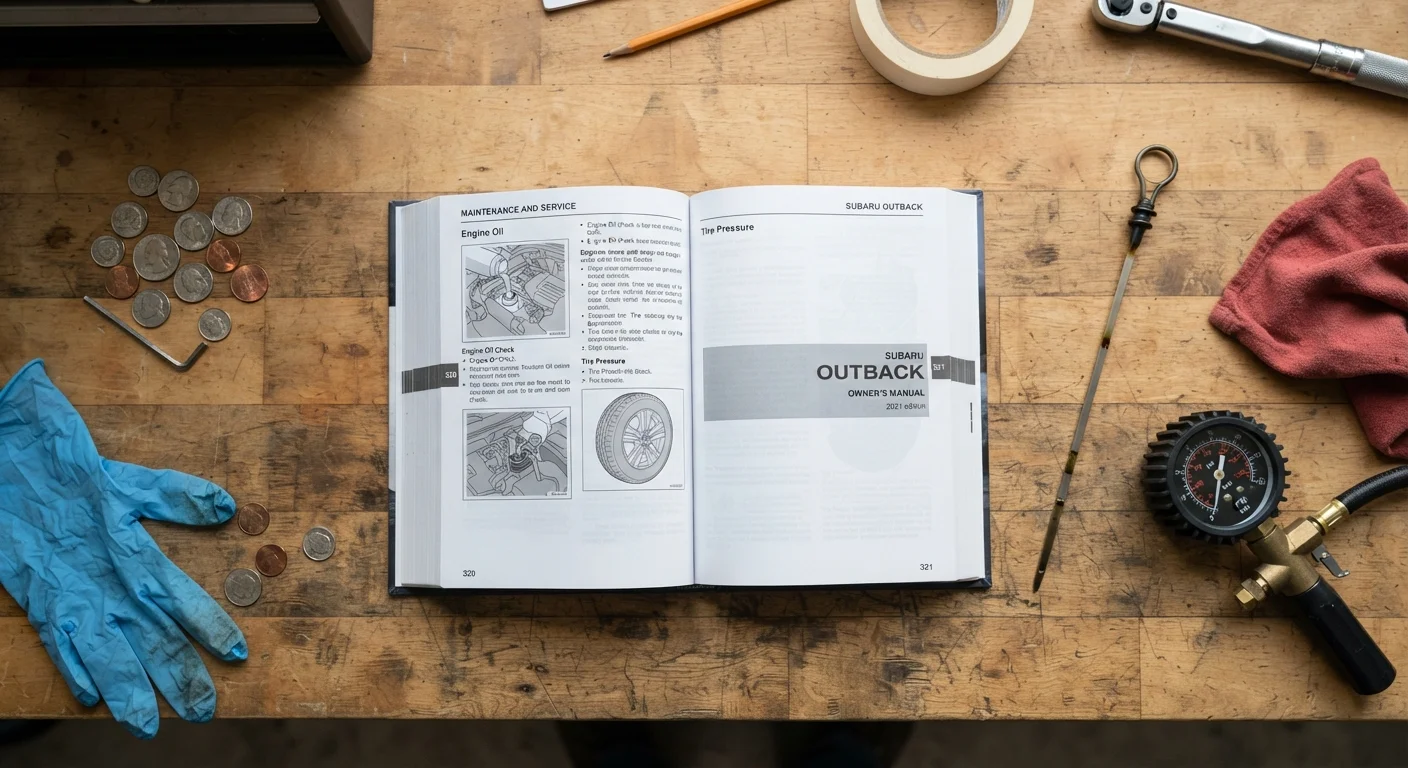
Check your owner's manual for the interval your manufacturer specifies. Many newer vehicles also include an oil-life monitoring system that calculates change intervals based on actual driving conditions - a more precise guide than mileage alone. See oil change intervals explained for a deeper look.
Myth
Premium fuel gives every car better performance and fuel economy.
Fact
Premium fuel only benefits engines specifically designed to require it; using it in a standard engine produces no measurable gain.
Higher-octane fuel resists engine knock - a problem that only occurs in high-compression or turbocharged engines tuned to need it. In a regular engine running at normal compression ratios, burning premium fuel produces no additional power, no better mileage, and no engine protection benefit. You're simply paying more per gallon for nothing.
Your fuel cap or door jamb will state whether your car requires premium or merely recommends it. 'Recommended' typically means the engine may slightly adjust timing to take advantage of higher octane, but regular fuel won't cause harm. Our article on fuel myths debunked covers this and other common fuel misconceptions.
Myth
You must warm up your engine for several minutes before driving in cold weather.
Fact
Modern fuel-injected engines reach optimal operating temperature faster by being driven gently than by idling stationary.
Extended idling to warm up an engine made sense with carbureted engines that needed time to manage fuel-air mixtures manually. Fuel injection systems handle cold starts automatically and electronically. Idling for five or ten minutes burns fuel, adds wear, and actually delays the point at which your engine oil fully circulates to critical components.
The correct approach for cold starts is to drive away promptly but gently - avoiding high RPMs for the first minute or two. Your engine will reach operating temperature sooner, and you'll avoid wasting fuel sitting in your driveway. Cabin heat will also arrive faster when the engine is under load.
Myth
Servicing your car at an independent shop instead of the dealership voids your warranty.
Fact
Under the Magnuson-Moss Warranty Act, manufacturers cannot void a warranty solely because you used an independent mechanic.
This is one of the most expensive myths in car ownership because it locks drivers into dealer-priced labor for years. The Magnuson-Moss Warranty Act - a federal US law - prohibits manufacturers from voiding your warranty just because routine maintenance was performed by a qualified independent shop, provided the work meets the manufacturer's specifications and is documented.
What can affect your warranty: using parts or fluids that don't meet the manufacturer's stated specifications, or failing to perform required maintenance at all. Keep your receipts and service records regardless of where you go. Independent shops frequently charge significantly less than dealership service departments for identical work.
Myth
The pressure number printed on the tyre sidewall is the correct inflation target.
Fact
That number is the tyre's maximum pressure rating - your vehicle's recommended pressure is on the driver's door jamb sticker.
Inflating to the sidewall number - which can be 44-51 PSI on many tyres - typically overinflates the tyre well beyond what your vehicle needs. Overinflated tyres wear unevenly in the centre, reduce grip, and make for a harsher ride. Underinflated tyres cause their own problems: higher rolling resistance and faster shoulder wear.
Your correct target pressure is listed inside the driver's door frame (and in your owner's manual), and it's specific to your vehicle's weight distribution and suspension tuning. Check pressure when the tyres are cold - before driving or after sitting for at least three hours - for an accurate reading. More on why this matters is in our guide to tyre pressure and fuel costs.
Myth
Flushing your transmission fluid every 30,000 miles is always necessary.
Fact
Transmission fluid change intervals vary widely by vehicle - many modern transmissions can go 60,000-100,000 miles or longer under normal driving conditions.
Transmission flushes are among the most frequently upsold services at quick-lube and service chain locations. The actual interval depends entirely on your vehicle's make, model, and the type of transmission fluid it uses - and many manufacturers specify far longer intervals than the 30,000-mile figure commonly promoted.
Severe driving conditions - frequent towing, stop-and-go city driving, or driving in extreme heat - can shorten the appropriate interval. But for typical commuter driving, following the manufacturer's schedule is both safer and cheaper than blanket interval rules. As always, your owner's manual is the definitive reference.
Using Your Owner's Manual as the Real Authority
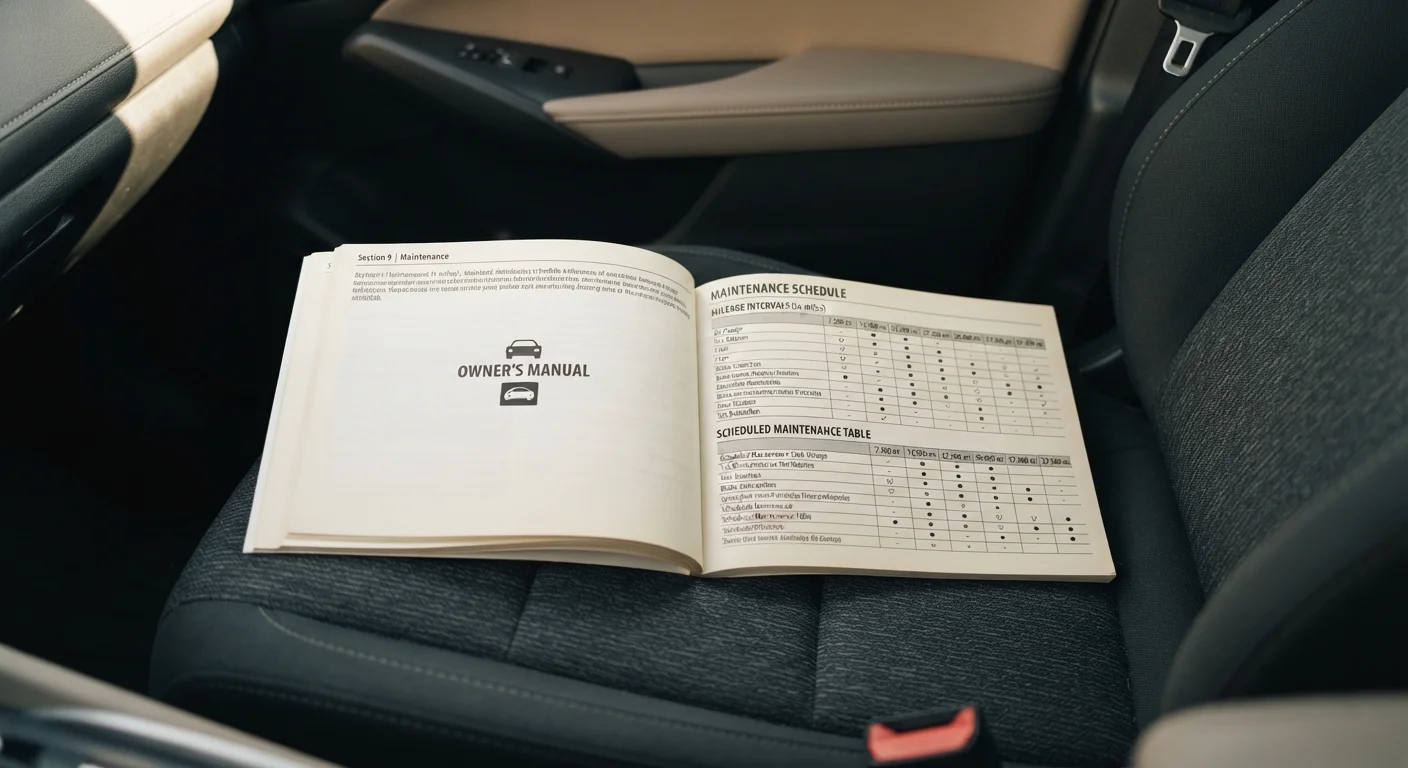
Nearly every myth below collapses the moment a driver opens their owner's manual. Manufacturers test their specific engines, transmissions, and systems to set precise maintenance intervals - and those numbers are almost always more generous (and more accurate) than what a quick-lube shop sticker says.
Don't Skip Maintenance Entirely to Save Money
Questioning unnecessary services is smart - but skipping genuinely required maintenance to cut costs is a different matter entirely. Neglecting items like coolant changes, brake fluid, or timing belt replacements at their specified intervals can lead to failures that cost many times more to repair than the service itself. Use your owner's manual to distinguish what's truly required from what's being upsold.
If you've never worked through the maintenance schedule section of your manual, our guide on reading your owner's manual walks you through exactly what to look for. For drivers just getting started, car maintenance for new drivers covers the foundational habits worth building early.
Tyre care is another area where myths persist and costs add up. Correct tyre pressure alone affects fuel economy, handling, and how quickly your tyres wear out. Getting that one thing right costs nothing but a few minutes and a $5 gauge.
~$11B
Estimated annual cost of unnecessary oil changes in the US
AAA has estimated that American drivers spend billions annually on oil changes performed more frequently than their vehicles actually require.
Up to 3%
Fuel economy penalty from underinflated tyres
The US Department of Energy estimates that keeping tyres properly inflated can improve fuel economy by up to 3% compared to running them low.
17%
Share of US drivers who incorrectly use premium fuel in standard engines
AAA research found roughly 1 in 6 US drivers used premium fuel in vehicles that only required regular, spending an estimated $2.1 billion more than necessary annually.
The bottom line: question any maintenance advice that isn't backed by your vehicle's documentation. Your car's manufacturer - not a forum post or a service counter upsell - is the authority on what your specific engine needs.