
The Hidden Cost of Low Tire Pressure
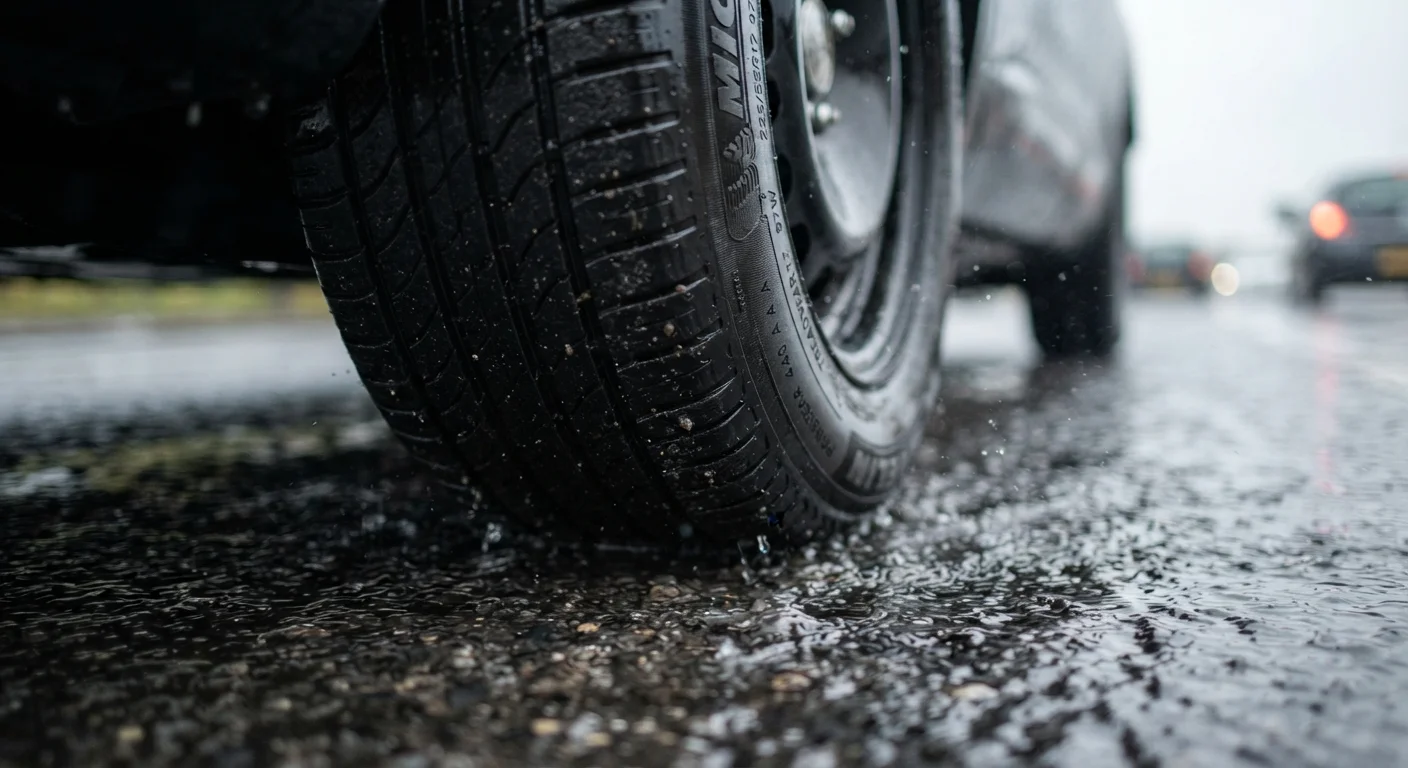
Low tire pressure is one of the most common - and most costly - forms of vehicle neglect, and most drivers don't realize it's happening. A tire that looks fine to the eye can be 10 PSI low, quietly increasing your fuel bill and grinding away tread every mile.
Here's the mechanism: an underinflated tire flexes more as it rolls. That extra flexing creates heat and resistance, meaning your engine has to work harder to maintain speed. The U.S. Department of Energy has noted that fuel economy improves by roughly 0.5% for every 1 PSI increase across all four tires when pressure is below the recommended level. Run all four tires 8 PSI low - not uncommon - and the drag adds up.
Tire wear is the other major cost. Underinflation causes the outer edges of the tread to contact the road more heavily than the center, wearing those edges faster than normal. Replacing a set of tires prematurely costs hundreds of dollars. Keeping them properly inflated extends tread life meaningfully.
~0.5%
Fuel economy gain per PSI increase
The U.S. Department of Energy estimates roughly 0.5% fuel economy improvement for each 1 PSI increase when tires are underinflated below recommended levels.
1 PSI/month
Natural pressure loss rate
Tires lose approximately 1 PSI per month through normal permeation, even without any puncture or valve leak.
~25%
Pressure drop needed to trigger TPMS
Most TPMS systems are designed to alert when pressure drops roughly 25% below the vehicle manufacturer's recommended PSI - well after efficiency losses have begun.
Reading the Right Number - and Where to Find It
A common source of confusion is the number molded into the tire sidewall. That figure - often something like "Max. Press. 51 PSI" - is the maximum pressure the tire structure can safely hold, not the pressure you should run. Using that number would make the tire dangerously overinflated for most passenger vehicles.
Your vehicle's recommended tire pressure is found in two places: the sticker on the inside of the driver's door jamb, and the owner's manual. The recommended PSI accounts for your vehicle's weight, suspension design, and load distribution. Front and rear tires sometimes have different recommended pressures, so read the sticker carefully.
Check Pressure Before You Start the Car
Always measure tire pressure on cold tires - before driving or at least three hours after parking. Driving heats the air inside the tire and raises the pressure reading, which can make an underinflated tire appear closer to target than it actually is. Early morning checks before your commute give the most accurate baseline.
For broader context on how tire care fits into your overall maintenance budget, see our guide to tyre maintenance costs.
How to Check and Adjust Pressure Yourself
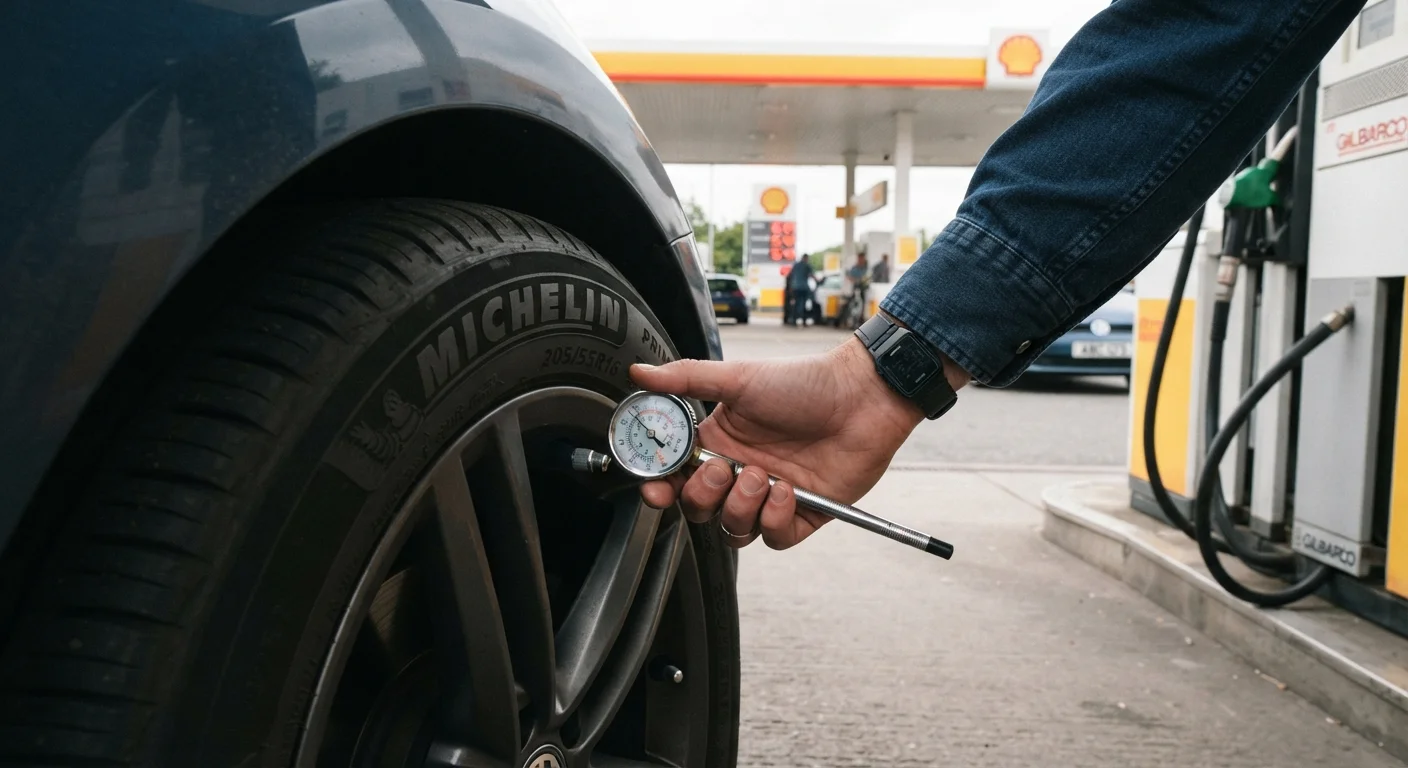
Checking tire pressure is a straightforward task that requires no mechanical skill. You need a tire pressure gauge - a basic pen-style gauge is accurate and inexpensive. Check pressure when tires are cold, meaning the vehicle has been parked for at least three hours or driven fewer than a mile. Heat from driving temporarily increases pressure and gives an inaccurate reading.
- Remove the valve cap from the tire's valve stem (the small rubber nub on the inner wheel rim).
- Press the gauge firmly and straight onto the valve stem - a brief hiss means the seal wasn't tight enough; reseat and try again.
- Read the PSI on the gauge and compare it to your door jamb sticker.
- Add air at a gas station pump or portable compressor until you reach the target PSI. Release air with the small pin inside the valve stem if you've overshot.
- Replace the valve cap.
Repeat for all four tires and check the spare if your vehicle has one. The whole process takes about five minutes.
Tire pressure is also relevant to fuel economy myths worth understanding - our fuel-saving myths explainer covers what actually moves the needle at the pump.
Seasonal Pressure Changes and TPMS Limitations
Temperature has a direct effect on tire pressure. As a general rule, pressure drops by approximately 1 PSI for every 10°F decrease in ambient temperature. That means tires properly inflated in summer can be noticeably low by mid-winter without a single slow leak. Checking pressure at the start of each season - and monthly otherwise - prevents this from quietly affecting your fuel economy and handling all winter.
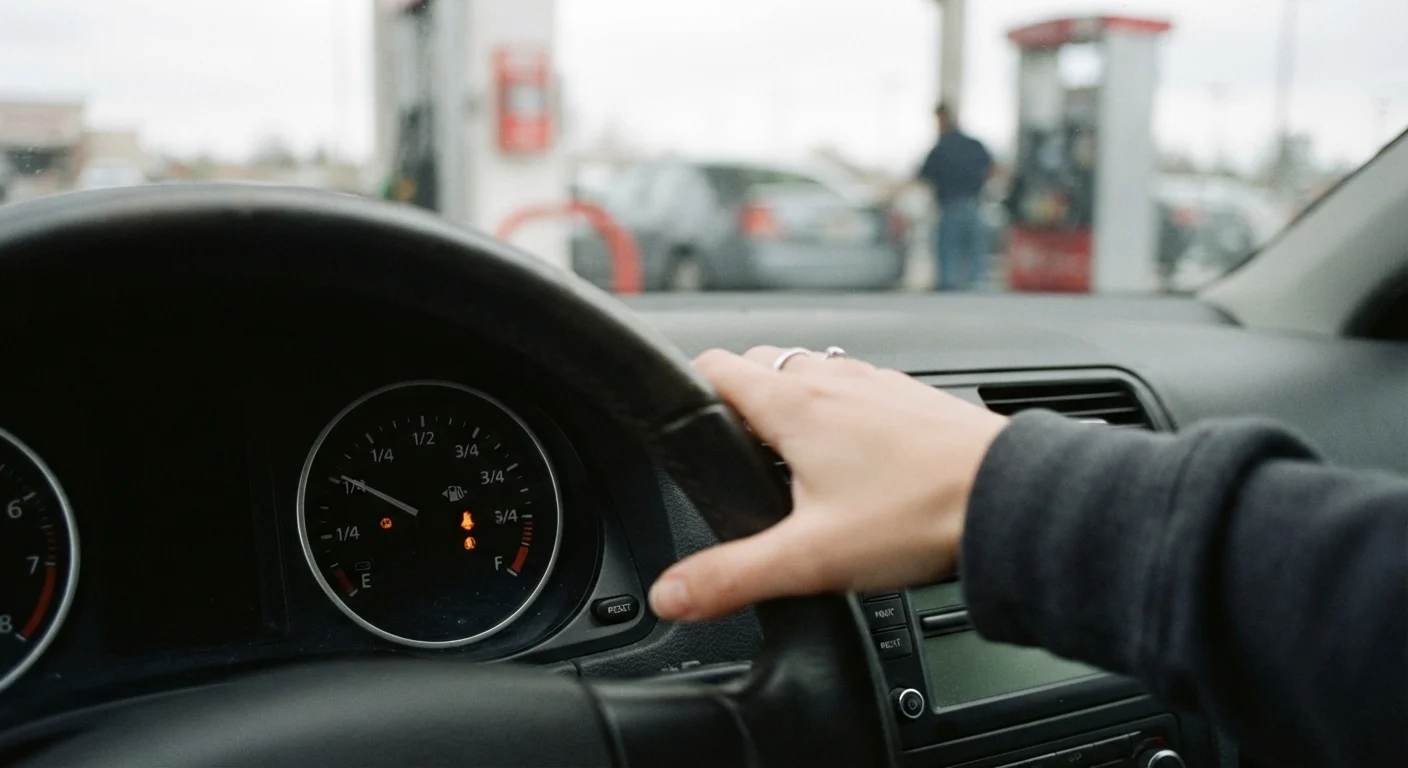
Many drivers assume their Tire Pressure Monitoring System (TPMS) will flag a problem before it matters. The TPMS, required on all U.S. vehicles manufactured after September 2007, typically triggers a warning only when pressure falls around 25% below the vehicle manufacturer's recommendation. A tire can sit at 10-15% below optimal pressure - enough to increase fuel consumption and wear - without ever turning on that dashboard light.
Think of the TPMS warning as a last resort indicator, not a substitute for proactive checks. If you're relying on it to manage pressure, you're already behind.
For related maintenance tasks that are easy to overlook, our guide to tyre rotation, balancing, and alignment explains what each service actually does and when you need it.