
What Each Service Actually Includes
The terms "interim" and "full" service get used interchangeably in garages, but they describe meaningfully different scopes of work. Understanding what's inside each one is the first step to not overpaying.
An interim service is a shortened maintenance visit typically recommended every 6 months or 6,000 miles - whichever comes first. It generally covers an oil and oil filter change, a visual inspection of key safety items (brakes, tires, lights, fluid levels), and topping off windshield washer fluid. Think of it as a mid-year health pulse rather than a full physical.
A full service is the comprehensive annual check. On top of everything in an interim service, it typically includes replacing the air filter and cabin filter, checking and possibly replacing spark plugs, inspecting the timing belt condition, replacing brake fluid (usually every two years), checking the fuel system, and a more thorough multi-point inspection. It's substantially more labor-intensive and costs more - but it addresses wear items that genuinely need periodic replacement.
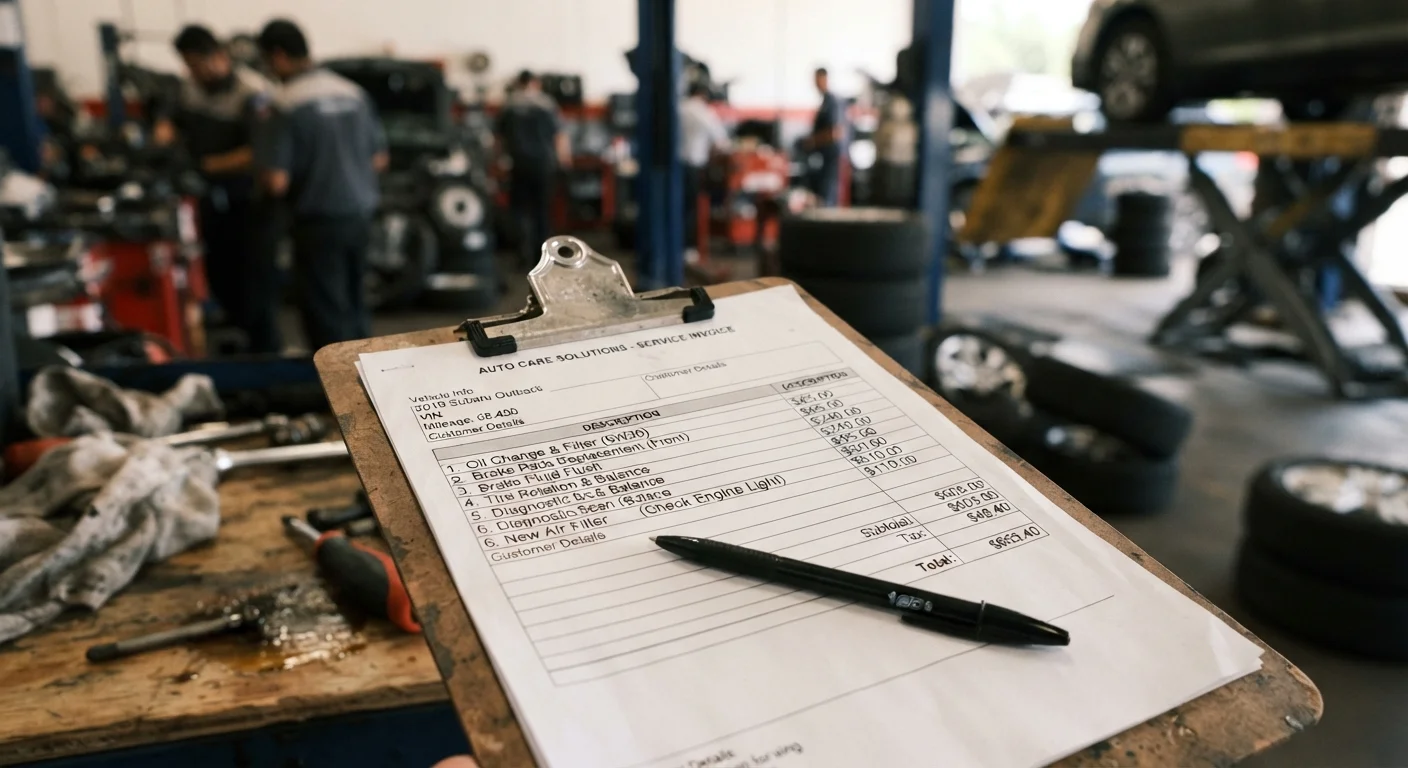
What neither service includes: major repairs, diagnostic work for warning lights, or component replacements beyond scheduled items. If you go in expecting a full service to fix a strange noise, you'll need to ask for that separately. Understanding your service quote line by line helps you catch when a garage is bundling extras you didn't authorize.
| Criterion | Interim Service | Full Service |
|---|---|---|
| Typical frequency | Every 6 months or 6,000 miles | Annually or every 12,000 miles |
| Oil and filter change | Yes | Yes |
| Air filter replacement | No | Yes |
| Cabin filter replacement | No | Yes |
| Spark plug inspection/replacement | No | Yes |
| Brake fluid replacement | No | Yes (typically every 2 years) |
| Safety/visual inspection | Basic check | Comprehensive multi-point |
| Typical cost range (US) | $60-$120 | $150-$300 |
How to Match the Service to Your Driving Habits
The right service interval isn't one-size-fits-all - it's determined by how you actually use your vehicle.
High annual mileage (12,000+ miles/year): Your oil degrades faster, brake pads wear quicker, and filters clog sooner. An interim service at the six-month mark makes practical sense here, with a full service annually.
Low annual mileage (under 8,000 miles/year): A single annual full service is almost always sufficient. Oil may degrade by age rather than mileage in this case, but a full service covers that. Paying for an interim on top adds cost without proportional benefit.
Frequent short trips: Cold-start driving - lots of trips under 5 miles - is harder on oil because the engine never fully reaches operating temperature to burn off moisture and contaminants. If this describes your commute, an interim service at six months is worth the cost even at lower mileage figures.
Older vehicles: Cars past 100,000 miles benefit from more frequent checks since wear rates increase. An interim-plus-full annual schedule gives you more touchpoints to catch issues early - which is exactly the logic behind why skipping scheduled maintenance tends to cost far more over time.
~$1,400
Average annual car maintenance cost per US driver
According to AAA's annual Your Driving Costs study, routine maintenance including oil changes, tires, and filters averages around this figure for a typical sedan.
3x
Cost multiplier when minor issues become major repairs
Industry estimates from automotive repair associations suggest deferred maintenance can turn a modest service cost into a repair bill several times larger once components fail.
Your owner's manual is the authoritative source here. Manufacturer-recommended intervals are based on engine design and tested wear data, not a garage's revenue targets. Cross-check any service recommendation against it.
The Real Cost Difference - and Where the Value Lies
Interim services typically run between $60-$120 at independent garages in the US, depending on oil type and location. Full services generally range from $150-$300 for most non-luxury vehicles, though complex engines or specialty oil can push costs higher.
The temptation to skip a full service and only do interim visits to save money short-term is understandable - but it's a false economy. Items like cabin air filters, spark plugs, and brake fluid have defined service lives. Ignoring them doesn't make them last longer; it just means you find out they've failed at an inconvenient (and usually more expensive) moment.
Conversely, paying for a full service twice a year when your mileage and driving pattern only warrant an interim is a common garage upsell. If a technician recommends upgrading to a full service mid-year without a clear, specific reason tied to your vehicle's condition or mileage, it's reasonable to ask what items would actually be performed that differ from the interim checklist.
The broader financial picture also matters if you're weighing long-term ownership. Consistent, correct servicing is one of the most reliable ways to protect resale value and avoid major mechanical failures - a point worth considering alongside the decision to keep a car long-term or upgrade.