
The Structure of a Service Quote
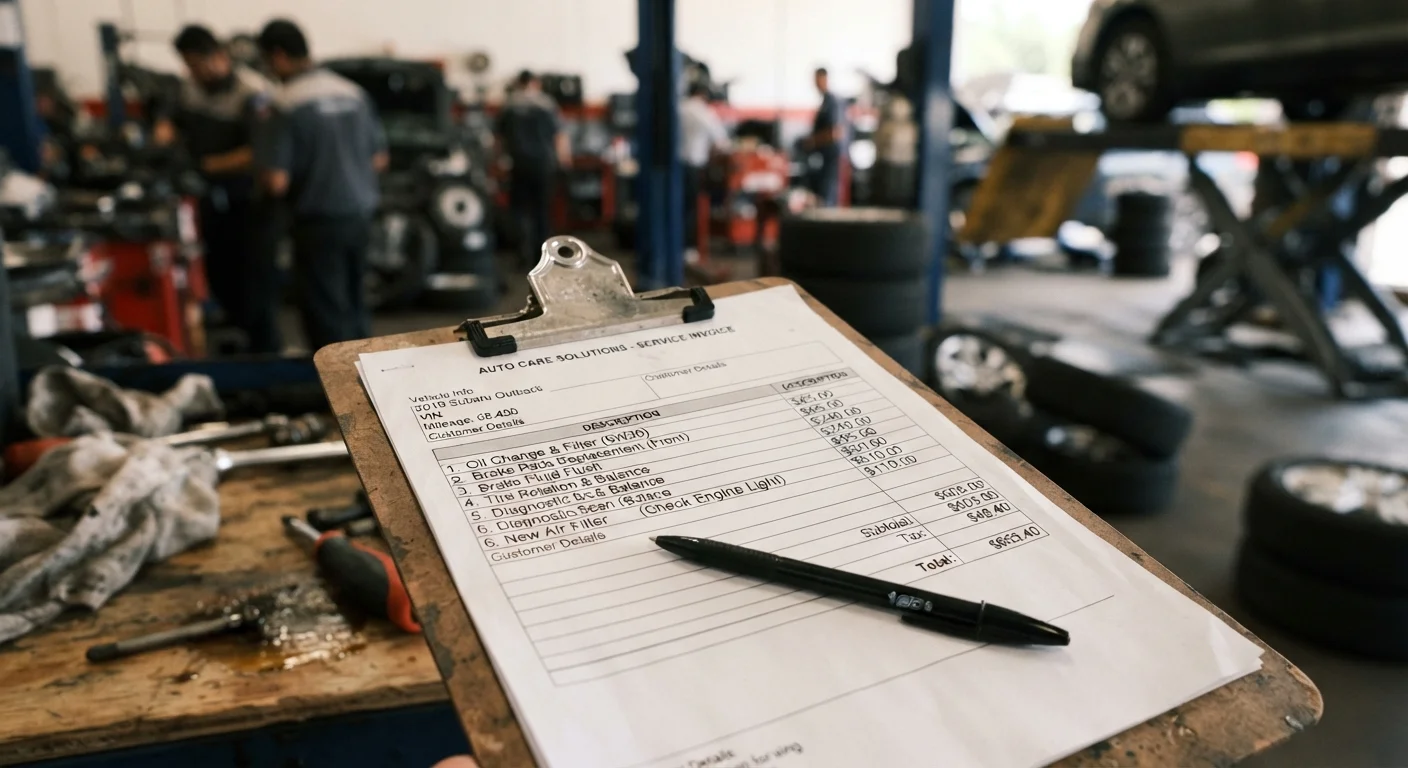
A car service quote is typically divided into three cost categories: labour, parts, and miscellaneous fees. Understanding how each is calculated tells you where the real money is going - and where there might be room to question a charge.
Labour is usually the largest single line item. Shops charge a flat-rate hour (also called a book rate) - a standardised time estimate for a given job, multiplied by the shop's hourly labour rate. That rate can range widely depending on whether you're at a dealership, a franchise chain, or an independent mechanic. The flat-rate system means you pay the same whether the technician finishes in 20 minutes or takes the full estimated hour.
Parts appear as individual line items, each with a listed unit price. Shops routinely mark up parts above their wholesale cost - a standard business practice, but one worth understanding. OEM (Original Equipment Manufacturer) parts come from the vehicle's maker; aftermarket parts are made by third-party suppliers and are often less expensive. Neither is automatically better for every job.
Miscellaneous fees may include shop supplies (rags, fluids used incidentally), hazardous waste disposal (old oil, coolant), and occasionally an environmental or shop fee. These are usually small but worth scanning. See our annual car running cost audit for a broader view of where service costs fit into your total vehicle spending.
Flat-rate hour
A standardised time allowance for a specific repair job, set by industry labour guides. You're charged for this fixed time regardless of how long the actual repair takes.
OEM parts
Original Equipment Manufacturer parts - components made by or for the vehicle's manufacturer. They match factory specifications but typically cost more than aftermarket alternatives.
Aftermarket parts
Parts made by third-party manufacturers rather than the vehicle's original maker. They're often less expensive and vary in quality; ask about warranty coverage before approving.
Core charge
A refundable deposit applied to certain replacement parts that requires returning the old unit to the shop. It appears as a debit on the quote and a credit once the old part is surrendered.
Sublet work
Repairs the service shop outsources to a specialist facility. The billing shop typically adds a markup to the specialist's charge, so ask for the underlying cost if sublet appears on your quote.
Shop supply fee
A catch-all charge covering incidental consumables used during the job - shop rags, cleaning solvents, small fasteners. Usually a fixed amount or a small percentage of the total bill.
Common Line Items Explained
Here are terms you'll commonly see on a service quote and what they actually mean:
- Diagnostic fee: A charge for the technician's time to identify a problem, often using a scan tool. Some shops waive this if you proceed with the repair; others don't - ask upfront.
- Fluid flush / fluid exchange: Draining and replacing a fluid system (brake fluid, coolant, transmission fluid). Distinct from a simple top-up, which costs far less.
- Filter replacement: Covers oil, air, cabin air, or fuel filters. Each is a separate part with its own labour time.
- Inspection or multi-point inspection: A visual check of key systems. Often listed as complimentary but occasionally billed. Confirm before you book.
- Sublet: Work the shop sends to a specialist (e.g., wheel alignment at an alignment centre). Shops typically mark up sublet work, so ask what the underlying charge is.
- Core charge: A refundable deposit on certain parts (alternators, starters) that requires returning the old unit. It should appear as a credit on your final invoice once the old part is handed over.
Not every service visit needs the same scope of work. See our guide on full-service vs. interim service to understand what your car actually needs at each interval.
| Labour rate range (US, independent shop) | Roughly $80-$120 per hour (AAA, general industry estimates) |
| Labour rate range (US, dealership) | Roughly $100-$175 per hour (AAA, general industry estimates) |
| Typical parts markup | 20%-50% above wholesale cost (Industry standard practice; varies by shop) |
| Written estimate requirement | Required on request in most US states (State consumer protection laws vary; verify locally) |
| Core charge refund trigger | Return of the old part to the shop |
How to Read a Quote Before You Sign
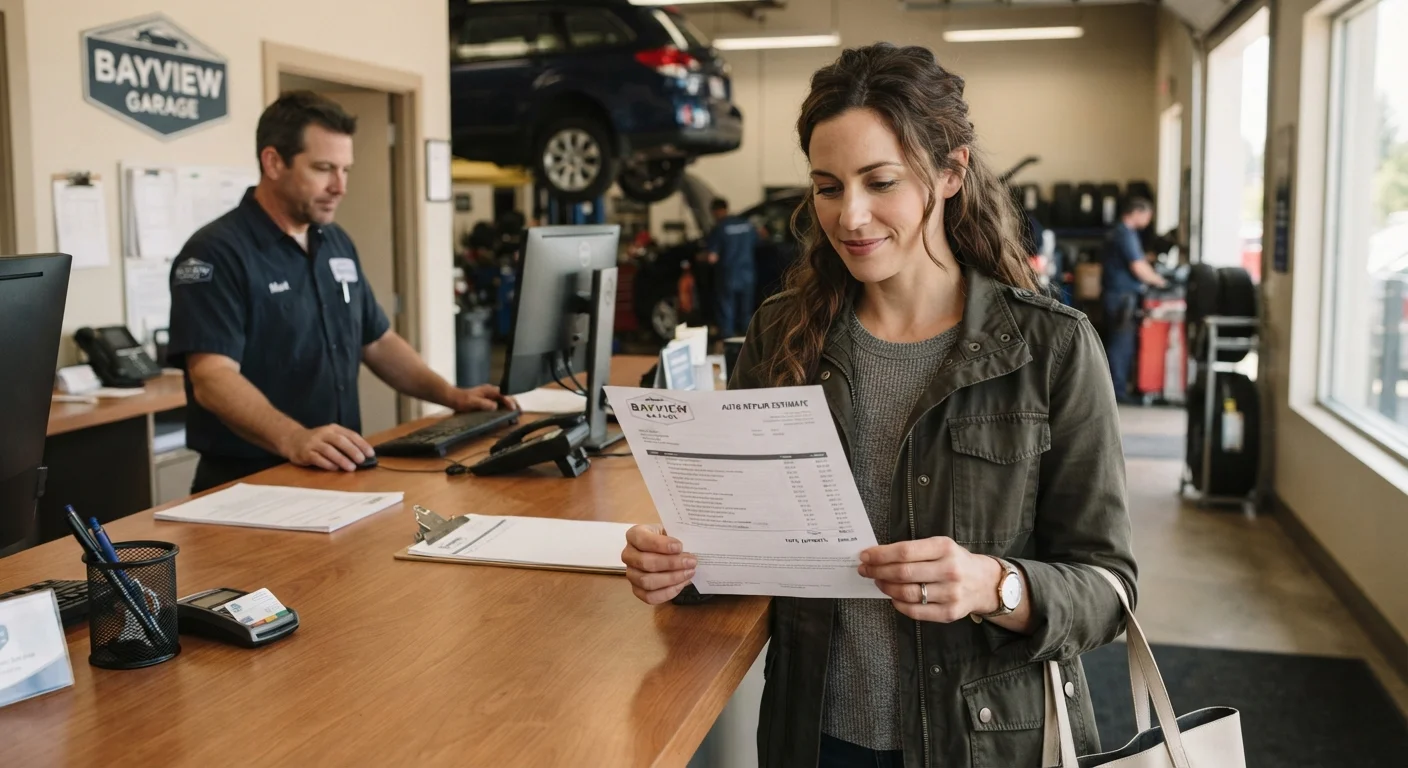
Before authorising any work, ask for a written estimate that breaks down labour and parts separately - shops in most US states are legally required to provide one on request. Review each line against these questions:
- Is the labour time reasonable? Online labour guides (many are publicly accessible) show standard flat-rate times for common jobs. A brake pad replacement on a typical sedan, for example, is generally estimated at one to two hours per axle.
- Are parts priced per unit? If a quote bundles several parts under a single price, ask for the breakdown. You want to know the cost of each component individually.
- What is the shop's hourly labour rate? This should be posted visibly at the counter in most states. Knowing the rate helps you verify that the labour charge matches the quoted time.
- Are any fees mandatory? Shop supply fees and disposal fees are often fixed, but it's worth confirming what's included and what's optional.
If any line item is unclear, ask for a plain-language explanation before you approve. A reputable shop will not object to the question. Once you understand the quote structure, you'll also be better prepared for the conversation covered in our article on negotiating a servicing price.