

Why Car Costs Creep Up Without Warning
Owning a car in the US costs the average driver thousands of dollars per year when you factor in fuel, insurance, maintenance, registration, and loan payments. Yet a meaningful portion of that figure often comes not from necessity but from habit - auto-renewing the same insurance policy, fueling with premium because it "seems better," or agreeing to every upsell at a service center without questioning it.
The goal here isn't to skip genuine maintenance - that backfires fast. A blown tire from skipped rotations or an engine seizure from neglected oil changes will cost far more than any saving. Instead, the goal is to identify the spending categories where inertia, misinformation, or marketing have inflated your costs without any corresponding benefit to your vehicle's health or your safety.
For a broader look at all your recurring vehicle expenses, the Annual Car Running Cost Audit is a useful place to start. The list below focuses on the most common areas where drivers routinely overpay.
Auto insurance you haven't reviewed in over a year
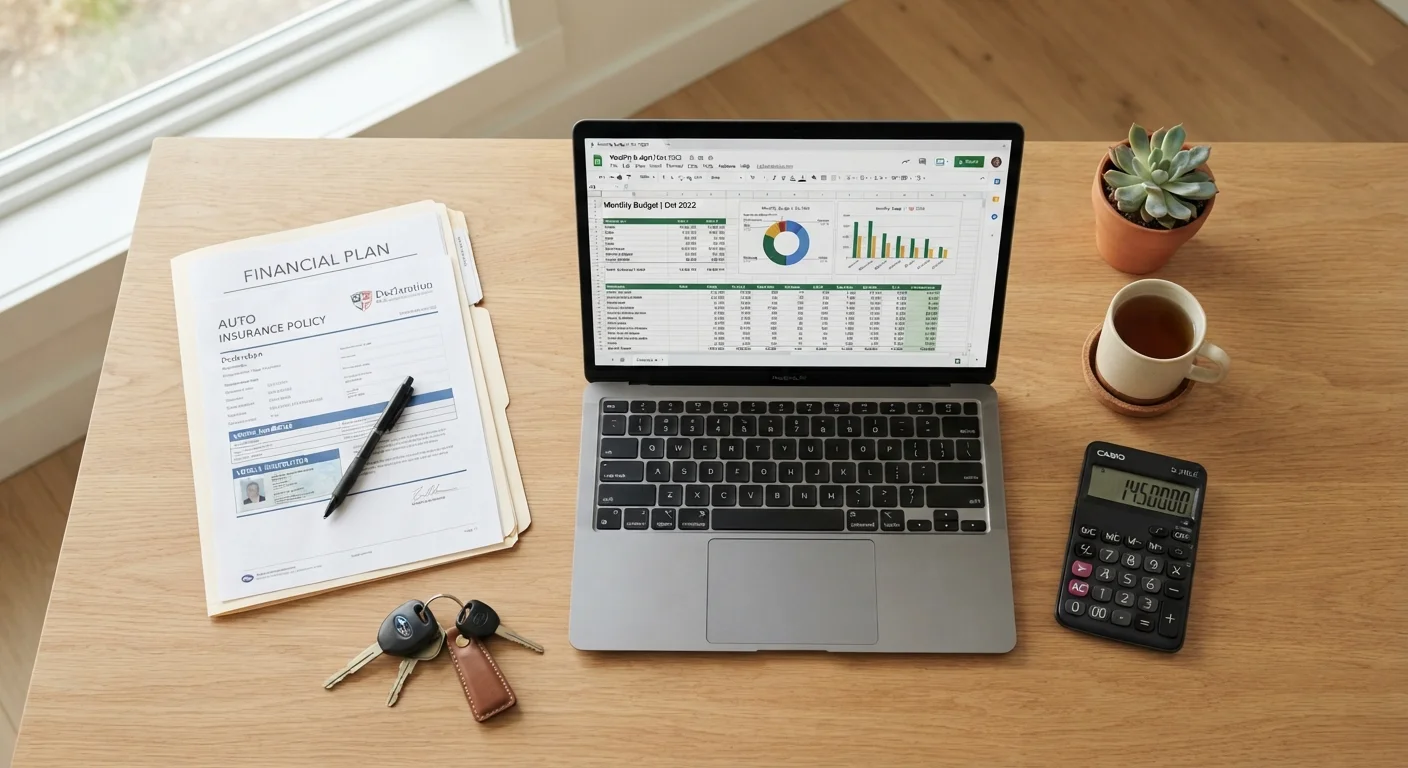
Insurance is typically one of the largest recurring car expenses, and loyalty rarely pays off. Insurers routinely offer better rates to new customers than they extend to existing ones - a practice sometimes called the "loyalty penalty." If you haven't compared quotes in the past 12 months, there's a reasonable chance you're overpaying.
Getting competing quotes doesn't require switching - it just requires a few minutes and your current policy details. Factors like your credit score, annual mileage, and even your deductible level all affect your premium. Raising your deductible (the amount you pay out-of-pocket before insurance kicks in) can noticeably lower your monthly cost, provided you have enough savings to cover it if needed.
Insurers often offer better rates to new customers - loyalty rarely lowers your premium.
Premium fuel in a car that doesn't require it
Premium gasoline costs significantly more per gallon than regular unleaded, and for most passenger vehicles it provides zero performance or protection benefit. The specification that matters is what your manufacturer lists in the owner's manual - not what sounds better at the pump.
If the manual says "regular unleaded recommended" (87 octane), premium fuel will not improve engine performance, fuel economy, or engine longevity. If the manual says "premium required," then using regular could cause issues over time. Check the manual - that's the only authoritative source for your specific engine.
For most vehicles, premium fuel costs more and delivers no measurable benefit over regular unleaded.
Over-frequent oil changes
The old "every 3,000 miles" oil change rule was established when engine technology and oil formulations were far less advanced than they are today. Most modern vehicles using synthetic oil are engineered to go 5,000 to 10,000 miles - or more - between changes, depending on the manufacturer's specification.
Changing your oil more frequently than your manufacturer recommends doesn't protect your engine - it just costs you more money. Your owner's manual will specify the correct interval for your vehicle and driving conditions. Following it is neither cutting corners nor skipping maintenance; it's following the engineering specification your car was built around.
Changing oil more often than your manufacturer specifies wastes money without adding engine protection.
Dealership add-ons and service upsells
Service centers - both dealership and independent - often present a list of additional services at each visit: fuel system cleaning, cabin air filter replacement, tire balancing, coolant flushes, and more. Some of these may be legitimate at the right mileage. Others are offered speculatively, regardless of whether your vehicle actually needs them.
Before agreeing to any service beyond your scheduled maintenance, ask two questions: Is this in my manufacturer's maintenance schedule at this mileage? Can you show me why it's needed right now? A reputable mechanic will answer both without pressure. Your Car Maintenance Basics hub is a useful reference for understanding which tasks are genuinely time- or mileage-sensitive.
Always cross-check service recommendations against your manufacturer's schedule before approving additional work.
Unnecessary idling habits
Many drivers idle their engines longer than necessary - warming up the car on cold mornings, sitting in drive-throughs, or letting the engine run while parked. Modern fuel-injected engines don't need more than about 30 seconds to warm up before gentle driving; prolonged idling can actually leave unburned fuel residue in the engine over time.
Beyond potential engine wear, idling burns fuel with zero miles gained. On a tight budget, cutting habitual idling is a small behavioural change with a direct and measurable effect on your fuel spend. It also reduces emissions - a benefit for both your local air quality and, in states with emissions testing, potentially your inspection outcome.
Modern engines need minimal warm-up time - prolonged idling burns fuel and offers no mechanical benefit.
Car washes and detailing at commercial frequencies
Keeping your car clean is reasonable - road salt, bird droppings, and tree sap can damage paint if left too long. But regular commercial detailing packages, interior shampoos, and wax treatments at frequent intervals are a lifestyle choice, not a maintenance requirement. A basic hand wash every few weeks and an occasional wax costs a fraction of what commercial detailing does.
Protective coatings, ceramic treatments, and paint sealants marketed at service centers often carry significant markups. If paint protection matters to you, research the options independently and compare costs - don't accept a quote in the service lane under time pressure.
Commercial detailing is a comfort expense - a basic home wash protects your paint just as well for most drivers.
Making the Cuts Stick
Trimming these costs isn't a one-time fix - it requires building a few simple habits. Set a calendar reminder to shop your insurance each renewal period. Check your owner's manual before your next fill-up to confirm your fuel grade. Review any service estimate against your manufacturer's maintenance schedule before approving work.
Start with your owner's manual
Before questioning any service recommendation or fuel choice, consult your vehicle's owner's manual first. It's the manufacturer's direct specification for your exact engine and drivetrain - more reliable than general advice, service center recommendations, or online forums. Most manuals are also available as free PDFs from the manufacturer's website if you don't have a physical copy.
If you want to go deeper, The Driver's Complete Guide to Cutting Car Costs covers every major lever - from depreciation strategy to fuel economy habits - in one place. And if insurance is where you're losing the most ground, understanding how driving behaviour affects your premium can help you make smarter choices well beyond just shopping around.
This article is for general informational purposes only. Always consult your vehicle's owner's manual and a qualified mechanic before making changes to your maintenance routine or vehicle operation.