
Why Service Pricing Has More Flexibility Than Most Drivers Realise
Most drivers treat a workshop quote like a fixed utility bill - something you pay without question. In reality, auto service pricing has several moving parts. Labour rates are set per shop, but the number of hours billed for a job can vary. Parts are purchased by shops at wholesale and resold with a markup. Neither figure is handed down from a regulator - they reflect what that particular business has decided to charge.
Independent shops, in particular, operate with genuine pricing latitude. They set their own hourly rates, choose their parts suppliers, and decide how aggressively to margin up components. This is different from, say, negotiating a car purchase price, where dealer margins are compressed by manufacturer pricing structures. In a service context, the shop has more room to move - and many will, if asked professionally.
Understanding this dynamic removes the awkwardness from the conversation. You're not demanding a favour; you're engaging with a business the same way any informed customer would. See our Car Maintenance Basics hub for context on which services genuinely matter and when.
Timing Your Service Appointment Matters
Shops are often more flexible on pricing during slower periods - mid-week mornings tend to be quieter than Friday afternoons. Mentioning that your schedule is flexible signals you're an easy customer to work with, which can make advisors more inclined to find room in the quote.
What You Need Before You Call
Effective negotiation is preparation, not confrontation. Before contacting any shop, gather the following:
What you will need
Online labour rate checkers (e.g. NAPA AutoCare, RepairPal)
Provides ballpark estimates for specific repairs in your zip code so you arrive with realistic benchmarks.
Your vehicle's owner manual
Confirms which services are actually due at your mileage, so you can decline unnecessary upsells with confidence.
A notepad or phone notes app
Record quote details, advisor names, and agreed pricing so nothing is disputed later.
Having competing quotes is the single most useful lever you have. A shop that knows you've done your homework is far more likely to sharpen its pencil than one dealing with a customer who has no reference point. This is the same discipline that applies when researching a car purchase before visiting a seller - information gathered in advance sets the terms of every conversation that follows.
Never Approve Work Without a Written Estimate
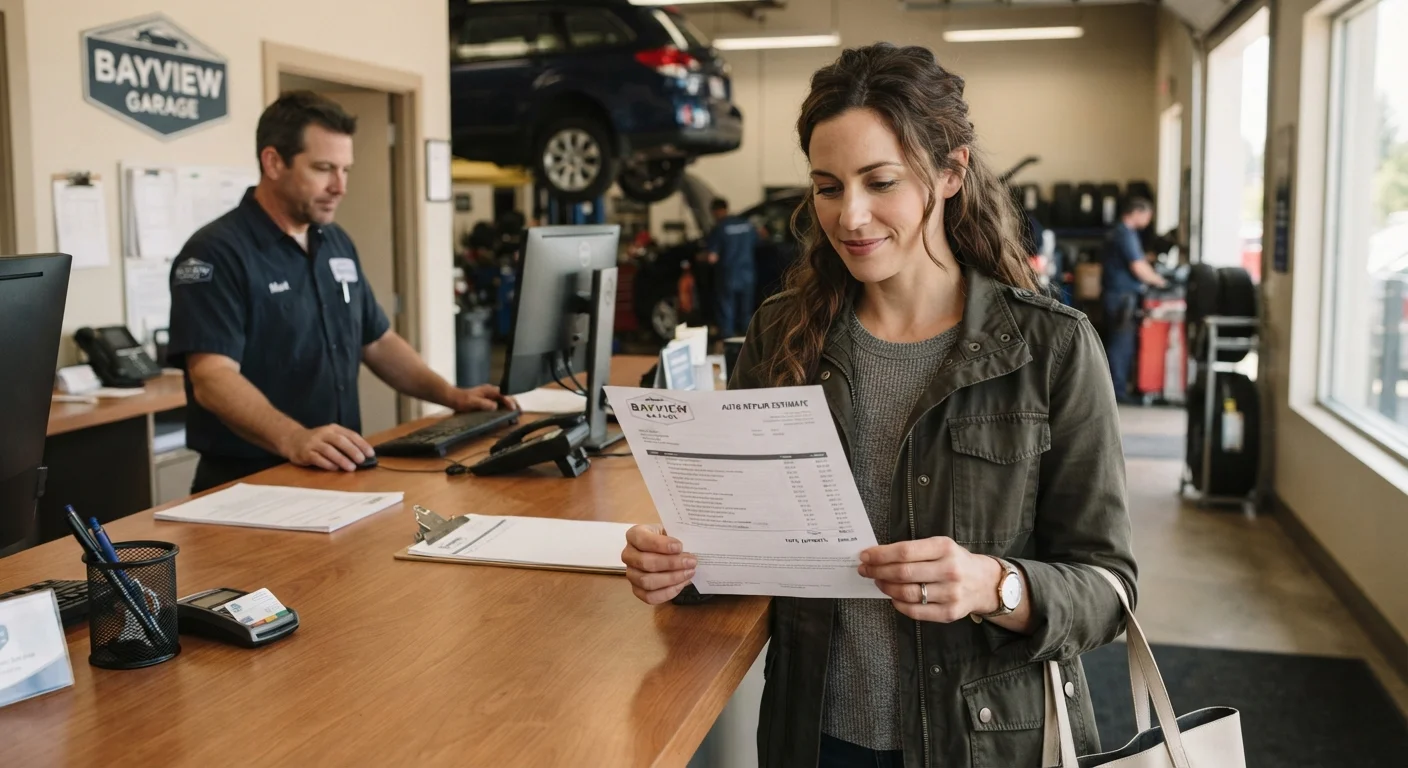
In most US states, auto repair shops are legally required to provide a written estimate before beginning work above a certain dollar threshold. Verbal agreements are hard to dispute. Ask for itemised written quotes every time - it also gives you something concrete to compare and negotiate against.
How to Have the Conversation Without Feeling Awkward
The steps below walk through the process from initial research to getting the agreed price confirmed in writing. The goal is to approach each interaction as a straightforward business exchange - no aggression, no apologising, just informed questions and specific numbers.
Research the going rate before you contact any shop
Use publicly available labour estimators to find the typical cost range for your specific repair or service in your zip code. Note both the labour hours typically involved and the parts cost separately. This gives you two distinct figures to work with rather than one opaque total.
Call at least three shops and ask for itemised quotes
Phone each shop and ask for a written, itemised estimate covering labour hours, labour rate per hour, and individual parts costs. Avoid accepting a single bundled price - itemisation lets you see exactly where the money goes and which line items might have flexibility.
Identify which line items are most negotiable
Parts markups are typically the most flexible element. Many shops buy parts at wholesale and resell at a margin of 20-50%. Labour rates are usually fixed per shop but may be adjusted for straightforward jobs. Ask whether the shop would match an OEM-equivalent part price if you supply the part, or whether they have a lower-cost parts tier available.
Make your case calmly using specific numbers
When you call back to negotiate, reference your research directly. Something like: "I've had a few quotes for this job and the range I'm seeing is $X to $Y - can you work closer to that figure?" Specific numbers are far more persuasive than general requests for a discount. Avoid apologising for asking; shops expect customers to be cost-conscious.
Ask about package deals and what you can defer
If multiple items are flagged, ask which are genuinely urgent and which can safely wait until your next visit. Shops will sometimes reduce the overall bill if you bundle two or three services together in a single appointment, since it saves them setup time. Your owner's manual is the best reference for what's actually due versus what's being recommended early.
Get any agreed price confirmed in writing before work begins
Once you've reached an agreed figure, ask the advisor to update the written estimate before you authorise the work. A verbal "we'll sort it out" at collection is harder to enforce. The written estimate should reflect any negotiated parts substitution, labour discount, or bundled pricing you discussed.
Negotiating Too Aggressively Can Backfire
Pushing for steep discounts on safety-critical work - like brake jobs or suspension repairs - can create awkward dynamics that affect the care your vehicle receives. Aim for fair pricing, not rock-bottom figures. If a quote seems far out of line, get a second opinion rather than pressuring one shop to match an unrealistic figure.
If you're managing broader car costs - including whether ownership makes financial sense for your situation at all - the article on owning vs. leasing on a tight budget covers the bigger picture trade-offs worth understanding alongside day-to-day maintenance costs.