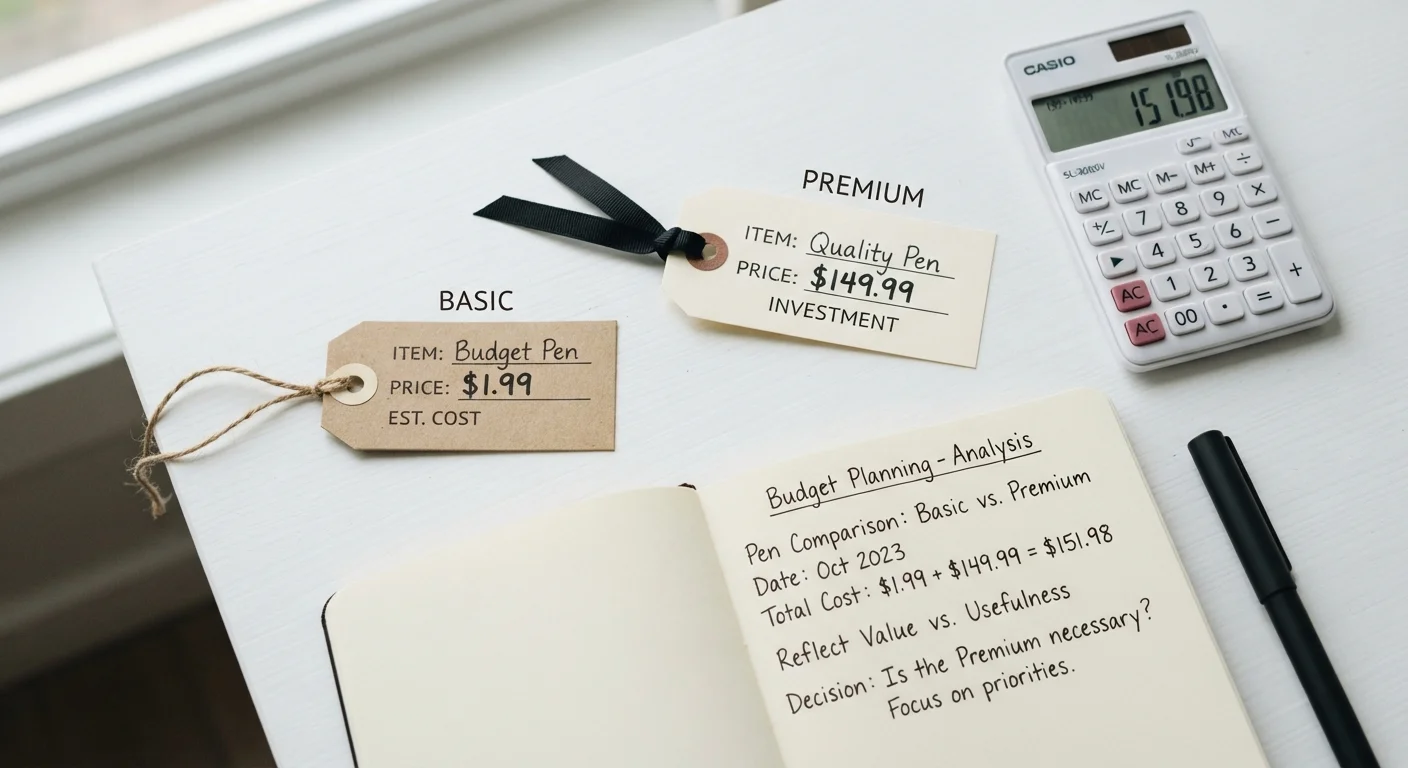


Why the Price Tag Is a Misleading Number
Retailers have one job at the point of sale: show you a number that feels manageable. That number - the sticker price - is almost always the smallest financial commitment you'll make on a given purchase. Everything that follows - fuel, filters, repairs, accessories, replacements - is invisible at checkout but very real on your bank statement.
Total Cost of Ownership (TCO) is the discipline of making those invisible costs visible before you commit. It reframes every purchase as a long-term financial relationship rather than a one-time transaction. A refrigerator isn't a $600 purchase; it's a $600 appliance that will consume electricity for 15 years, need a filter replaced annually, and possibly require a compressor repair mid-life. That changes the math considerably.
This matters especially for budget-conscious shoppers who are most at risk from low-price anchoring - the tendency to focus on the upfront number because it's the only one clearly stated. Once you start calculating TCO, you'll find that the cheapest option on the shelf is often not the cheapest option in practice.
~50%
Vehicle TCO attributed to non-purchase costs
AAA's annual Your Driving Costs study consistently finds that depreciation, fuel, insurance, and maintenance account for roughly half or more of the total five-year cost of owning a new vehicle.
$1,000+
Annual energy cost for an average US household
The U.S. Energy Information Administration estimates average residential electricity bills exceed $1,000 per year, underscoring how appliance efficiency choices compound significantly over product lifespans.
3-5×
Lifetime cost multiplier vs. sticker price
Consumer finance analysts commonly observe that durable goods such as vehicles, appliances, and electronics cost three to five times their purchase price when all ownership costs are totaled over a typical useful life.
The Four Components of TCO
Every purchase's true cost can be broken into four categories. Not all four apply to every item, but running through each one systematically prevents expensive blind spots.
1. Acquisition Cost
This is the sticker price, plus taxes, delivery fees, installation charges, and any immediate accessories needed to make the item functional. Many shoppers forget that a new printer, for example, often requires a separate ink purchase before it works.
2. Operating Cost
Ongoing expenses to keep the item running: electricity, fuel, software subscriptions, replacement filters, consumables. These costs compound significantly over years of use. An Energy Star-rated appliance might cost $100 more upfront but save $30 per year on electricity - meaning it breaks even in about three years and saves money every year after that.
3. Maintenance and Repair Cost
Scheduled upkeep (oil changes, tune-ups, filter swaps) and unscheduled repairs. Items with lower upfront prices frequently have higher part costs or shorter service intervals. A cheap tire may need replacing 20,000 miles sooner than a mid-range alternative, erasing the initial savings entirely.
4. End-of-Life Cost
What happens when you're done with it? Resale value, recycling fees, disposal costs, or replacement timing all factor in. A vehicle that retains 50% of its value after five years has a materially lower TCO than one that depreciates to 30% over the same period.
For a structured method of comparing two price points using this kind of long-view math, see the Lifetime Value Formula - it walks through the calculation step by step.
TCO in Practice: Common Purchases Where It Changes the Decision
Abstract frameworks are only useful when they connect to real decisions. Here's how TCO reshapes thinking across categories most millennials regularly navigate.
Vehicles
Purchase price is often less than half of what a car costs over a five-year ownership period. Insurance, fuel, maintenance, registration, and depreciation can collectively exceed the original sale price. Two vehicles priced identically at the dealership can differ by thousands of dollars in annual running costs depending on fuel efficiency, insurance rates, and reliability records. The Car Buying Smart hub covers how to evaluate vehicles with this fuller picture in mind, and Cutting Car Costs goes deeper on reducing ongoing ownership expenses.
Appliances
A washing machine or dishwasher will run for a decade or more. Energy consumption, water usage, and repair frequency vary significantly between models at similar price points. Consumer-focused energy cost calculators can help quantify the difference before purchase.
Clothing and Footwear
A $30 pair of shoes replaced every six months costs $60 per year. A $90 pair lasting two years costs $45 per year - and that ignores the time and hassle of repeated purchases. TCO applies even here. The cost-per-use metric is a fast, reliable shortcut for clothing decisions specifically.
How to Run a Quick TCO Estimate Before You Buy
You don't need a spreadsheet to apply TCO thinking - though one helps for larger purchases. A practical back-of-envelope approach works for most decisions.
- Start with the all-in acquisition cost: purchase price + tax + delivery + any required accessories.
- Estimate annual operating costs: energy, consumables, subscriptions. Multiply by expected years of use.
- Add a maintenance buffer: for mechanical or electrical items, budgeting 1-2% of purchase price per year is a commonly used starting estimate for routine upkeep.
- Subtract resale or salvage value: what could you realistically sell it for when you're done?
- Compare the final totals - not the sticker prices.
For recurring or food-related purchases where sticker price is the primary confusion point, a different but complementary lens is cost per serving, which strips away package-size distortions the same way TCO strips away upfront-price distortions.
Build a Simple TCO Template
Create a five-row table in any notes app: Acquisition, Annual Operating Cost × Years, Maintenance, End-of-Life, and Total. Fill it in for each option you're comparing. Even rough estimates reveal differences that sticker prices completely hide. The five minutes you spend on this before a major purchase can save hundreds of dollars over the ownership period.
The broader framework tying these concepts together - including quality signals and psychological spending traps - is laid out in Value vs. Price: A Complete Guide.