
Why Price and Value Are Not the Same Thing
Price is a number on a tag. Value is the return you get on that number - measured in use, satisfaction, durability, and avoided future costs. Conflating the two is one of the most common and costly mistakes in everyday spending.
A $12 umbrella that fails in the first wind storm costs more than a $45 one that lasts a decade. A $200 gym membership you use twice costs more per workout than a $30/month plan you actually show up for. The sticker price is just the entry point; value is calculated over time and use.
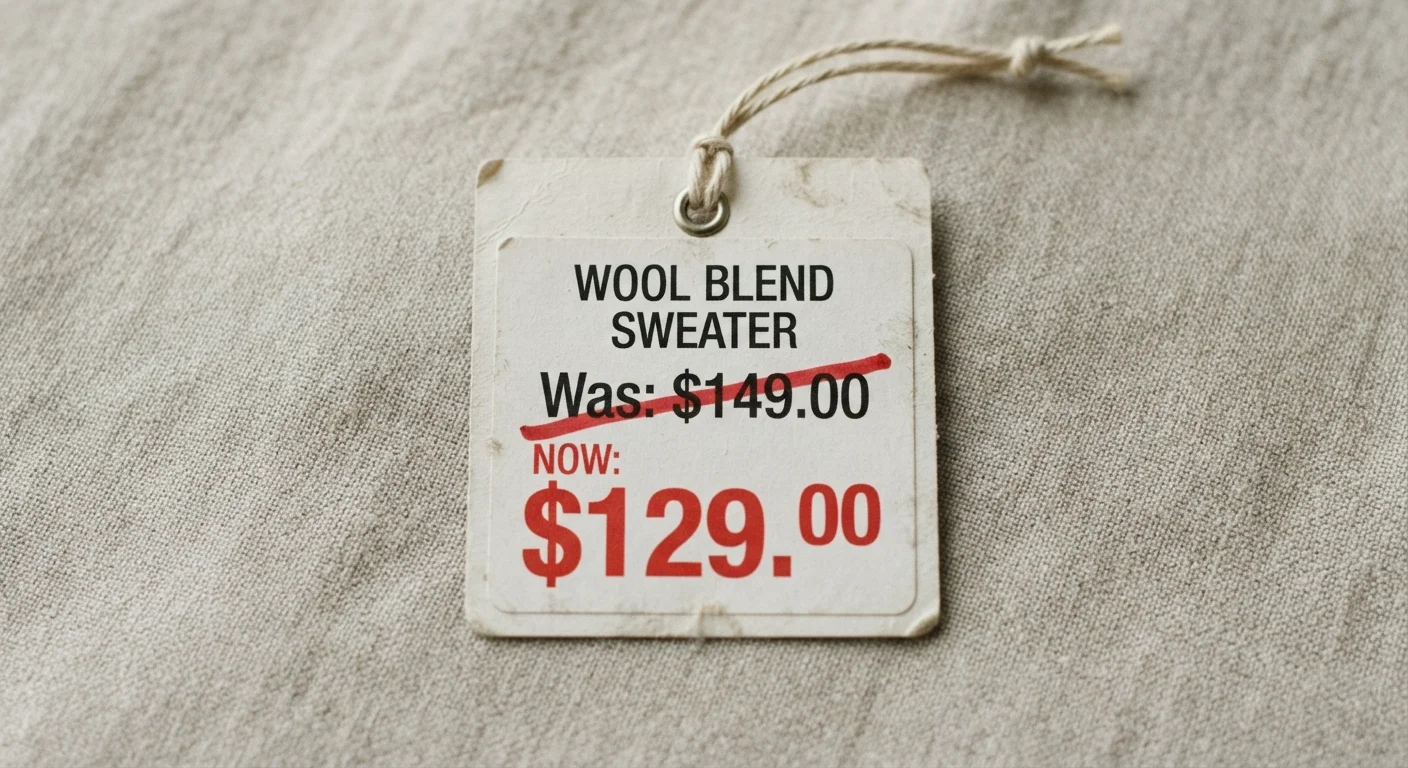
This distinction matters even more when retailers deliberately blur it. Reference pricing - marking an item "was $99, now $49" - creates a mental shortcut that equates a low price with a good deal. As our article on how reference pricing works explains, original prices are often set artificially high specifically to make discounts look larger. Recognizing this is the first step toward smarter evaluation.
Part of building intentional spending habits is learning to pause and ask: value for whom, in what context, and over what time horizon?
The Cost-Per-Use Framework
Cost-per-use (CPU) is straightforward: divide the purchase price by the number of times you realistically expect to use the item. A $90 cast-iron skillet used four times a week for ten years costs less than $0.05 per use. A $20 non-stick pan replaced annually costs roughly $0.08 per use - and generates more waste.
$1,497
Average annual U.S. household spend on clothing
According to the U.S. Bureau of Labor Statistics Consumer Expenditure Survey, most clothing items are worn far fewer times than purchasers anticipate.
3x
Replacement frequency of budget vs. quality footwear
Consumer durability studies suggest budget footwear is replaced roughly three times as often as mid-to-high durability alternatives over a five-year period.
47%
Gym memberships reported as underused
Research on subscription behavior consistently finds nearly half of gym members use their membership less than once per month after the first quarter.
Apply CPU to clothing, tools, kitchen equipment, and fitness gear. The formula breaks down for consumables and experiences, but for durable goods it is one of the most honest filters available.
To make CPU calculations reliable, be honest about projected use. Consumer research consistently shows people overestimate how often they'll use specialty items. A pasta maker used twice before sitting in a cabinet has a very different CPU than an advertised scenario implies. Estimate conservatively - cut your optimistic projection in half as a starting check.
When evaluating a durable purchase, halve your optimistic use estimate before calculating cost-per-use. Most people use specialty items at roughly half the frequency they anticipate at purchase.
Behavioral research on the 'optimism bias' shows people consistently overestimate future behavior - especially for aspirational purchases like exercise equipment or cooking tools.
Check whether replacement parts are available and priced reasonably before buying any appliance or electronic device. A product you can repair is worth more than one you can only replace.
Repairability directly extends effective product lifespan and reduces total cost of ownership - a metric most price comparisons ignore entirely.
True Cost of Ownership: What Retailers Don't Show You
The sticker price is typically the smallest part of what you'll actually spend. True cost of ownership (TCO) adds:
- Consumables and supplies - ink for a printer, filters for a vacuum, blades for a shaver
- Maintenance and repairs - service intervals, replacement parts, professional labor
- Energy costs - appliances, vehicles, and electronics with high standby draw add up over years
- Opportunity cost - money tied up in an underused item that could have been deployed elsewhere
Vehicles are a textbook TCO example. Insurance, fuel, registration, maintenance, and depreciation can dwarf the loan payment. The car buying smart hub covers how to evaluate these ongoing costs before committing to a purchase.
Similarly, budget travel planning requires TCO thinking: a cheap flight means little if baggage fees, ground transport, and accommodation mark-ups erase the saving. Our guide on evaluating a destination's true cost applies the same logic to travel decisions.
Psychological Traps That Distort Your Judgment
Even informed shoppers fall into cognitive biases engineered into retail environments:
- Anchoring: The first price you see becomes a reference point. A $300 item marked down to $180 feels like a deal even if $180 is the fair market price.
- Scarcity and urgency: "Only 3 left" and "Offer ends tonight" compress decision time and bypass deliberate thinking.
- Sunk cost bias: Continuing to use (or pay for) something purely because you already spent money on it - a gym membership you hate, a subscription you don't use.
- The decoy effect: A third, overpriced option makes the middle option look like obvious value, even if neither is what you need.
Understanding these patterns doesn't make you immune, but naming them in the moment creates enough friction to slow the impulse. Our article on evaluating discounts before they tempt you provides a practical framework you can apply at the point of decision.
Reading Quality Signals Without Paying for Brand Premium
Brand recognition is a proxy for quality - a useful one when you have no other information, but an expensive one when better signals exist. More reliable indicators include:
- Material and construction specs: Thread count, gauge of steel, type of wood joinery, IP ratings on electronics. These are objective and comparable.
- Return and warranty terms: Companies confident in their products offer meaningful guarantees. A 90-day return window signals more confidence than a 14-day one.
- Repairability: Products designed to be repaired - with available parts and documented service manuals - have longer effective lifespans and lower TCO.
- Verified user reviews over time: Look for reviews that report on the item after 6-12 months of use, not just unboxing impressions.
The distinction between frugality and value-driven spending often comes down to this: cutting costs on quality signals you can verify is smart; cutting costs on brand premium you're paying for anyway is smarter still.
When Cheap Is the Right Call
Not every category rewards investing in quality. Some purchases have virtually no meaningful quality gradient at any price point - and systematically spending more on them is just waste.
Generic over-the-counter medications with identical active ingredient percentages, basic pantry staples, single-use items, and fashion basics with short trend cycles are all areas where the cheaper option frequently delivers identical outcomes. Our companion article on low-stakes spending categories maps this terrain in detail.
Conversely, some categories reliably punish budget choices through replacement frequency, injury risk, or compounding downstream costs - as covered in the article on categories where skimping costs more. Knowing which category you're shopping in before you open your wallet is half the decision.
A Decision Checklist for Any Purchase
Before finalizing a purchase, run through these questions:
- What is my realistic cost-per-use? Be conservative in projecting frequency.
- What are the ongoing costs? Consumables, energy, maintenance, insurance.
- What are the objective quality signals? Materials, warranty, repairability - not just brand.
- Am I being influenced by a psychological trigger? Scarcity, anchoring, or a reference price.
- Is this a high-stakes or low-stakes category? Does quality variation actually matter here?
- What happens if I wait 48 hours? If the urge disappears, it was impulse. If the need persists, proceed.
Use price history tools to verify whether a current price is genuinely competitive before committing. These tools surface pricing patterns that are invisible from a single product page view.
Smarter spending isn't about spending less in absolute terms - it's about extracting more genuine value from every dollar. Apply this framework consistently, and the cumulative effect on your finances is significant.