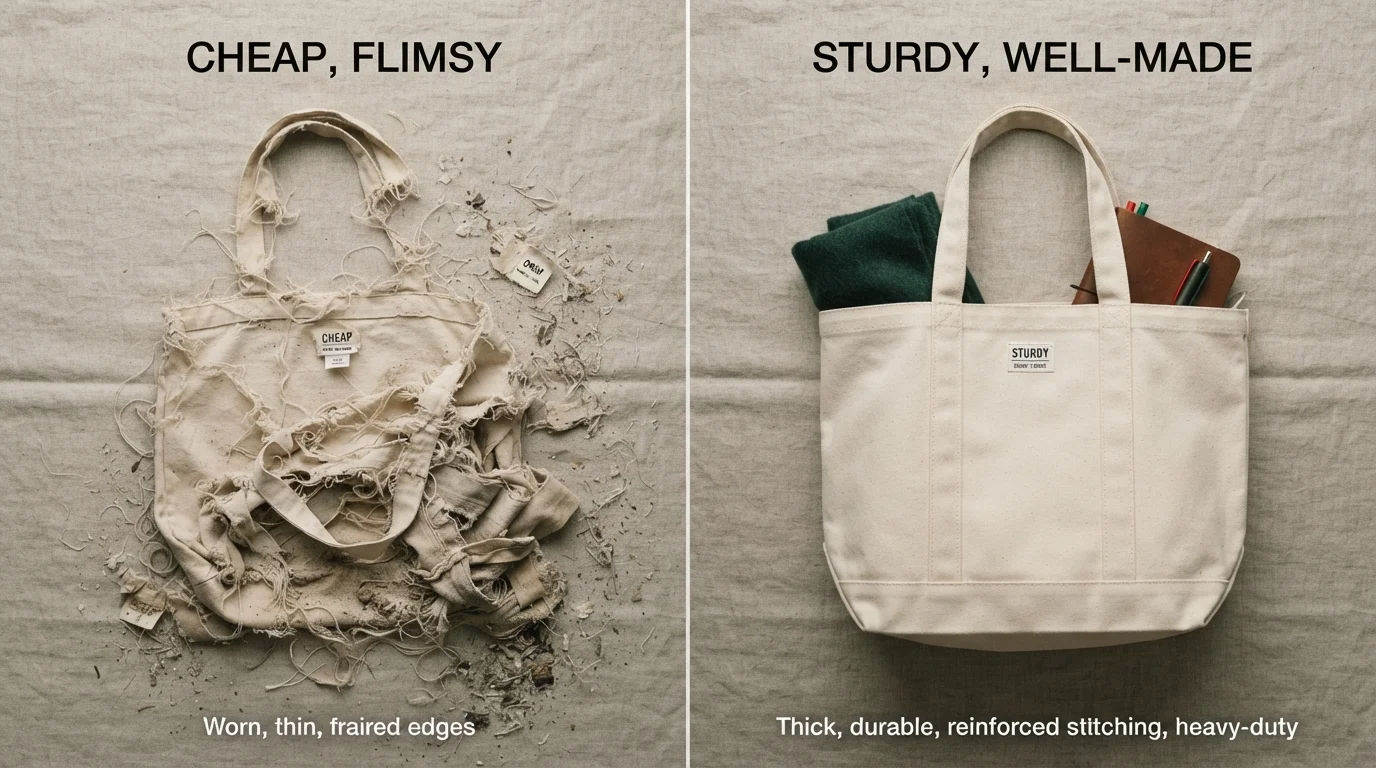

When Cheaper Is Simply Correct
Most spending advice focuses on where you shouldn't cut corners - and that guidance exists for good reason. As explored in categories where skimping quietly costs more, some purchases reliably punish budget choices through reduced durability, safety risks, or expensive follow-on costs.
But the inverse is equally true and far less discussed: there are entire categories where paying more delivers no meaningful advantage. The ingredients are standardized, performance variation is minimal, and the long-term cost consequences are essentially zero. In these areas, defaulting to the cheaper option is not settling - it is the rational, evidence-backed choice.
Understanding which categories fall into this bucket is one of the highest-leverage moves a budget-conscious shopper can make. It removes decision fatigue from routine purchases and frees mental and financial resources for the spending decisions that genuinely warrant careful thought. This connects directly to the principles behind values-based budgeting - spend less where it doesn't matter so you can spend meaningfully where it does.
Pantry staples and dry goods
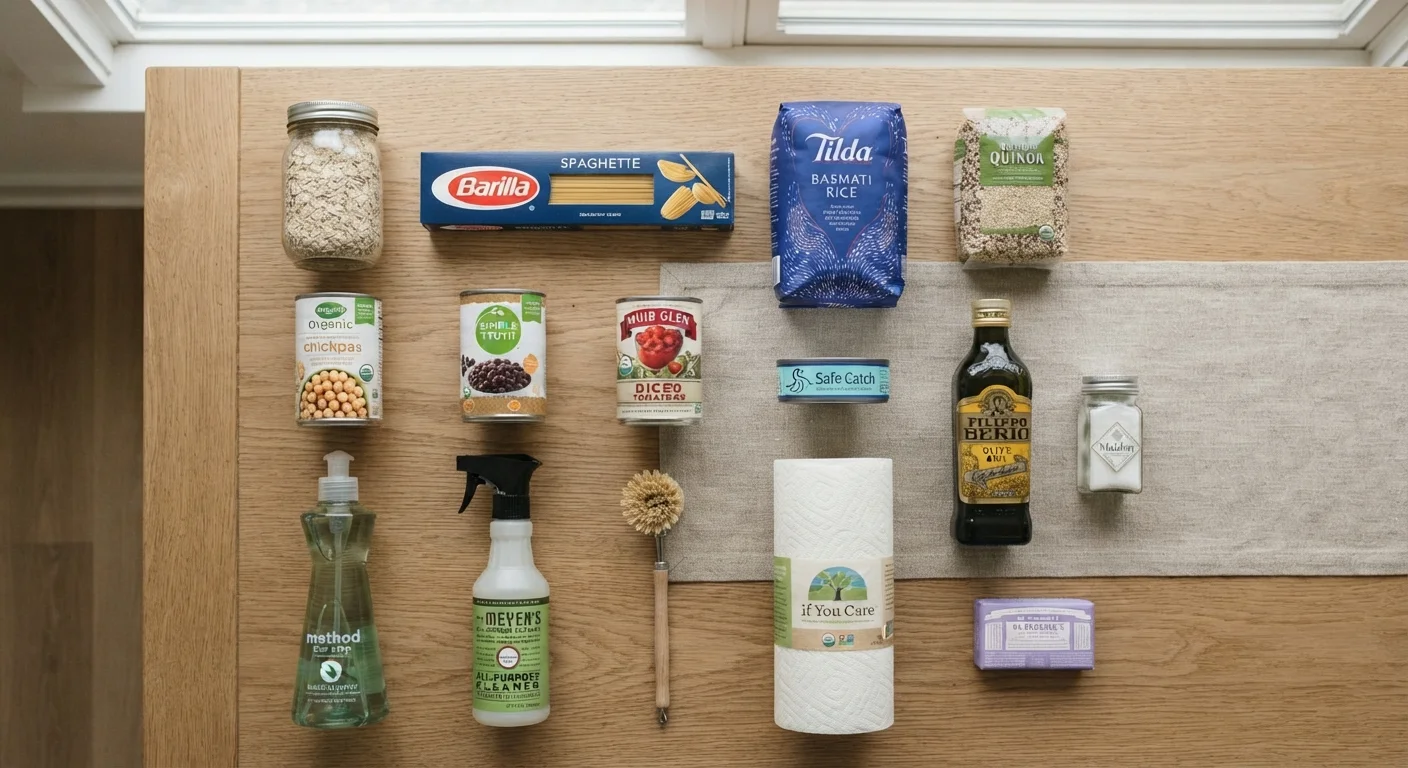
Flour, sugar, dried pasta, rice, canned beans, oats - these commodities are subject to standardized food safety regulations and have no meaningful quality variation between store-brand and national-brand versions. The ingredients list on a generic can of chickpeas and a premium one are functionally identical. Consumer taste tests on staple dry goods consistently show that most people cannot distinguish store-brand from name-brand in blind comparisons.
Switching an average household's pantry staples to store-brand equivalents can cut grocery spending by 20-30% on those items with no detectable difference in meals. That is not a small number compounded over a year.
Most people cannot distinguish store-brand pantry staples from name-brand equivalents in blind comparisons.
Basic household cleaning products
The active ingredients in most household cleaners - sodium hypochlorite in bleach, surfactants in dish soap, isopropyl alcohol in disinfectants - are regulated commodities. Generic bleach contains the same concentration of active ingredient as a branded version. The difference you are paying for is packaging, fragrance, and marketing.
Store-brand dish soap, multipurpose sprays, and laundry detergent (for standard loads) perform comparably to premium alternatives for routine cleaning tasks. The one area to read labels carefully is specialty applications - but for everyday surfaces, budget options consistently hold up.
Generic bleach contains the same regulated active ingredient concentration as any branded alternative.
Over-the-counter generic medications
In the United States, the FDA requires generic medications to contain the same active ingredient, at the same dosage and strength, with equivalent bioavailability as their brand-name counterparts. This is a regulatory requirement, not a marketing claim. A generic ibuprofen tablet and a branded one work the same way by law.
Store-brand pain relievers, antihistamines, antacids, and similar OTC products frequently cost 30-50% less than brand equivalents while meeting identical efficacy standards. Checking the active ingredient and dosage on both labels confirms equivalence in seconds.
This is general consumer information, not medical advice. Consult a qualified healthcare professional for questions about your specific health needs or medications.
FDA regulations require generic medications to match brand-name active ingredients and bioavailability exactly.
Basic office and school supplies
Printer paper, ballpoint pens, standard notebooks, manila folders, tape, and staples are manufactured to commodity specifications. A ream of store-brand printer paper meets the same weight and brightness standards as a premium brand because those standards are what printers and copiers require to function correctly.
The premium you pay for branded office supplies goes almost entirely toward brand recognition. For high-volume, routine use - note-taking, printing, filing - budget options perform identically and wear out at comparable rates.
Branded printer paper meets the same weight and brightness specifications as any budget alternative.
Basic car maintenance fluids
Engine coolant, windshield washer fluid, and basic motor oil meeting a vehicle's specified viscosity grade (such as 5W-30) are governed by industry and manufacturer standards - not brand loyalty. What matters is that the product meets the specification listed in your owner's manual, not which company put it in the bottle.
For most routine fluid top-offs, a store-brand product meeting the correct specification is functionally equivalent to a premium branded one. Checking the API rating or manufacturer specification on the label takes ten seconds and confirms compatibility. Cutting car costs across multiple categories - including routine fluids - compounds into significant annual savings for regular drivers.
Always verify specifications in your vehicle's owner's manual. For complex maintenance tasks, consult a qualified mechanic.
For routine fluid top-offs, meeting the owner's manual specification matters far more than brand name.
Cotton basics and undergarments
Plain white t-shirts, socks, and everyday undergarments made from standard cotton blends do not improve meaningfully with price beyond a certain baseline threshold. Once a garment meets basic construction standards - reinforced seams, consistent fabric weight - the additional cost of a premium brand reflects label status rather than longevity or comfort in most cases.
Durability in this category is more closely tied to washing habits and care instructions than to brand. Buying basics from budget or store-brand options and following care label instructions typically produces a comparable lifespan to premium alternatives at a fraction of the cost.
Cotton basics durability depends more on washing habits than on brand name or price.
Disposable kitchen supplies
Aluminum foil, plastic wrap, parchment paper, and standard kitchen trash bags are single-use items where the performance ceiling is low and the task is simple. Standard-gauge aluminum foil covers a baking dish. Standard-weight parchment paper lines a sheet pan. The job is finite and the item is discarded.
Premium versions of these products occasionally offer meaningfully heavier gauge options for specific tasks (heavy-duty foil for grilling, for example), but for routine kitchen use, store-brand versions consistently meet the same functional need at substantially lower cost.
Single-use kitchen supplies have a low performance ceiling - store brands routinely meet that ceiling.
Putting the Framework to Work
These categories share a common structure: the underlying product is commoditized, quality is regulated or standardized, and the performance gap between budget and premium is negligible in practice. Once you internalize that pattern, you can apply it to new categories on your own.
Build Your Own Low-Stakes List
Keep a running note on your phone of categories where you have personally switched to a budget option and noticed no difference. This list compounds in value over time - each confirmed swap becomes a standing decision you never have to revisit. It also sharpens your instincts for identifying new categories that fit the pattern.
The goal is not to be cheap across the board - that approach backfires just as often as it succeeds, as the complete guide to smarter spending decisions explains in detail. The goal is to be precise: invest where quality differences are real and consequential, and default to budget where they are not.
Start by auditing your recurring purchases. For each one, ask whether you have ever actually noticed a quality difference between the store brand and the premium version. If the answer is no, that category belongs on your low-stakes list. Small leaks across many routine categories add up faster than most people expect - everyday spending leaks are worth mapping before they quietly compound. That audit alone can redirect meaningful dollars toward what matters most to you.