
The Real Cost of Each Option (Spoiler: Both Are Free)
If you're exercising outdoors or using bodyweight moves at home, your equipment budget is exactly zero. That's the starting point - and it's a significant one. No gym membership, no gear subscription, no commute cost. But "free" isn't the only variable that determines whether a routine holds up over time.
The actual costs are less financial and more situational: time, energy, access, and the friction that accumulates between you and your workout. Understanding where each option creates or removes friction is what this comparison is really about. For a broader look at what you gain and give up by skipping the gym entirely, see The Honest Trade-Offs of Exercising Without a Gym or Coach.
Head-to-Head: How the Two Options Stack Up
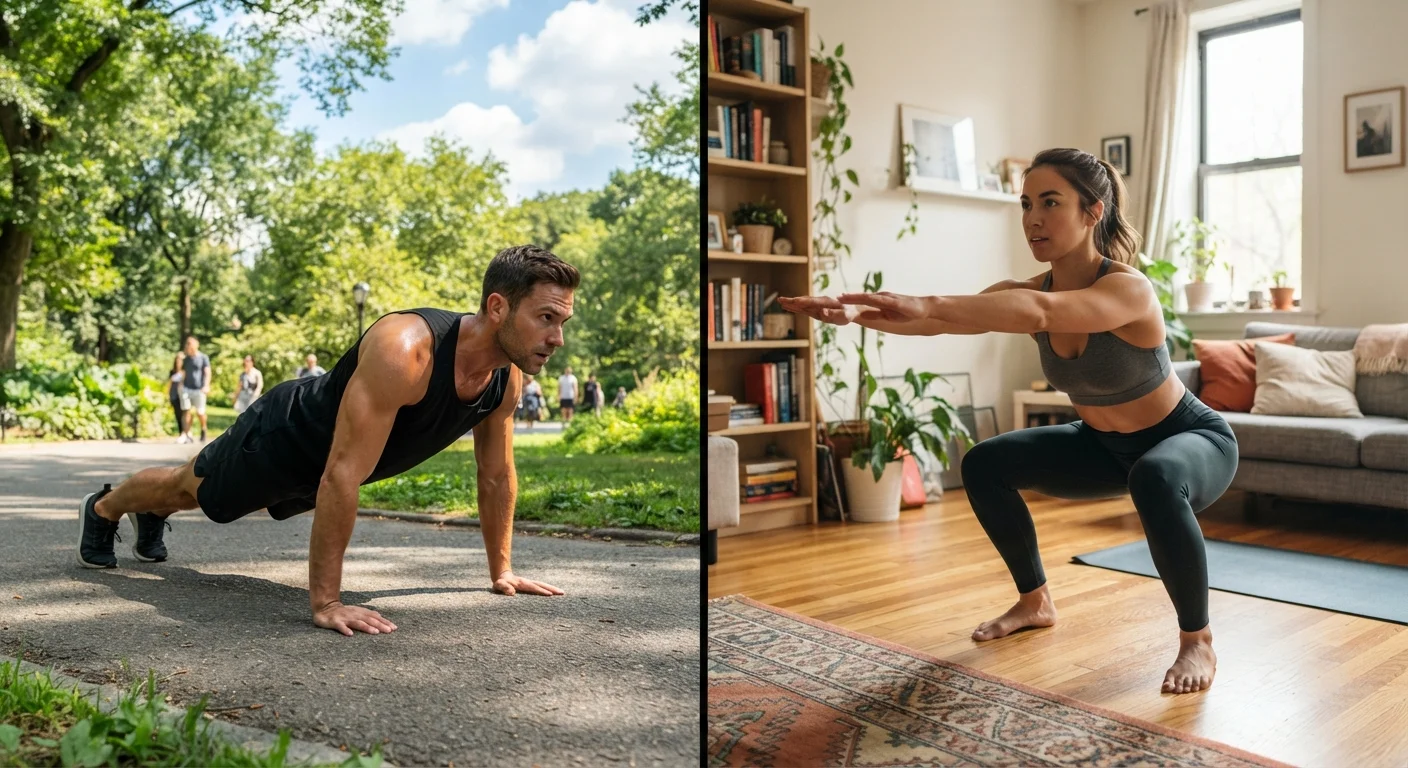
Here's a direct look at how outdoor workouts and indoor bodyweight sessions compare across the factors that matter most for budget-conscious, time-pressed people.
| Outdoor Workouts | Indoor Bodyweight Sessions | |
|---|---|---|
| Cost | Free | Free |
| Weather dependence | High - rain, heat, ice all disrupt plans | None - fully weather-proof |
| Space required | Park, sidewalk, or open area needed | ~6-10 sq ft of floor space |
| Mood / motivation boost | Higher - environment changes help | Lower - requires more self-discipline |
| Privacy | Low - public spaces | High - fully private |
| Schedule flexibility | Moderate - daylight and safety matter | High - any time, day or night |
| Exercise variety | High - running, stairs, hills, calisthenics | Moderate - bodyweight progressions |
| Safety considerations | Varies by neighborhood and conditions | Controlled, consistent environment |
A few of these rows deserve more context. Weather dependence is probably the biggest structural weakness of outdoor-only routines - a stretch of rain, extreme heat, or icy sidewalks can derail a habit before it's cemented. Privacy matters more than people expect; many beginners feel self-conscious exercising in public, which is a real barrier worth taking seriously rather than dismissing.
What the Research Suggests About Outdoor Exercise
Studies in environmental psychology consistently find associations between exercising in natural or green environments and improved mood and reduced perceived effort during exercise - though it's worth noting that much of this research relies on self-reported outcomes and relatively small samples. The effect is real enough to be meaningful in practice: you may simply feel like you're working less hard outdoors, which can help you go longer.
Sunlight exposure during outdoor workouts also supports vitamin D production and can help regulate sleep-wake cycles, both of which influence energy levels and recovery. These are general observations about how the body functions - not prescriptions. If you have a health condition affecting sun exposure or bone health, talk to a healthcare provider before making outdoor exercise a primary strategy.
Ease Into Outdoor Sessions Gradually
If you're new to exercising outside, start with shorter sessions during moderate weather to let your body adapt to variable terrain and temperature. Wear appropriate footwear for your surface - grass, pavement, and gravel all place different demands on joints. Staying hydrated matters more outdoors, especially in warm months, so bring water even for short sessions.
The practical downside is access. Not everyone has a safe park, sidewalk, or open space nearby. Urban density, neighborhood safety, and extreme regional climates can make consistent outdoor exercise genuinely difficult - not a personal failing, but a real constraint.
The Case for Staying In: What Indoor Bodyweight Sessions Do Well
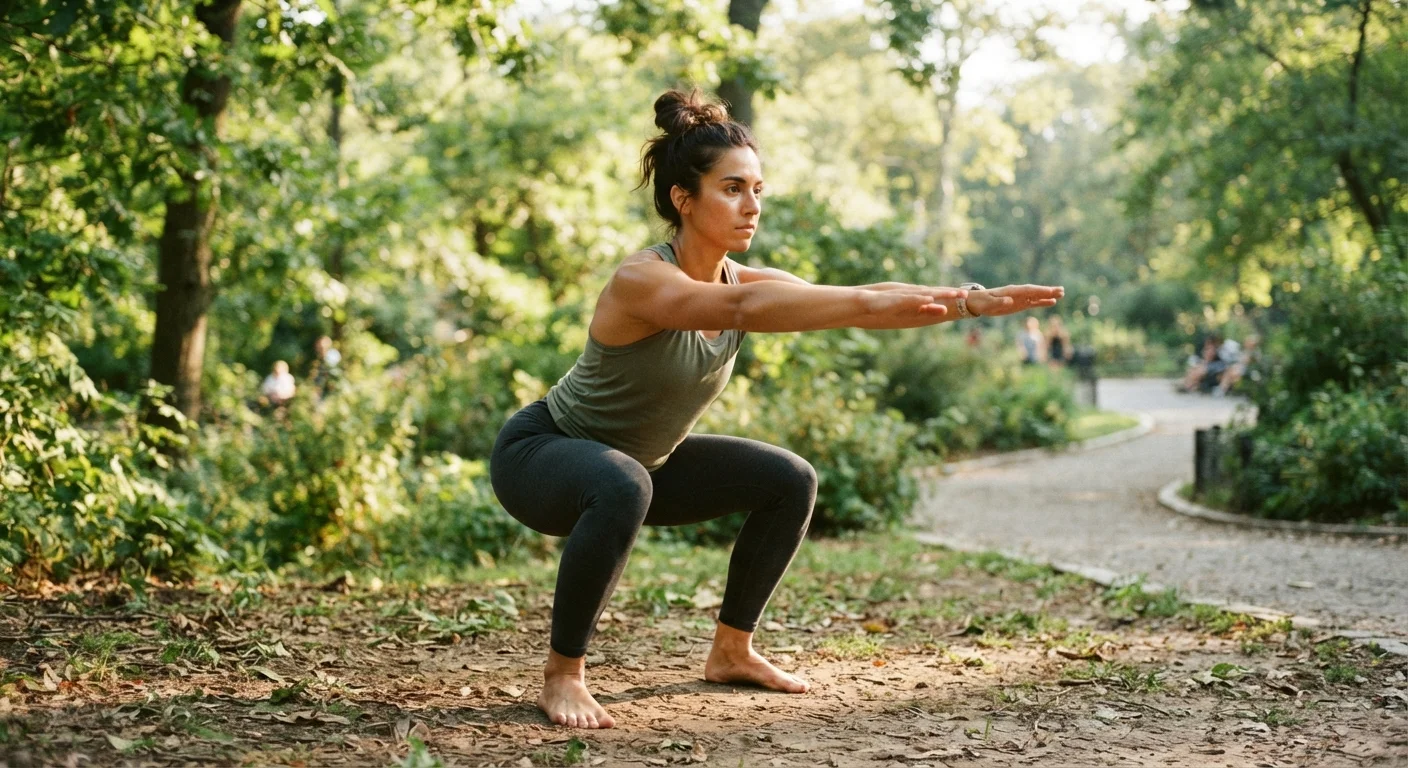
The biggest advantage of indoor bodyweight training is zero dependency on external conditions. It's 20°F outside? Doesn't matter. It's 11 p.m. and your gym is closed? Irrelevant. You have seven square feet of floor space? Enough for a full-body session.
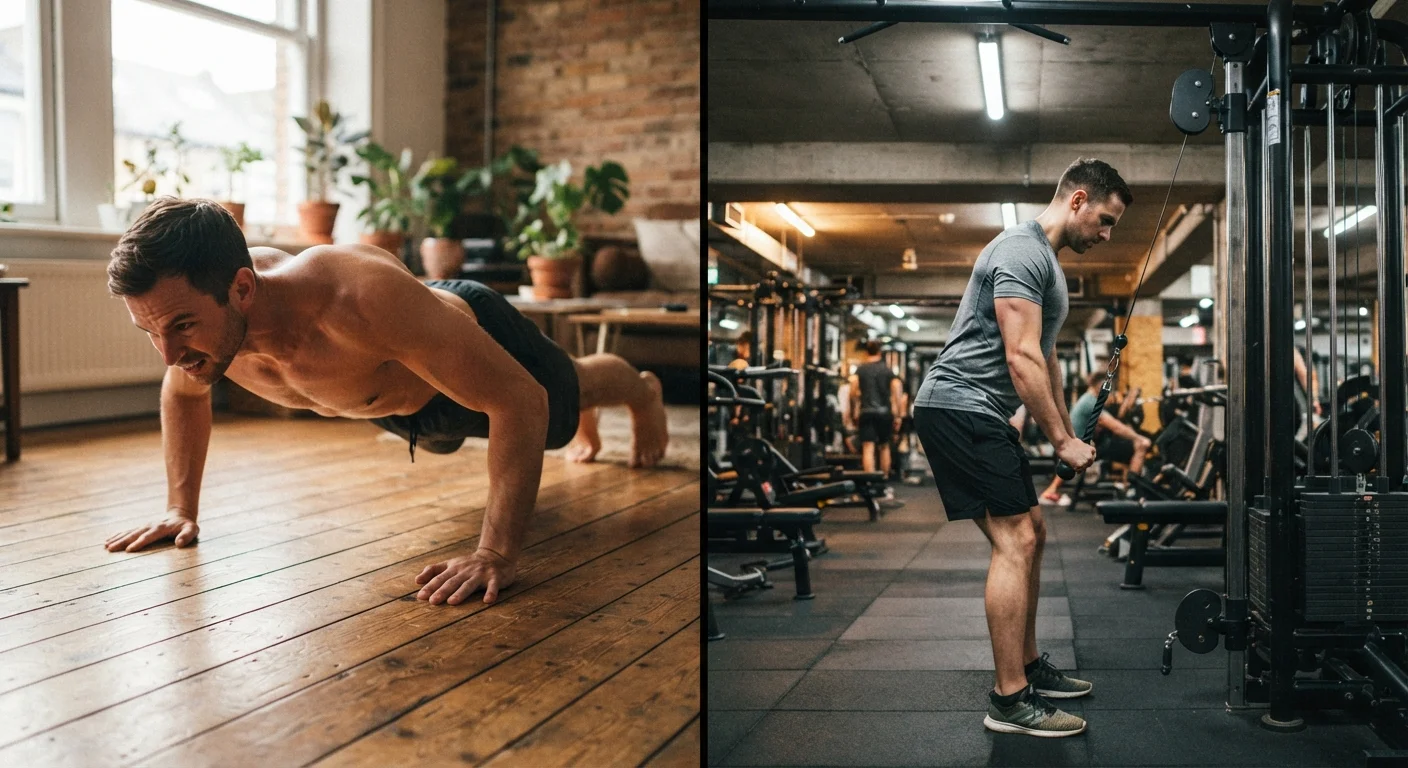
Bodyweight training - push-up variations, squats, lunges, planks, glute bridges, and their progressions - can build meaningful strength and endurance without any equipment. Research comparing bodyweight training to gym machines shows that for most general fitness goals, the gap in outcomes is smaller than gym marketing would have you believe.
The challenge indoors is motivational: without a change of environment, many people find it harder to mentally "switch on" for exercise. Your couch is right there. Your phone is right there. Building a habit indoors often requires more deliberate structure - a consistent time slot, a cleared space, and a plan written out in advance rather than improvised.
Matching the Option to Your Actual Life
The honest answer is that the better workout is the one you'll do reliably. Here's a simple way to think through the decision:
- If your schedule is consistent and daylight is available: outdoor sessions in the morning or after work are a low-friction choice with mood benefits built in.
- If your hours are irregular or you have caregiving responsibilities: indoor bodyweight sessions give you flexibility to exercise whenever a window opens, without needing to leave home.
- If your neighborhood doesn't feel safe or accessible for exercise: don't force outdoor workouts. A living room routine you can sustain beats an outdoor one you'll skip.
- If motivation is your chronic weak spot: outdoor variety and social visibility (even strangers in a park) can provide accountability that an empty living room can't.
Most people who build lasting free fitness habits end up using a combination - outdoor sessions when conditions allow, indoor fallback when they don't. Building a weekly schedule using parks and your living room walks through exactly how to structure that kind of hybrid week.
If you've tried either approach before and quit by week three, the problem usually isn't the setting - it's the structure around it. Why free workout routines fall apart early covers the most common culprits and how to fix them before they derail you again.
This article provides general fitness information for educational purposes only and is not a substitute for advice from a qualified healthcare or fitness professional. Consult a professional before starting a new exercise routine, especially if you have any existing health conditions.